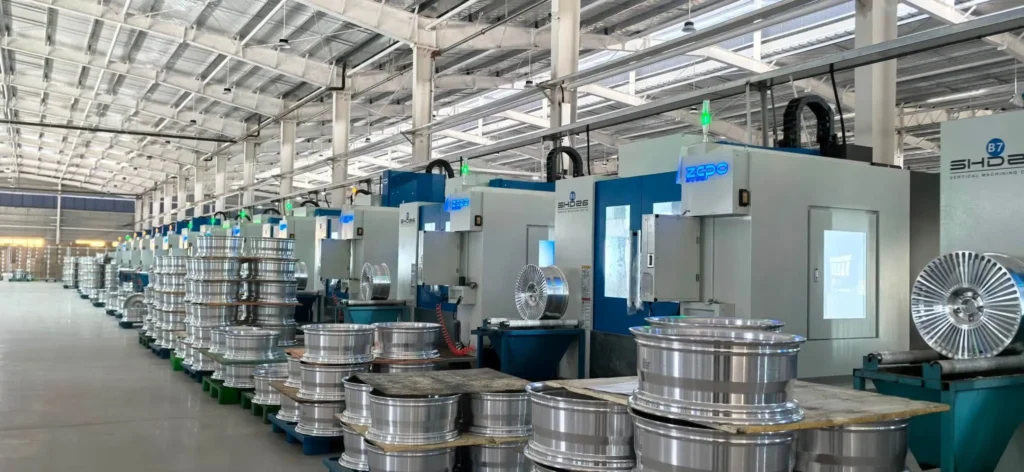
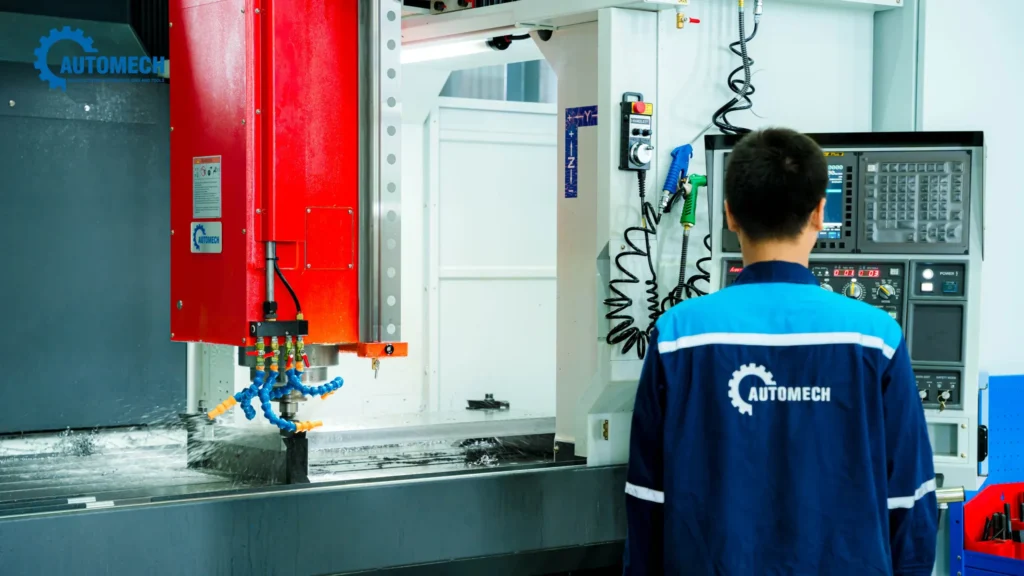
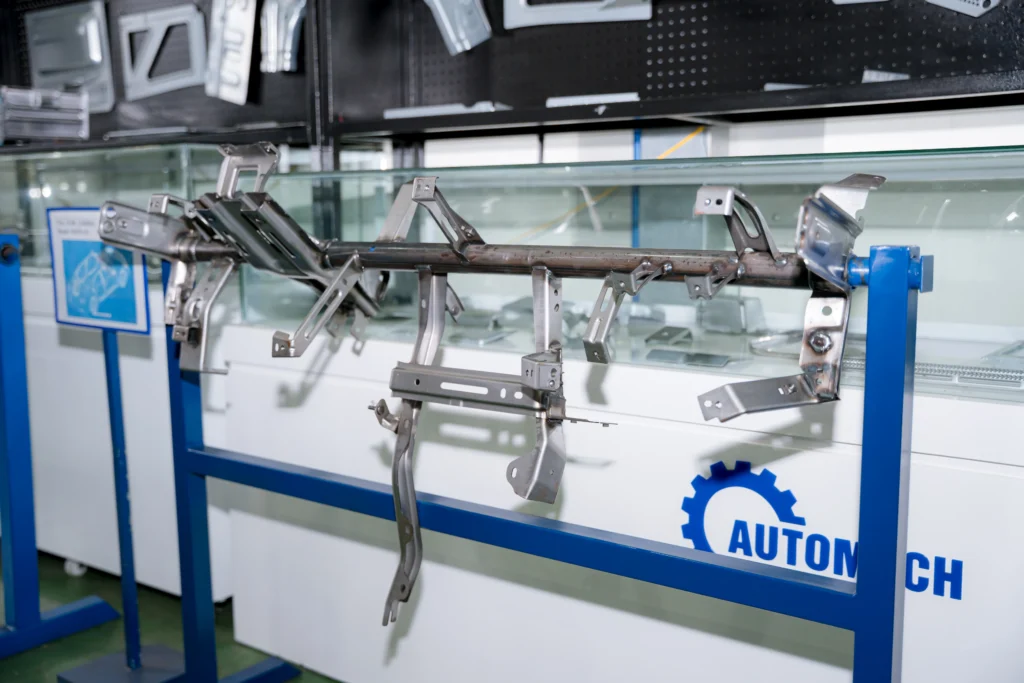
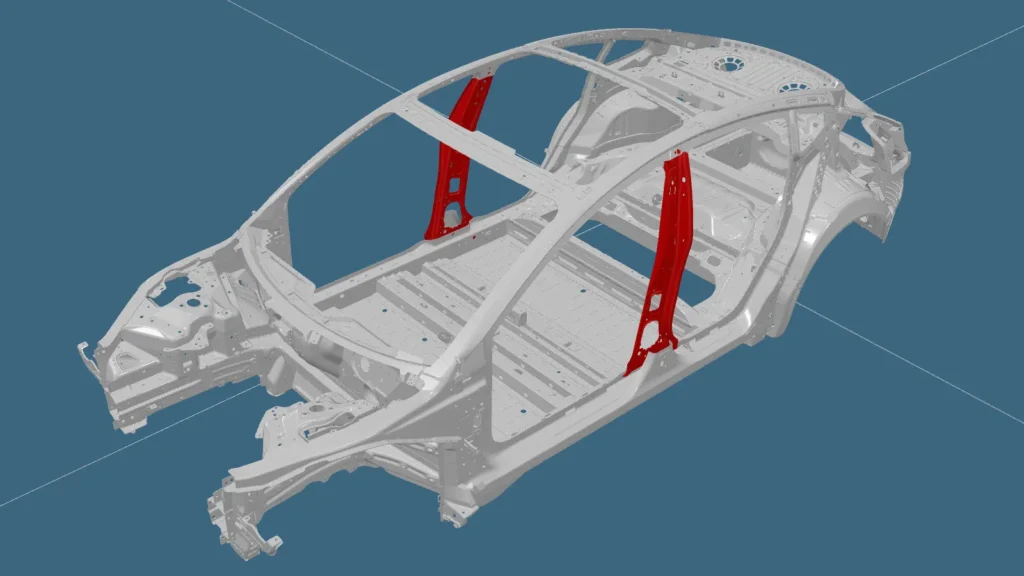
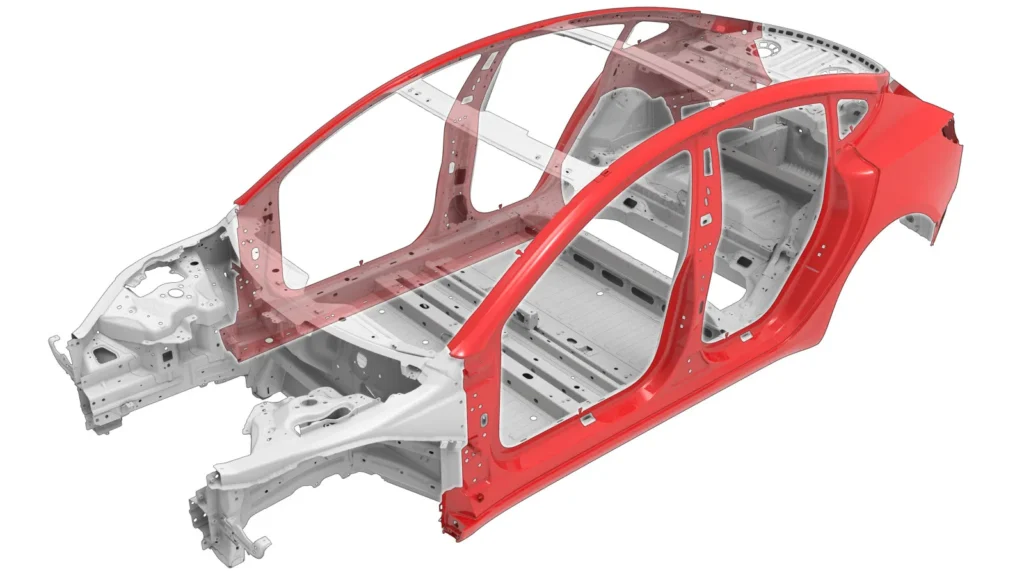
Automotive aluminum CNC milling has become an indispensable manufacturing process for modern vehicle engineering, enabling the rapid production of high-precision, lightweight components. As automotive OEMs and Tier 1 suppliers accelerate the transition toward electric vehicles (EVs) and fuel-efficient internal combustion engines, subtractive machining of aluminum alloys plays a crucial role. Through advanced multi-axis computer numerical control (CNC) technology, manufacturers can achieve tight tolerances, intricate geometries, and repeatable quality needed for critical powertrain, structural, and battery enclosure applications.
1. Automotive Aluminum CNC Milling Overview
1.1 What is automotive aluminum CNC milling?
1.1.1 Definition of automotive aluminum CNC milling
Automotive aluminum CNC milling refers to a precision subtractive manufacturing process that uses computer-controlled rotating cutting tools to remove material from solid aluminum workpieces. Guided by digital CAD/CAM programming, multi-axis milling machines shape raw aluminum billets, extrusions, or castings into complex automotive parts with exacting dimensional specs.
1.1.2 Role in precision automotive component manufacturing
Precision is paramount in modern automotive assembly lines. CNC milling enables manufacturers to produce intricate internal channels, tight pocketing, and perfectly flat mating surfaces that are essential for leak-proof fluid transfer, structural integrity, and smooth mechanical articulation.
1.2 Why automotive buyers need aluminum CNC milling
1.2.1 Lightweight component requirements
Reducing curb weight is one of the most effective strategies for increasing fuel economy and extending electric vehicle battery range. Aluminum provides a superior strength-to-weight ratio compared to traditional steel, allowing automotive engineers to design lighter parts without compromising structural safety.
1.2.2 Tight tolerance and repeatability demands
Automotive assemblies often involve hundreds of interconnected parts that require micron-level accuracy. High-precision aluminum CNC milling guarantees consistent dimensional tolerances (down to ± 0.01 mm or tighter), ensuring every component fits seamlessly into mass-production assembly lines.
1.3 Role in global automotive supply chains
1.3.1 OEM and Tier supplier production needs
Global OEMs and Tier suppliers require flexible contract manufacturing partners capable of scaling from initial prototype validation to high-volume production runs. CNC milling provides rapid turnaround times and low tooling setup costs compared to permanent mold casting or stamping dies.

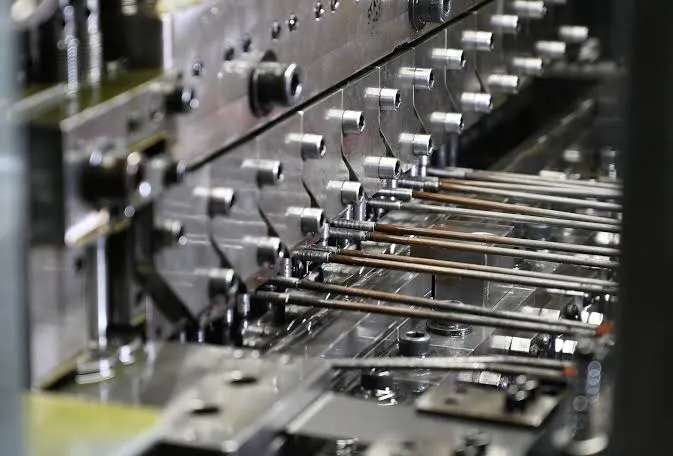
Automotive aluminum CNC milling enables manufacturers to produce lightweight components with high dimensional accuracy
1.3.2 Vietnam as an emerging CNC machining destination
Vietnam has rapidly grown into a preferred global sourcing hub for high-precision CNC machining. With modern manufacturing infrastructure, competitive labor costs, and strong engineering capabilities, suppliers like Automech provide international automotive buyers with a reliable alternative for diversification.
2. Why Aluminum is Used in Automotive CNC Machining
2.1 Lightweighting benefits
2.1.1 Weight reduction for fuel efficiency
In internal combustion engine (ICE) vehicles, every kilogram of weight saved directly translates into reduced fuel consumption and lower greenhouse gas emissions. Substituting heavy steel brackets and housings with milled aluminum counterparts drastically lowers overall vehicle mass.
2.1.2 EV range and battery efficiency improvement
Heavy lithium-ion battery packs present a major engineering challenge for electric vehicles. By using lightweight CNC milled aluminum enclosures and structural crossmembers, EV engineers can offset battery weight, thereby extending driving range per charge and improving overall energy efficiency.
2.2 Mechanical performance benefits
2.2.1 Strength-to-weight ratio
Certain heat-treatable aluminum alloys exhibit yield strengths comparable to structural steel while weighing roughly one-third as much. This outstanding strength-to-weight ratio allows components to absorb high mechanical shock and vibration loads under severe driving conditions.
2.2.2 Corrosion resistance and durability
Aluminum naturally forms a protective oxide layer when exposed to air, offering inherent resistance to rust, road salt, moisture, and automotive chemicals. This durability extends component operating lifespans and reduces warranty claims for automotive OEMs.
2.3 Thermal performance benefits
2.3.1 Heat dissipation in EV and electronic systems
Automotive electronics, electric drivetrains, and battery modules generate significant operational heat. Aluminum’s high thermal conductivity allows CNC milled heat sinks and cooling structures to rapidly draw thermal energy away from sensitive components.
2.3.2 Use in heat sinks and battery-related components
Complex cooling channels can be directly milled into aluminum plates or housings. These precision-machined liquid cooling plates maintain optimal temperature zones across battery cells and power electronics, preventing thermal runaway and maximizing battery lifespan.
3. Common Automotive Aluminum CNC Milled Parts

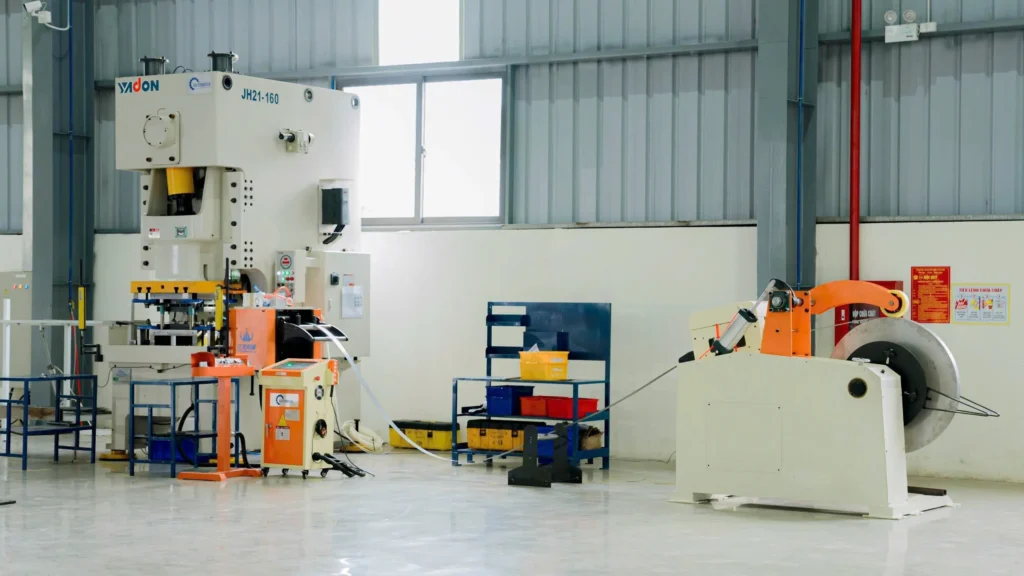
Automotive aluminum CNC milling is widely used for machining complex parts with tight tolerances
3.1 EV and battery components
3.1.1 Battery housings
Precision-milled aluminum battery enclosures shield battery cells from road debris and environmental exposure while offering structural protection during vehicle collisions.
3.1.2 Battery module frames
Internal battery framework assemblies demand high dimensional consistency to hold individual cells securely, align electrical busbars, and maintain stable cooling contact.
3.1.3 Cooling plates and thermal management parts
CNC milled liquid cooling plates incorporate intricate fluid paths that circulate coolant beneath or between battery modules to regulate operating temperatures.
3.2 Structural and mounting components
3.2.1 Mounting brackets
Aluminum motor mounts, suspension brackets, and alternator brackets provide rigid anchor points across the chassis, dampening engine vibrations while minimizing weight.
3.2.2 Lightweight support frames
Subframe connectors, shock tower braces, and crossmembers are routinely milled from solid extruded or forged aluminum to deliver chassis stiffness without bulk.
3.2.3 Enclosures and covers
Electronic control unit (ECU) housings, inverter covers, and power distribution enclosures are machined with tight sealing grooves to protect delicate circuits against dust and ingress.
3.3 Engine and transmission-related parts
3.3.1 Aluminum housings
Transmission valve bodies, gearbox casings, and oil pan assemblies require extremely flat, warp-free mating faces to ensure leak-free gasket seals under pressure.
3.3.2 Precision covers and adapter plates
Engine front covers, timing chain plates, and bellhousing adapters require high-precision hole locations to align rotating shafts and bearings correctly.
3.3.3 Functional machined assemblies
Turnkey assemblies including integrated throttle bodies, fuel rails, and hydraulic manifold blocks rely on multi-axis CNC milling for deep-hole drilling, porting, and threading.
4. Aluminum Alloys Used in Automotive CNC Milling

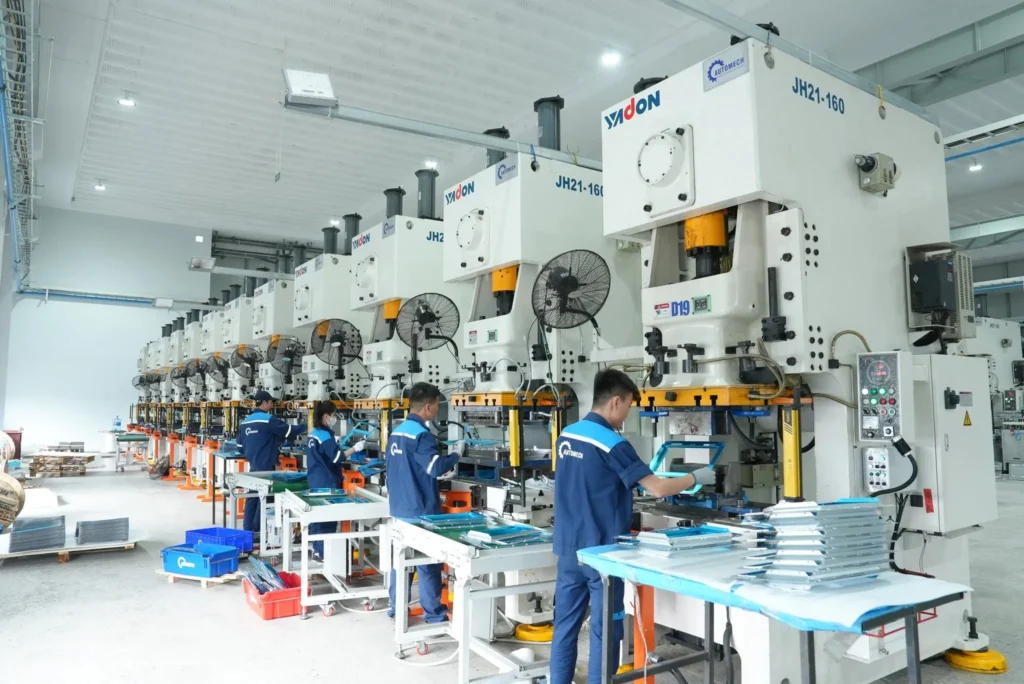
Advanced automotive aluminum CNC milling helps improve component consistency and production efficiency
4.1 Common aluminum alloys
4.1.1 6061 aluminum for general automotive components
Aluminum 6061-T6 is the workhorse grade for automotive aluminum CNC milling due to its versatile balance of mechanical strength, weldability, and corrosion resistance. It machines predictably, making it ideal for engine covers, mounting brackets, and structural prototypes.
4.1.2 6063 aluminum for structural and extrusion-based parts
Known for its superior surface finish and excellent extrudability, 6063 aluminum is frequently selected for secondary post-extrusion milling. Automotive manufacturers utilize 6063 for trim components, battery enclosure rails, and decorative interior structural elements.
4.1.3 7075 aluminum for high-strength applications
Alloyed primarily with zinc, 7075-T6 provides tensile strengths exceeding $500\text{ MPa}$, competing directly with mild steel. It is favored for stress-critical automotive applications such as high-performance suspension arms, racing chassis nodes, and transmission gears.
4.1.4 ADC12 for die-cast aluminum components
ADC12 (A383) is a widely used die-casting silicon-aluminum alloy that often requires post-cast CNC milling. Precision milling on ADC12 castings cleans up gasket faces, drills tight-tolerance mounting holes, and threads critical fluid ports.
4.2 Alloy selection criteria
4.2.1 Strength and machinability
Engineers balance yield strength against cutting speed and tool wear. While 7075 offers superior strength, 6061 allows higher cutting feeds and produces less tool stress during high-volume production runs.
4.2.2 Corrosion resistance
Components exposed to road salt and environmental moisture require alloys with high natural passivation. The 6xxx-series alloys inherently resist oxidation better than copper-heavy 2xxx-series or zinc-heavy 7xxx-series alloys.
4.2.3 Thermal conductivity
For EV battery housings and power electronics enclosures, thermal dissipation is a primary driver. Alloys like 6063 offer high thermal conductivity (200 W/m.K), ensuring rapid heat transfer away from sensitive electronics.
4.3 Material impact on machining performance
4.3.1 Tool wear and cutting stability
High-silicon alloys like ADC12 cause abrasive tool wear, requiring carbide or diamond-coated tooling. Conversely, softer alloys like 6061 require sharp tool geometries with polished flutes to prevent built-up edge (BUE) formation.
4.3.2 Dimensional stability after machining
Internal residual stresses from cold working or heat treatment can cause aluminum parts to warp during milling. Stress-relieved tempers (like T651) are selected for large structural plates to maintain planarity post-machining.
5. CNC Milling Processes for Aluminum Automotive Parts

Automotive aluminum CNC milling supports the production of lightweight parts for modern vehicle applications
5.1 3-axis aluminum CNC milling
5.1.1 Simple geometry parts
Three-axis CNC milling machines operate along the X, Y, and Z axes, delivering efficient material removal for planar components. It remains the most economical choice for flat covers, simple brackets, and adapter plates.
5.1.2 Cost-effective machining for flat surfaces and pockets
By reducing machine hourly rates and programming complexity, 3-axis milling lowers unit costs for high-volume, single-sided features such as shallow fluid channels, bolt patterns, and perimeter profiling.
5.2 4-axis aluminum CNC milling
5.2.1 Multi-side machining
Four-axis CNC milling adds a rotary axis (A-axis), allowing workpieces to rotate during cutting. This enables multi-sided features such as cylindrical housings or radial holes to be machined in a single continuous setup.
5.2.2 Reduced setup time and better repeatability
Machining multiple faces without manually re-clamping the part eliminates operator positioning errors. This setups reduction directly boosts dimensional repeatability for complex automotive brackets and valve bodies.
5.3 5-axis aluminum CNC milling
5.3.1 Complex automotive geometries
Simultaneous 5-axis CNC milling manipulates the cutting tool along five axes concurrently. It is necessary for organic automotive surfaces, compound angles, deep internal cavities, and complex EV drivetrain housings.
5.3.2 High precision components with fewer setups
Completing a part in one single 5-axis setup (Done-in-One) minimizes cumulative datum errors caused by fixture transfers. This delivers tight geometric tolerances (GD&T) critical for aerospace-grade and high-end automotive assemblies.
5.4 High-speed machining for aluminum
5.4.1 Optimized spindle speed and feed rate
High-speed machining (HSM) utilizes spindle speeds exceeding 20,000 RPM and elevated feed rates. Because aluminum has low cutting resistance, HSM rapidly evacuates chips while minimizing cutting forces on the part.
5.4.2 Improved surface finish and cycle time
High cutting velocity lowers tool engagement time, producing mirror-like surface finishes (Ra < 0.8 μm) without secondary grinding. This significantly reduces cycle time for mass automotive production.
6. Technical Challenges in Automotive Aluminum CNC Milling

Manufacturers rely on automotive aluminum CNC milling to achieve precise geometries and excellent surface finishes
6.1 Thin-wall aluminum machining
6.1.1 Deformation risk during machining
Large EV battery trays and electronic enclosures feature thin walls (< 2.0 mm) to save weight. Cutting forces and vibration during milling can easily cause wall deflection, chatter, or permanent part warping.
6.1.2 Fixture and clamping control
To combat deformation, specialized vacuum fixtures, hydraulic damping clamps, and high-speed light-cut passes are deployed. Distributed clamping pressure prevents localized stress concentration across delicate structures.
6.2 Burr control and deburring
6.2.1 Burr formation in aluminum milling
Due to aluminum’s ductility, exit burrs naturally form along part edges as cutting tools break through material. Uncontrolled burrs compromise assembly fit, damage seals, and pose safety hazards.
6.2.2 Manual and automated deburring methods
Modern production lines integrate automated robotic deburring brushes, chamfer milling toolpaths, or high-pressure thermal/chemical deburring to guarantee clean, smooth edges across high-volume batches.
6.3 Thermal stability
6.3.1 Heat generation during high-speed machining
High-rpm milling generates friction heat at the tool-chip interface. Aluminum’s high coefficient of thermal expansion (≈ 23 × 10⁻⁶/K) means localized heating quickly alters part dimensions during cutting.
6.3.2 Dimensional changes caused by temperature variation
If a component heats up during roughing, it will shrink upon cooling, leading to out-of-tolerance final features. Utilizing temperature-controlled flood coolant and climate-controlled machining shops stabilizes part dimensions.
6.4 Surface finish control
6.4.1 Functional surface requirements
Critical sealing faces such as oil pan mating surfaces or hydraulic manifold blocks require strict flatness and specific surface roughness profiles (Ra 0.4 – 1.6 μm) to prevent fluid leakage.
6.4.2 Cosmetic and assembly surface requirements
Visible automotive components demand uniform cosmetic finishes free from tool marks, scratches, or gouges. Optimizing tool stepover, feed rates, and post-machining anodizing ensures pristine aesthetic quality.
7. Tolerance and Dimensional Accuracy Requirements

Automotive aluminum CNC milling is suitable for producing prototypes as well as high-volume automotive components
7.1 Automotive tolerance requirements
7.1.1 Standard tolerance ranges for aluminum parts
Standard automotive machining tolerances for non-critical features typically fall between ± 0.05 mm and ± 0.10 mm. These tolerances apply to external mounting tabs, non-sealing covers, and clearance hole locations where tight fits are not mechanically necessary.
7.1.2 Tight tolerance machining for precision assemblies
Critical automotive assemblies such as transmission valve bodies, bearing bores, and EV battery cooling plate mating surfaces require micro-level accuracy. High-precision CNC milling routinely achieves tight tolerances ranging from ± 0.005 mm to ± 0.015 mm, ensuring pressure-tight fluid seals and zero-play mechanical fits.
7.2 Factors affecting dimensional accuracy
7.2.1 Machine stability and calibration
Machine tool rigidity, spindle runout, and thermal expansion of the machine bed directly impact cutting accuracy. Regular laser interferometer calibration and dynamic kinematic alignment prevent positional drift during long production cycles.
7.2.2 Tool selection and tool wear
Tool deflection under high cutting loads leads to dimensional errors, particularly in deep-cavity or thin-rib milling. Utilizing solid carbide tools with optimized rake angles and polycrystalline diamond (PCD) inserts minimizes tool wear and maintains dimensional stability over thousands of machining cycles.
7.2.3 Fixture accuracy and workholding strategy
Improper clamping pressure can induce elastic deformation in aluminum workpieces, causing parts to spring back out of tolerance once unclamped. Vacuum chucks, hydraulic zero-point clamping systems, and custom conformal fixtures distribute clamping forces evenly to mitigate mechanical distortion.
7.3 Inspection and validation
7.3.1 CMM inspection
Coordinate Measuring Machines (CMMs) located in climate-controlled quality labs provide multi-axis dimensional verification. CMMs measure complex geometric dimensioning and tolerancing (GD&T) features, including flatness, position, parallelism, and surface profile against the original CAD model.
7.3.2 First article inspection
Before initiating mass production, a comprehensive First Article Inspection (FAI) validates the complete manufacturing process. FAI reports verify that machine offsets, tooling parameters, and program toolpaths yield fully compliant components.
7.3.3 In-process dimensional checks
Automated touch probes integrated directly into CNC machine spindles conduct real-time feature measurements during machining. In-process probing detects tool wear or thermal drift early, allowing automated coordinate offsets before parts exceed allowable tolerance thresholds.
8. Automotive Aluminum CNC Milling vs Steel Machining

High-precision automotive aluminum CNC milling helps meet demanding automotive quality and performance requirements
8.1 Material difference
8.1.1 Aluminum lightweight advantage
Aluminum features a density of approximately 2.70 g/cm3, roughly one-third that of structural steel (~ 7.85 g/cm3). This low density gives aluminum a major advantage for lightweight structural components, power electronics housings, and EV chassis members.
8.1.2 Steel strength and load-bearing advantage
Steel remains superior in extreme load-bearing and high-wear applications, such as engine crankshafts, transmission gears, and heavy-duty suspension knuckles. Alloy steels offer yield strengths exceeding 1000 MPa, which standard aluminum alloys cannot match without substantial volume increases.
8.2 Machining difference
8.2.1 Cutting speed and tool selection
Aluminum allows significantly higher cutting velocities (vc > 1000 m/min) compared to steel (vc ≈ 100 – 300 m/min) due to its lower shear strength and softness. Aluminum milling requires sharp, polished flutes to prevent chip welding, whereas steel machining demands tough, heat-resistant PVD or CVD coated carbide tools.
8.2.2 Cycle time and surface finish
High material removal rates (MRR) in aluminum milling yield drastically shorter machining cycle times compared to steel. Aluminum also yields superior surface finishes (Ra < 0.4 µm) directly off the mill, eliminating secondary grinding operations required for hardened steel.
8.3 Application difference
8.3.1 Aluminum for EV, lightweight, and thermal components
Aluminum CNC milling dominates electric mobility applications, heat dissipation modules, ECU enclosures, battery tray structures, and body-in-white (BIW) mounting brackets where weight reduction and heat transfer are critical.
8.3.2 Steel for high-load and structural components
Steel machining is reserved for severe mechanical stress, high friction, and elevated temperature environments including engine blocks, exhaust manifolds, drivetrain gears, and heavy chassis crossmembers.
8.4 Comparison table opportunity
8.4.1 Aluminum vs steel by weight, cost, machinability, and application
| Performance Parameter | Aluminum CNC Milling | Steel CNC Machining |
| Material Density | Low (~ 2.70 g/cm3) | High (~ 7.85 g/cm3) |
| Tensile Strength | Medium (150 – 550 MPa) | High (400 – 1200+ MPa) |
| Thermal Conductivity | High (130 – 200 W/m.K) | Low (30 – 50 W/m.K) |
| Cutting Speed ($v_c$) | Very High (800 – 2500 m/min) | Moderate (100 – 350 m/min) |
| Machinability Index | Excellent (150% – 300%) | Moderate (40% – 75%) |
| Tool Wear Rate | Low (Low cutting forces) | High (Heat & abrasive wear) |
| Primary Applications | EV battery trays, heat sinks, brackets | Drivetrain gears, shafts, high-load chassis |
8.4.2 Supplier selection based on material requirements
Automotive buyers must select suppliers based on specialized equipment capabilities. Aluminum machining requires high-RPM spindles (15,000 – 30,000 RPM) and high-pressure coolant systems, whereas steel machining demands high-torque spindles and heavy-duty, dampening machine structures.
9. Lightweighting and EV Applications

Automotive aluminum CNC milling can efficiently process aluminum alloys used in structural and powertrain components
9.1 Automotive lightweighting strategy
9.1.1 Reducing vehicle weight without sacrificing performance
Vehicle lightweighting focuses on systematic mass reduction across all major assemblies. Substituting heavy cast-iron or steel parts with CNC milled aluminum structural components lowers total mass while preserving mechanical rigidity, crashworthiness, and dynamic stability.
9.1.2 Supporting fuel efficiency and emissions targets
For internal combustion engines, reducing vehicle weight directly lowers fuel consumption. Empirical data indicates that a 10% reduction in vehicle weight improves overall fuel economy by 6% – 8%, aiding OEMs in meeting stringent Corporate Average Fuel Economy (CAFE) and Euro 7 emissions standards.
9.2 EV component applications
9.2.1 Battery housings and structural frames
Electric vehicle battery enclosures must provide structural protection against ground impacts while maintaining airtight, waterproof seals. CNC milled aluminum perimeter frames and structural cross-members absorb impact energy during collisions while isolating battery cells.
9.2.2 Heat sinks and thermal management components
EV power electronics such as traction inverters, DC-DC converters, and onboard chargers generate substantial heat. CNC milled aluminum cooling plates feature micro-channel fluid paths that optimize heat dissipation and keep power modules within safe thermal limits.
9.2.3 Electronic enclosures and mounting plates
Electronic Control Units (ECUs) and autonomous driving compute modules require shielded, dust-proof enclosures. Aluminum CNC milling manufactures tight-tolerance mating grooves for O-ring elastomer seals and provides built-in electromagnetic interference (EMI) shielding.
9.3 Manufacturing requirements for EV aluminum parts
9.3.1 Dimensional accuracy
Large-format EV components, such as multi-module battery trays, demand precise coplanarity and hole-location tolerances across lengths exceeding 1.5 meters to ensure stress-free bolt alignment during robotic pack assembly.
9.3.2 Thermal performance
Liquid cooling plates require exceptionally smooth mating faces with flatness tolerances under 0.03 mm. This eliminates air gaps when applying thermal interface materials (TIM), maximizing heat transfer rates from power modules to liquid coolant.
9.3.3 Surface finish and assembly compatibility
Post-machining surface treatments including chemical conversion coatings (Chromate/Alodine) or hard-coat anodizing protect aluminum components against galvanic corrosion while preserving electrical grounding paths where required.
10. Quality Control Systems for Aluminum CNC Milling

Advanced machining centers make automotive aluminum CNC milling more efficient and repeatable
10.1 Incoming material inspection
10.1.1 Material certificate verification
Raw aluminum billets, plates, and extrusions undergo strict incoming quality checks. Quality assurance inspectors review chemical analysis and mechanical testing certificates (EN 10204 3.1) to confirm chemical composition and temper compliance.
10.1.2 Aluminum alloy grade confirmation
Portable X-ray fluorescence (XRF) or optical emission spectrometers verify the exact elemental composition of incoming stock. This prevents material mix-ups between similar alloy grades (e.g., mistaking 6063 for high-strength 6061).
10.2 In-process quality control
10.2.1 First article inspection
Before launching full production runs, the initial machined component undergoes complete dimensional validation via CMM and optical comparators. Production approval requires 100% compliance with engineering drawing specifications.
10.2.2 Dimensional checks during production
Statistical Process Control (SPC) protocols monitor critical dimensions at set intervals during production. Control charts track feature trends to calculate process capability indices (Cpk >= 1.67), identifying tool wear before non-conforming parts are produced.
10.2.3 Tool wear monitoring
Automated spindle load sensors measure cutting force increases caused by edge wear. Laser tool setters periodically check tool length and diameter, automatically replacing worn cutters with sister tooling to maintain consistent machining accuracy.
10.3 Final inspection
10.3.1 CMM dimensional inspection
Finished components are placed in temperature-controlled measuring rooms (~ 20 °C) to undergo final CMM dimensional inspection, validating all critical geometric tolerances, hole locations, and surface profiles.
10.3.2 Surface finish verification
Contact profilometers measure surface roughness (Ra, Rz) across critical gasket sealing faces, bearing journals, and O-ring grooves to verify compliance with specified micro-inch or micro-meter surface requirements.
10.3.3 Burr and visual inspection
High-magnification optical borescopes and vision systems inspect internal fluid channels, cross-drilled holes, and thread profiles to ensure parts are completely free of exit burrs, loose chips, or handling marks.
10.4 Traceability and documentation
10.4.1 Batch traceability
Every production lot receives a unique batch tracking number. Critical automotive parts receive laser-etched 2D DataMatrix barcodes or serial numbers to link each finished component directly to its raw material heat lot and manufacturing parameters.
10.4.2 Inspection reports
Final shipment packages include complete quality documentation, comprising CMM dimensional reports, material mill test reports (MTR), surface roughness logs, and plating/anodizing thickness certifications.
10.4.3 Quality records for OEM buyers
Quality documentation and SPC data logs are archived in digital quality management systems (QMS) for a minimum of 10 to 15 years, meeting strict automotive OEM audit readiness and warranty tracking requirements.
11. ISO 9001 and IATF 16949 Requirements

Automotive aluminum CNC milling provides the precision required for critical automotive components
11.1 ISO 9001 for CNC machining suppliers
11.1.1 Quality management system
An ISO 9001 certification establishes the baseline Quality Management System (QMS) for precision CNC machining suppliers. It ensures that standard operating procedures are documented, repeatable, and consistently audited across all machining operations.
11.1.2 Process control and continuous improvement
Under ISO 9001, suppliers implement systematic process control frameworks to monitor key performance indicators (KPIs). Continuous improvement protocols (Plan-Do-Check-Act) help eliminate production bottlenecks, minimize scrap rates, and optimize aluminum milling efficiencies.
11.2 IATF 16949 for automotive CNC machining
11.2.1 Automotive-specific quality requirements
IATF 16949 extends basic QMS standards by incorporating stringent automotive-specific quality controls. It focuses on defect prevention, reduction of variation, and elimination of waste in the automotive supply chain through tools like APQP, PPAP, FMEA, and SPC.
11.2.2 OEM and Tier supplier expectations
Global automotive OEMs and Tier 1 suppliers mandate IATF 16949 compliance to ensure that contract manufacturing partners can consistently deliver defect-free components. Compliance guarantees that every aluminum milled part adheres to strict automotive engineering safety standards.
11.3 Why certifications matter for automotive aluminum parts
11.3.1 Reduced production risk
Certified suppliers mitigate manufacturing risks by adhering to standardized machining and inspection parameters. This reduces part rejection rates, prevents assembly line stoppage for OEMs, and ensures predictable delivery schedules.
11.3.2 Better consistency across batches
Strict process standardization ensures batch-to-batch dimensional uniformity. Whether producing an initial 10-piece prototype run or a mass-production batch of 100,000 units, certified suppliers maintain identical tolerance bands.
11.3.3 Stronger supplier audit readiness
ISO 9001 and IATF 16949 compliance ensures complete documentation and traceability, making suppliers fully prepared for rigorous customer quality audits and warranty inspections.
12. Why Source Automotive Aluminum CNC Milling from Vietnam
12.1 CNC machining Vietnam advantages
12.1.1 Competitive production cost
Vietnam offers a highly cost-effective manufacturing environment without compromising precision or structural quality. Favorable labor costs, efficient production management, and competitive raw material sourcing lower the overall unit cost for complex milled parts.
12.1.2 Growing precision machining capability
Vietnam’s industrial infrastructure has undergone rapid technological upgrades. Contemporary machine shops feature modern multi-axis CNC machining centers, CMM inspection labs, and automated production cells capable of tackling challenging automotive geometries.

Professional automotive aluminum CNC milling services can accommodate complex designs and tight dimensional tolerances
12.2 Vietnam for US and European automotive buyers
12.2.1 Export manufacturing readiness
Vietnamese precision machining manufacturers possess extensive experience catering to Tier 1 and OEM buyers across North America and Europe. They understand international engineering standards, technical documentation, and protective packaging required for transoceanic transport.
12.2.2 Supply chain diversification from China
As global buyers seek to diversify manufacturing footprints and build resilient supply chains, Vietnam serves as a primary “China+1” destination. Sourcing from Vietnam provides supply chain stability, reduces tariff risks, and ensures long-term operational continuity.
12.3 CNC machining supplier Vietnam benefits
12.3.1 Skilled engineering workforce
Vietnam boasts a deep pool of highly trained mechanical engineers, CNC programmers, and quality control specialists. Their technical expertise allows for seamless DFM reviews, CAD/CAM optimizations, and rapid prototyping execution.
12.3.2 Cost-quality balance for automotive production
Vietnamese manufacturing delivers an optimal cost-to-quality ratio. International automotive buyers obtain aerospace-grade machining accuracy and strict quality control at a fraction of Western production costs.
13. How to Choose an Automotive Aluminum CNC Milling Supplier
13.1 Technical capability checklist
13.1.1 3-axis, 4-axis, and 5-axis milling capability
Ensure the supplier possesses a versatile machine fleet containing 3-axis, 4-axis, and simultaneous 5-axis CNC machining centers to handle both simple plates and complex 3D organic geometries.
13.1.2 Aluminum alloy machining experience
Verify the supplier’s experience in processing various automotive aluminum alloys, including 6061, 6063, 7075, and die-cast ADC12, ensuring they understand specific speed/feed strategies and tool geometries for each grade.
13.1.3 Tight tolerance capability
Confirm that the supplier can consistently achieve critical automotive tolerance specifications (down to ± 0.01 mm or ± 0.005 mm for bearing bores and sealing faces) with minimal process drift.
13.2 Engineering capability checklist
13.2.1 DFM review capability
A qualified supplier must offer comprehensive Design for Manufacturability (DFM) analysis to identify potential machining risks, reduce tool setup requirements, and optimize component designs prior to production.
13.2.2 CAD/CAM programming expertise
Evaluate the engineering team’s proficiency in using advanced CAD/CAM software to generate collision-free, high-speed toolpaths that minimize cycle times while maintaining superior surface finishes.

Automotive aluminum CNC milling helps manufacturers reduce component weight while maintaining structural performance
13.2.3 Aluminum machining feasibility analysis
Engineers should conduct feasibility reviews regarding material behavior, thin-wall distortion risks, thermal expansion control, and custom workholding design before finalizing quotations.
13.3 Quality system checklist
13.3.1 ISO 9001 certification
Verify current ISO 9001 certification to ensure standard quality management system controls are actively maintained across manufacturing processes.
13.3.2 IATF 16949 capability for automotive projects
For critical automotive assemblies, prioritize suppliers with IATF 16949 capability, ensuring advanced PPAP documentation, APQP planning, and robust defect-prevention frameworks.
13.3.3 CMM inspection and traceability
Check for climate-controlled quality labs equipped with Coordinate Measuring Machines (CMM), optical profilers, and end-to-end material batch traceability systems.
13.4 Export readiness checklist
13.4.1 Experience serving US/EU buyers
Choose a machining partner with a proven track record of exporting precision parts to North America and Europe, understanding Western business communication, quality expectations, and delivery milestones.
13.4.2 Export documentation and packaging capability
Ensure the supplier provides professional export documentation (MTRs, CMM reports, Certificate of Conformance) and protective VCI/corrosion-proof packaging suitable for long-distance sea or air freight.
13.4.3 Communication and RFQ response speed
Fast, transparent communication and technical responsiveness during the RFQ phase are key indicators of a dependable long-term manufacturing partner.
14. Automotive Aluminum CNC Milling Pricing Factors
14.1 Main cost drivers
14.1.1 Aluminum alloy type and availability
Raw material selection directly influences overall manufacturing cost. Standard grades like 6061-T6 are widely available and economical, whereas high-strength 7075-T6 or specialized die-casting alloys like ADC12 carry higher material premiums and varying market lead times.
14.1.2 Part complexity and machining time
Part geometry determines the required CNC milling axes and overall cycle time. Complex 3D organic shapes, deep pockets, and multi-sided features require 4-axis or 5-axis machining, which increases hourly machine rates compared to simple 3-axis planar milling.

Reliable automotive aluminum CNC milling contributes to consistent quality across large production batches
14.1.3 Tolerance and surface finish requirements
Achieving micro-level tolerances (down to ± 0.005 mm) and ultra-smooth surface finishes (Ra < 0.8 µm) demands slower cutting feeds, specialized finishing tools, and frequent in-process measurements. These extra processing steps naturally increase total production costs.
14.2 Setup and production costs
14.2.1 CAD/CAM programming
Before cutting begins, manufacturing engineers must analyze CAD models and generate optimized CAM toolpaths. Complex automotive parts with intricate internal channels require extensive programming time to ensure collision-free tool movements and efficient chip removal.
14.2.2 Fixture and workholding preparation
Custom workholding is essential for stabilizing thin-wall aluminum parts during high-speed milling. Designing and fabricating dedicated vacuum fixtures or hydraulic zero-point clamping systems represents an upfront non-recurring engineering (NRE) setup cost.
14.2.3 Tooling and inspection requirements
Specialized polycrystalline diamond (PCD) tools, custom end mills, and dedicated inspection gauges add to initial project costs. High-precision automotive parts also necessitate extensive CMM dimensional reporting, which contributes to quality assurance expenses.
14.3 Production volume impact
14.3.1 Prototype pricing
Prototype production involves higher per-unit costs because setup, CAD/CAM programming, and fixture fabrication costs are allocated over a small batch of parts (1 to 10 units). However, prototyping validates design feasibility before capital commitment.
14.3.2 Low-volume batch pricing
For pre-series production runs (100 to 1,000 units), setup expenses are distributed across more components, substantially lowering the unit price. Machine utilization improves as toolpaths and workholding operations become standardized.
14.3.3 Mass production pricing
High-volume production runs (exceeding 10,000 units) achieve the lowest unit cost through automated loading, optimized multi-cavity fixtures, and dedicated high-RPM machining cells. Extended production runs maximize machine efficiency and minimize material waste.
14.4 Cost optimization methods
14.4.1 DFM-based design improvement
Implementing Design for Manufacturability (DFM) guidelines early in the design phase significantly reduces machining difficulty. Standardizing internal corner radii to match common tool diameters avoids costly custom cutters and speeds up material removal.
14.4.2 Tolerance optimization
Specifying tight tolerances only on critical mating faces, bearing bores, and gasket surfaces avoids unnecessary precision costs. Non-critical mounting tabs and external covers should maintain standard tolerances (± 0.10 mm) to reduce cycle times.
14.4.3 Material and process selection
Matching alloy selection to functional requirements prevents over-engineering. Choosing 6061-T6 instead of 7075-T6 for standard brackets delivers substantial material cost savings while still meeting structural strength and corrosion resistance needs.
15. CNC Milling RFQ Process for Automotive Aluminum Parts

Automotive aluminum CNC milling supports applications ranging from engine components to suspension and transmission parts
15.1 How to request an aluminum CNC milling quote
15.1.1 Submit CAD files and 2D technical drawings
A complete Request for Quotation (RFQ) package requires 3D STEP or IGES files for geometry analysis, alongside 2D PDF drawings detailing critical tolerances, thread specifications, geometric dimensioning and tolerancing (GD&T), and surface finish requirements.
15.1.2 Provide material, tolerance, and quantity requirements
Buyers should explicitly state the required aluminum alloy grade (e.g., 6061-T6), surface treatment specifications (e.g., hard-coat anodizing), batch quantities, and projected annual production volumes to ensure accurate pricing estimates.
15.2 Engineering review process
15.2.1 Manufacturability analysis
Upon receiving an RFQ, engineering teams evaluate the component geometry using advanced CAD/CAM software. The review identifies potential machining hazards, deep pocketing issues, or unreachable features that could complicate milling operations.
15.2.2 Aluminum machining feasibility review
Engineers analyze material properties, thin-wall deformation risks, and workholding options. Feasibility feedback highlights potential warping during material removal and proposes suitable stress-relief thermal treatments or specialized clamping strategies.
15.2.3 Cost and lead time estimation
Based on toolpath simulation, raw material pricing, and quality inspection protocols, the supplier calculates machine cycle time and tooling expenses to generate a transparent cost breakdown and realistic delivery schedule.
15.3 What buyers should prepare
15.3.1 CAD drawings and technical specifications
Technical specifications should clearly indicate material standards (e.g., ASTM, EN), heat treatment requirements, and any required non-destructive testing (NDT).
15.3.2 Surface finish and burr control requirements
Buyers should specify acceptable surface roughness values (Ra) for functional and cosmetic faces. Clear guidelines regarding edge break chamfers and deburring expectations ensure parts meet assembly line safety and functional standards.
15.3.3 Inspection and quality documentation requirements
Outline required quality compliance deliverables prior to order placement. Specify whether the project demands First Article Inspection (FAI) reports, CMM measurement logs, material test certificates (MTRs), or PPAP documentation.
15.4 Faster RFQ best practices
15.4.1 Define critical dimensions clearly
Highlighting key mating dimensions and tight-tolerance bores on 2D drawings helps engineering teams focus on critical features quickly, accelerating the manufacturability assessment and quotation cycle.
15.4.2 Specify alloy grade and surface finish
Providing exact material callouts and anodizing or plating standards upfront eliminates clarification delays. Indicating acceptable alternative alloy grades also helps suppliers check local material stock availability immediately.

Modern automotive aluminum CNC milling combines advanced equipment with rigorous quality control processes
15.4.3 Share expected production volume and delivery schedule
Disclosing prototype timelines alongside long-term mass production forecasts allows suppliers to propose optimal tooling strategies and volume-tiered pricing structures right from the initial quote.
16. Trusted Automotive Aluminum CNC Milling Supplier in Vietnam – Automech
16.1 Automech automotive aluminum CNC milling capabilities
16.1.1 CNC milling and CNC machining systems
Established in 2020, Automech (Automech Mechanical Equipment and Solutions Joint Stock Company) operates an advanced manufacturing system supported by modern multi-axis CNC machining centers, high-speed milling systems, and automated production cells.
16.1.2 Custom aluminum CNC milling for OEM parts
Automech delivers turnkey custom aluminum CNC milling solutions tailored to OEM and Tier 1 customer drawings. The engineering team processes billets, extrusions, and die-cast blanks into precision automotive structures and housings.
16.1.3 Prototype to mass production support
Automech supports every stage of the product lifecycle. Factory 1 in Bac Ninh (10,500 m²) focuses on custom tooling, jigs, and automated machines, while Factory 2 (10,000 m², inaugurated June 2026) is dedicated to high-volume automotive parts with an 80% target automation rate.
16.2 Automotive and industrial experience
16.2.1 High precision CNC milling for automotive
Automech has demonstrated proven execution capabilities across major industrial projects for leading enterprises such as VinFast, VinES, Hoa Phat, Kim Long Motors, and Seojin. The company produces precision drivetrain components, brackets, and structural subassemblies.
16.2.2 EV and lightweight component support
Capitalizing on advanced 3D pipe bending, fiber laser cutting, and multi-axis CNC milling, Automech supports electric vehicle manufacturing. Key applications include electric bus frame structures, battery housing assemblies, and lightweight mounting components.
16.2.3 Industrial precision component manufacturing
Beyond automotive components, Automech manufactures high-precision industrial parts, stamping dies, welding jigs, inspection fixtures, and automated assembly machinery for home appliances and general engineering sectors.
16.3 Quality and inspection systems
16.3.1 CMM inspection
Automech utilizes Coordinate Measuring Machines (CMMs) and advanced optical measuring systems within climate-controlled testing zones. Dimensional measurements validate complex GD&T parameters directly against customer CAD models.

Automotive aluminum CNC milling allows manufacturers to create intricate features with high repeatability
16.3.2 First article inspection
Strict quality protocols require full First Article Inspection (FAI) approval prior to launching mass production. Detailed dimensional and material verification reports confirm complete drawing compliance.
16.3.3 In-process quality control
Quality control is embedded across all production stages. Statistical Process Control (SPC) checks, in-machine touch probing, and tool wear monitoring maintain process stability and eliminate non-conforming parts early.
16.3.4 Traceability and QA documentation
Automech provides complete quality documentation packages, including raw material certificates, heat treatment logs, CMM inspection reports, and full batch traceability data required by global automotive OEM auditors.
16.4 Export manufacturing capability
16.4.1 Experience serving US/EU buyers
Automech’s modern production facilities and engineering capabilities are structured to serve international buyers across North America, Europe, and Asia. The team adheres to international engineering standards and B2B project management practices.
16.4.2 Export-ready production and documentation
Automech prepares export orders with protective VCI packaging, ocean-freight palletizing, clear shipping labeling, and comprehensive customs documentation to ensure safe international delivery.
16.5 Why choose Automech for automotive aluminum CNC milling
16.5.1 Engineering-driven manufacturing support
Automech’s dedicated R&D and solution engineering team provides DFM reviews, feasibility analyses, and toolpath optimizations to enhance part quality while lowering manufacturing costs.
16.5.2 Cost-effective CNC machining Vietnam solution
By combining state-of-the-art CNC equipment, skilled engineering talent, and nationwide service hubs (Hanoi, Bac Ninh, Hai Phong, Da Nang, Hue, HCMC), Automech offers a highly competitive “China+1” sourcing option in Vietnam.
16.5.3 RFQ support for international automotive buyers
International automotive buyers can easily initiate project inquiries by submitting CAD files and project specifications. Automech’s engineering team delivers prompt DFM feedback, lead time estimates, and competitive quotations tailored to global OEM requirements.
17. AI Overview & Featured Snippet Section
17.1 People Also Asked questions
17.1.1 What is automotive aluminum CNC milling?
Automotive aluminum CNC milling is a precision subtractive manufacturing process that uses computer-controlled rotating tools to cut aluminum workpieces into custom vehicle components. Guided by digital CAD/CAM files, multi-axis milling machines shape raw billets, extrusions, or die-cast blanks into tight-tolerance automotive parts with repeatable accuracy across production batches.

Precision automotive aluminum CNC milling is essential for components requiring accurate fit and reliable performance
17.1.2 Why is aluminum used in automotive CNC machining?
Aluminum is widely used in automotive CNC machining because of its high strength-to-weight ratio, excellent corrosion resistance, and high thermal conductivity. Machining aluminum allows engineers to reduce vehicle curb mass for higher fuel efficiency and extended EV driving range without sacrificing structural durability or heat dissipation performance.
17.1.3 What aluminum alloys are used for automotive parts?
Commonly used alloys include 6061-T6 for general structural covers and brackets, 6063 for secondary post-extrusion parts, 7075-T6 for high-stress suspension and racing components, and ADC12 for secondary precision milling on die-cast housings. The optimal choice depends on mechanical load, machinability, and corrosion requirements.
17.1.4 What automotive parts are made by aluminum CNC milling?
Key components produced through aluminum CNC milling include EV battery enclosures, module support frames, liquid cooling plates, engine covers, transmission valve bodies, mounting brackets, ECU heat sinks, and structural chassis connectors.
17.1.5 How accurate is aluminum CNC milling?
Modern multi-axis CNC milling centers achieve standard automotive tolerances of ± 0.05 mm to ± 0.10 mm. For precision assemblies such as transmission fluid ports, bearing bores, and EV cooling plate mating faces, tight-tolerance milling achieves accuracies of ± 0.005 mm to ± 0.015 mm under climate-controlled conditions.
17.1.6 How do I choose an automotive aluminum CNC milling supplier?
Evaluate potential suppliers based on multi-axis CNC milling fleet capabilities, experience machining diverse aluminum alloys, tight tolerance execution, robust quality systems (ISO 9001 and IATF 16949), in-house CMM inspection, DFM engineering support, and proven export readiness for global delivery.
17.1.7 How do I request an aluminum CNC milling RFQ?
To request an RFQ, provide 3D CAD files (STEP/IGES) along with 2D technical drawings detailing critical tolerances, material grades, required surface finishes, batch quantities, and target production delivery timelines. Complete technical data enables rapid feasibility analysis and accurate cost estimates.
17.2 Short answer blocks
17.2.1 Automotive aluminum CNC milling definition
Automotive aluminum CNC milling utilizes computer-controlled rotary cutters to shape solid aluminum stock into precision automotive parts. The process delivers micron-level accuracy, high surface quality, and excellent batch repeatability, supporting lightweight ICE vehicles and electric mobility architectures.
17.2.2 Aluminum CNC milling benefits for automotive parts
Machining aluminum parts offers mass reduction for fuel and battery range optimization, superior heat dissipation for EV power electronics, inherent corrosion resistance, and fast cutting cycle times compared to steel. These performance traits lower long-term manufacturing costs and improve vehicle dynamics.
17.2.3 Supplier selection summary
Selecting an ideal automotive aluminum CNC milling supplier requires evaluating machine axis flexibility, alloy machining experience, certified quality management (ISO 9001/IATF 16949), in-process CMM inspection, and B2B export capabilities for seamless supply chain integration.

Automotive aluminum CNC milling offers an effective solution for producing lightweight and high-performance vehicle components
17.3 Featured snippet opportunities
17.3.1 Definition snippet: What is automotive aluminum CNC milling?
Automotive aluminum CNC milling is a computer-automated subtractive manufacturing process that removes material from aluminum stock using rotating cutting tools. It produces lightweight, high-precision vehicle components such as EV battery trays, engine covers, and mounting brackets with tight tolerances down to ± 0.005 mm and high surface quality.
17.3.2 List snippet: Common automotive aluminum CNC milled parts
The most common automotive aluminum CNC milled parts include:
- EV battery enclosures and module framing
- Powertrain housings and transmission valve bodies
- Suspension mounting brackets and chassis stiffeners
- Electronic control unit (ECU) enclosures and adapter plates
17.3.3 Table snippet: Aluminum vs steel CNC machining
| Feature | Aluminum CNC Milling | Steel CNC Machining |
| Material Density | Low (~ 2.70 g/cm³) | High (~ 7.85 g/cm³) |
| Machinability Rate | High (Fast cutting speeds) | Moderate (Higher cutting resistance) |
| Thermal Conductivity | High (~ 130 – 200 W/mK) | Low (~ 30 – 50 W/mK) |
| Tool Wear Rate | Low (Sharp, polished flutes) | Moderate to High (Requires PVD/CVD coatings) |
| Primary Automotive Application | EV battery trays, heat sinks, structural brackets | High-load gears, drive shafts, engine blocks |
17.3.4 Checklist snippet: How to choose an automotive aluminum CNC milling supplier
When selecting an automotive aluminum CNC milling supplier, buyers should verify the following:
- Machining Capacity: Availability of 3-axis, 4-axis, and 5-axis high-RPM milling centers.
- Material Expertise: Proven track record machining 6061, 6063, 7075, and ADC12 alloys.
- Quality Compliance: Active ISO 9001 certification and IATF 16949 capability.
- Inspection Rigor: Climate-controlled testing lab with CMM and 100% first article inspection.
- Engineering Support: In-house DFM analysis, feasibility reviews, and CAD/CAM programming.
18. Internal Linking Strategy
18.1 Parent service and pillar links
18.1.1 CNC milling services
Explore our comprehensive CNC Milling Services pillar page to learn how multi-axis computer-controlled machining centers transform various raw metals and engineering plastics into high-precision industrial components for global OEM applications.

Experienced suppliers use automotive aluminum CNC milling to meet demanding production schedules and quality standards
18.1.2 CNC machining Vietnam
Discover the strategic advantages of outsourcing precision manufacturing to Asia by reviewing our guide on CNC Machining Vietnam, detailing industry growth, skilled engineering talent, competitive production costs, and modern infrastructure.
18.2 CNC milling cluster links
18.2.1 Custom CNC milling
For specialized engineering projects requiring tailored geometries and custom workholding fixtures, visit our resource on Custom CNC Milling to see how prototype-to-mass production workflows support custom mechanical requirements.
18.2.2 High precision CNC milling for automotive
Understand the rigorous quality control, GD&T execution, and safety compliance standards involved in automotive production on our detailed page for High Precision CNC Milling for Automotive.
18.2.3 CNC milling RFQ
Streamline your procurement process by consulting our step-by-step guide on preparing a CNC Milling RFQ, covering critical drawing formats, tolerance callouts, and material specification requirements for fast quote turnarounds.
18.3 Trust and authority links
18.3.1 CNC machining contract manufacturer Vietnam
Learn how partnering with a certified CNC Machining Contract Manufacturer Vietnam helps global OEMs expand production capacity, reduce capital expenditure, and build resilient supply chains.
18.3.2 ISO 9001 CNC machining supplier
Review the quality management frameworks, standardized operating procedures, and continuous improvement protocols maintained by an ISO 9001 CNC Machining Supplier.
18.3.3 IATF 16949 CNC machining supplier
Discover how an IATF 16949 CNC Machining Supplier implements APQP, PPAP, and FMEA protocols to meet strict automotive safety standards and eliminate defects across large batch runs.
18.3.4 CNC machining exporter Vietnam
Understand international shipping protocols, protective VCI packaging, customs documentation, and logistics management by visiting our page on CNC Machining Exporter Vietnam.
19. Conversion Section: Request Automotive Aluminum CNC Milling RFQ
19.1 Why automotive buyers need reliable aluminum CNC milling suppliers
19.1.1 Lower manufacturing risk
Partnering with a reliable aluminum CNC milling supplier minimizes production risk through structured process controls, proven toolpath strategies, and strict material traceability. Certified quality management prevents non-conforming parts from reaching assembly lines, eliminating costly production downtime for global automotive OEMs.

Automotive aluminum CNC milling can support different production volumes while maintaining consistent machining quality
19.1.2 Better lightweight component performance
Precision-milled aluminum components directly contribute to vehicle mass reduction, enhancing fuel economy and extending EV battery range. Experienced suppliers optimize cutting toolpaths to maintain structural strength while milling thin-wall housings and intricate cooling plates that maximize heat dissipation.
19.1.3 Stronger production consistency
High-volume automotive manufacturing demands absolute batch-to-batch dimensional consistency. Modern multi-axis CNC machines equipped with in-process touch probing and automatic tool setters maintain tight tolerances across thousands of parts, ensuring seamless integration into automated vehicle assembly lines.
19.2 RFQ CTA strategy
19.2.1 Request RFQ
Initiate your project quotation today by submitting your project parameters through our online portal to receive a detailed cost breakdown and lead time estimate from our B2B engineering team.
19.2.2 Upload CAD drawing
Share your 3D CAD models (STEP, IGES) alongside 2D technical drawings (PDF) featuring critical dimensional tolerances, GD&T callouts, and surface roughness specifications for instant technical evaluation.
19.2.3 Contact engineering team
Connect directly with Automech’s mechanical engineers to discuss custom tooling solutions, alloy selection choices, and production scheduling tailored to your vehicle manufacturing deadlines.
19.2.4 Request DFM review
Request an upfront Design for Manufacturability (DFM) review to identify geometric optimizations, standardize internal corner radii, and reduce machining time before finalizing part designs.
19.2.5 Request aluminum machining feasibility review
Obtain a thorough aluminum machining feasibility analysis evaluating thin-wall deflection risks, thermal expansion control, and specialized clamping strategies prior to tooling investment.
19.2.6 Get automotive aluminum CNC milling quotation
Contact Automech today to receive a competitive, volume-tiered quotation for prototype development, pre-series runs, or mass-production automotive aluminum CNC milling projects in Vietnam.
20. FAQ Section
20.1 What is automotive aluminum CNC milling?
20.1.1 Automotive aluminum CNC milling produces precision aluminum components for vehicles using computer-controlled milling machines.
Automotive aluminum CNC milling is an automated subtractive manufacturing process that uses rotating cutting tools to machine raw aluminum stock into high-precision vehicle components. Guided by digital CAD/CAM software, multi-axis milling centers deliver consistent dimensional accuracy, complex pocketing, and smooth surface finishes across prototype and mass production runs.
20.2 Why is aluminum used in automotive CNC machining?
20.2.1 Aluminum is lightweight, corrosion-resistant, thermally conductive, and suitable for EV, structural, and precision automotive components.
Aluminum is extensively used in automotive CNC machining because it offers a high strength-to-weight ratio that lowers overall vehicle mass, directly improving ICE fuel efficiency and extending EV driving range. Additionally, its natural oxide layer provides corrosion resistance, while its high thermal conductivity makes it ideal for heat sinks and liquid cooling plates.

Advanced automotive aluminum CNC milling technology helps minimize machining errors and improve overall production efficiency
20.3 What automotive parts are made by aluminum CNC milling?
20.3.1 Battery housings, brackets, heat sinks, enclosures, mounting plates, covers, and precision machined assemblies.
Aluminum CNC milling manufactures critical components including EV battery enclosures, battery module frames, liquid cooling plates, motor mounting brackets, ECU heat sinks, transmission covers, valve bodies, and custom structural subassemblies that demand micron-level tolerances.
20.4 What aluminum alloys are commonly used?
20.4.1 Common options include 6061, 6063, 7075, and ADC12, depending on strength, machinability, and application requirements.
Alloy selection depends on mechanical stress and thermal requirements: 6061-T6 is preferred for general structural covers and brackets; 6063 offers superior surface finish for extruded profiles; 7075-T6 provides extreme tensile strength for high-stress suspension parts; and ADC12 is ideal for secondary post-cast machining on die-cast housings.
20.5 How do I request an automotive aluminum CNC milling RFQ?
20.5.1 Submit CAD files, 2D drawings, material grade, tolerance requirements, surface finish, quantity, and delivery expectations.
To request an accurate quotation, submit your 3D CAD models (STEP/IGES) and 2D engineering drawings. Be sure to specify the aluminum alloy grade, critical tolerances, surface roughness requirements, post-machining finishes (such as anodizing), expected batch volumes, and target delivery schedules.
Automech Mechanical Equipment and Solutions Joint Stock Company
Head Office: No. 285 Phuc Loi Street, Phuc Loi Ward, Hanoi City
Da Nang Branch: No. 20 Nguyen Sinh Sac Street, Hoa Khanh Ward, Da Nang City
Ho Chi Minh Branch: No. 84, Street No. 10, Van Phuc Urban Area, Hiep Binh Ward, Ho Chi Minh City
Factory No. 1: Automech Automation Equipment, Mold & Tool Manufacturing Factory – Automech Demo Center: Dinh Tram Industrial Park, Nenh Ward, Bac Ninh City, Vietnam
Factory No. 2: Automech Parts Manufacturing & Component Fabrication Factory: Viet Nhat Industrial Cluster, Xuan Cam Commune, Bac Ninh City, Vietnam
Hotline: 0987 899 347
Website: https://automechmfg.com/
Fanpage: https://www.facebook.com/automech.mfg/
YouTube: https://www.youtube.com/@Automechmfg