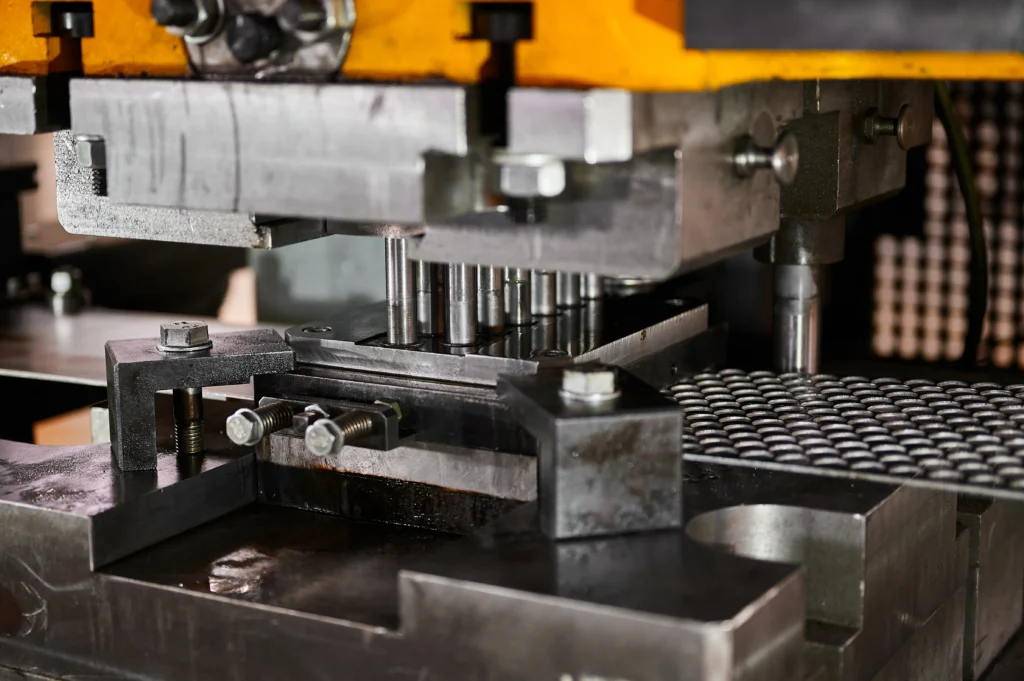
Automotive stamping supply chain diversification is no longer a secondary contingency plan—it is an operational imperative for global automotive OEMs and Tier 1 suppliers facing tariff volatility, single-region concentration, and line-down bottlenecks. Discover how strategic multi-sourcing and precision metal forming in Vietnam—supported by IATF 16949-certified facilities, advanced progressive die engineering, and duty-advantaged export corridors—empowers procurement leaders to protect vehicle assembly schedules, optimize Total Cost of Ownership (TCO), and build long-term manufacturing resilience for structural BIW, chassis, and EV platforms.
1. Automotive Stamping Supply Chain Diversification: A Strategic Guide for Global OEMs
1. Automotive Stamping Supply Chain Diversification: A Strategic Guide for Global OEMs
Automotive stamping supply chain diversification has transitioned from an operational hedge to an executive-level mandate for global original equipment manufacturers (OEMs) and Tier 1 suppliers. In an era marked by tariff volatility, geopolitical friction, and concentrated geographic risk, relying on a single production origin for structural Body-in-White (BIW), chassis, and powertrain stampings threatens production continuity and compresses operating margins.
By strategically reallocating production volume across alternative manufacturing hubs—most notably Vietnam—automotive procurement executives can build resilient, dual-track supply networks. This guide examines how global OEMs execute structural sourcing transitions, benchmark total cost of ownership (TCO), and leverage precision manufacturing hubs in Southeast Asia to protect baseline vehicle assembly lines.
1.1 Executive Summary
1.1.1 Why automotive supply chain diversification has become a strategic priority
Over-reliance on concentrated geographic corridors leaves automotive manufacturers exposed to systemic vulnerabilities. Geopolitical escalations, targeted trade tariffs (such as Section 301 duties), port congestions, and localized factory shutdowns can idle final assembly facilities within days.
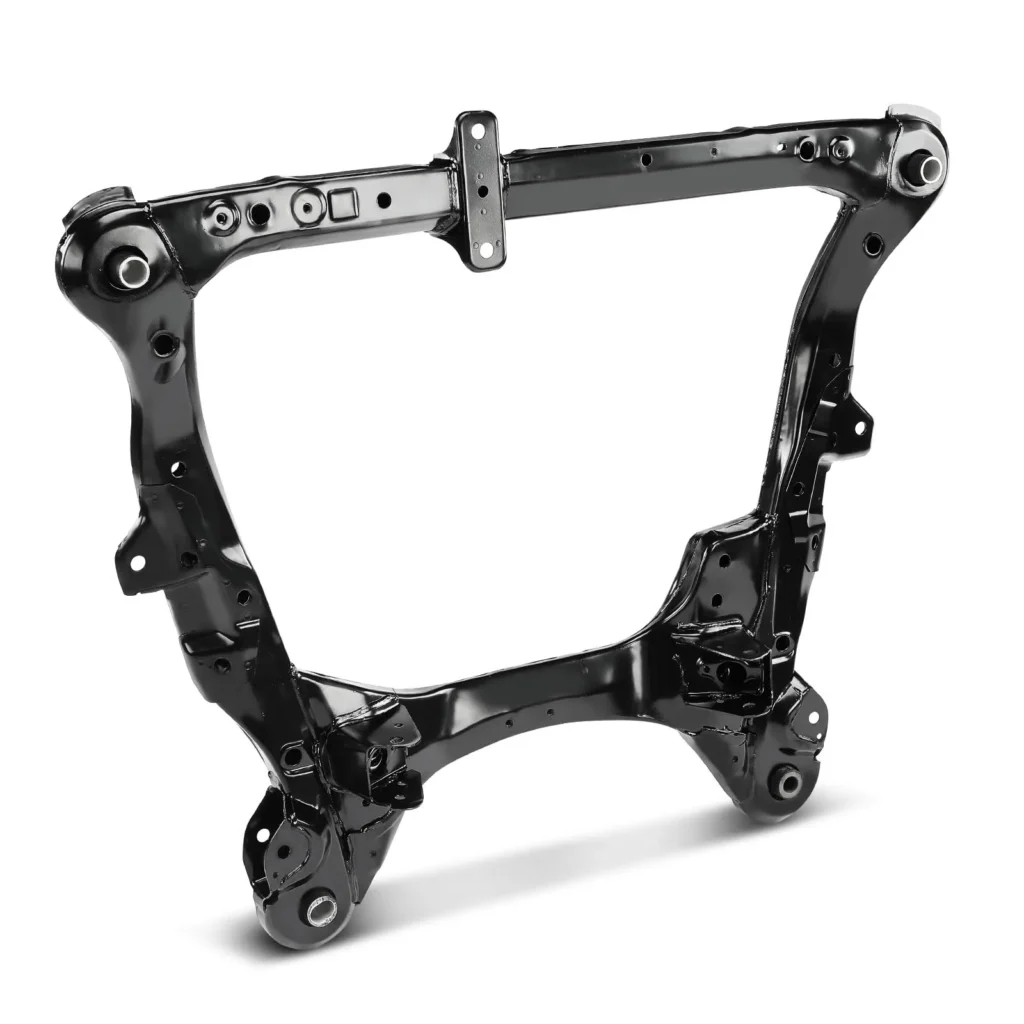
Because automotive stampings serve as structural foundations—forming vehicle frames, crossmembers, brackets, and battery enclosures—a stockout halts the entire assembly line at catastrophic daily costs. Supply chain diversification distributes production loads across politically neutral, trade-friendly territories to guarantee uninterrupted operational throughput.
1.1.2 How Vietnam supports resilient automotive sourcing
Vietnam has rapidly emerged as the premier manufacturing alternative within Southeast Asia. Supported by expansive free trade networks, competitive factor costs, and sustained industrial capital investments, the country offers a mature precision metal forming ecosystem.
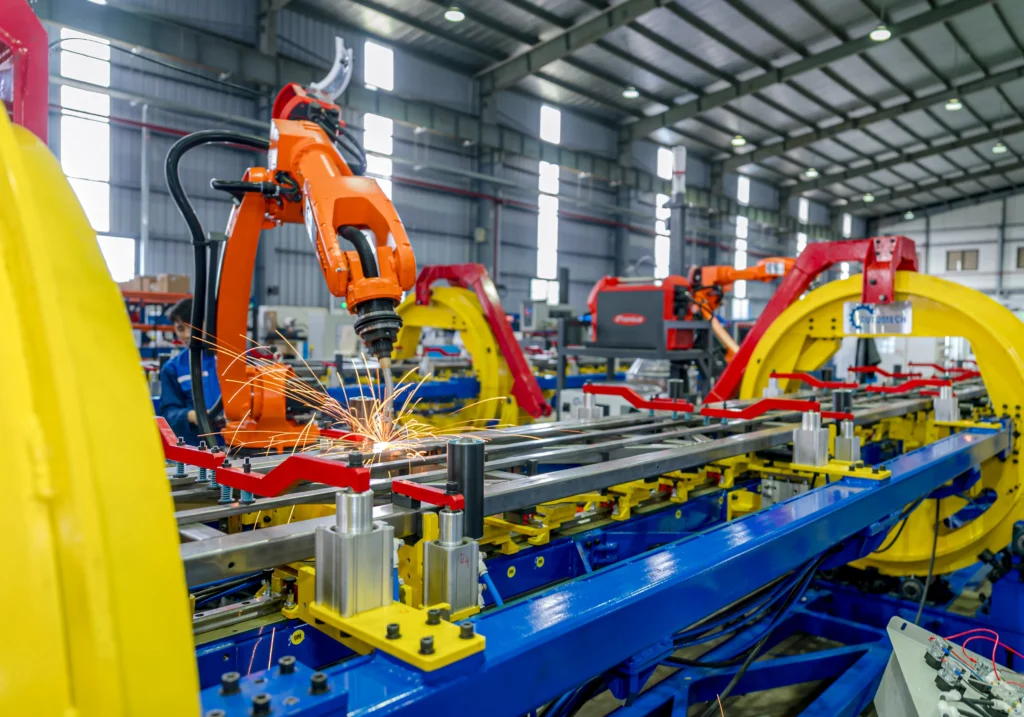
Vietnamese manufacturers provide advanced tool design, progressive die stamping, robotic welding, and automated surface treatment under stringent automotive management frameworks. Sourcing stamped assemblies from Vietnam enables OEMs to derisk from legacy regions while capturing direct labor and tariff cost savings.
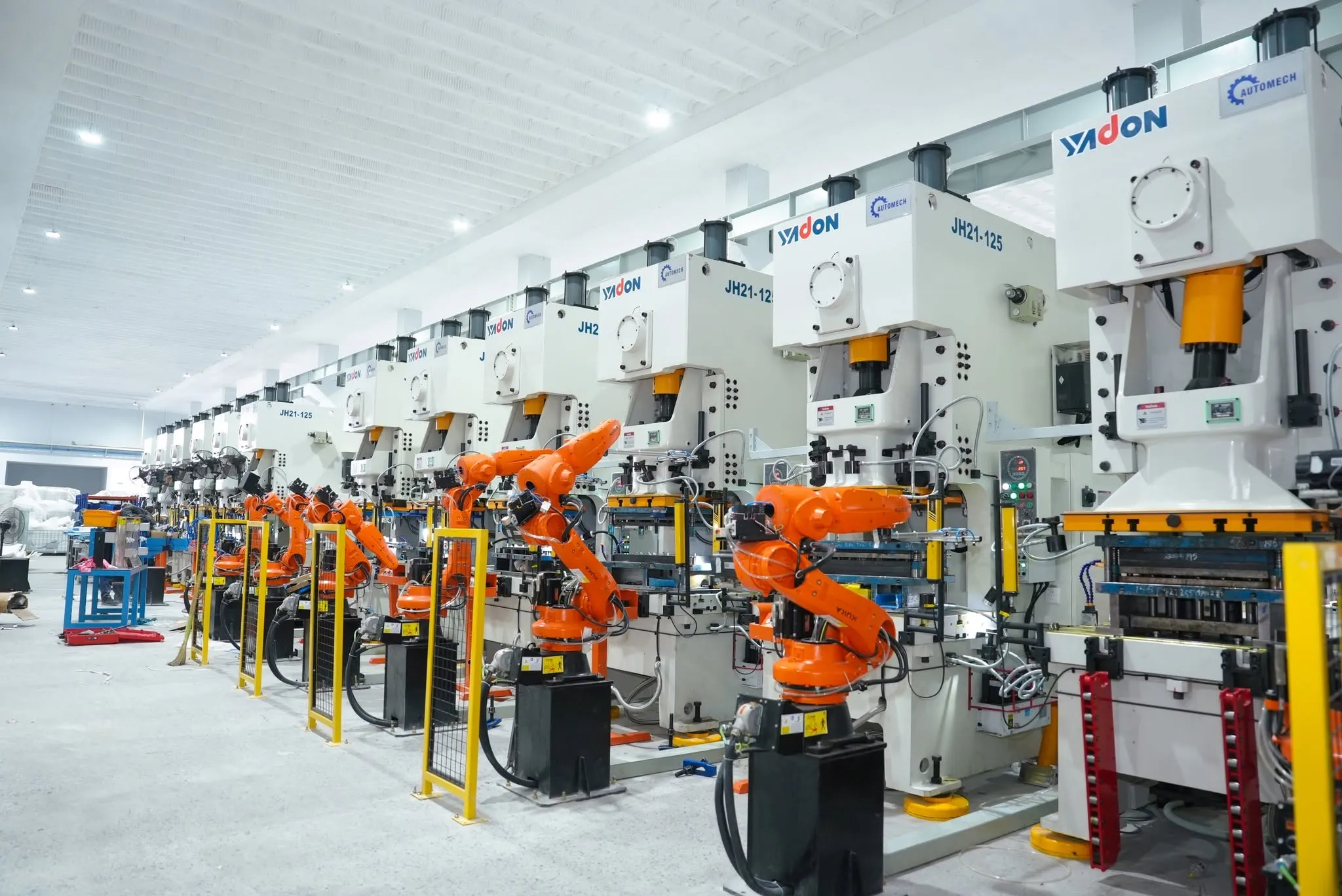
Automotive stamping supply chain diversification mitigating global risks through multi-region manufacturing hubs.
1.1.3 Key takeaways for OEM procurement teams
-
Resilience Demands Multi-Sourcing: Establishing secondary production footprints outside legacy manufacturing hubs prevents catastrophic line stoppages and stabilizes component availability.
-
TCO Extends Beyond Piece Price: Accurate supplier evaluation balances tooling amortization, duty rates, freight volatility, safety stock carrying costs, and production scrap rates.
-
Technical Compliance Is Non-Negotiable: Diversification partners must maintain active IATF 16949 certification, automated CMM validation, and full Production Part Approval Process (PPAP) Level 3 engineering support.
-
Vietnam Delivers Scale and Precision: Manufacturers like Automech bridge advanced engineering tolerances with low-risk geographic positioning for North American and European vehicle programs.
1.2 What Is Automotive Stamping Supply Chain Diversification?
1.2.1 Definition of automotive stamping supply chain diversification
Automotive stamping supply chain diversification is the strategic procurement process of distributing the design, tooling, and manufacturing of stamped metal vehicle components across multiple suppliers and geographical regions to eliminate single-point failure risks, optimize landed costs, and protect automotive assembly lines from macroeconomic disruptions.
[Legacy Model: Concentrated Sourcing]
Single Geographic Hub ──► High Tariff Risk + Bottlenecks ──► OEM Assembly Risk

[Diversified Model: Multi-Hub Sourcing]
Primary Manufacturing Hub   ──┐
                              ├─► Dual-Track Logistics ──► Resilient Assembly Continuity
Secondary Hub (e.g., Vietnam) ──┘
1.2.2 Why diversification matters for automotive OEMs
Automotive manufacturing operates on strict Just-In-Time (JIT) and Just-In-Sequence (JIS) frameworks. Unlike standard industrial hardware, structural sheet metal stampings, deep-drawn housings, and complex welded brackets cannot be substituted with off-the-shelf alternatives when disruptions occur.
Tooling lead times often span 16 to 24 weeks; therefore, sudden supplier insolvency or regional trade embargos cannot be resolved quickly. Diversification embeds operational flexibility directly into the procurement structure, allowing engineering teams to re-balance production schedules across validated production lines without program downtime.
1.2.3 Relationship between sourcing diversification and manufacturing resilience
True manufacturing resilience requires operational redundancy across design, tooling fabrication, stamping production, and export logistics. Sourcing diversification separates political and regional logistics vulnerabilities from the vehicle build schedule.
When global OEMs qualify secondary stamping suppliers in decoupled industrial markets like Vietnam, they build internal bandwidth to handle fluctuating demand cycles, absorb local raw material shocks, and maintain standard capacity utilization regardless of regional external crises.
2. Why Global OEMs Are Diversifying Automotive Stamping Supply Chains
                                  DRIVERS OF DIVERSIFICATION
                                              │
         ┌────────────────────────────────────┼────────────────────────────────────┐
         ▼                                    ▼                                    ▼
┌──────────────────┐                ┌──────────────────┐                ┌──────────────────┐
│ Global Friction  │                │ Industry Shifts  │                │ China+1 Strategy │
├──────────────────┤                ├──────────────────┤                ├──────────────────┤
│• Single-Country  │                │• EV Structural   │                │• Tariff Shielding│
│• Section 301     │                │  Components      │                │• Dual Tooling    │
│• Port Volatility │                │• Near/Friend-    │                │• Geographic Risk │
│• Escalating Wage │                │  Shoring         │                │  Arbitrage       │
└──────────────────┘                └──────────────────┘                └──────────────────┘
2.1 Global Supply Chain Challenges
2.1.1 Single-country sourcing risks
Decades of prioritizing immediate piece-price savings created excessive manufacturing concentration. When over 70% of an OEM’s structural brackets, clips, and chassis reinforcements originate within a single border, localized events—such as energy rationing, national industrial shutdowns, or regulatory freezes—threaten downstream operations worldwide.
2.1.2 Geopolitical uncertainty
Rising diplomatic friction among world powers has exposed vulnerabilities in traditional globalized supply chains. Export restrictions on critical industrial metals, heightened scrutiny of technical equipment imports, and regional security flashpoints compel automotive executives to relocate tooling assets and purchase orders into politically neutral trade zones.
2.1.3 Trade tariffs and regulatory changes
Changes in international trade agreements and escalating tariff schedules (including punitive Section 301 tariffs reaching up to 25% or higher on steel and aluminum fabrications) have permanently altered the cost equations for legacy sourcing programs. Regulatory frameworks such as the USMCA’s Rules of Origin and the European Union’s Carbon Border Adjustment Mechanism (CBAM) penalize non-compliant or tariff-burdened origins, pushing OEMs toward countries with clear, duty-advantaged bilateral treaties.
2.1.4 Logistics disruptions and freight volatility
Ocean freight markets have experienced severe fluctuations, with shipping container rates spiking across Trans-Pacific and Asia-Europe routes during periods of canal disruptions, container imbalances, and strategic chokepoint delays. A diversified logistics strategy utilizes regional shipping lanes and alternative deep-water export ports, limiting an OEM’s exposure to single-corridor carrier bottlenecks.
2.1.5 Rising manufacturing costs
Traditional manufacturing destinations have experienced sustained increases in industrial land rents, utility rates, environmental compliance taxes, and manufacturing labor wages. Without corresponding improvements in stamping efficiency, these structural cost increases erode OEM operating margins on long-term vehicle programs.
2.2 Automotive Industry Trends Driving Diversification
2.2.1 EV production expansion
The transition to electric vehicle (EV) architectures requires new stamping and structural assembly capabilities:
-
High-Capacity Battery Enclosures: Large-format aluminum stampings engineered for structural protection and thermal dissipation.
-
Lightweight Structural Components: Utilization of high-strength low-alloy (HSLA) and dual-phase steels (e.g., DP600, DP980) to maximize range while maintaining passenger compartment integrity.
-
Precision Busbar and Shielding Assemblies: Intricate copper and aluminum progressive die stampings requiring strict dimensional tolerances (within ±0.02 mm) to prevent electrical shorts.
2.2.2 Regional manufacturing strategies
Automotive OEMs are abandoning pure globalization in favor of balanced regional production models. Sourcing platforms are increasingly structured around major regional consumption hubs—the Americas, Europe, and Asia-Pacific. Sourcing stamped structural sub-assemblies from dedicated regional hubs prevents cross-ocean logistical failures from interrupting final vehicle integration.
2.2.3 Nearshoring and friend-shoring
Procurement policies prioritize trade partners with shared economic alliances and stable bilateral commitments (“friend-shoring”). By relocating supplier networks to stable nations with open economic policies, automotive firms protect multi-year capital investments in specialized progressive and transfer stamping tooling.
2.2.4 Multi-sourcing strategies for critical components
Tier 1 and Tier 2 automotive components are systematically categorized by failure criticality. High-tonnage body stampings, safety-critical seating hardware, and precision motor core laminations are shifted away from single-source supplier allocations toward balanced multi-supplier frameworks (e.g., a 70/30 or 60/40 volume distribution) across independent countries.
2.3 China+1 Manufacturing Strategy
2.3.1 What is China+1?
The China+1 strategy is a risk-mitigation framework where multinational corporations maintain core manufacturing operations within China to service its domestic market, while establishing parallel, redundant production capacity in an additional country—predominantly within Southeast Asia—to supply global export markets.
2.3.2 Benefits for automotive OEMs
-
Tariff Avoidance: Exemption from Section 301 punitive tariffs for US-bound assemblies, alongside duty-free access to EU markets via comprehensive Free Trade Agreements (FTAs).
-
Tooling Duplication and Asset Protection: Building secondary die sets outside legacy markets protects high-capital tooling assets from local regulatory freezes or geopolitical seizures.
-
Supply Continuity: Should operations in one territory face localized shutdowns, production volume can be transferred to the secondary facility without redesigning the core component.
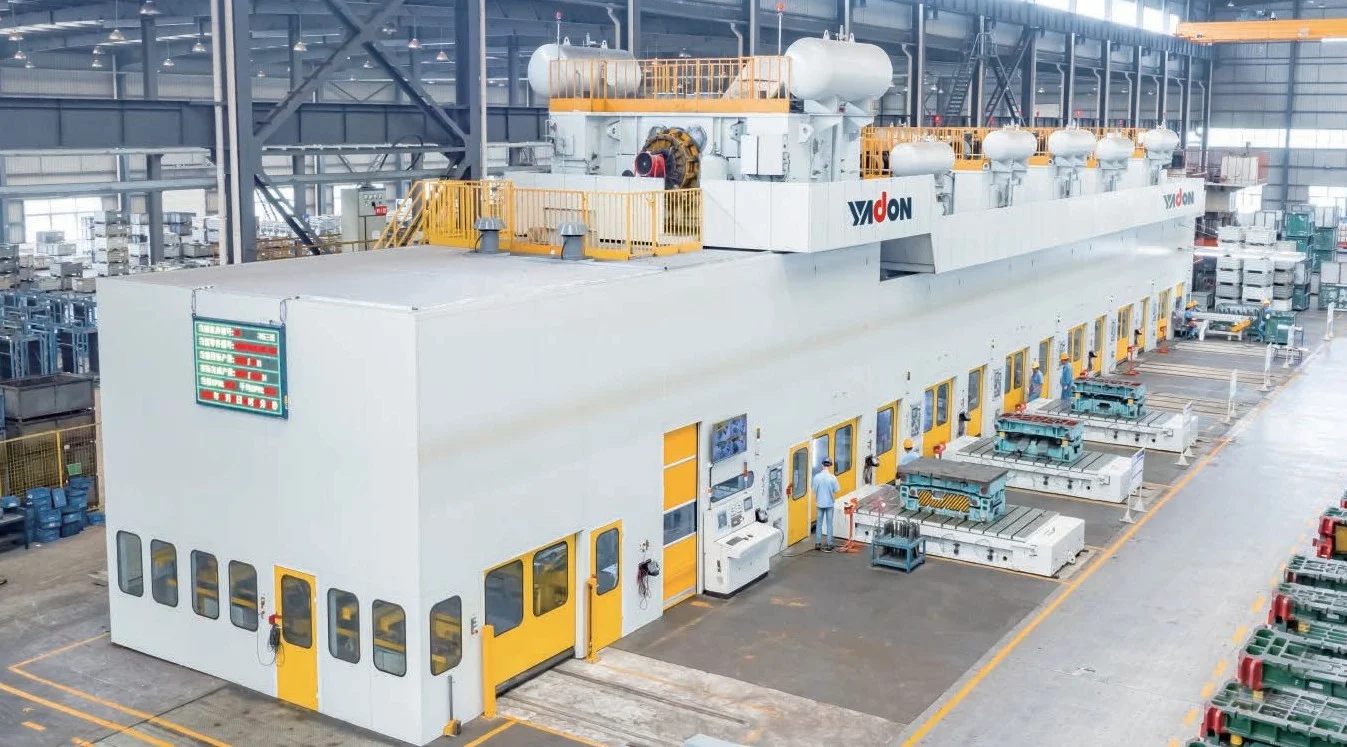
Automotive stamping supply chain diversification enhancing resilience against raw material and steel price volatility
2.3.3 Common implementation models
-
Parallel Production (Active-Active): Dual tooling sets are qualified simultaneously; the primary facility supplies 60-70% of program volume, while the secondary facility produces the remaining 30-40% to keep dies active and ready for immediate volume scale-up.
-
Component Bifurcation: High-complexity or legacy vehicle parts remain with the domestic incumbent, while next-generation platform parts, EV structural components, and export-targeted SKUs are awarded to the alternative manufacturing partner.
-
Tooling Transfer: Existing stamping dies are inspected, refurbished, and relocated to the secondary manufacturer to avoid initial tooling CapEx while immediately securing geographic diversification.
3. Why Vietnam Is Emerging as an Automotive Manufacturing Hub
                             VIETNAM MANUFACTURING ADVANTAGES
                                             │
      ┌──────────────────────┬───────────────┴──────────────┬──────────────────────┐
      ▼                      ▼                              ▼                      ▼
┌──────────────┐      ┌──────────────┐              ┌──────────────┐      ┌──────────────┐
│  FTAs & Trade│      │ Cost Profile │              │ Labor Talent │      │ Sea Corridors│
├──────────────┤      ├──────────────┤              ├──────────────┤      ├──────────────┤
│• EVFTA       │      │• 30-45% Labor│              │• STEM Skills │      │• Hai Phong   │
│• CPTPP       │      │  Savings     │              │• Precision   │      │• Cai Mep     │
│• Zero-Tariff │      │• Competitive │              │  Tooling     │      │• Direct US & │
│  Trade Blocs │      │  Power Costs │              │  Expertise   │      │  EU Routes   │
└──────────────┘      └──────────────┘              └──────────────┘      └──────────────┘
3.1 Vietnam’s Automotive Manufacturing Ecosystem
3.1.1 Growth of automotive suppliers
Vietnam’s domestic automotive manufacturing sector has matured beyond basic low-tier assembly. The establishment of domestic vehicle producers like VinFast, alongside ongoing assembly operations by Toyota, Honda, Hyundai, Ford, and Thaco, has catalyzed the expansion of an integrated supply base. Hundreds of certified Tier 2 and Tier 3 suppliers across Northern and Southern industrial corridors now produce complex stamped, molded, and machined components to global OEM standards.
3.1.2 Government support
The Vietnamese government actively prioritizes mechanical engineering and precision manufacturing as core strategic sectors. Key incentives include:
-
Corporate Income Tax (CIT) Exemptions: Preferential tax rates (down to 10% for up to 15 years) and multi-year tax holidays for high-tech and automotive supporting industry projects located within designated Industrial Zones (IZs).
-
Import Duty Waivers: Complete exemptions on raw materials, components, and specialized tooling machinery imported for export-oriented production.
-
Infrastructure Upgrades: Heavy public investment in deep-water ports, dedicated expressways connecting industrial corridors to international logistics terminals, and reliable electrical grid infrastructure.
3.1.3 Export-oriented manufacturing
Vietnam operates as one of the most open trading economies globally, boasting more than 15 active Free Trade Agreements (FTAs). Key pacts relevant to global automotive procurement include:
-
EVFTA (EU-Vietnam Free Trade Agreement): Progressively eliminates over 99% of tariffs on industrial goods, providing clear cost advantages for automotive metal components exported to European OEMs.
-
CPTPP (Comprehensive and Progressive Agreement for Trans-Pacific Partnership): Secures tariff-free trade pathways across key automotive markets including Canada, Mexico, Japan, and Australia.
-
RCEP (Regional Comprehensive Economic Partnership): Integrates regional supply networks across Southeast Asia, South Korea, Japan, and Australasia for streamlined raw material sourcing.
3.2 Competitive Advantages
3.2.1 Cost competitiveness
Vietnam provides substantial operating cost advantages compared to legacy industrial bases. Direct manufacturing labor rates remain 30% to 45% lower than coastal manufacturing regions in China, and significantly below European and North American domestic baselines. Industrial power rates, plant leasing costs, and secondary processing overhead remain stable, enabling lower overall transformation costs for high-tonnage sheet metal stamping projects.
3.2.2 Skilled manufacturing workforce
Vietnam’s demographic profile provides a young, technically literate labor pool. High enrollment in technical universities and specialized vocational training programs delivers thousands of qualified mechanical engineers, CNC programmers, tool and die makers, and quality assurance specialists annually. This talent base supports advanced manufacturing standards, including automated CAD/CAM die development, complex tooling builds, and in-line statistical process control.
3.2.3 Expanding industrial infrastructure
Modern industrial parks across provinces such as Bac Ninh, Hai Duong, Hai Phong, Vinh Phuc, and Binh Duong are purpose-built for heavy mechanical manufacturing. These facilities feature heavy-duty reinforced foundations, stable high-voltage power grids, specialized wastewater treatment plants for metal plating and finishing, and rapid transit access to export gateways.
3.2.4 Strategic geographic location
Positioned along major international shipping routes with over 3,200 kilometers of coastline, Vietnam provides immediate maritime connectivity to the world’s most active trade lanes. Modern deep-sea ports—such as Lach Huyen in Hai Phong (Northern Vietnam) and Cai Mep-Thi Vai (Southern Vietnam)—support direct container vessel calls to the US West Coast and Europe without intermediate transshipment, reducing transit schedules and mitigating intermodal damage risks.
3.3 Vietnam vs China for Automotive Stamping Sourcing
3.3.1 Comparison Table
| Evaluation Parameter | Vietnam Manufacturing Hub | Legacy China Hub | Strategic Sourcing Impact |
| Direct Labor Costs | Highly competitive (approx. $2.50–$4.00/hour) | Increasing ($5.50–$8.50+/hour) | Direct piece-price reduction on labor-intensive progressive stampings and secondary assemblies. |
| Tariff Exposure (US Export) | Standard MFN tariffs (0% to 3.5% on typical stamped steel assemblies) | Section 301 punitive tariffs (up to 25% additional duty) | Immediate 20–25% landed cost savings at US ports of entry. |
| Trade Agreements (EU Export) | Direct duty-free access via active EVFTA provisions | Standard non-preferential duties apply | Progressive tariff elimination optimizes landed margins for European OEMs. |
| Geopolitical Risk Profile | Neutral diplomatic posture; stable global trade ties | Elevated trade tensions, regulatory volatility, export friction | Substantially lower risk of sudden cross-border shipping halts or sanctions. |
| Tooling & Die Fabrication | Rapidly advancing; high-precision domestic tooling | Mature, highly developed internal tooling infrastructure | Vietnam offers lower overall tooling amortization; complex progressive dies require thorough DFM audit. |
| Raw Material Availability | Expanding domestic mills (e.g., Hoa Phat, Formosa) + open import tariffs | Comprehensive, highly integrated domestic raw steel/aluminum ecosystem | Procurement teams verify raw material mill certificates (MTCs) and import channels for specialized alloys. |
| IATF 16949 Penetration | Rapidly expanding among export-focused tier suppliers | Widespread, standard across tier suppliers | Supplier vetting must audit active automotive-specific certifications and PPAP compliance. |
4. Automotive Metal Stamping Capabilities in Vietnam
                             MANUFACTURING PROCESS FLOW
                                         │
        ┌────────────────────────────────┼────────────────────────────────┐
        ▼                                ▼                                ▼
┌──────────────────┐           ┌──────────────────┐           ┌──────────────────┐
│ Core Stamping    │           │ Secondary Ops    │           │ Tooling & Die    │
├──────────────────┤           ├──────────────────┤           ├──────────────────┤
│• Progressive Die │           │• Robotic Spot /  │           │• In-House CAD/CAM│
│• Deep Drawing    │   ───►    │  MIG Welding     │   ───►    │• Wire EDM / CNC  │
│• Precision Blank │           │• E-Coat / Zinc   │           │• Die Maintenance │
│• High-Tonnage    │           │• Automated Tap   │           │• Life Cycle Logs │
└──────────────────┘           └──────────────────┘           └──────────────────┘
4.1 Core Manufacturing Processes
4.1.1 Sheet metal stamping
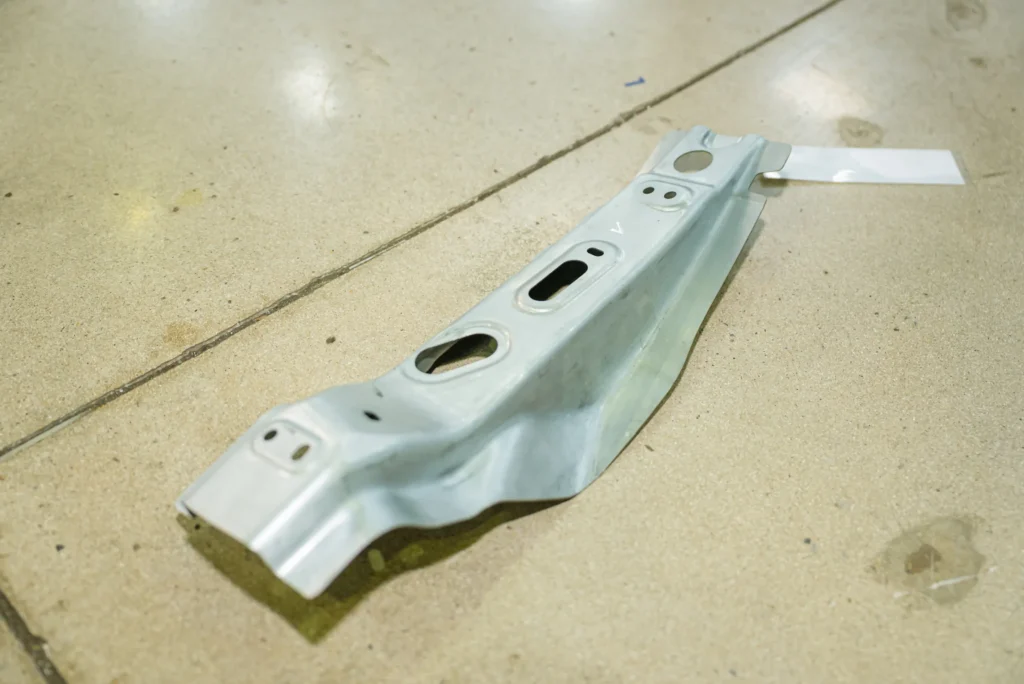
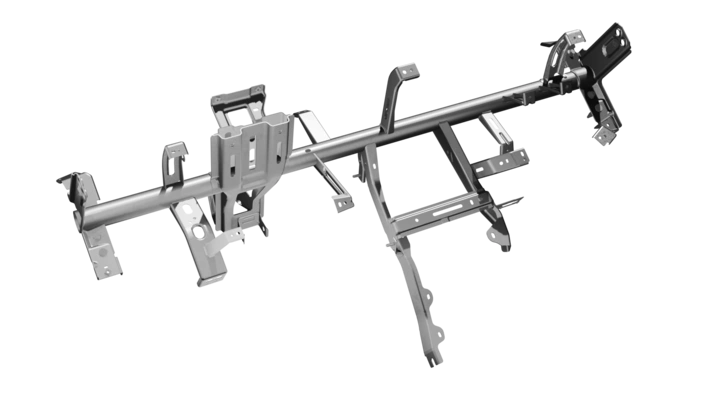
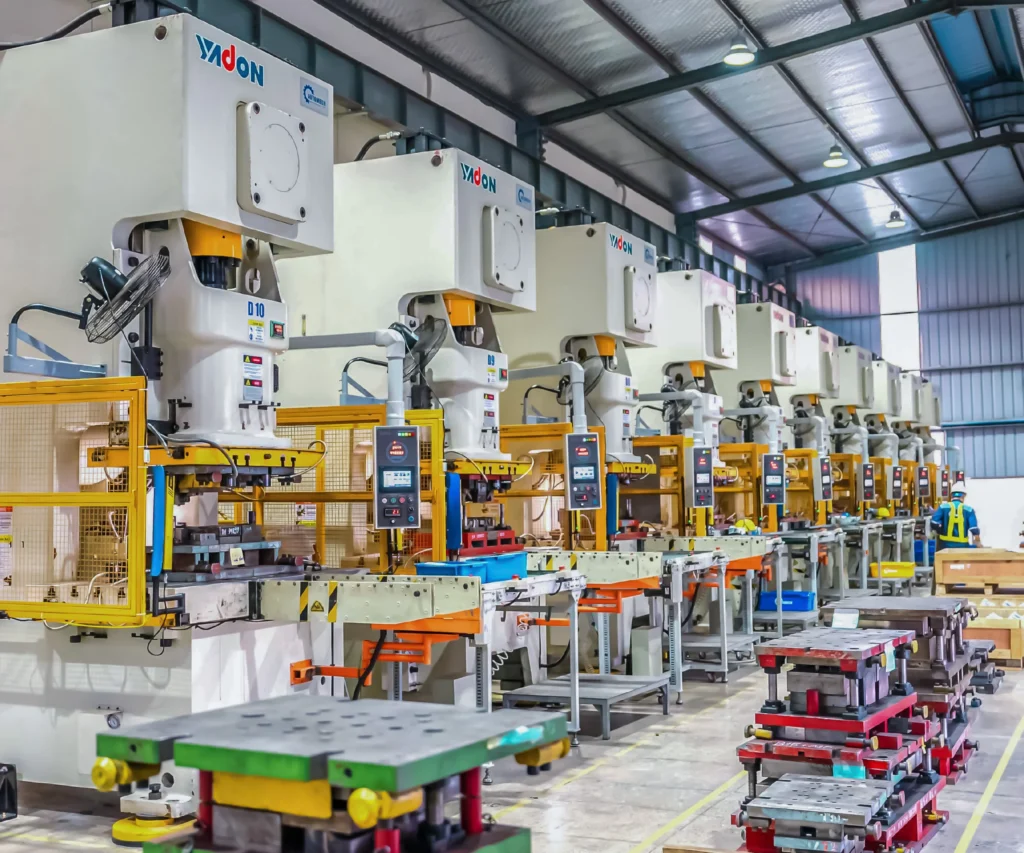
Modern Vietnamese stamping plants house high-tonnage mechanical, hydraulic, and servo stamping presses ranging from 160 tons to 1,200+ tons. These press lines handle standard mild steels, pre-galvanized sheet, structural stainless steels, and aluminum alloys for a broad array of Body-in-White (BIW) brackets, crossmembers, reinforcing plates, and seat frame components.
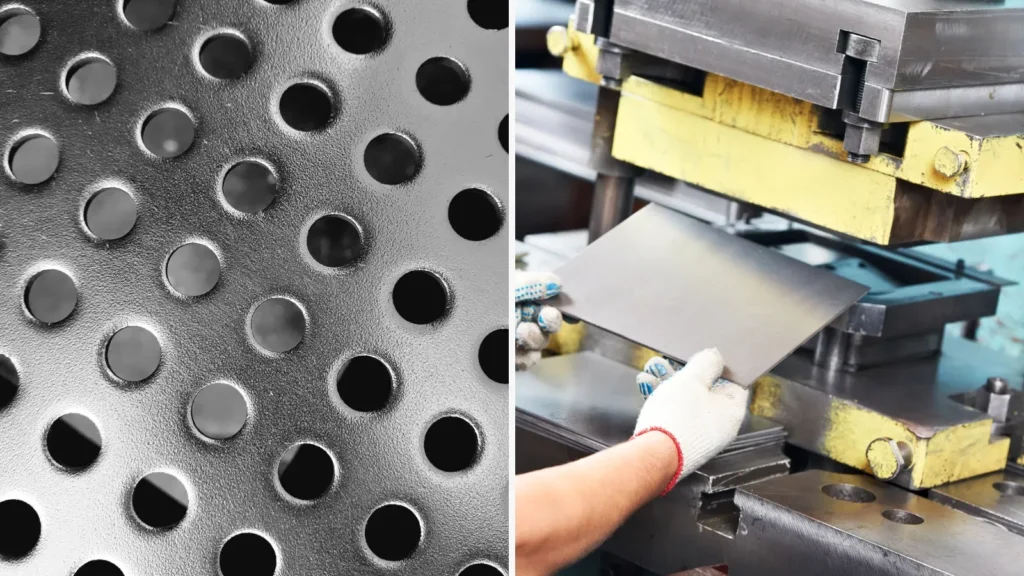
4.1.2 Precision metal stamping
Precision stamping facilities maintain tight dimensional controls for safety-critical and electro-mechanical automotive assemblies:
-
Tolerances: Sustained execution within ±0.02 mm to ±0.05 mm across critical features.
-
Component Types: Electronic connector pins, lead frames, anti-vibration retainers, sensor brackets, and busbars for high-voltage EV distribution.
-
Material Thicknesses: Ranging from ultra-thin strip stock (0.15 mm) to heavy structural sheet (6.0 mm+).
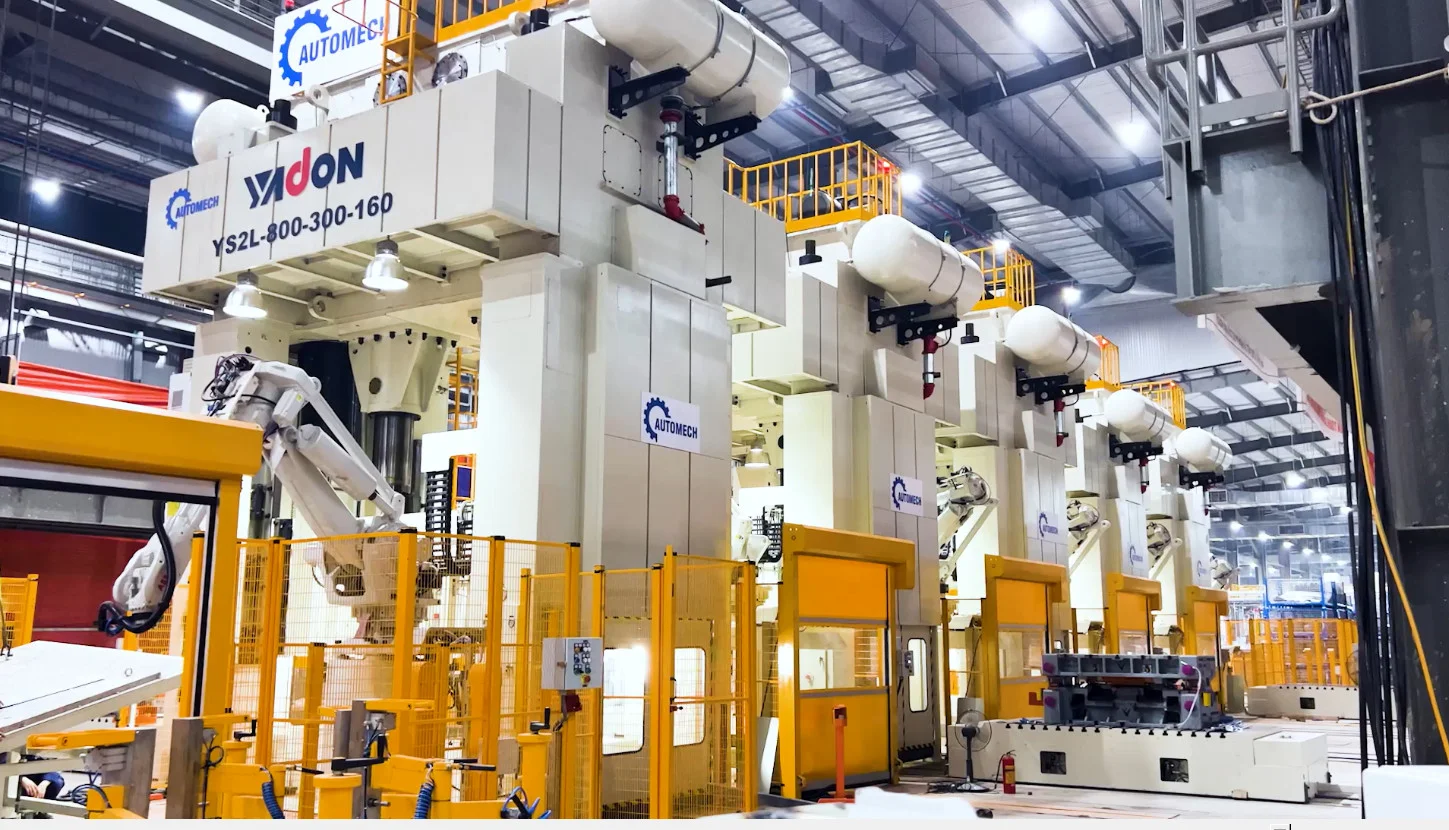
Automotive stamping supply chain diversification integrating local press shops to significantly reduce lead times.
4.1.3 Progressive die stamping
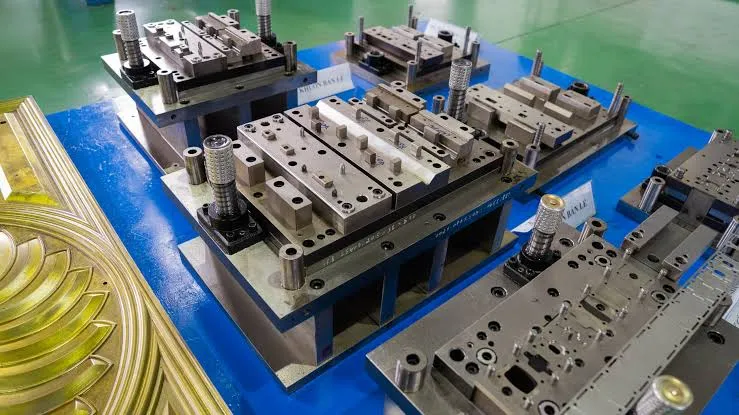
For high-volume automotive production (annual volumes exceeding 100,000 to 1,000,000 units), progressive die stamping delivers maximum cycle efficiency and consistency. Strip stock feeds through multiple sequential stations—piercing, notching, bending, forming, and blanking—within a single integrated tool. Automated coil handling, straighteners, and acoustic tonnage monitors ensure consistent cycle times of 40 to 120 strokes per minute (SPM).
4.1.4 Deep drawing
Deep drawing operations produce seamless, hollow cylindrical or box-shaped components where the depth dimension exceeds the overall diameter:
-
Applications: Fuel system housings, hydraulic reservoir canisters, motor enclosures, and oil pans.
-
Engineering Control: Precise servo-press blank-holder pressure control prevents material wrinkling, thinning, and fracture in specialized draw steels (e.g., DC04, DC06, aluminum 5000/6000 series).
4.1.5 Forming and bending
Advanced press brake automation and custom multi-slide bending systems process structural profiles requiring non-linear geometries. In-die sensors monitor material springback—a critical factor when forming Advanced High-Strength Steels (AHSS) such as DP600 and DP980—to ensure final bend profiles strictly meet 3D CAD geometries.
4.2 Secondary Manufacturing Processes
4.2.1 Welding assembly
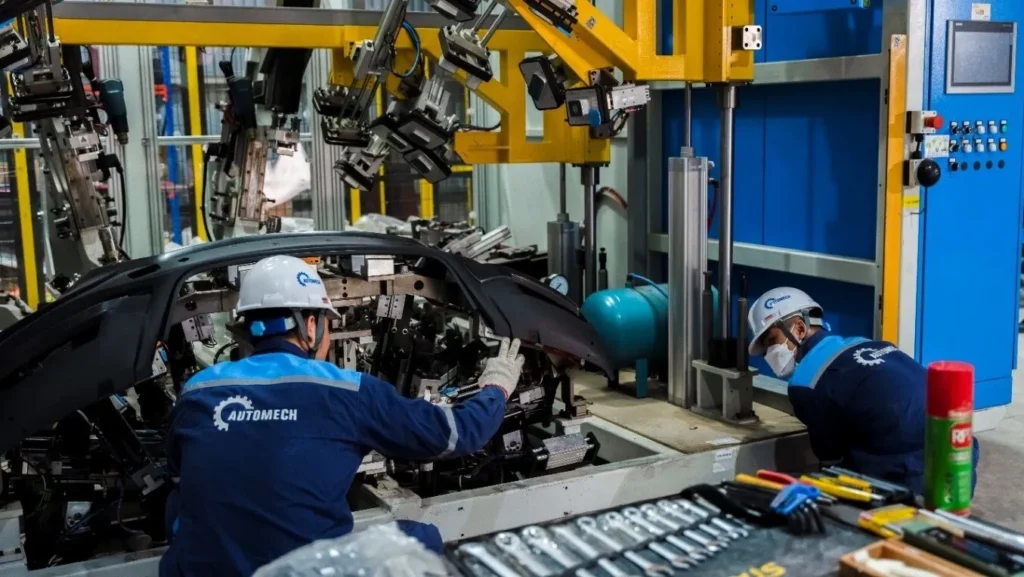
Single stamped components are frequently joined into structural sub-assemblies before shipping. Vietnamese Tier-level suppliers integrate automated welding cells:
-
Robotic Resistance Spot Welding: Used for multi-layer sheet metal joining on BIW brackets with real-time weld current and displacement monitoring.
-
Robotic GMAW / MIG / TIG Welding: Delivers high-integrity structural seams on suspension members, seat crossbars, and chassis components.
-
Projection / Nut Welding: High-speed integration of threaded fasteners, studs, and standoffs with automatic push-out and torque verification.
[Raw Coil / Strip] ──► [Progressive Stamping] ──► [Automated Deburring]
                                                        │
[Final Inspection] ◄── [Surface Treatment]    ◄── [Robotic Welding]
4.2.2 Deburring
Eliminating sharp edges, micro-burrs, and blanking fractures is vital for component fatigue life and assembly safety. Processing includes automated vibratory tumbling, centrifugal barrel finishing, rotary brush deburring, and thermal deburring to achieve smooth Edge Radius (R) specifications.
4.2.3 Tapping
In-die mechanical and servo tapping units, alongside secondary multi-spindle CNC tapping machines, cut or form internal threads from M2.5 to M16. In-line thread-presence sensors and optical inspection cameras verify thread integrity and pitch correctness on 100% of parts prior to downstream assembly.
4.2.4 Surface treatment
Automotive stampings require robust corrosion resistance capable of withstanding 240 to 1,000+ hours of ASTM B117 salt spray exposure without base-metal oxidation. Certified finishes include:
-
Cathodic Electrodeposition (E-Coat): High-uniformity corrosion barriers for structural BIW components.
-
Zinc and Zinc-Nickel Plating: Electroplated finishes with trivalent passivates and protective sealers conforming to OEM specifications and RoHS/REACH directives.
-
Phosphate and Powder Coating: Heavy-duty abrasion barriers for exposed chassis, suspension, and underbody components.
4.2.5 Final assembly
Beyond simple metal forming, contract manufacturers handle complete mechanical sub-assemblies. This includes integrating rubber vibration-isolation bushings, installing press-fit dowels, crimping stamped clips, and packing components directly into OEM-specified returnable dunnage.
4.3 Tooling Capability
                               TOOLING LIFECYCLE MANAGEMENT
                                             │
      ┌──────────────────────┬───────────────┴──────────────┬──────────────────────┐
      ▼                      ▼                              ▼                      ▼
┌──────────────┐      ┌──────────────┐              ┌──────────────┐      ┌──────────────┐
│  CAD/CAM DFM │      │ Precision Fab│              │ Tryout Press │      │ Preventative │
├──────────────┤      ├──────────────┤              ├──────────────┤      ├──────────────┤
│• AutoForm    │      │• Wire EDM    │              │• CMM Layout  │      │• Shot Count  │
│  Simulation  │      │• High-Speed  │              │• Strip Map   │      │  Tracking    │
│• Springback  │      │  CNC Machining│             │  Approval    │      │• Sharpening  │
│  Analysis    │      │• D2/SKD11/   │              │• 300-Piece   │      │  Protocols   │
│              │      │  Carbide     │              │  Run         │      │              │
└──────────────┘      └──────────────┘              └──────────────┘      └──────────────┘
4.3.1 Tool and die manufacturing
High-volume stamping success depends directly on die design and construction. Leading suppliers in Vietnam maintain in-house toolrooms equipped with precision equipment:
-
Machining Centers: High-speed 3-axis and 5-axis CNC vertical machining centers (Makino, Mazak, OKK).
-
Electrical Discharge Machining: Submerged wire EDM units (Sodick, Fanuc) delivering cut tolerances down to ±0.003 mm.
-
Precision Surface Grinding: Optical profile grinders capable of achieving mirror surface finishes (Ra < 0.2 µm) on complex forming inserts.
4.3.2 Progressive die development
Engineers build multi-station progressive dies utilizing premium imported tool steels:
-
Die Steels: D2, SKD11, DC53, and powder-metallurgy steels (Vanadis, CPM) heat-treated and vacuum-tempered to 58–62 HRC.
-
High-Wear Punches and Bushings: Fine-grain tungsten carbide inserts utilized on high-friction punching and coining stations to sustain die life past 1,000,000 cycles.
-
Standard Tooling Components: Guide pins, bushings, nitrogen gas springs, and mechanical lifters sourced from verified global brands (Misumi, Fibro, Dayton).
4.3.3 Tool maintenance
Preventative maintenance protocols preserve tooling accuracy throughout multi-year production programs:
-
Tool Life Tracking: Press counters track stroke counts against scheduled maintenance intervals.
-
Scheduled Refurbishment: Periodic disassembly, ultrasonic cleaning, punch re-sharpening, micro-polishing, and gas spring pressure verification every 50,000 to 100,000 strokes.
-
Emergency Response: On-site toolroom staff provide immediate repair capabilities, replacing wear components within hours rather than days.
4.3.4 Engineering support
Domestic engineering groups utilize specialized design software:
-
CAD/CAM: Siemens NX, SolidWorks, CATIA for Class-A component and die design.
-
Forming Simulation: AutoForm and Dynaform software for finite element forming analysis, identifying draw thinning, localized strain, wrinkling, and springback before steel cutting begins.
5. Quality Requirements for Automotive Stamping Suppliers
5.1 Automotive Quality Management Systems
┌────────────────────────────────────────────────────────────────────────┐
│                        IATF 16949 FRAMEWORK                           │
├───────────────────────────────────┬────────────────────────────────────┤
│         Core Tools (APQP)         │       Continuous Improvement       │
├───────────────────────────────────┼────────────────────────────────────┤
│ • PPAP Level 1–5 Submissions      │ • Kaizen Root Cause Analysis       │
│ • DFMEA & PFMEA Failure Modeling  │ • 8D Corrective Action Reporting   │
│ • Measurement Systems (MSA/Gage)  │ • Scrap and Energy Minimization    │
│ • Statistical Process (SPC / Cpk) │ • Gemba Waste Reductions           │
└───────────────────────────────────┴────────────────────────────────────┘
5.1.1 ISO 9001
ISO 9001 serves as the baseline quality system foundation, validating that an organization enforces structured document control, management review, standardized operating procedures (SOPs), and systematic customer satisfaction protocols.
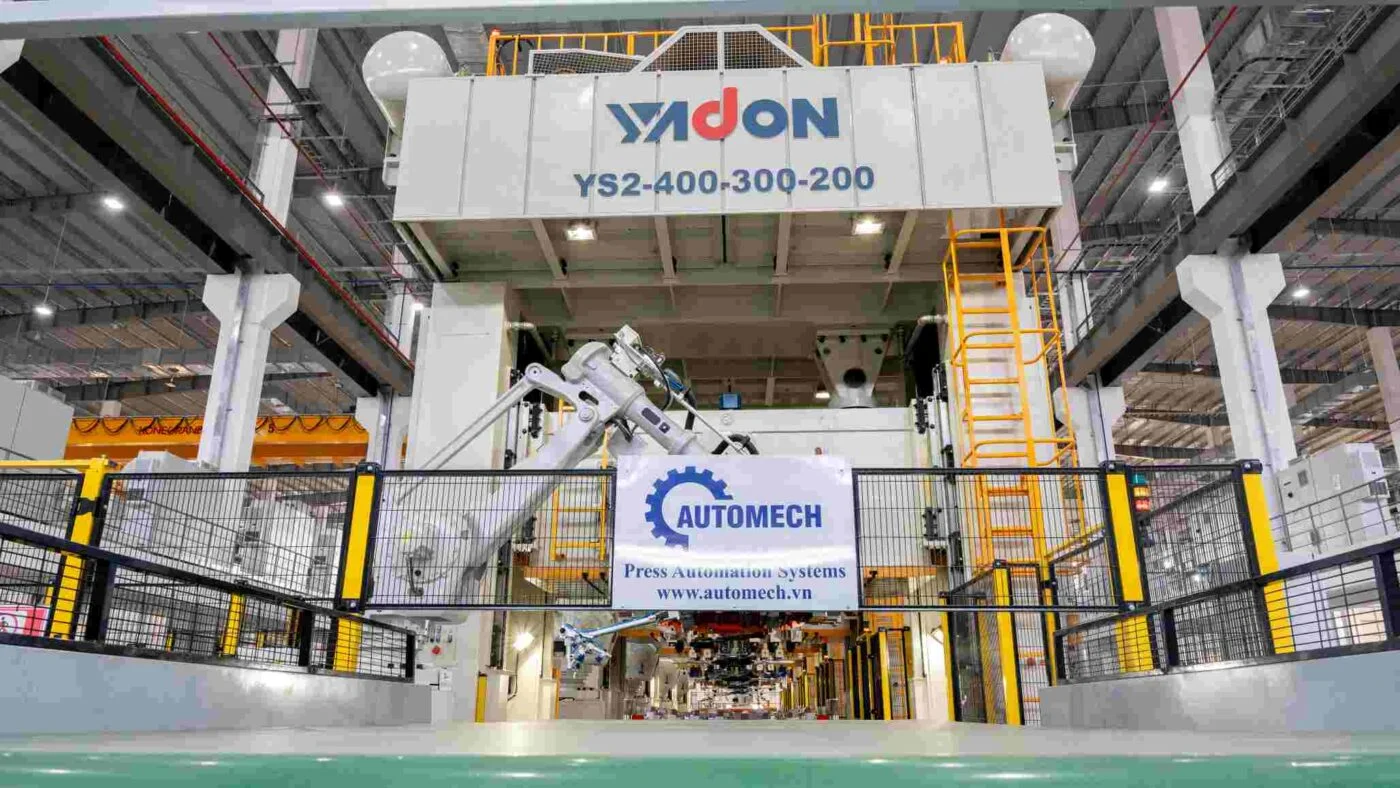
Automotive stamping supply chain diversification balancing tier-1 and tier-2 supplier networks for critical metal components
5.1.2 IATF 16949
The definitive quality standard for the international automotive supply chain. IATF 16949 integrates ISO 9001 with automotive-specific requirements focused on defect prevention, supply chain variation reduction, and scrap minimization. Tier 1 OEMs require suppliers to hold active IATF 16949 certification issued by an accredited third-party registrar.
5.1.3 Continuous improvement systems
Suppliers must demonstrate active Kaizen methodologies, Lean Manufacturing disciplines, and structured problem-solving frameworks—such as 8D (Eight Disciplines), 5-Why root-cause analysis, and Ishikawa (Fishbone) diagrams—to rapidly address and prevent quality escapes.
5.2 Core Automotive Quality Processes
5.2.1 PPAP (Production Part Approval Process)
Automotive suppliers must provide complete PPAP documentation—typically at Level 3 (the automotive industry benchmark)—including:
-
Dimensional inspection results covering all drawing characteristics.
-
Material Test Reports (MTRs) and mill test certificates verifying chemistry and mechanical properties.
-
Qualified Part Submission Warrants (PSW) signed by quality management.
5.2.2 APQP (Advanced Product Quality Planning)
A structured framework used to define and execute the development steps necessary to ensure a product satisfies the customer. Spanning five phases—from concept design through tooling fabrication to full mass-production launch—APQP ensures that engineering risks are mitigated prior to press run approval.
5.2.3 FMEA (Failure Mode and Effects Analysis)
-
DFMEA (Design FMEA): Evaluates risk associated with product geometry and material selection when the supplier holds design ownership.
-
PFMEA (Process FMEA): Systematically analyzes each stamping, piercing, washing, and welding station to identify potential process failures, assigning Severity (S), Occurrence (O), and Detection (D) ratings to derive Action Priorities (AP).
5.2.4 Control Plan
A living document describing the inspection systems, measuring tools, sampling frequencies, and reaction plans required at every production phase—from incoming coil slit inspection to final dunnage packaging.
5.2.5 Traceability
Complete forward and backward lot traceability must be maintained:
-
Raw Material: Traceability linking the finished stamping to the master coil heat number and chemical test report.
-
Production Operations: Shift, machine ID, operator, die number, and maintenance logs.
-
Part Marking: Micro-percussion, dot-peen, or laser-etched 2D Data Matrix QR codes marked directly onto critical structural stampings.
5.3 Inspection and Validation
5.3.1 CMM inspection
Quality assurance labs rely on high-precision Coordinate Measuring Machines (CMM—Hexagon, Zeiss) with tactile scanning probes and laser line scanners. CMMs evaluate complex spatial coordinates, true positions, profile tolerances, and GD&T callouts in temperature-controlled (20°C ± 1°C) metrology laboratories.
METROLOGY & PROCESS CONTROL GATES
├── 1. Incoming: Optical Spectrometry (Material Composition) & Tensile Testing
├── 2. First Article: Full 3D CMM Layout Inspection against Native CAD
├── 3. In-Line: Vision Systems & Go/No-Go Attribute Checking Fixtures
└── 4. Real-Time SPC: Automated X-bar / R Charts Tracking Key Control Dimensions
5.3.2 First Article Inspection (FAI)
Before initiating any mass-production stamping run, quality engineers execute full FAI protocols. Technicians verify initial blanks against the engineering print, signing off on setup parameters only after every dimension falls comfortably within the specification limits.
5.3.3 SPC monitoring
Critical-to-Quality (CTQ) characteristics are tracked in real time using Statistical Process Control (SPC). Suppliers track process capability metrics:
-
Cp / Cpk: Measuring long-term process centering and dispersion (automotive standard: Cpk ≥ 1.33 for standard dimensions; Cpk ≥ 1.67 for safety-critical dimensions).
-
Pp / Ppk: Measuring initial short-term process performance during pilot PPAP runs.
5.3.4 Dimensional verification
Dedicated attribute checking fixtures and custom Go/No-Go profile gauges evaluate contour profiles and hole positions directly on the shop floor. Optical 3D non-contact scanners (GOM / Zeiss ATOS) provide comprehensive color-map surface deviation analyses, comparing physical stampings against master CAD geometry.
6. How to Build a Resilient Automotive Stamping Supply Chain
6.1 Multi-Sourcing Strategy
               BALANCED PRODUCTION SOURCING ALLOCATION
                                 │
        ┌────────────────────────┴────────────────────────┐
        ▼                                                 ▼
┌───────────────────────────────┐ ┌───────────────────────────────┐
│  Primary Supplier (60–70%)    │ │  Secondary Supplier (30–40%)  │
├───────────────────────────────┤ ├───────────────────────────────┤
│ • Base platform volume        │ │ • Surge buffer capacity       │
│ • Long-term production run    │ │ • Redundant qualified tooling │
│ • Core regional consumption   │ │ • Export-market de-risking    │
└───────────────────────────────┘ └───────────────────────────────┘
6.1.1 Primary supplier
The primary manufacturing partner typically absorbs 60% to 70% of the aggregate platform volume. This supplier provides consistent, high-volume production, capturing core scale economies and stabilizing long-term unit production costs.
6.1.2 Secondary supplier
The secondary manufacturer produces the remaining 30% to 40% of baseline volume. Crucially, the secondary facility operates fully qualified, production-ready stamping dies and welding fixtures. Should the primary partner experience an operational outage, the secondary plant can ramp its press lines to 100% capacity within days, preventing downstream vehicle assembly disruptions.
6.1.3 Regional supplier diversification
A balanced global sourcing matrix avoids grouping primary and secondary suppliers within the same geopolitical sphere or maritime corridor. By pairing an Asian manufacturing hub (e.g., Vietnam) with a domestic or nearshore partner (e.g., Mexico or Eastern Europe), an OEM creates balanced insulation against localized tariffs, regional political disputes, and maritime chokepoint delays.
6.2 Supplier Qualification Process
6.2.1 Technical capability assessment
Engineering teams conduct rigorous technical audits of prospective stamping facilities:
-
Evaluation of press bed sizes, stroke lengths, tonnage curves, and coil feed capacities.
-
In-house die maintenance infrastructure and wire EDM/CNC tooling support capabilities.
-
In-line automated error-proofing (Poka-Yoke), including optical part detection and slug-drop sensors.
6.2.2 Production capacity evaluation
A detailed Overall Equipment Effectiveness (OEE) analysis establishes true capacity utilization:
-
Review of active press utilization rates, shift patterns, and changeover efficiencies (SMED).
-
Verification of facility expansion capacity and floor space for additional stamping presses or welding cells.
-
Audit of backup power systems to ensure manufacturing continuity during local utility disruptions.
6.2.3 Financial stability
Procurement executives audit financial statements, balance sheets, and working capital reserves to confirm that the supplier can finance raw coil inventory, fund ongoing tooling maintenance, and absorb macroeconomic volatility without defaulting on production schedules.
6.2.4 Export capability
The supplier must demonstrate verified experience managing international shipments:
-
Mastery of international maritime trade practices, customs clearance documentation, and ocean freight logistics.
-
Proven compliance with international packaging regulations (anti-corrosion protection, certified export pallets).
-
Dedicated English-speaking technical project management teams capable of managing engineering change orders (ECOs) across international time zones.
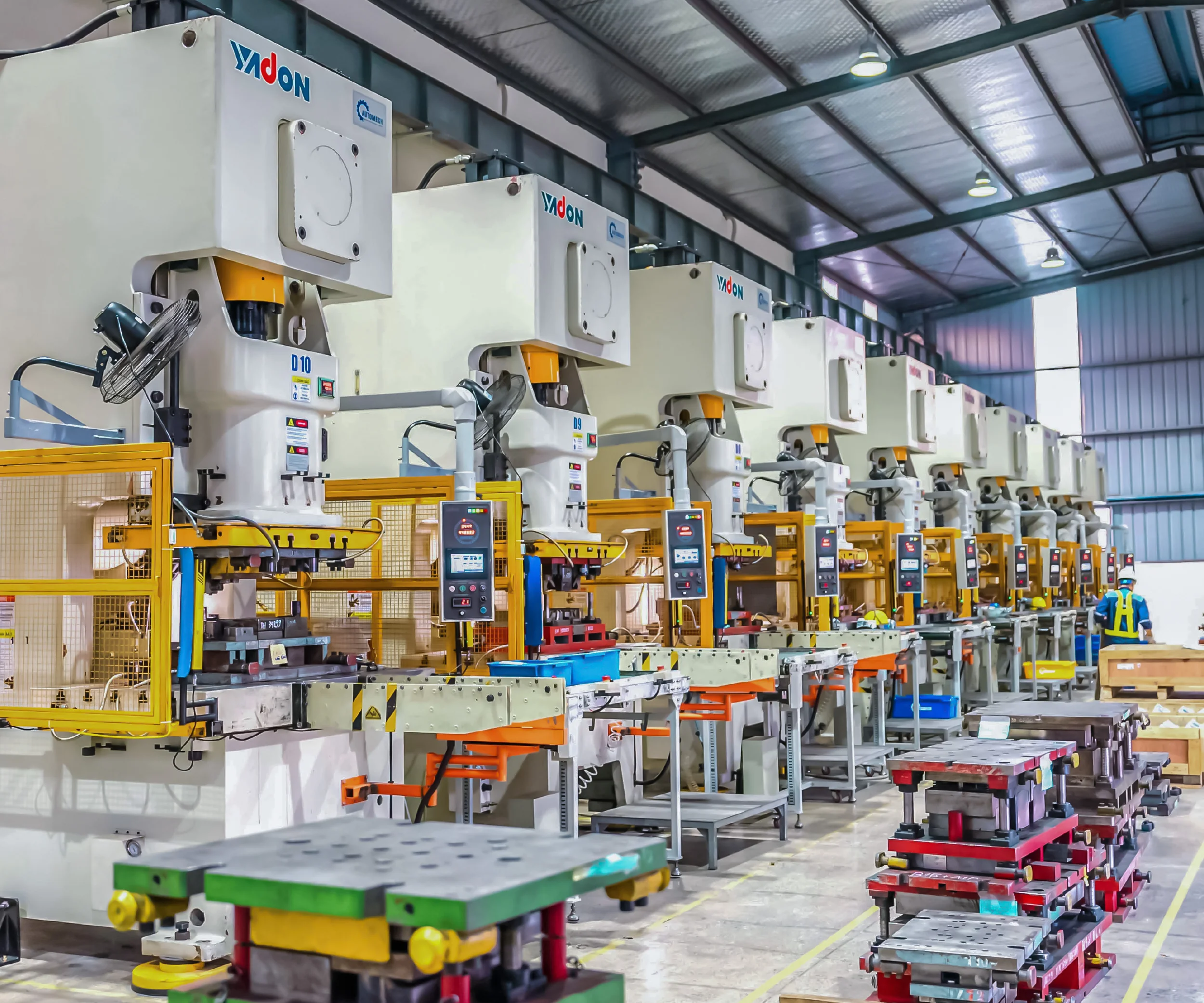
Automotive stamping supply chain diversification leveraging nearshoring strategies specifically for body-in-white (BIW) parts
6.2.5 Sustainability assessment
Tier 1 OEMs increasingly evaluate environmental, social, and governance (ESG) metrics:
-
ISO 14001 Environmental Management Systems certification.
-
Scrap metal recycling channels and waste-stream segregation protocols.
-
Greenhouse gas tracking and utilization of renewable energy (such as industrial rooftop solar installations).
6.3 Supply Chain Risk Management
6.3.1 Capacity planning
Robust supply chain frameworks implement dynamic Rough-Cut Capacity Planning (RCCP) alongside formal Sales and Operations Planning (S&OP). Suppliers and buyers maintain transparent electronic capacity tracking, ensuring press tonnage, feed equipment, and welding robot availability are reserved against 12-month rolling customer demand forecasts.
6.3.2 Inventory optimization
To balance lean Just-In-Time (JIT) objectives with global ocean logistics timelines, procurement teams employ strategic inventory buffers:
-
Vendor Managed Inventory (VMI): The supplier maintains safety stock buffers (typically 30 to 60 days of finished goods) at a local warehouse near the OEM’s assembly plant.
-
Consignment Inventory: Components remain on the supplier’s balance sheet until consumed on the OEM assembly line, lowering buyer carrying costs while guaranteeing immediate stock availability.
6.3.3 Lead time reduction
Compressing order-to-delivery cycles requires streamlining every step of the value chain:
-
Standardizing die change processes via Single-Minute Exchange of Die (SMED) techniques (targeting under 10-minute setup times).
-
Maintaining pre-cut raw material coil inventory at the stamping facility.
-
Establishing bonded warehousing arrangements to accelerate export customs clearances.
6.3.4 Business continuity planning
Suppliers must present verified Business Continuity Plans (BCP) addressing disaster recovery:
-
Redundant tooling capabilities across duplicate press lines within the plant.
-
Alternative power generation systems to maintain uninterrupted operations during grid outages.
-
Secondary raw material supply lines with approved secondary steel and aluminum mills.
7. Automotive Procurement Considerations
7.1 Total Cost of Ownership (TCO)
Evaluating stamping sourcing purely by piece price often introduces hidden costs. An accurate decision model assesses the complete Total Cost of Ownership (TCO):
                       TOTAL COST OF OWNERSHIP (TCO)
 ┌────────────────────────────────────────────────────────────────────────┐
 │ [Direct Manufacturing Costs]                                           │
 │   • Raw Material (Slit Coil / Plate) + Transformation Energy + Labor   │
 ├────────────────────────────────────────────────────────────────────────┤
 │ [Tooling CapEx & Maintenance]                                          │
 │   • Progressive Die Build + Amortization Rate + Lifetime Refurbishment │
 ├────────────────────────────────────────────────────────────────────────┤
 │ [Logistics, Tariffs & Duties]                                          │
 │   • Ocean Freight + DDP Port Handling + Section 301 / Import Tariffs   │
 ├────────────────────────────────────────────────────────────────────────┤
 │ [Supply Chain Inventory & Risk]                                        │
 │   • VMI Buffer Stock Holding Costs + Quality Rejection Allowances      │
 └────────────────────────────────────────────────────────────────────────┘
7.1.1 Manufacturing cost
Direct unit manufacturing costs include raw metal coil consumption (accounting for 50% to 70% of total stamping cost), press operational energy, direct machine operator labor, deburring, and surface finishing. Process engineering optimizations that maximize material yield (reducing skeleton scrap) yield significant piece-price savings over high production runs.
7.1.2 Tooling investment
Tooling CapEx comprises the upfront engineering, design, precision machining, tryout, and validation of progressive or transfer dies:
-
Direct Tooling Ownership: OEMs pay for and retain legal ownership of tooling assets, which are cataloged with metal asset tags.
-
Tooling Amortization: Tooling costs are amortized across the projected annual production volume (EAU) over the multi-year vehicle program lifecycle.
-
Refurbishment Commitments: Suppliers must formally commit to maintaining dies at their expense through guaranteed cycle lifetimes (e.g., minimum 500,000 to 1,000,000 strokes).
7.1.3 Logistics cost
Landed logistics calculations factor in international ocean shipping, bunker adjustment factors (BAF), port terminal handling charges (THC), customs brokerage, inland freight, and returnable packaging transport.
7.1.4 Inventory carrying cost
Because ocean transit introduces 18 to 35 days of inventory pipeline delay depending on the destination port, procurement teams must factor in the cost of capital tied up in transit, warehousing fees for safety buffers, and inventory insurance.
7.2 Export Logistics
TRANS-PACIFIC / ASIA-EUROPE LOGISTICS PROTOCOL
[Factory Gate] ──► [VCI Packaging & Crating] ──► [Bonded Port Terminal]
                                                        │
[OEM Assembly Floor] ◄── [Inland Drayage] ◄── [Customs Green Channel]
7.2.1 Incoterms
Selecting the proper Incoterm establishes clear transfer points for operational risk and financial responsibility:
-
FOB (Free On Board): The supplier handles export clearance and loads the container onto the vessel at Vietnamese ports (e.g., Hai Phong or Cai Mep). The OEM manages ocean carriage and import handling.
-
CIF (Cost, Insurance, and Freight): The supplier covers freight and marine insurance to the destination port of entry.
-
DDP (Delivered Duty Paid): The supplier handles all transportation, insurance, customs brokerage, and import duties directly to the OEM’s local receiving dock.
7.2.2 Packaging standards
Automotive stampings require rigorous protection against maritime corrosion and mechanical transit shock:
-
VCI Protection: Vapor Corrosion Inhibitor (VCI) bags and films enclose parts, preventing surface oxidation caused by ocean humidity.
-
Custom Dunnage: Thermoformed plastic trays, corrugated partitions, and steel returnable racks engineered to prevent part-to-part contact and cosmetic distortion.
-
Export Pallet Standards: Heat-treated wooden pallets complying with ISPM 15 standards, banded with high-tensile steel or PET strapping and stretch-wrapped.
7.2.3 International shipping
-
Lead Times: Typical maritime transit times range from 18 to 24 days to US West Coast ports, 28 to 35 days to US East Coast ports, and 25 to 32 days to major European ports (e.g., Rotterdam, Hamburg).
-
Direct Vessel Calls: Utilizing deep-water terminals in Hai Phong and Cai Mep avoids intermediary feeder vessel transshipments, reducing transit times and mitigating damage risks.
7.2.4 Customs documentation
Accurate export paperwork ensures rapid processing through customs channels:
-
Commercial Invoice and Detailed Packing List with exact gross and net weight distributions.
-
Certificate of Origin (Form B for general export, Form EUR.1 for European trade under the EVFTA) validating duty-free or preferential tariff eligibility.
-
Complete Material Safety Data Sheets (MSDS) and mill test certificates verifying compliance with RoHS, REACH, and conflict-mineral regulations.
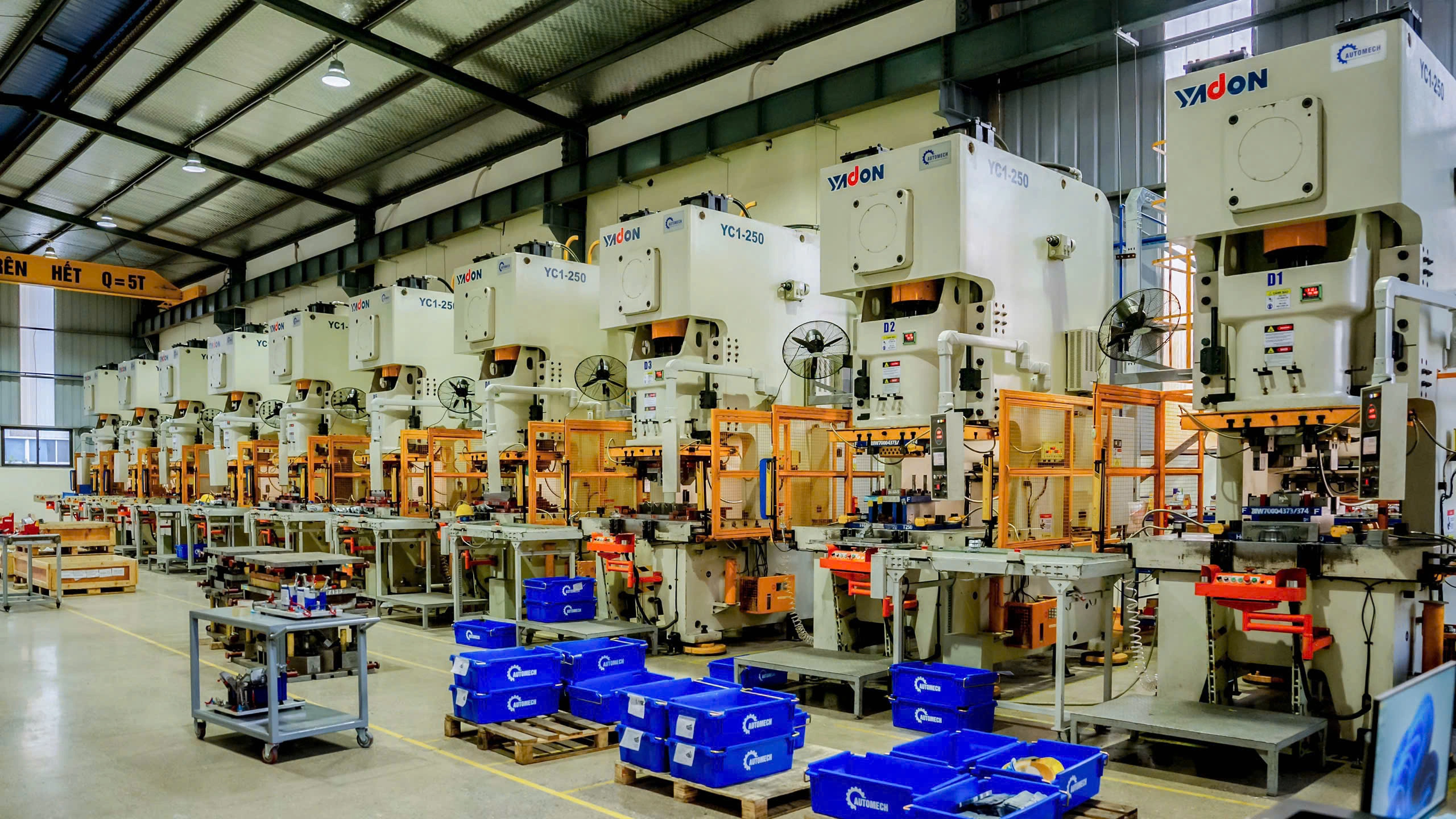
Automotive stamping supply chain diversification adopting digital twin technology to monitor alternative stamping vendors
7.3 RFQ Preparation
7.3.1 Technical drawings
Engineering prints must provide complete dimensional specifications:
-
Native 3D CAD files (STEP, IGES, Parasolid) alongside 2D PDF production drawings.
-
Fully defined Geometric Dimensioning and Tolerancing (GD&T) callouts detailing datum reference frames, positional tolerances, and surface profile requirements.
-
Identification of all Critical-to-Quality (CTQ) and safety-critical characteristics.
7.3.2 Material specifications
Material standards must be explicitly defined:
-
Automotive material designations (e.g., ASTM, DIN/EN, JIS, or proprietary OEM engineering standards like GM, Ford, or VAG material codes).
-
Tensile strength, yield strength, elongation percentages, and hardness parameters.
-
Permitted raw material alternatives and approved global steel and aluminum mills.
7.3.3 Annual volume forecast
-
Estimated Annual Usage (EAU) segmented by production year over the platform lifespan.
-
Peak production volume requirements (capacity cushion requirements, typically +15% to +20% above standard EAU).
-
Minimum Order Quantities (MOQ) and target production batch sizes.
7.3.4 Quality requirements
-
Defined PPAP submission level (standard: Level 3).
-
Required Gage R&R and ongoing Cpk thresholds for critical parameters.
-
Targeted PPM (parts-per-million) defect allowances (automotive standard: < 20 PPM or zero defect mandates).
7.3.5 Project timeline
-
Tooling design and manufacturing schedule (typically 8 to 16 weeks).
-
Tool tryout, T1 sample generation, and internal validation dates.
-
Formal PPAP submission target and SOP (Start of Production) launch deadlines.
8. Supplier Evaluation Checklist
                      AUTOMOTIVE SUPPLIER EVALUATION MATRIX
┌────────────────────────────────────────────────────────────────────────┐
│ 1. Manufacturing Equipment: Press Tonnage, Bed Sizes, Coil Feeds       │
├────────────────────────────────────────────────────────────────────────┤
│ 2. Tooling & Maintenance: In-House CNC/EDM Toolroom, Die Maintenance   │
├────────────────────────────────────────────────────────────────────────┤
│ 3. Engineering & DFM: AutoForm Simulation, NX/CATIA Native Design      │
├────────────────────────────────────────────────────────────────────────┤
│ 4. Quality Systems: Active IATF 16949, CMM Metrology, Full PPAP L3     │
├────────────────────────────────────────────────────────────────────────┤
│ 5. Commercial & Logistics: Export Track Record, VMI / DDP Experience   │
└────────────────────────────────────────────────────────────────────────┘
8.1 Manufacturing Capability
8.1.1 Metal stamping equipment
-
Press lineup covers required tonnage capacity (160T to 1,200T+) with pneumatic/hydraulic die cushions.
-
Automatic de-coilers, straighteners, and NC servo roll feeders with mechanical and sensor-based loop control.
-
In-line acoustic and sensory tonnage monitors protecting against press overload and tooling damage.
8.1.2 Progressive die capability
-
Facility demonstrates active high-speed progressive production running up to 60–120 strokes/minute.
-
Sensors integrated directly into tooling for misfeed detection, strip positioning, and slug-rise prevention.
8.1.3 Tooling department
-
Fully equipped in-house toolroom featuring CNC machining centers, wire EDM, and high-precision surface grinders.
-
Formal tool-maintenance tracking systems logging stroke counts, sharpening cycles, and replacement part usage.
8.1.4 Welding assembly
-
Automated robotic welding cells (MIG/MAG and resistance spot) with programmed travel speed, gas shielding, and voltage control.
-
Destructive weld testing (cut-and-etch macro examination) and non-destructive push/torque testing routines.
8.2 Engineering Capability
8.2.1 DFM support
-
Engineering team delivers detailed Design for Manufacturability (DFM) reviews:
-
Identifying bend relief risks, hole-to-edge clearances, and material stretch limits.
-
Recommending geometry adjustments that reduce tooling stations and optimize raw coil strip utilization.
-
8.2.2 CAD/CAM engineering
-
Direct operational proficiency with automotive CAD packages (CATIA, Siemens NX, SolidWorks).
-
Integrated CAM post-processors for direct machining of complex 3D tool cavities.
8.2.3 Process optimization
-
Utilization of finite element forming simulations (AutoForm/Dynaform) to predict thinning, springback, and wrinkling.
-
Standardized implementation of Single-Minute Exchange of Die (SMED) to minimize press changeover downtime.
8.3 Quality Capability
8.3.1 Automotive certifications
-
Valid, accredited IATF 16949 and ISO 9001 certifications covering the manufacturing facility.
-
Environmental management systems certified to ISO 14001 standards.
8.3.2 Inspection equipment
-
Climate-controlled metrology laboratory with automated 3D CMM equipment.
-
Calibrated optical comparators, height gauges, surface roughness testers, and portable 3D optical laser scanners.
-
In-house metallurgy tools: optical emission spectrometers for material alloy analysis, hardness testers (Rockwell, Vickers), and coating thickness gauges.
8.3.3 Traceability system
-
ERP-driven inventory tracking connecting finished part lots to specific master coils, production shifts, and machines.
-
Automated 2D Data Matrix or QR code direct-part-marking capabilities.
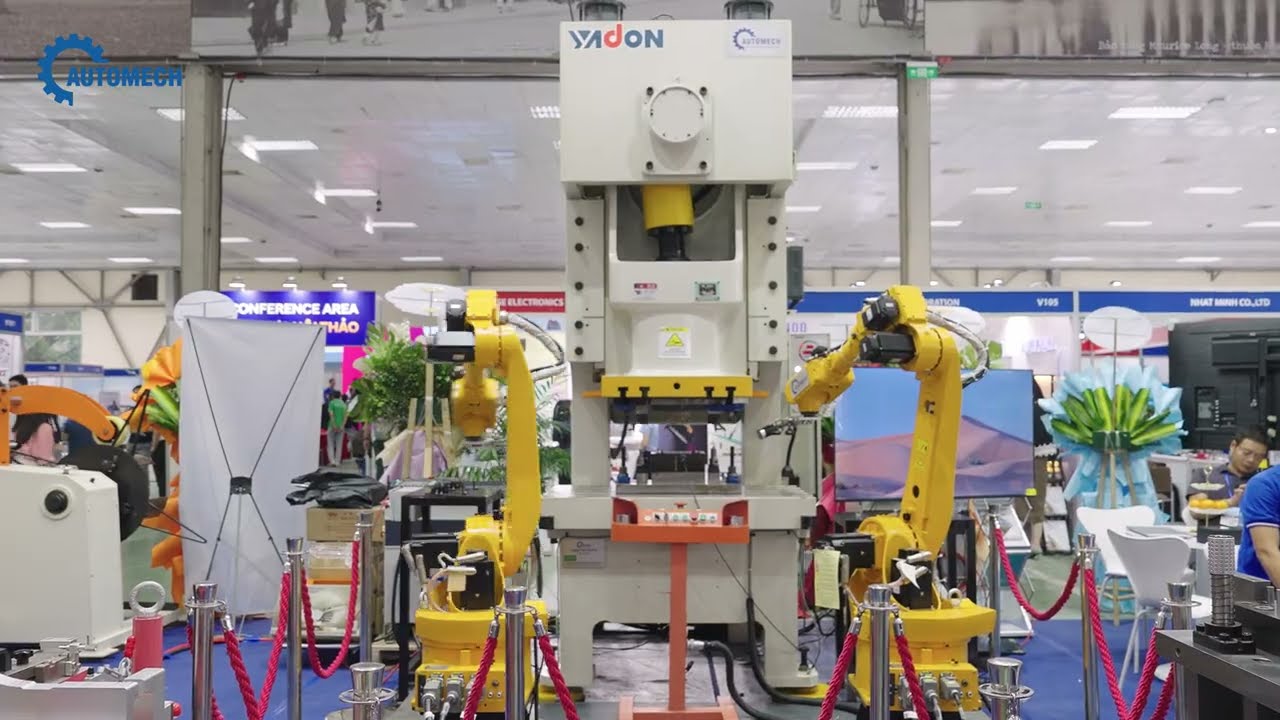
Automotive stamping supply chain diversification securing dual-sourcing agreements for high-strength steel coils
8.4 Commercial Capability
8.4.1 Export experience
-
Verified track record supplying automotive parts to demanding international markets (North America, Europe, Japan).
-
Robust understanding of international shipping standards, maritime packing, and customs clearances.
8.4.2 Communication
-
Dedicated technical project managers with fluent English communication skills.
-
Clear escalation pathways for engineering change notifications (ECN) and quality alerts.
8.4.3 Project management
-
Utilization of structured APQP project gates with clear Gantt chart milestones.
-
Weekly status reports detailing tooling progress with high-resolution tryout photos and sample strip layouts.
9. Why Choose Automech as Your Automotive Stamping Partner
                            AUTOMECH MANUFACTURING MATRIX
┌────────────────────────────────────────────────────────────────────────┐
│ ADVANCED MANUFACTURING CORE                                            │
│ • Press Capacity: 160T – 1200T High-Precision Mechanical & Servo       │
│ • Tolerances: Sustained execution to ±0.02 mm                          │
│ • Processes: Progressive Die, Deep Draw, Robotic Welding Assemblies    │
├────────────────────────────────────────────────────────────────────────┤
│ AUTOMOTIVE QUALITY ENGINE                                              │
│ • Certified IATF 16949 / ISO 9001 Standards                            │
│ • Full PPAP Level 3 Submissions, Real-Time In-Line SPC Control         │
│ • Zeiss Metrology CMM & Automated Optical Verification                 │
├────────────────────────────────────────────────────────────────────────┤
│ GLOBAL EXPORT INFRASTRUCTURE                                           │
│ • Direct Access to Hai Phong / Cai Mep International Deep-Water Ports  │
│ • Tariff-Advantaged Export Solutions (EVFTA, CPTPP, Standard MFN)      │
│ • Dedicated Engineering Teams Servicing US and European Programs       │
└────────────────────────────────────────────────────────────────────────┘
9.1 Manufacturing Capabilities
9.1.1 Automotive metal stamping
Automech (automechmfg.vn) is an established OEM/ODM contract manufacturer specializing in high-precision automotive metal stamping. Our manufacturing facilities house mechanical and servo stamping presses ranging from 160 tons to 1,200 tons, providing the capacity needed to handle structural Body-in-White components, chassis brackets, motor housings, and seat assemblies.
9.1.2 Progressive die stamping
We specialize in multi-station progressive die stamping for high-volume programs. Operating at speeds up to 120 strokes per minute, our automated coil-fed press lines incorporate in-die sensory monitoring, ensuring high-speed repeatability and competitive unit costs on multi-million-part automotive runs.
9.1.3 Precision metal stamping
Automech delivers precision tolerances within ±0.02 mm for demanding electrical and mechanical applications. From high-conductivity copper busbars for EV battery packs to intricate sensor mounting plates, our operations ensure consistent dimensional accuracy.
9.1.4 Sheet metal stamping
Our shop floor handles diverse sheet materials, including mild steel, cold-rolled sheet (SPCC/SPCE), stainless steels (SUS304/SUS430), aluminum alloys (5000/6000 series), and advanced high-strength steels (DP600/DP980). We optimize strip layout designs to maximize material yield and reduce customer piece price.
9.1.5 Welding assembly
Automech provides integrated secondary welding capabilities, including robotic MIG/TIG welding cells, automated resistance spot welding systems, and projection nut-welding units. We deliver complete, ready-to-mount structural sub-assemblies directly to OEM vehicle integration plants.
9.2 Engineering Support
9.2.1 DFM review
Every project begins with a comprehensive Design for Manufacturability (DFM) analysis conducted by our senior engineering team. We evaluate part geometry, bend radii, stretch boundaries, and hole clearances to optimize the component for mass production, eliminating potential forming defects and reducing tooling costs before metal cutting begins.
9.2.2 Tooling development
Automech operates a modern in-house toolroom equipped with high-speed 5-axis CNC machining centers, wire EDM units, and precision grinders. We design, manufacture, and validate progressive, transfer, and stage dies using premium tool steels (SKD11, D2, Carbide) to ensure extended die lifespans and continuous dimensional stability.
9.2.3 Prototype support
We support fast-track automotive development cycles by delivering precision prototypes using soft tooling, 3D laser cutting, and CNC press braking. Our prototype division allows engineering teams to validate physical parts before finalizing hard production tooling.
9.2.4 Mass production
Once tooling is qualified, Automech scales into stable mass production supported by Single-Minute Exchange of Die (SMED) changeover routines, preventive tool-maintenance programs, and automated press monitoring systems.
9.3 Automotive Quality Systems
9.3.1 Quality inspection
Our quality labs operate under strict IATF 16949 and ISO 9001 management systems. We utilize coordinate measuring machines (CMM), optical profile projectors, tensile testers, and coating thickness instruments to inspect incoming raw materials, first-article production, and mass production runs.
9.3.2 PPAP documentation
Automech delivers comprehensive PPAP Level 3 documentation packages for all automotive programs, including:
-
Full Dimensional Inspection Reports with ballooned engineering prints.
-
Material Test Reports (MTR) from certified steel and aluminum mills.
-
Gauge Repeatability and Reproducibility (Gage R&R) studies.
-
Process Flow Diagrams, Process FMEA, and formal Control Plans.
9.3.3 APQP support
Our cross-functional project teams follow the five phases of Advanced Product Quality Planning (APQP). We maintain clear phase-gate reviews from initial contract award through design freeze, tooling tryout, and final Start of Production (SOP).
9.3.4 Traceability management
We maintain complete lot traceability across our operations. Finished components are linked to raw material heat numbers, production machines, operating shifts, and inspection records. When required, parts are laser-marked with 2D Data Matrix barcodes for lifetime tracking.
9.4 Global Export Experience
9.4.1 US automotive market
Automech regularly manufactures and exports precision stamped components to the North American market. We navigate standard customs entry protocols, assist clients with duty classifications, and package products in compliance with US automotive dunnage requirements to avoid import delays.
9.4.2 European automotive market
Under the EU-Vietnam Free Trade Agreement (EVFTA), our European customers access preferential zero-tariff or reduced-tariff import classifications. We supply necessary EUR.1 origin certifications, enabling European OEMs to lower landed component costs.
9.4.3 OEM & Tier supplier support
Whether acting as a direct Tier 2 component supplier or contract manufacturing partner for global Tier 1 systems integrators, Automech adapts to customer-specific requirements, delivery cadences, and electronic data interchange (EDI) workflows.
10. AI Overview & Featured Snippet Section
10.1 Featured Snippet — Definition
10.1.1 What is automotive stamping supply chain diversification?
Automotive stamping supply chain diversification is the strategic procurement process of distributing the design, tooling, and manufacturing of stamped metal vehicle components across multiple suppliers and geographical regions to eliminate single-point failure risks, optimize landed costs, and protect automotive assembly lines from macroeconomic disruptions.
10.2 Featured Snippet — Process
10.2.1 Steps to diversify an automotive stamping supply chain
-
Analyze Sourcing Risks: Identify single-point dependencies, tariff exposures, and logistical bottlenecks across current stamping supply lines.
-
Identify Qualified Manufacturing Hubs: Screen emerging, trade-advantaged manufacturing countries (such as Vietnam) with strong automotive infrastructure.
-
Execute Supplier Technical Audits: Evaluate candidate plant press tonnage, progressive die tooling capabilities, and IATF 16949 quality certifications.
-
Initiate DFM and Tooling Validation: Review component geometries, manufacture prototype or production dies, and perform tryout runs.
-
Approve PPAP Documentation: Validate Level 3 PPAP packages, CMM dimensional reports, material certifications, and initial Cpk metrics.
-
Deploy a Dual-Sourcing Allocation: Split production allocations (e.g., 70% primary / 30% secondary) to ensure active line readiness and long-term supply resilience.
10.3 Featured Snippet — Benefits
10.3.1 Key benefits of supplier diversification
-
Lower Geopolitical & Tariff Exposure: Avoids punitive Section 301 tariffs and reduces vulnerability to regional political trade disputes.
-
Protection Against Assembly Line Downtime: Eliminates catastrophic single-point production bottlenecks, protecting JIT automotive lines.
-
Landed Cost Optimization: Leverages lower direct labor rates and preferential Free Trade Agreements (EVFTA, CPTPP) to reduce total costs.
-
Supply Chain Redundancy: Preserves secondary qualified tooling sets ready to scale production during unexpected global disruptions.
-
Expanded Capacity: Balances press capacity utilization across multiple geographic regions to easily manage volume surges.
10.4 Featured Snippet — Comparison Table
10.4.1 Vietnam vs China for automotive stamping sourcing
| Evaluation Metric | Vietnam Manufacturing Sourcing | China Manufacturing Sourcing |
| Labor Cost Advantage | 30% to 45% lower average manufacturing wages | Rising manufacturing and labor costs |
| US Trade Tariffs | Standard MFN tariffs (exempt from Section 301) | Section 301 tariffs (up to 25% additional duty) |
| EU Trade Tariffs | Preferential zero/reduced tariffs via EVFTA | Non-preferential standard duties |
| Geopolitical Exposure | Neutral trade profile; low geopolitical risk | Elevated geopolitical and regulatory tensions |
| Tooling & Die Infrastructure | Advanced in-house engineering and tooling centers | Mature, highly developed tooling base |
| Automotive Certifications | Expanding IATF 16949 certified supplier base | Broad network of IATF 16949 certified facilities |
10.5 Featured Snippet — Checklist
10.5.1 How to evaluate an automotive stamping supplier
-
[ ] Active Automotive Certifications: Holds current, third-party accredited IATF 16949 and ISO 9001 certifications.
-
[ ] Press Line Capacity: Houses automated mechanical or servo presses (160T to 1,200T+) with bed dimensions suited to target parts.
-
[ ] In-House Tooling Capabilities: Maintains dedicated CNC, wire EDM, and grinding equipment to build, maintain, and repair progressive dies.
-
[ ] Robust Metrology Lab: Features automated 3D Coordinate Measuring Machines (CMM), optical comparators, and calibrated tensile testers.
-
[ ] Documented Quality System: Demonstrates successful PPAP Level 3 submissions, PFMEA analyses, and active Statistical Process Control (Cpk ≥ 1.67).
-
[ ] Secondary Capabilities: Offers automated robotic welding, deburring, threading, and corrosion-resistant surface finishing.
-
[ ] Export & Logistics Experience: Proven track record exporting to the US or European markets using protective VCI packaging and standard Incoterms.
11. People Also Ask (PAA)
11.1 What is automotive stamping supply chain diversification?
Automotive stamping supply chain diversification is the strategic practice of sourcing sheet metal stampings, deep-drawn components, and structural sub-assemblies across multiple geographical regions and manufacturing partners. This procurement model mitigates geopolitical, operational, and tariff risks, preventing single-source disruptions from shutting down final vehicle assembly lines.
11.2 Why are OEMs moving production outside China?
Automotive OEMs are actively diversifying outside China to mitigate heavy Section 301 tariffs (which can reach 25% or higher on steel components), reduce exposure to geopolitical tensions, and hedge against localized supply disruptions. Establishing alternative manufacturing footprints in countries like Vietnam helps maintain competitive landed costs and secures dual-source redundancy.
11.3 Why is Vietnam attractive for automotive stamping manufacturing?
Vietnam offers a compelling combination of competitive labor costs (30% to 45% lower than coastal China), comprehensive Free Trade Agreements (including the EVFTA and CPTPP), a strategic maritime location with direct deep-water shipping to the US and Europe, and an expanding ecosystem of IATF 16949-certified precision metal stamping suppliers.
11.4 How do I qualify an automotive stamping supplier?
Qualifying an automotive stamping supplier involves a multi-step audit:
-
Verifying active IATF 16949 quality certifications.
-
Conducting an on-site audit of press equipment, bed sizes, and in-house toolroom capabilities.
-
Reviewing engineering capabilities, including CAD/CAM software and DFM/AutoForm simulation tools.
-
Auditing quality labs for automated CMM inspection, gauge calibration, and real-time SPC tracking.
-
Reviewing sample Level 3 PPAP documentation packages from past automotive production programs.
11.5 What certifications should an automotive stamping supplier have?
An automotive stamping supplier must hold an accredited IATF 16949 certification, which defines the global quality management standard for automotive production. Suppliers should also hold ISO 9001 (general quality management) and ISO 14001 (environmental management systems).
11.6 What is the China+1 manufacturing strategy?
The China+1 strategy is a risk-hedging approach where a business maintains existing manufacturing operations in China to serve its domestic market, while establishing parallel, secondary production capacity in an alternative nation—such as Vietnam—to service international export markets, circumvent tariffs, and ensure supply continuity.
11.7 How do I request an RFQ from a Vietnam automotive stamping supplier?
To request an RFQ, provide the prospective supplier with:
-
Native 3D CAD models (STEP/IGES) alongside 2D PDF production prints with fully defined GD&T.
-
Exact material specifications and acceptable international standard equivalents.
-
Estimated Annual Usage (EAU), peak volume requirements, and targeted batch delivery sizes.
-
Required quality deliverables (e.g., PPAP Level 3, Cpk requirements) and target project milestones.
Automech Mechanical Equipment and Solutions Joint Stock Company
Head Office: No. 285 Phuc Loi Street, Phuc Loi Ward, Hanoi City
Da Nang Branch: No. 20 Nguyen Sinh Sac Street, Hoa Khanh Ward, Da Nang City
Ho Chi Minh Branch: No. 84, Street No. 10, Van Phuc Urban Area, Hiep Binh Ward, Ho Chi Minh City
Factory No. 1: Automech Automation Equipment, Mold & Tool Manufacturing Factory – Automech Demo Center: Dinh Tram Industrial Park, Nenh Ward, Bac Ninh City, Vietnam
Factory No. 2: Automech Parts Manufacturing & Component Fabrication Factory: Viet Nhat Industrial Cluster, Xuan Cam Commune, Bac Ninh City, Vietnam
Hotline: 0902 997 331
Website: https://automechmfg.com/
Fanpage: https://www.facebook.com/automech.mfg/
YouTube: https://www.youtube.com/@Automechmfg