Looking for a reliable automotive export stamping manufacturer? Automech delivers high-precision metal stampings, advanced progressive die tooling, and robust Body-in-White (BIW) assemblies from Vietnam. Trusted by global OEMs and Tier 1 suppliers, we combine state-of-the-art automation, stringent IATF 16949 standards, and competitive export pricing to secure your international supply chain.
As a leading automotive export stamping manufacturer, Automech delivers high-precision sheet metal stamping, progressive die tooling, and robust Body-in-White (BIW) assemblies for global automotive OEMs and Tier 1 suppliers. Operating out of our advanced manufacturing facility in Vietnam, we combine state-of-the-art automation, stringent IATF 16949 quality standards, and competitive cost structures to provide resilient supply chain solutions for international markets across North America, Europe, and Asia.
1. Automotive Export Stamping Manufacturer: Global OEM Manufacturing Partner from Vietnam
As a leading automotive export stamping manufacturer, Automech delivers high-precision sheet metal stamping, progressive die tooling, and robust Body-in-White (BIW) assemblies for global automotive OEMs and Tier 1 suppliers. Operating out of our advanced manufacturing facility in Vietnam, we combine state-of-the-art automation, stringent IATF 16949 quality standards, and competitive cost structures to provide resilient supply chain solutions for international markets across North America, Europe, and Asia.
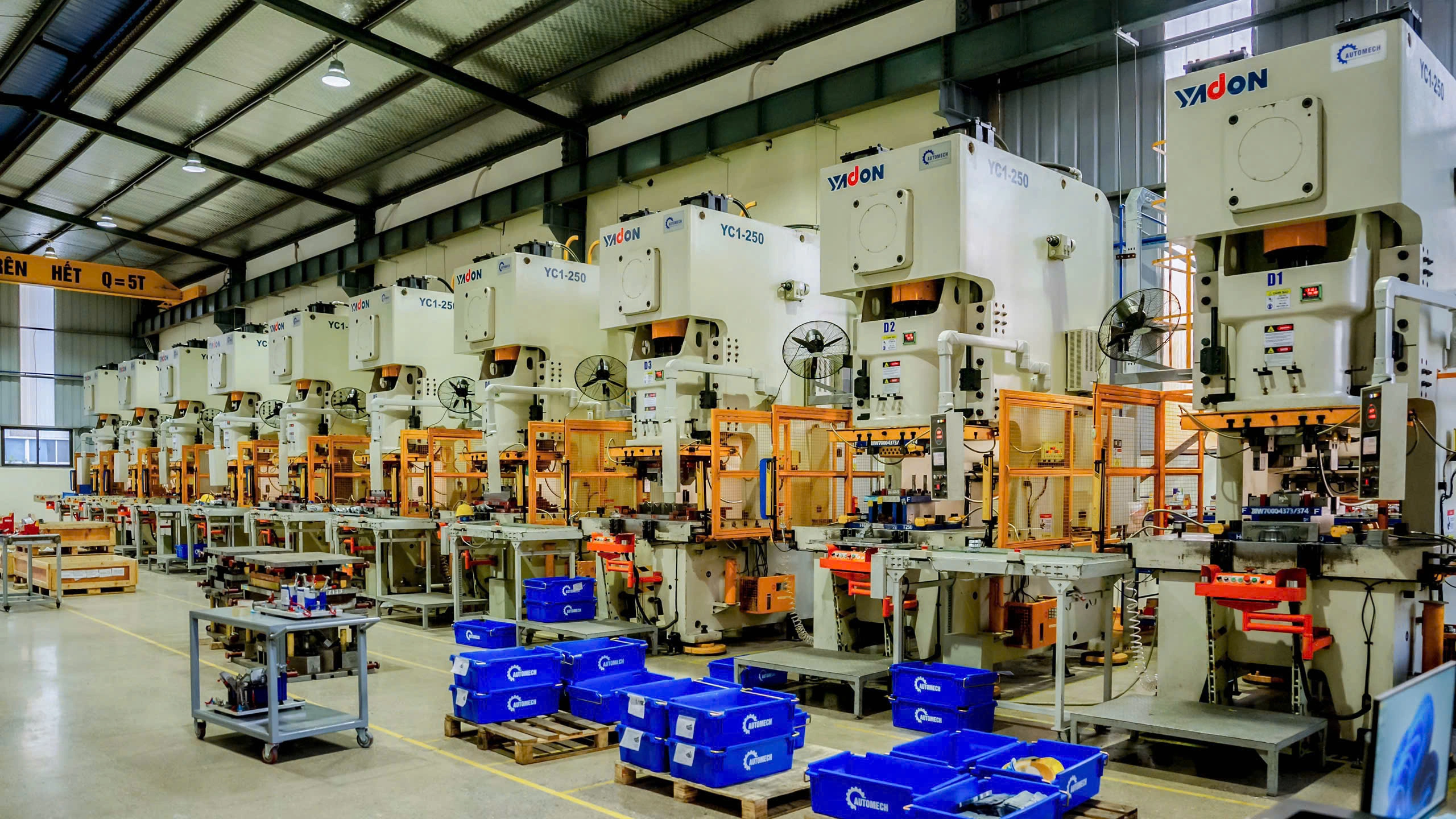
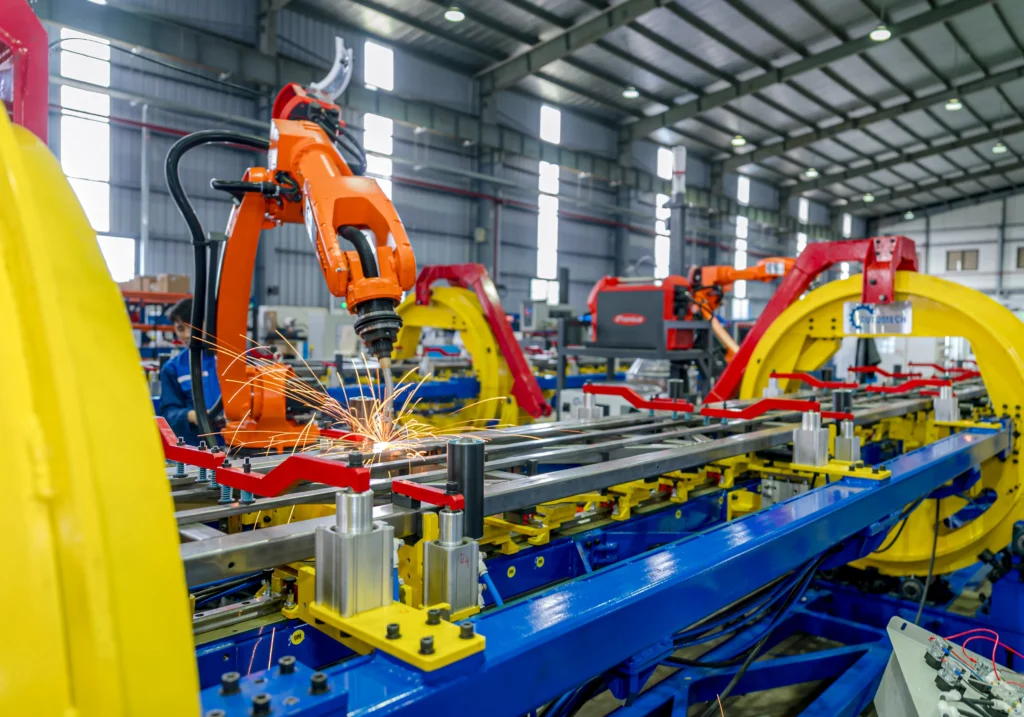
Automated stamping press line equipped with robotic arms for efficient OEM automotive component manufacturing
1.1. What Is an Automotive Export Stamping Manufacturer?
1.1.1. Definition of automotive export stamping manufacturing
An automotive export stamping manufacturer is a specialized industrial enterprise that transforms metal coils and blanks into high-precision structural components, brackets, and skin panels tailored specifically for international automotive assembly plants. These operations utilize advanced mechanical and hydraulic presses, custom progressive dies, and automated transfer systems to ensure tight dimensional tolerances and repeatable quality at scale.
1.1.2. Role in the global automotive supply chain
These specialized manufacturers form the structural foundation of the automotive supply chain. By converting raw steel and aluminum into high-strength components, they feed directly into major vehicle assembly lines. Export stamping partners manage complex logistical, technical, and quality compliance requirements to ensure uninterrupted component delivery across international borders.
1.1.3. Difference between an OEM manufacturer, contract manufacturer, and stamping exporter
Understanding the nuances of supplier classifications helps procurement teams optimize sourcing strategies:
-
OEM (Original Equipment Manufacturer) Supplier: Designs and manufactures proprietary components or builds directly to strict, highly customized OEM blue-prints with full lifecycle ownership.
-
Contract Manufacturer: Produces parts based strictly on customer-provided specifications without necessarily specializing in proprietary automotive tooling or extensive global logistics.
-
Stamping Exporter: Focuses specifically on high-efficiency stamping, international packaging standards, regulatory export documentation, and global freight integration.
1.2. Why Automotive OEMs Source Stamped Components Globally
1.2.1. Global sourcing trends for automotive metal parts
Global automotive supply chains are shifting toward regionalized diversification. OEMs no longer rely on single-region production bases, choosing instead to procure specialized metal components from established manufacturing hubs that offer superior engineering capabilities combined with cost efficiencies.
1.2.2. China+1 sourcing strategy
To mitigate geopolitical risks, tariff fluctuations, and unexpected supply disruptions, procurement leaders widely implement the “China+1” strategy. Vietnam has emerged as the premier alternative destination due to its rapid industrialization, robust infrastructure, and trade agreements.
1.2.3. Cost, quality, and supply chain resilience
Global sourcing allows automotive companies to balance operational expenditures without compromising product integrity. Securing partners with advanced quality control systems guarantees long-term supply chain resilience and shields assembly operations from local market volatility.
1.2.4. Supplier localization and regional manufacturing strategies
Localization initiatives reduce transit times and carbon footprints. By sourcing from dynamic export regions like Southeast Asia, international brands streamline inventory turnover and respond faster to regional market demands.
2. Automotive Export Manufacturing Capabilities
2.1. Automotive Metal Stamping Services
2.1.1. Sheet metal stamping
Our sheet metal stamping operations handle a wide range of gauges, transforming flat metal sheets into complex geometries through high-tonnage pressing and precise forming techniques.
2.1.2. Precision metal stamping
Precision metal stamping achieves microscopic tolerances required for mission-critical automotive applications, utilizing high-speed servo presses and real-time sensor monitoring.
2.1.3. Progressive die stamping
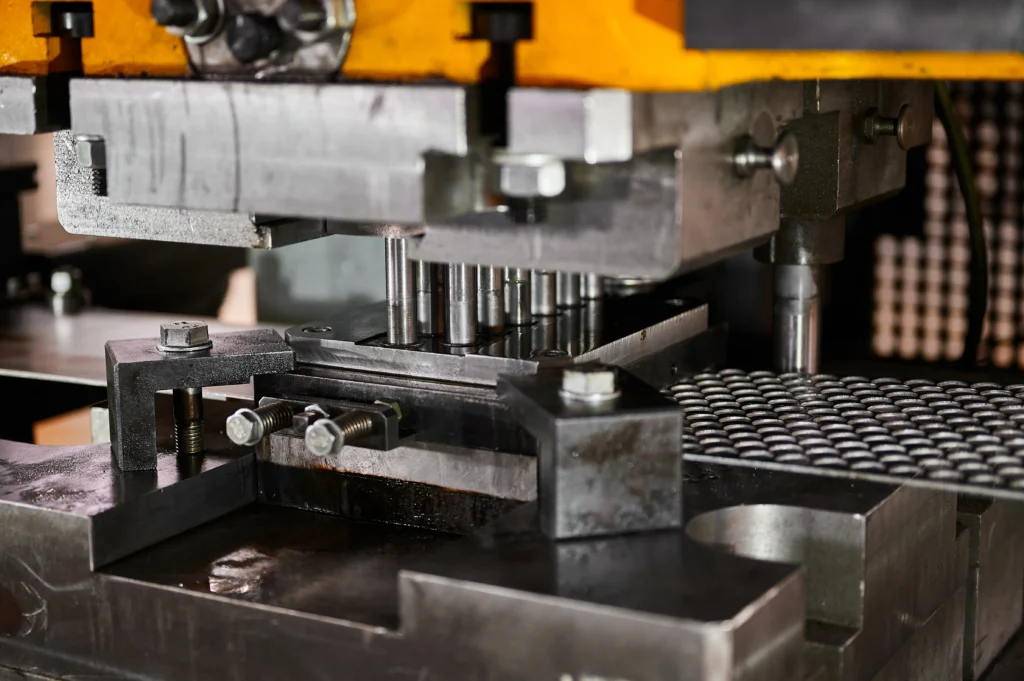
Progressive die stamping executes multiple operations—such as blanking, coining, bending, and piercing—in a single continuous stroke, maximizing throughput and reducing unit costs for high-volume runs.
2.1.4. Transfer stamping
Transfer stamping moves individual workpieces mechanically between separate die stations. This method is ideal for large, deep-drawn structural parts that require complex multi-stage forming.
2.1.5. High-volume production
Automated destackers, robotic loaders, and high-speed stamping lines ensure continuous, uninterrupted multi-shift manufacturing runs that meet the demanding schedules of global vehicle assembly plants.
2.2. Automotive Structural Component Manufacturing
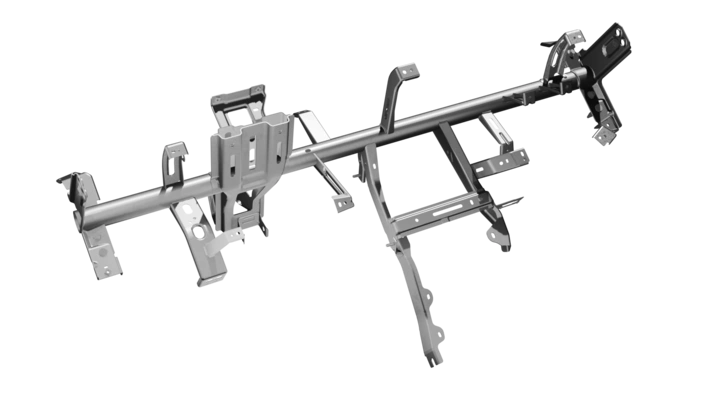
2.2.1. BIW (Body in White) components
We manufacture essential Body-in-White components that form the skeletal safety cage of modern passenger and commercial vehicles, ensuring optimal crash energy management.
2.2.2. Automotive bracket stamping
High-strength brackets secure internal systems, wiring harnesses, and structural modules, requiring rigorous fatigue resistance and dimensional exactness.
2.2.3. Reinforcement parts
Strategic reinforcement stampings enhance structural rigidity in impact zones, doors, and roof pillars without adding excessive weight to the vehicle.
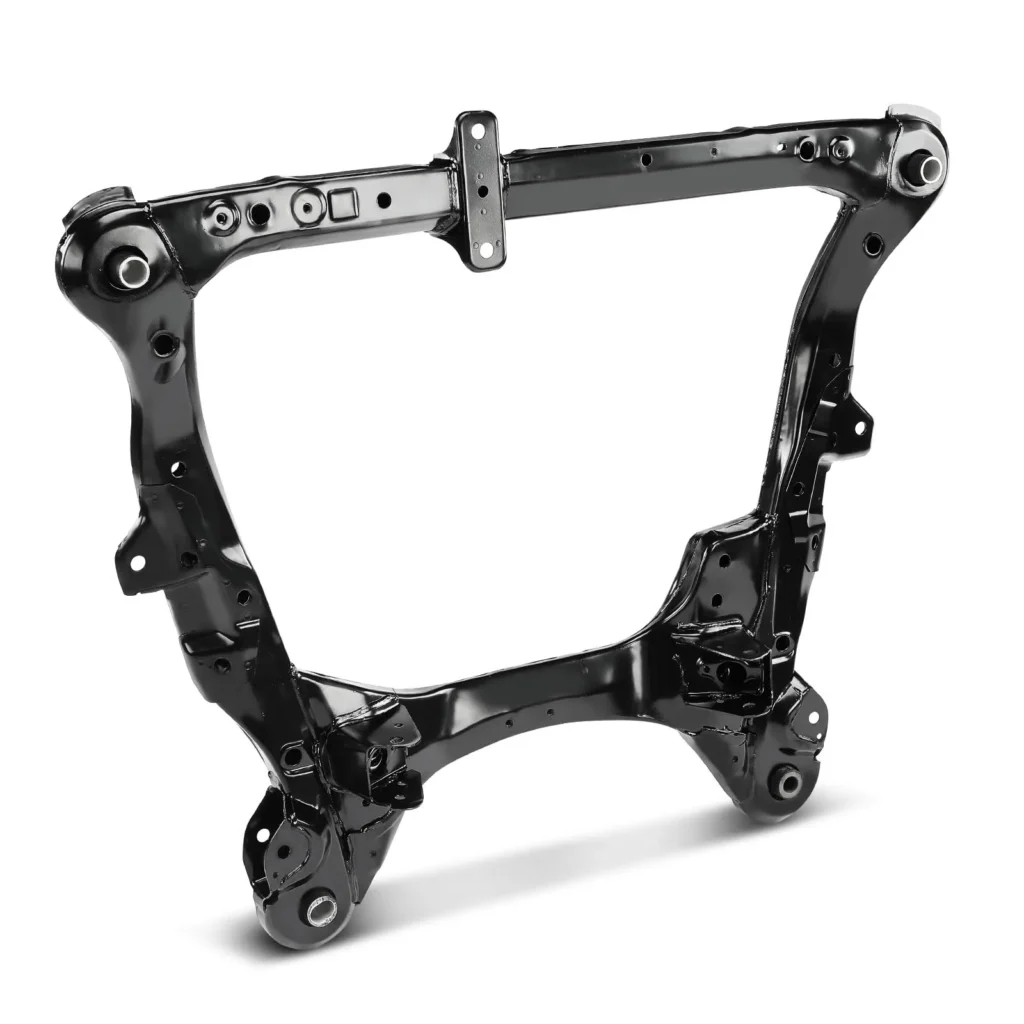
2.2.4. Cross members and structural assemblies
Heavy-duty cross members distribute load forces across the chassis, fabricated through heavy-gauge stamping and robust robotic welding integration.
2.2.5. Safety-critical stamped components
Parts designated for occupant protection undergo rigorous non-destructive testing and 100% automated vision inspection to guarantee zero-defect delivery.
2.3. Automotive Stamping Assembly
2.3.1. Robotic welding
Multi-axis industrial robots deliver precise, repeatable welds on complex geometries, ensuring consistent weld penetration and structural strength.
2.3.2. Projection welding
Projection welding concentrates electric current at localized raised points on components, creating high-integrity structural joints for threaded fasteners and brackets.
2.3.3. MIG/TIG welding
Manual and automated Metal Inert Gas (MIG) and Tungsten Inert Gas (TIG) welding processes provide exceptional bond strength for heavy structural sub-assemblies.
2.3.4. Assembly fixtures and welding jigs
Custom-engineered welding fixtures lock stamped parts in exact geometric alignment, neutralizing thermal distortion during the welding process.
2.3.5. Complete sub-assembly manufacturing
We deliver fully integrated sub-assemblies ready for immediate installation on your main vehicle production lines, reducing your internal handling and inventory overhead.
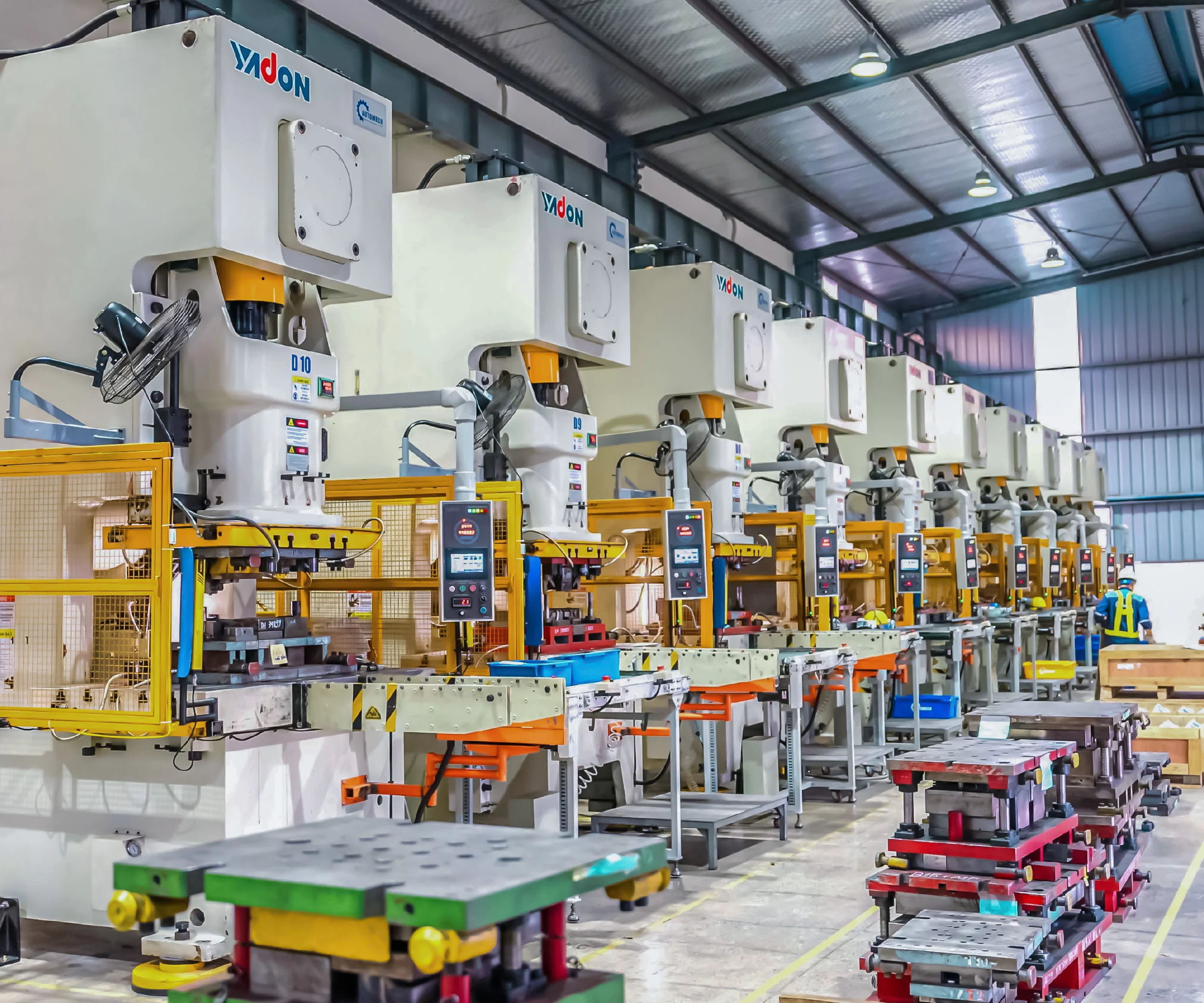
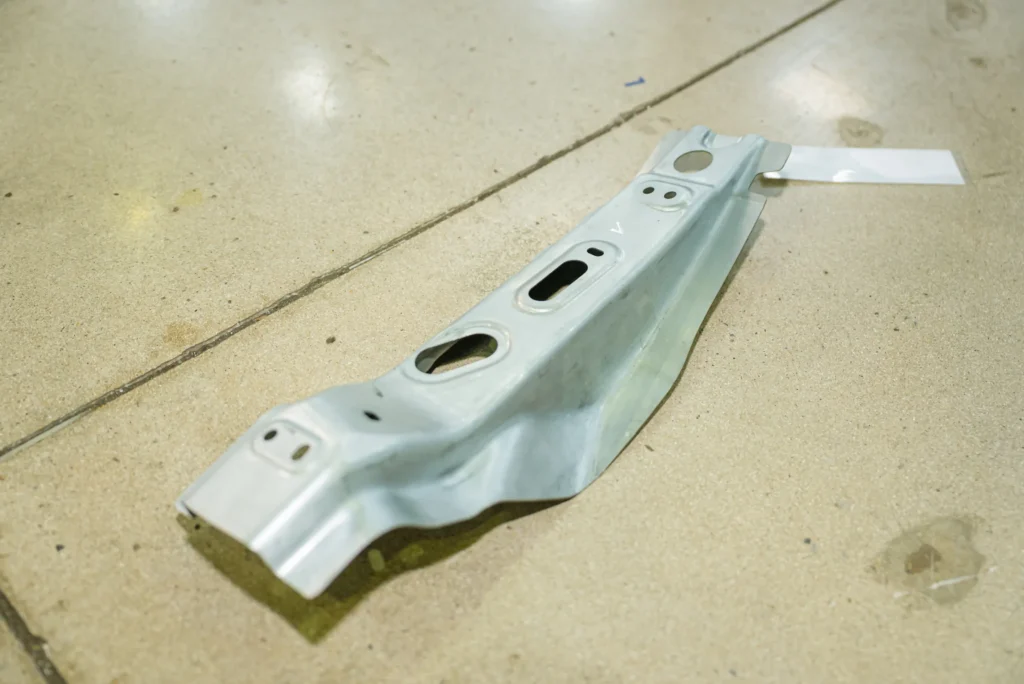
A full-scale automated press line optimizing automotive stamping OEM sourcing and high-volume production
3. Automotive Export Manufacturing Process
3.1. Engineering & Project Review
3.1.1. RFQ analysis
Every Request for Quotation undergoes a multidisciplinary review by our engineering team to evaluate technical feasibility, material requirements, and target volumes.
3.1.2. DFM review
Our Design for Manufacturability (DFM) analysis identifies potential production bottlenecks, proposes geometry optimizations, and lowers overall tool manufacturing costs.
3.1.3. CAD/CAM engineering
Using advanced software suites, our engineers translate 2D and 3D CAD data into precision CAM toolpaths and simulation models before cutting any steel.
3.1.4. Feasibility assessment
Finite Element Analysis (FEA) simulates material flow during stamping to predict thinning, wrinkling, or springback issues prior to tool fabrication.
3.2. Tooling & Die Development
3.2.1. Progressive die tooling
We design and build multi-station progressive dies in-house, ensuring precise inter-station timing and exceptional longevity.
3.2.2. Transfer die development
Custom transfer dies are engineered for large panels, incorporating optimized finger-transfer mechanisms for smooth part transit.
3.2.3. Tool steel selection
We use premium-grade tool steels (such as SKD11, D2, and DC53) with specialized heat treatments to withstand high mechanical stress and abrasive wear.
3.2.4. Tool maintenance strategy
Rigorous preventive maintenance programs, including laser scanning and cyclical refurbishment, guarantee long-term tool performance across millions of cycles.
3.3. Production Workflow
3.3.1. Coil processing
Raw metal coils are carefully inspected, straightened, and cleaned through automated decoiling and leveling lines to remove surface imperfections.
3.3.2. Blanking
High-speed blanking presses cut exact initial flat shapes from metal coils, minimizing scrap and optimizing material utilization.
3.3.3. Piercing
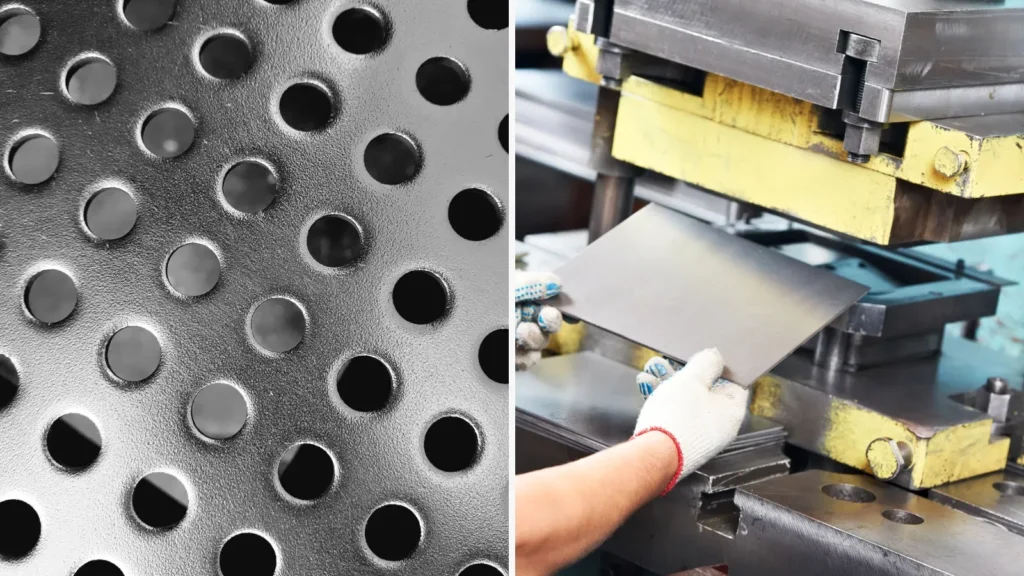
Precision punches create clean mounting holes, slots, and cutouts with burr-free edges according to strict engineering tolerances.
3.3.4. Forming
Controlled press tonnage shapes flat blanks into three-dimensional profiles without compromising material molecular integrity.
3.3.5. Bending
Computer-controlled press brakes and progressive die stations achieve precise angular bends with minimal springback variation.
3.3.6. Deep drawing
Complex cups, housings, and shells are formed via deep drawing, carefully managing metal elongation across multiple reduction stages.
3.3.7. Secondary operations
Post-stamping processes include tapping, countersinking, deburring, and specialized protective surface treatments.
3.3.8. Welding and assembly
Stamped components are joined through automated welding cells and verified against master checking fixtures.
3.4. Prototype to Mass Production
3.4.1. Prototype manufacturing
Low-volume prototype parts are produced using laser cutting and soft tooling to validate design concepts and vehicle fitment.
3.4.2. Pilot production
Pilot runs test the full manufacturing ecosystem, validating press setups, weld fixtures, and quality inspection routines.
3.4.3. SOP launch
Start of Production (SOP) marks the transition to stable, repeatable commercial manufacturing under strict quality surveillance.
3.4.4. Mass production management
Real-time ERP tracking monitors cycle times, material yields, and maintenance schedules to fulfill high-volume global delivery schedules.
4. Materials & Automotive Applications
4.1. Materials Used
4.1.1. Mild steel
Offers excellent formability and cost-effectiveness for non-structural interior brackets and secondary automotive components.
4.1.2. High-strength steel (HSS)
Provides increased yield strength and impact resistance, allowing for thinner gauge designs and vehicle weight reduction.
4.1.3. Advanced High Strength Steel (AHSS)
Crucial for modern crash management systems, AHSS combines ultra-high tensile strength with energy-absorbing deformation characteristics.
4.1.4. Stainless steel
Utilized for exhaust shields, trim elements, and corrosion-prone environments where long-term cosmetic and structural integrity is mandatory.
4.1.5. Aluminum alloys
Lightweight aluminum grades help electric and traditional vehicle manufacturers reduce overall mass to improve fuel efficiency and battery range.
4.2. Automotive Applications
4.2.1. Chassis components
Robust structural metal parts that withstand continuous dynamic road loads and suspension forces.
4.2.2. BIW structural parts
Pillars, roof rails, and floor pans engineered to protect vehicle occupants during frontal, side, and rollover collisions.
4.2.3. Seat structures
High-precision stamped seat frames, recliners, and sliding tracks built for occupant safety and ergonomic comfort.
4.2.4. Battery tray components
Specialized structural housings and thermal shields designed to secure and protect heavy electric vehicle battery packs.
4.2.5. EV structural parts
Lightweight, high-strength frames and enclosures built specifically to house electric drivetrain and power electronics systems.
4.2.6. Engine brackets
Vibration-resistant mounts that securely anchor powertrain components to the vehicle chassis.
4.2.7. Suspension brackets
Heavy-duty load-bearing components engineered to handle extreme multi-axial stress from wheel assemblies.
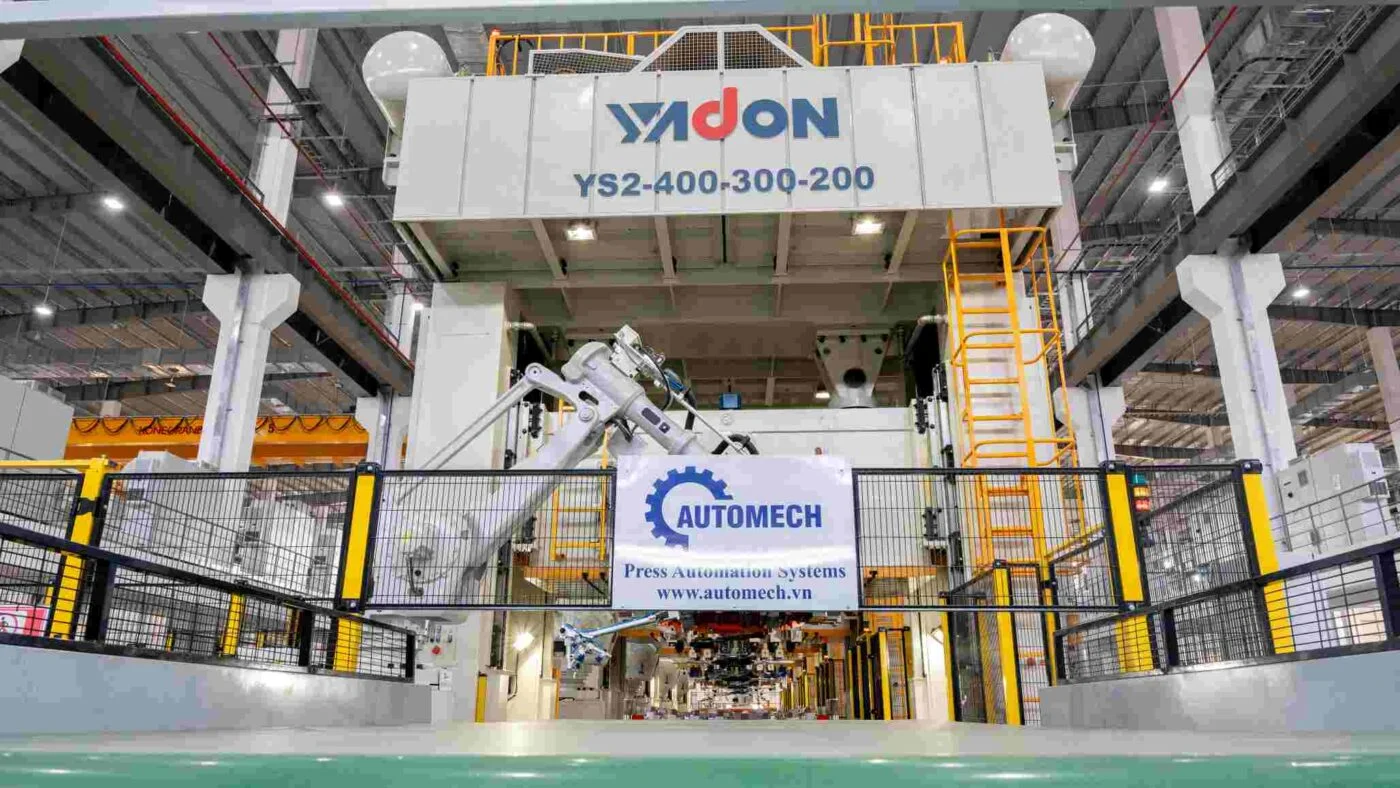
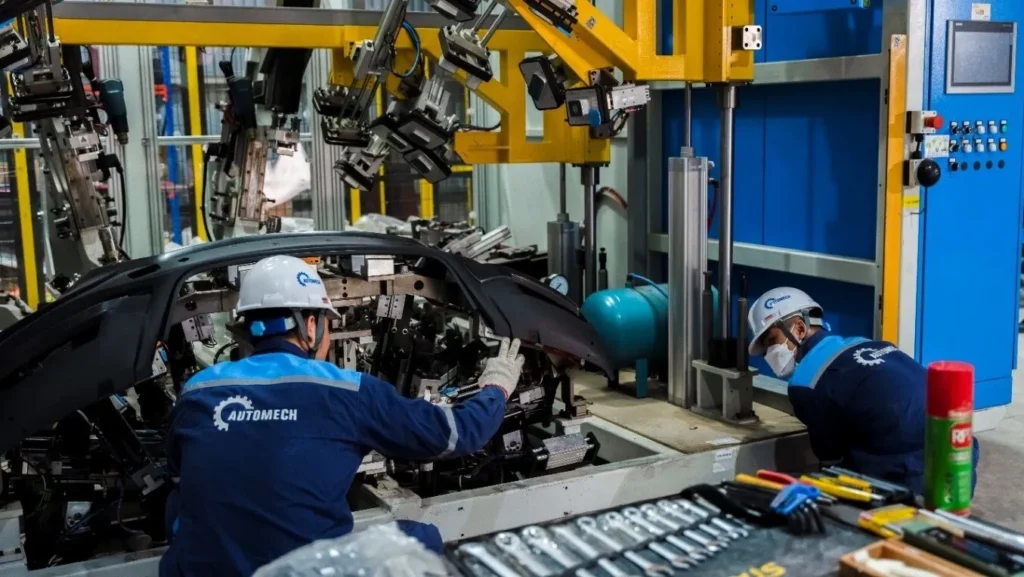
Heavy-duty automotive stamping press equipped with quick-die-change systems for reliable OEM sourcing.
5. Quality Systems for Automotive Export Manufacturing
5.1. Automotive Quality Standards
5.1.1. ISO 9001
Establishes our foundational framework for continuous quality management, customer satisfaction, and operational process control.
5.1.2. IATF 16949
The gold standard for automotive quality management systems, ensuring defect prevention, supply chain variation reduction, and scrap minimization.
5.1.3. OEM supplier requirements
We strictly adhere to specific customer-defined manufacturing standards and global automotive compliance directives.
5.2. APQP & PPAP Management
5.2.1. APQP planning
Advanced Product Quality Planning ensures clear communication, risk mitigation, and proactive engineering milestones from concept to commercial launch.
5.2.2. PPAP documentation
Production Part Approval Process packages provide comprehensive evidence that all customer engineering and specification requirements are fully understood and met.
5.2.3. FMEA
Failure Mode and Effects Analysis evaluates design and process risks proactively to implement preventive controls before production begins.
5.2.4. Control Plan
Comprehensive documentation outlining real-time process parameters, inspection frequencies, and reaction plans for every manufacturing stage.
5.2.5. MSA
Measurement Systems Analysis ensures gage R&R reliability and eliminates inaccuracies in dimensional data collection.
5.2.6. Traceability
End-to-end barcode and laser-marking traceability links every finished part to its raw material heat lot and production timestamp.
5.3. Inspection & Measurement
5.3.1. CMM inspection
Coordinate Measuring Machines verify complex 3D geometries and GD&T tolerances down to the micron level.
5.3.2. Vision inspection
Automated optical systems scan high-speed production streams for surface flaws, burrs, and dimensional discrepancies.
5.3.3. Gauge inspection
Custom functional checking gauges simulate real-world vehicle mating conditions for rapid assembly verification.
5.3.4. First Article Inspection (FAI)
Comprehensive dimensional evaluations validate tool setup accuracy before full-scale production runs commence.
5.3.5. In-process SPC
Statistical Process Control charts monitor ongoing manufacturing trends to detect tool wear or process drift immediately.
5.3.6. Final inspection
Rigorous pre-shipment audits ensure zero non-conforming parts leave our facility.
6. Export Manufacturing & Global Supply Chain
6.1. Export Manufacturing Workflow
6.1.1. Production scheduling
Advanced Enterprise Resource Planning (ERP) tools align manufacturing output directly with customer release schedules and shipping windows.
6.1.2. ERP production control
Real-time shop floor data tracking monitors work-in-progress (WIP), machine utilization, and operator efficiency.
6.1.3. Packaging standards
Custom export-grade packaging—including VCI anti-corrosion films, reinforced steel pallets, and heavy-duty corrugated containers—protects parts during transoceanic transit.
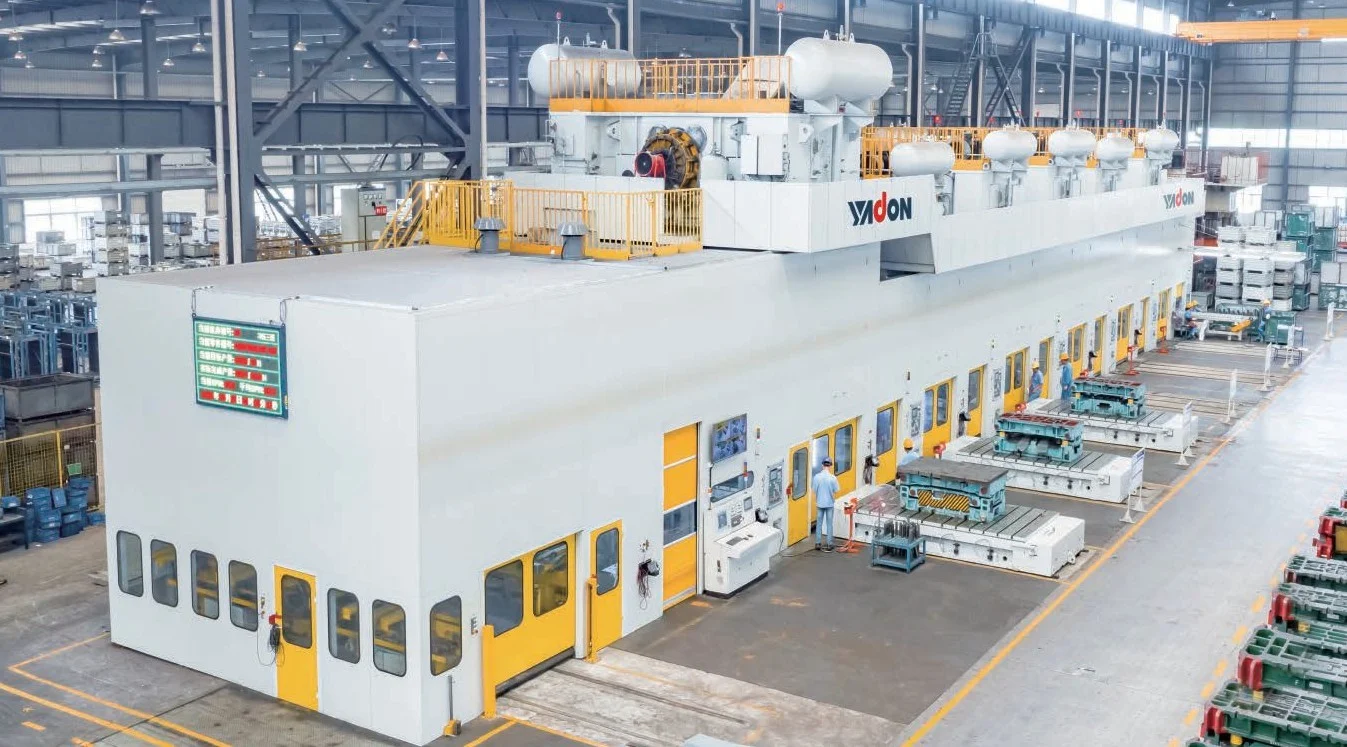
State-of-the-art stamping press integration featuring robotic automation for precision automotive OEM parts
6.1.4. Export documentation
Our logistics team handles all commercial invoices, certificates of origin, packing lists, and customs clearance paperwork seamlessly.
6.1.5. International logistics
We partner with premier global freight forwarders to provide reliable door-to-port or door-to-door ocean and air shipping solutions.
6.2. Manufacturing Capacity
6.2.1. Production scalability
Flexible press lines and modular tooling setups allow us to scale output efficiently from small batch runs to millions of units annually.
6.2.2. High-volume manufacturing
Dedicated multi-shift operations ensure continuous fulfillment of high-demand global supply agreements.
6.2.3. Multi-program production
Robust plant organization enables simultaneous management of multiple OEM vehicle programs without cross-contamination or scheduling delays.
6.2.4. Supply chain stability
Diversified raw material sourcing and strategic safety stock buffers insulate our clients from external supply disruptions.

High-capacity mechanical press engineered for advanced automotive stamping and global OEM sourcing
7. Why Global OEMs Source Automotive Stamping from Vietnam
7.1. Vietnam’s Automotive Manufacturing Advantages
7.1.1. Competitive manufacturing costs
Optimized labor costs and efficient overhead structures allow us to deliver superior pricing without sacrificing precision or quality.
7.1.2. Skilled engineering workforce
Vietnam boasts a highly educated, technically proficient engineering talent pool trained in advanced CAD/CAM and quality management.
7.1.3. Strong export infrastructure
Rapidly expanding deep-water ports, modern highways, and streamlined customs procedures facilitate rapid international shipping.
7.1.4. Expanding automotive ecosystem
A growing network of Tier 1 suppliers, material processors, and toolmakers creates a synergistic industrial environment.
7.2. Vietnam vs China Automotive Sourcing
| Evaluation Criteria | Sourcing from Vietnam | Sourcing from China |
| Tariff & Trade Advantage | Highly favorable trade agreements and diversified tariff structures | Subject to ongoing trade frictions and Section 301 tariffs in the US |
| Labor & Overhead Costs | Highly competitive operational expenses and stable cost inflation | Rising labor costs in coastal manufacturing clusters |
| Supply Chain Resilience | Excellent for China+1 risk mitigation and regional diversification | Congested logistics hubs and concentrated geopolitical risk |
| Engineering & Quality Support | Dedicated, highly responsive engineering teams with international standards | Mature ecosystem but increasingly saturated and rigid |
7.2.1. Cost comparison
Vietnam offers lower total landed costs compared to traditional manufacturing centers when factoring in tariffs, labor, and overhead efficiencies.
7.2.2. Lead time comparison
Streamlined export processing and unburdened port infrastructure ensure predictable transit schedules to North American and European ports.
7.2.3. Quality comparison
Adherence to IATF 16949 standards and rigorous capital investment in high-precision Japanese and European machinery guarantee world-class quality.
7.2.4. Supply chain diversification
Shifting production to Vietnam insulates automotive brands from regional chokepoints and geopolitical instability.
7.2.5. Risk management
Proactive dual-sourcing strategies safeguard assembly plants against unexpected domestic and international disruptions.
8. How to Evaluate an Automotive Export Stamping Manufacturer
8.1. Engineering Capability
8.1.1. Tooling expertise
Examine the supplier’s in-house die design and maintenance capabilities to ensure they can resolve complex stamping challenges independently.
8.1.2. DFM support
Verify whether the manufacturer offers proactive Design for Manufacturability engineering feedback to optimize part cost and performance.
8.1.3. CAD/CAM capability
Ensure the supplier utilizes current, industry-standard software compatible with your engineering systems.
8.2. Manufacturing Capability
8.2.1. Stamping capacity
Assess press tonnage ranges, bed sizes, and automation levels to confirm alignment with your part size and volume requirements.
8.2.2. Welding capability
Check for advanced robotic welding cells and certified welding personnel capable of complex structural fabrication.
8.2.3. Assembly capability
Look for integrated sub-assembly services that reduce your supply chain touchpoints and internal assembly labor.
8.2.4. Automation level
High automation in material handling and scrap removal guarantees consistent cycle times and worker safety.
8.3. Quality Capability
8.3.1. Certification systems
Confirm valid IATF 16949 and ISO 9001 quality system certifications.
8.3.2. PPAP readiness
Ensure the team has extensive experience preparing Level 1 through Level 5 PPAP documentation packages.
8.3.3. Inspection equipment
Verify investment in advanced metrology tools, including CMM systems and optical comparators.
8.3.4. Traceability systems
Check for robust barcode or laser serialization practices that track parts from raw coil to final shipment.
8.4. Export Capability
8.4.1. International shipping experience
Review the supplier’s track record of successful container shipments to North America, Europe, and Asia.
8.4.2. Export documentation
Confirm internal competence in handling complex customs paperwork, bills of lading, and compliance certificates.
8.4.3. OEM project management
Evaluate the responsiveness and technical proficiency of their dedicated export project managers.
8.4.4. Long-term supply support
Assess financial stability and long-term capacity commitments to ensure a reliable multi-year partnership.
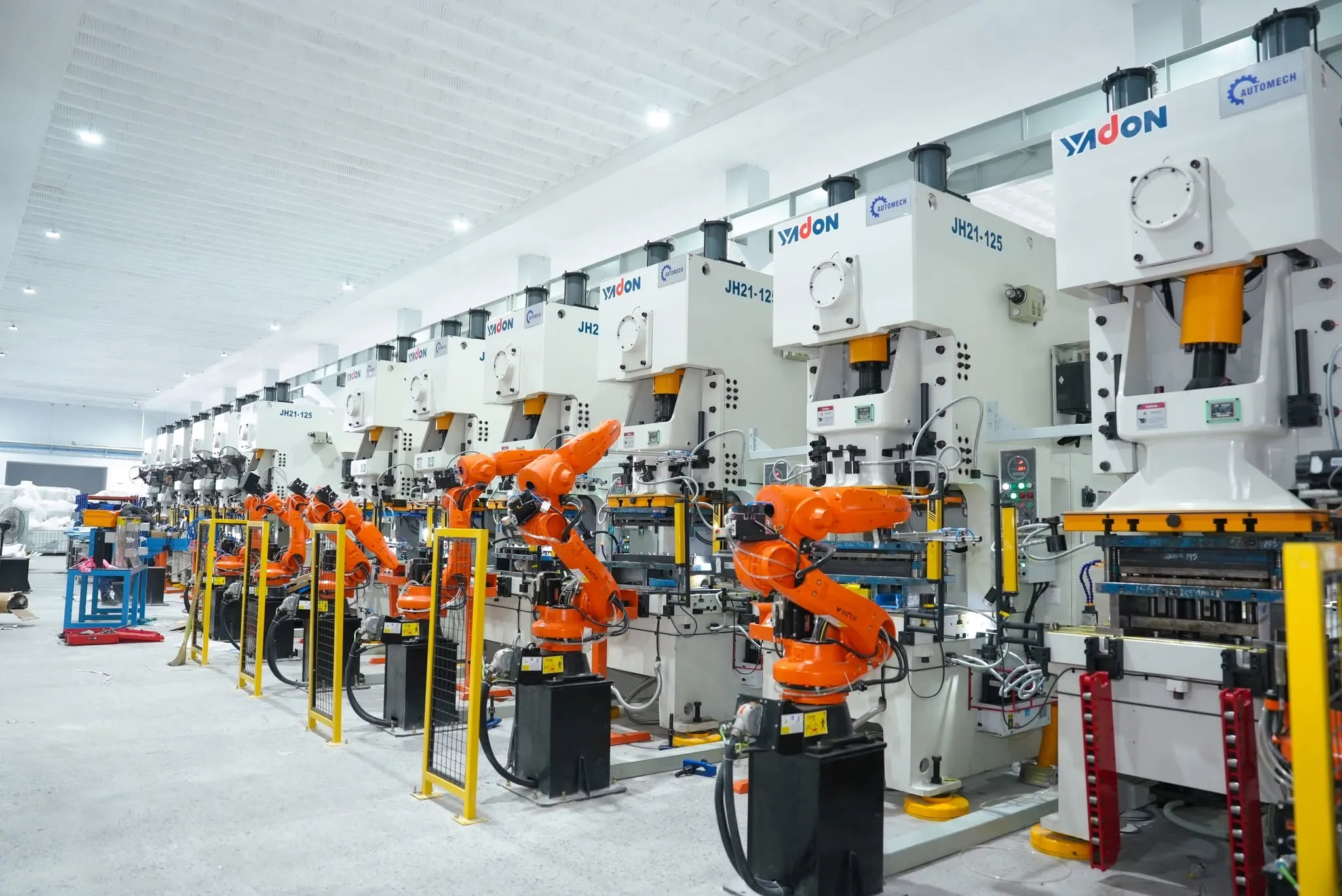
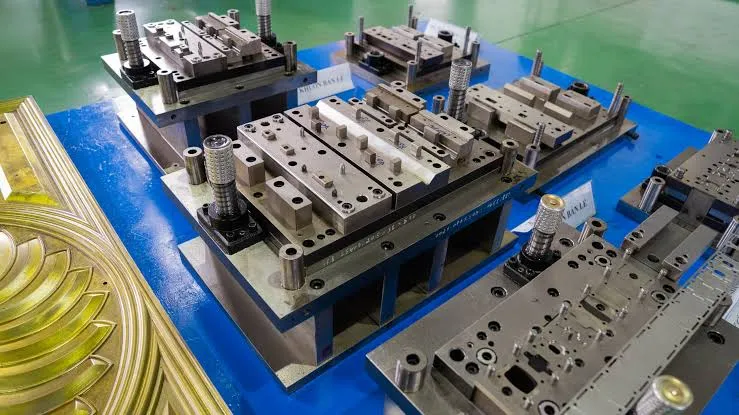
Precision stamping presses and die storage setup supporting flexible automotive OEM sourcing
9. Why Choose Automech as Your Automotive Export Stamping Manufacturer
9.1. Automotive Manufacturing Capabilities
9.1.1. Precision metal stamping
Automech operates high-speed mechanical and hydraulic presses equipped with advanced automation to deliver micro-tolerance stamped parts reliably.
9.1.2. Progressive die stamping
Our dedicated toolrooms design and fabricate multi-station progressive dies that maximize material yields and minimize piece-part costs.
9.1.3. Automotive tooling
We build durable, high-precision tooling engineered to withstand rigorous high-volume production cycles without degradation.
9.1.4. BIW manufacturing
Our facility specializes in complex Body-in-White structural reinforcements, brackets, and safety-critical stampings.
9.1.5. Welding & assembly
We provide turnkey sub-assemblies utilizing precision robotic MIG/TIG and projection welding cells backed by rigorous testing.
9.2. Engineering & Project Support
9.2.1. DFM engineering
Our experienced engineers review your CAD data early to eliminate design flaws, optimize formability, and reduce tooling expenses.
9.2.2. Prototype development
We accelerate your time-to-market with fast-turnaround prototype manufacturing and rigorous pre-production testing.
9.2.3. Tool development
In-house tool design and maintenance guarantee rapid troubleshooting and minimal downtime during active production runs.
9.2.4. Cost optimization
By leveraging strategic material purchasing and manufacturing efficiencies, we deliver highly competitive pricing for global export clients.
9.3. Global Export Experience
9.3.1. US market
We understand the rigorous quality, packaging, and logistical requirements of major American automotive and industrial OEMs.
9.3.2. European market
Our operations comply fully with European quality directives, environmental standards, and regulatory documentation requirements.
9.3.3. Canada & Mexico
We offer seamless NAFTA/USMCA-aligned logistics support and cross-border shipping coordination.
9.3.4. OEM & Tier 1 project support
Automech serves as a trusted Tier 1 and Tier 2 manufacturing partner, ensuring transparent communication and flawless execution.
10. Automotive Export RFQ Process
10.1. Information Required
10.1.1. CAD drawings
Provide 3D models (STEP, IGES, or CATIA) and 2D engineering blueprints with clear GD&T callouts.
10.1.2. Material specifications
Specify exact material grades, thicknesses, and required surface treatments or coatings.
10.1.3. Annual volume
Indicate expected annual usage (EAU) and batch size breakdowns to help us determine optimal press scheduling.
10.1.4. Quality requirements
Detail any specific OEM quality standards, testing protocols, or inspection frequencies.
10.1.5. PPAP level
Specify the required PPAP submission level (typically Level 3 for automotive production parts).
10.2. RFQ Workflow
10.2.1. Engineering review
Our technical team evaluates your package for manufacturing feasibility and material flow behavior.
10.2.2. DFM analysis
We provide actionable feedback on geometry adjustments to improve manufacturability and reduce costs.
10.2.3. Tooling evaluation
We calculate precise tool design requirements, estimated press tonnages, and die fabrication timelines.
10.2.4. Cost estimation
Our estimators compile comprehensive pricing covering raw materials, tool amortization, and piece-part costs.
10.2.5. Quotation
We deliver a transparent, detailed commercial quotation outlining lead times, FOB/CIF terms, and payment structures.
10.2.6. Prototype approval
Upon quotation acceptance, we manufacture initial samples for your engineering sign-off.
10.2.7. Production launch
Following prototype approval, we initiate tool sign-off, PPAP submission, and full-scale mass production.
Ready to optimize your global supply chain? Contact Automech Today to submit your CAD drawings and receive a detailed commercial quotation within 48 hours.
11. Featured Snippet Opportunities
11.1. Definition Snippet
11.1.1. What is an automotive export stamping manufacturer?
An automotive export stamping manufacturer is a specialized industrial supplier that produces high-precision metal stampings, structural brackets, and Body-in-White components for international automotive OEMs and Tier 1 assemblers, managing specialized global logistics and IATF 16949 quality compliance.
11.2. List Snippet
11.2.1. Automotive export manufacturing process
-
Engineering & DFM Review: Evaluating CAD files and simulating metal flow.
-
Tooling & Die Development: Building precision progressive and transfer dies.
-
Coil Processing & Stamping: Blanking, forming, piercing, and deep drawing.
-
Welding & Assembly: Utilizing robotic MIG/TIG and projection welding.
-
Quality Inspection & PPAP: Conducting CMM checks and compiling documentation.
-
Export Packaging & Logistics: Securing parts in VCI packaging for international freight.
11.3. Comparison Table
11.3.1. Vietnam vs China automotive stamping suppliers
-
Tariff Advantage: Vietnam benefits from favorable trade agreements, whereas China faces heavy US tariffs.
-
Cost Efficiency: Vietnam offers competitive labor and stable operational overhead.
-
Supply Chain Risk: Vietnam provides an effective China+1 diversification strategy to insulate against localized disruptions.
11.4. Comparison Table
11.4.1. OEM supplier vs contract manufacturer
-
OEM Supplier: Owns proprietary designs or builds exclusively to exact OEM brand blueprints with complete lifecycle support.
-
Contract Manufacturer: Produces parts based strictly on customer blueprints without dedicated long-term automotive tooling specialization.
11.5. Checklist Snippet
11.5.1. How to choose an automotive export stamping manufacturer
-
Verify IATF 16949 and ISO 9001 certifications.
-
Confirm in-house progressive die tooling and DFM engineering expertise.
-
Evaluate press tonnage capacity and automated robotic welding cells.
-
Review international shipping history and PPAP documentation readiness.
12. People Also Ask
12.1. What is an automotive export stamping manufacturer?
An automotive export stamping manufacturer specializes in converting metal coils into high-precision structural parts, BIW components, and brackets for international vehicle assembly plants, managing complex global logistics and stringent automotive quality standards.
12.2. Why source automotive stamped parts from Vietnam?
Vietnam offers highly competitive manufacturing costs, a skilled engineering workforce, robust export infrastructure, and an expanding automotive ecosystem, making it the premier destination for China+1 supply chain diversification.
12.3. What certifications should an automotive stamping supplier have?
A reputable automotive stamping supplier must hold IATF 16949 and ISO 9001 certifications to guarantee compliance with international automotive quality management systems.
12.4. How do automotive suppliers export to the US and Europe?
Suppliers utilize export-grade VCI packaging, reinforced pallets, and containerized ocean or air freight, backed by complete commercial invoices, certificates of origin, and customs clearance documentation.
12.5. What is PPAP in automotive manufacturing?
PPAP (Production Part Approval Process) is a standardized automotive framework that provides documentation proving the supplier understands all customer engineering requirements and can consistently manufacture conforming parts.
12.6. Why are OEMs shifting sourcing from China to Vietnam?
Global OEMs are shifting sourcing to Vietnam to mitigate geopolitical risks, avoid escalating tariffs, and stabilize long-term supply chain resilience through effective regional diversification.
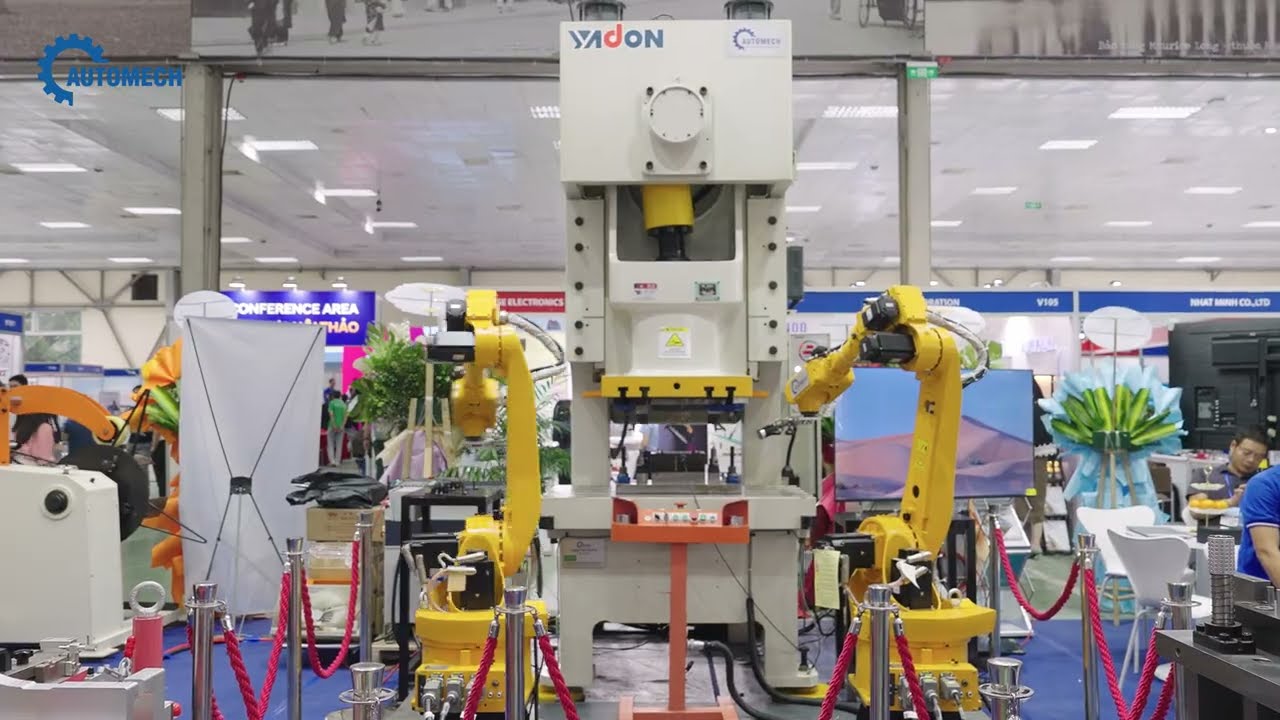
Multi-stage automated stamping production line tailored for high-efficiency automotive OEM manufacturing
12.7. How do I evaluate an automotive export stamping manufacturer?
Evaluation involves reviewing their engineering and DFM capabilities, press tonnage and welding capacity, quality inspection equipment (CMM, FAI), and international shipping track record.
12.8. How do I request an automotive stamping RFQ?
To request an RFQ, provide 3D CAD models, 2D blueprints with GD&T, material specifications, annual volume projections, and your required PPAP submission level.
13. Frequently Asked Questions
13.1. Can you manufacture OEM automotive stamped components?
Yes. Automech operates as a dedicated OEM and Tier 1 manufacturing partner, producing high-precision BIW components, structural brackets, and chassis parts built strictly to customer specifications.
13.2. What materials do you process?
We process a wide range of automotive-grade metals, including mild steel, High-Strength Steel (HSS), Advanced High Strength Steel (AHSS), stainless steel, and lightweight aluminum alloys.
13.3. Do you support prototype and mass production?
Yes. We offer rapid prototype manufacturing for initial design validation as well as scalable, multi-shift mass production for long-term commercial supply agreements.
13.4. Can you provide PPAP documentation?
Yes. We provide complete PPAP documentation packages up to Level 3, including FMEA, control plans, MSA studies, and dimensional inspection reports.
13.5. Which countries do you export to?
Automech regularly exports precision stamped components to automotive assembly plants and Tier 1 warehouses across the United States, Europe, Canada, Mexico, and regional Asian markets.
13.6. How long does tooling development take?
Tooling development typically ranges from 6 to 12 weeks depending on part complexity, die geometry (progressive vs. transfer), and material specifications.
13.7. How can I request a quotation from Automech?
You can request a commercial quotation by submitting your CAD drawings, material requirements, and annual volume estimates directly through our RFQ Portal. Our engineering team will review your files and respond within 48 hours.
Automech Mechanical Equipment and Solutions Joint Stock Company
Head Office: No. 285 Phuc Loi Street, Phuc Loi Ward, Hanoi City
Da Nang Branch: No. 20 Nguyen Sinh Sac Street, Hoa Khanh Ward, Da Nang City
Ho Chi Minh Branch: No. 84, Street No. 10, Van Phuc Urban Area, Hiep Binh Ward, Ho Chi Minh City
Factory No. 1: Automech Automation Equipment, Mold & Tool Manufacturing Factory – Automech Demo Center: Dinh Tram Industrial Park, Nenh Ward, Bac Ninh City, Vietnam
Factory No. 2: Automech Parts Manufacturing & Component Fabrication Factory: Viet Nhat Industrial Cluster, Xuan Cam Commune, Bac Ninh City, Vietnam
Hotline: 0987 899 347
Website: https://automechmfg.com/
Fanpage: https://www.facebook.com/automech.mfg/
YouTube: https://www.youtube.com/@Automechmfg