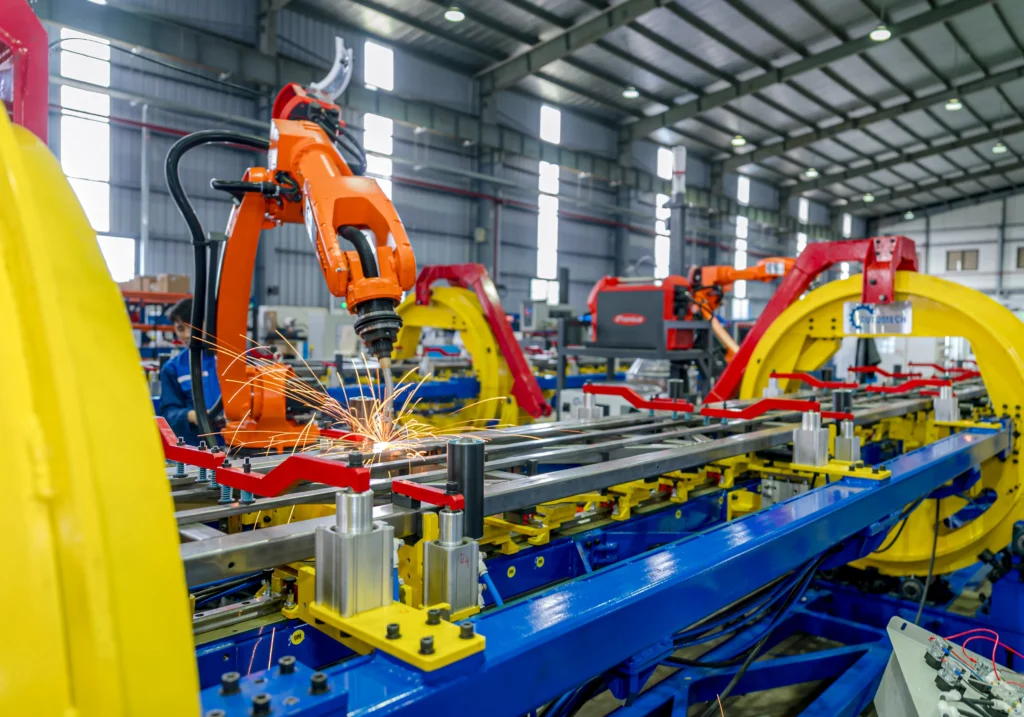
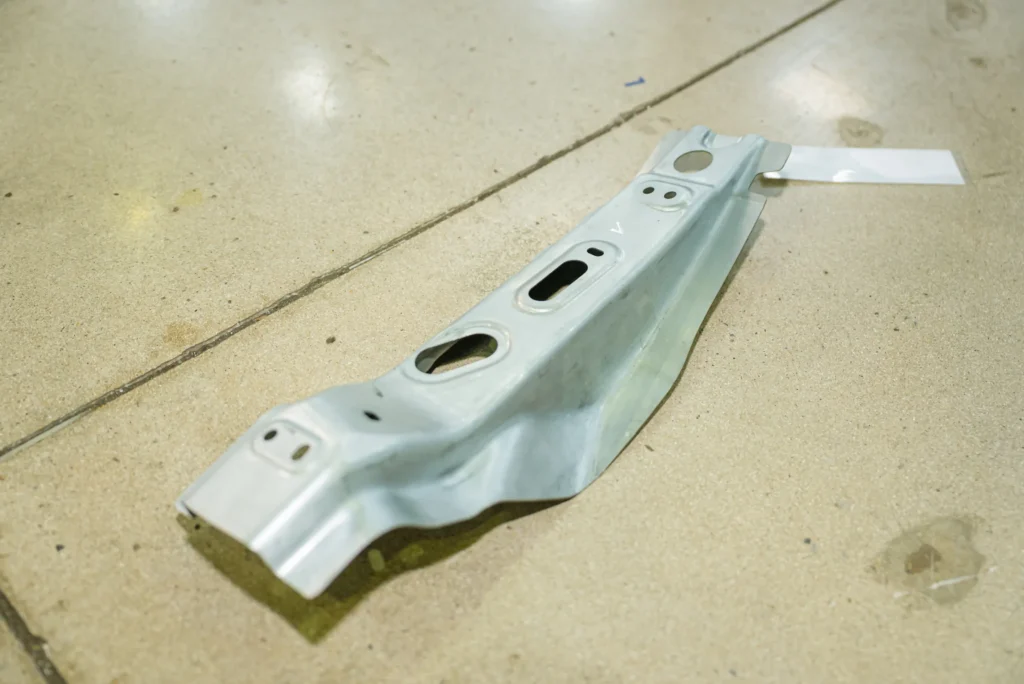
In modern industrial automation, advanced manufacturing relies heavily on the integration of mechanical engineering, electronics, and digital control software. At the heart of this multi-disciplinary framework is the Mechatroniker (Mechatronics Technician)—a highly skilled technical professional capable of operating, maintaining, and troubleshooting complex automated machinery. From robotic welding cells and progressive stamping presses to high-precision Body-in-White (BIW) assembly lines, the Mechatroniker ensures high operational efficiency, minimal downtime, and consistent quality across modern smart factories.
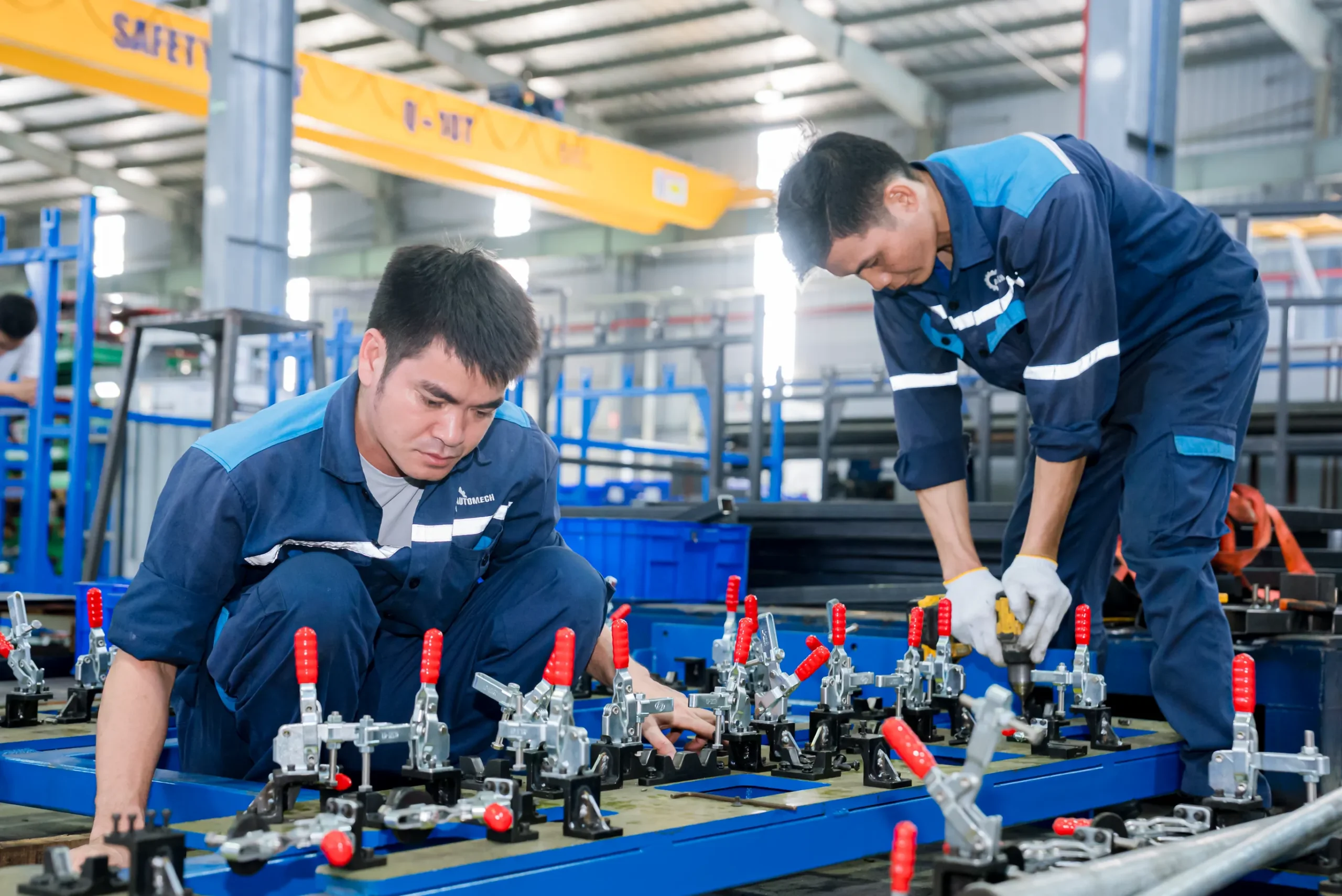
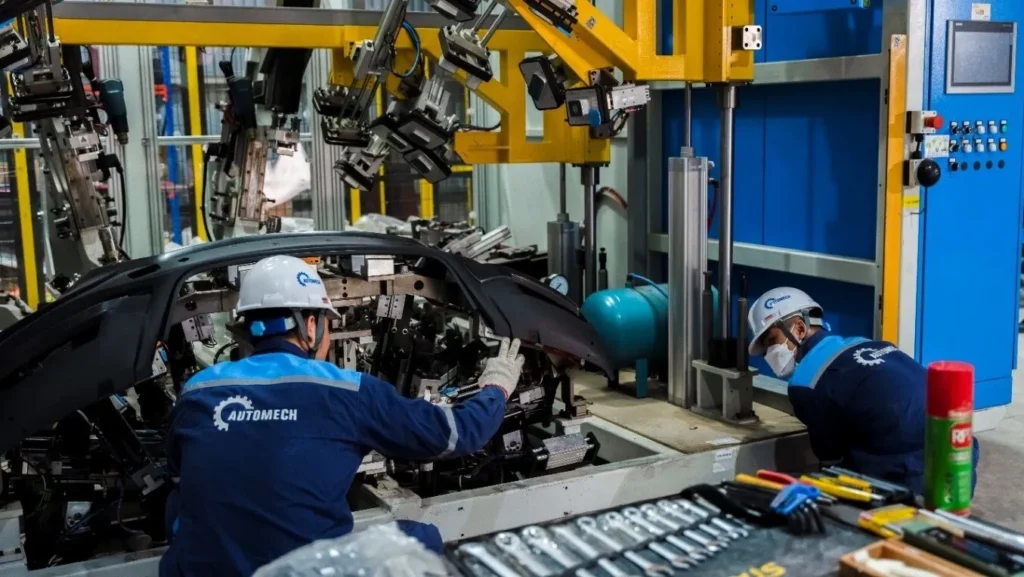
Two technicians in blue uniforms inspecting and assembling mechanical clamping fixtures (jigs) on a blue steel frame inside an industrial factory
1. What Is a Mechatroniker?
1.1 What Does Mechatroniker Mean?
1.1.1 Definition of Mechatroniker
The term Mechatroniker originates from the German industrial education system, describing a specialist who combines mechanics (Mechanik), electronics (Elektronik), and information technology (Informatik). In international manufacturing, a Mechatroniker is defined as a multi-skilled technician responsible for assembling, installing, commissioning, maintaining, and repairing complex mechatronic systems.
1.1.2 Mechatroniker as a Mechatronics Technician
Unlike traditional specialists whose expertise is confined to a single domain, a Mechatroniker bridges the gap between mechanical fitters, industrial electricians, and automation programmers. They understand both the physical dynamics of machine mechanics and the logical control structures governing automated hardware.
1.1.3 Relationship Between Mechanics, Electronics and Automation
A mechatronic system operates through three interconnected layers:
- Mechanical Structure: The physical frame, gears, actuators, linkages, and fluid power mechanisms.
- Electronics & Hardware: Power distribution, sensor interfaces, servo drives, wiring harnesses, and microcontrollers.
- Control Software: Programmable Logic Controller (PLC) code, Human-Machine Interface (HMI) menus, feedback loops, and communication protocols.
1.2 What Is Mechatronics?
1.2.1 Mechanical Engineering
Mechanical engineering provides the physical foundation for machinery, focusing on structural dynamics, kinematics, materials science, hydraulics, and pneumatics to enable controlled movement and mechanical work.
1.2.2 Electrical and Electronic Systems
Electrical engineering governs power supply, signal transmission, and electronic circuits. It connects switches, sensors, power modules, and electric motors to deliver precise energy distribution across machine networks.
1.2.3 Control Engineering and Automation
Control engineering utilizes mathematical algorithms and programmable controllers to direct machine behavior. It processes real-time sensor feedback to adjust actuator outputs, maintaining accurate positioning, speed, and timing.
1.2.4 Integration of Mechanical and Digital Systems
Modern mechatronics fuses mechanical elements with digital intelligence. Physical movement is continuously monitored by digital sensors, processed by computerized controllers, and corrected via closed-loop feedback systems.
1.3 Mechatroniker vs Mechatronics Engineer
1.3.1 Education and Training
- Mechatroniker (Technician): Completes a dual vocational training program (Ausbildung) or technical diploma (3 to 3.5 years), emphasizing hands-on diagnostics, installation, wiring, mechanical adjustment, and shop-floor machine maintenance.
- Mechatronics Engineer: Holds a Bachelor’s or Master’s degree in Engineering (B.Sc./M.Sc.), focusing on theoretical mathematical modeling, software development, CAD system design, and overall plant architecture.
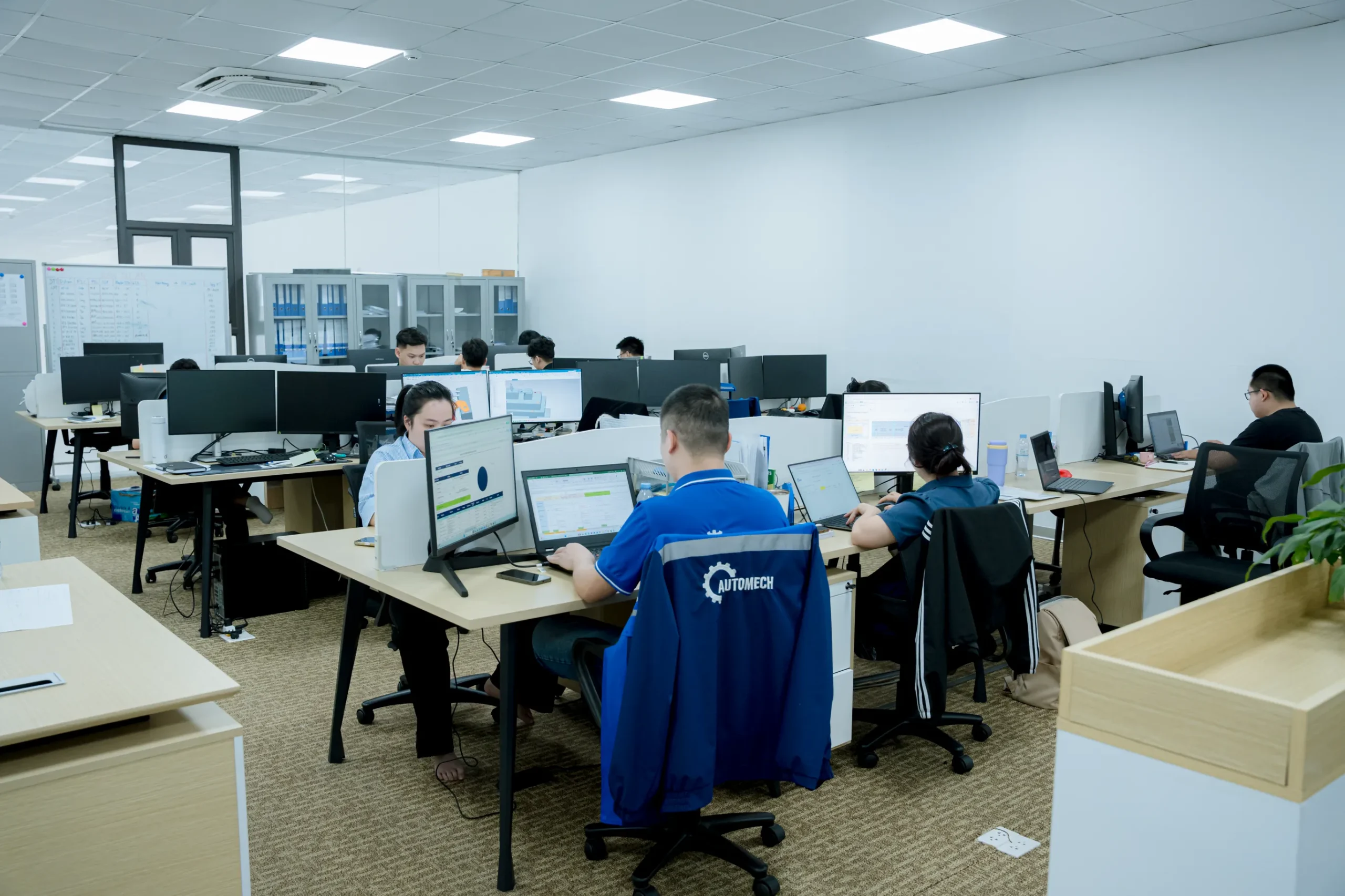
Engineers and designers working at computer workstations in a modern office, developing mechanical and technical drawings
1.3.2 Practical Technical Responsibilities
The Mechatroniker operates directly on the plant floor. Their daily tasks involve physical assembly, electrical panel wiring, sensor calibration, mechanical alignment, PLC fault tracing, and preventive maintenance routines.
1.3.3 Engineering and System Development Responsibilities
Mechatronics Engineers focus on high-level system design. They develop initial CAD blueprints, simulate kinematic motions, program core software algorithms, establish quality control matrices, and manage capital equipment projects.
2. What Does a Mechatroniker Do?
2.1 Core Responsibilities
2.1.1 Installing and Commissioning Machinery
Mechatronikers assemble structural machine frames, mount mechanical drives, route pneumatic and hydraulic lines, wire electrical control cabinets, and load control software. During commissioning, they run calibration cycles to verify signal continuity and operational parameters before releasing machinery to production.
2.1.2 Maintaining Production Equipment
Routine maintenance helps prevent sudden equipment breakdowns. Mechatronikers inspect wear components, replace fluid filters, check lube levels, tension drive belts, recalibrate sensors, and update controller firmware across factory lines.
2.1.3 Diagnosing Mechanical and Electrical Failures
When production lines stop, the Mechatroniker conducts systematic root-cause analysis. They trace mechanical jams, electrical short circuits, hydraulic pressure drops, and PLC software faults to restore operation quickly.
2.2 Machine Troubleshooting
2.2.1 Mechanical Troubleshooting
Includes identifying worn bearings, misaligned linear guides, damaged gear teeth, leaking pneumatic cylinders, and loose drive couplings that cause mechanical chatter or dimensional drift.
2.2.2 Electrical Troubleshooting
Involves using digital multimeters, oscilloscopes, and circuit schematics to trace blown fuses, tripped circuit breakers, degraded cable insulation, loose terminal screws, and failed power supplies.
2.2.3 PLC and Control System Diagnostics
Mechatronikers connect industrial laptops to PLCs (e.g., Siemens S7-1500, Allen-Bradley ControlLogix) to monitor live ladder logic diagrams. They trace missing I/O signals, identify program interlock faults, and resolve software communication timeouts.
2.2.4 Sensor and Actuator Fault Detection
Technicians test inductive proximity switches, optical sensors, rotary encoders, laser distance meters, solenoid valves, and servo drives to ensure field signals match control requirements.
2.3 Maintenance Responsibilities
2.3.1 Preventive Maintenance
Executing scheduled maintenance checklists based on machine operating hours or cycle counts to replace consumable parts before structural failure occurs.
2.3.2 Predictive Maintenance
Utilizing condition monitoring technologies—such as vibration analysis, infrared thermography, and oil condition sampling—to detect component degradation before functional breakdown.
2.3.3 Machine Safety and Reliability
Ensuring all safety circuits, light curtains, emergency stop buttons, interlocked guard doors, and pressure relief valves comply with international machinery safety standards (ISO 13849 / IEC 62061).
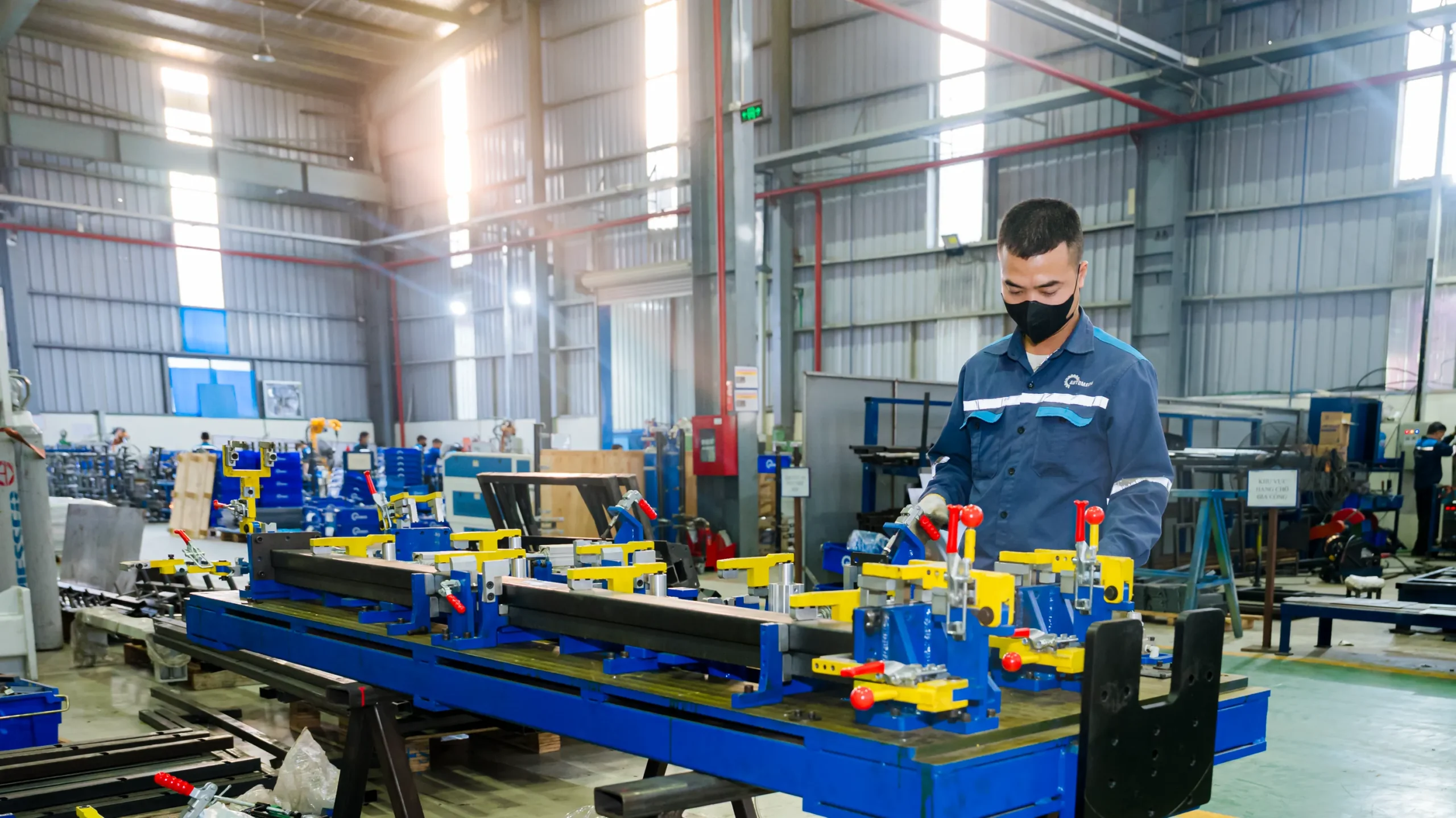
A technician wearing a protective mask inspecting complex mechanical fixtures and assembly jigs in the factory line
3. Skills Required for a Mechatroniker
3.1 Mechanical Skills
3.1.1 Mechanical Components and Systems
Understanding fit tolerances, bearing seats, shaft alignments, power transmission screws, rack-and-pinion drives, and mechanical fastener torque specifications.
3.1.2 Pneumatic and Hydraulic Systems
Reading fluid power schematics, adjusting pressure regulators, setting directional control valves, repairing cylinder seals, and maintaining hydraulic power units (HPUs).
3.1.3 Machine Assembly and Adjustment
Using precision hand tools, dial indicators, torque wrenches, micrometers, and laser alignment devices to assemble structural modules within tight geometric limits.
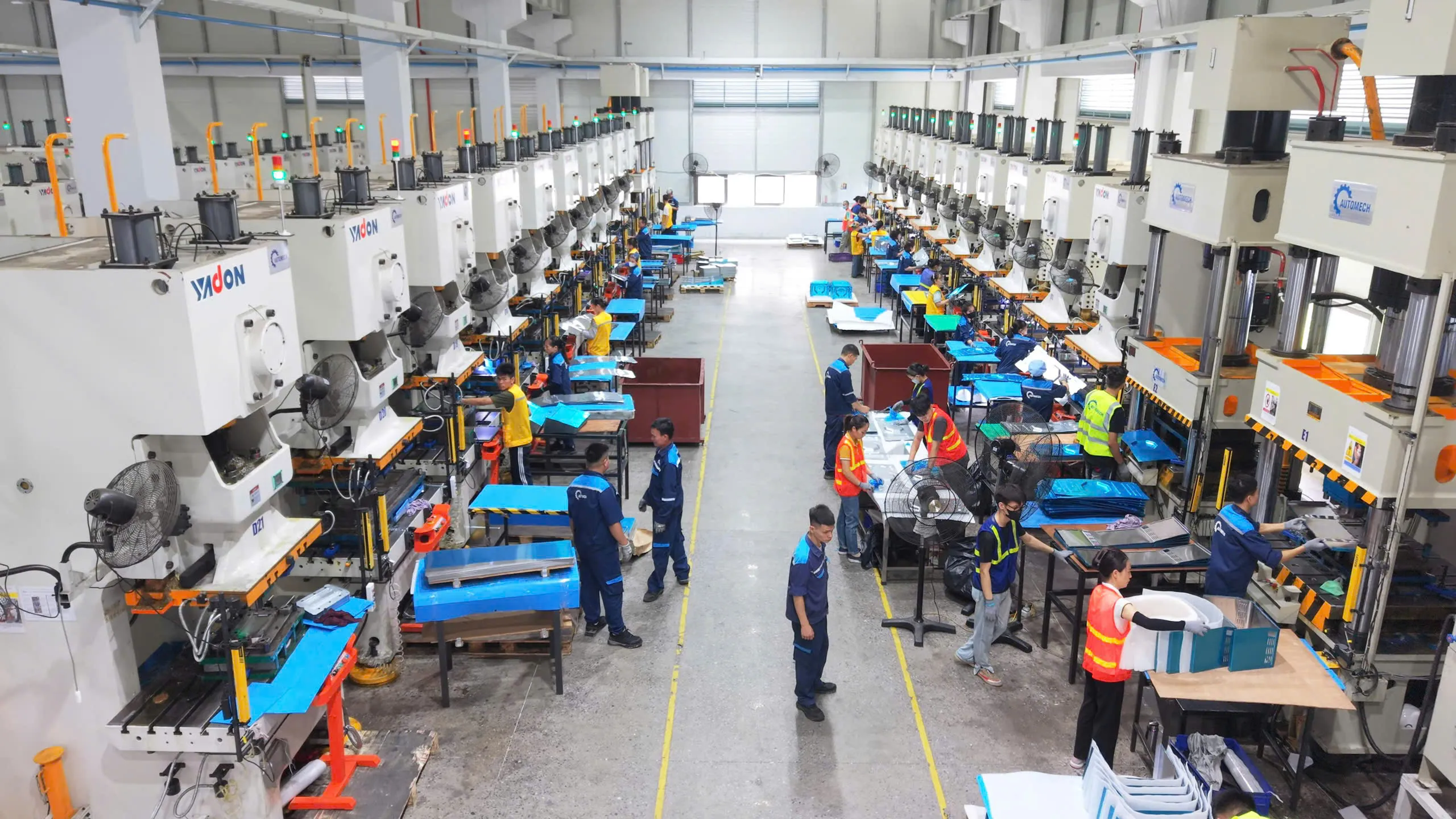
An elevated wide shot of a metal stamping production line, showcasing an organized factory floor with multiple industrial press machines and workers processing metal components
3.2 Electrical and Electronic Skills
3.2.1 Electrical Circuits
Reading complex electrical schematics (EPLAN format), wiring 3-phase AC power networks, 24V DC control loops, relay logic, and ground fault protection circuits.
3.2.2 Sensors and Actuators
Connecting and configuring photoelectric, capacitive, inductive, ultrasonic, and vision sensors alongside electric linear actuators, solenoids, and heaters.
3.3.3 Servo Motors and Drives
Configuring variable frequency drives (VFDs) and brushless AC servo drives, tuning PID velocity loops, and setting absolute encoder home offsets.
3.3 Automation and Control Skills
3.3.1 PLC Programming and Diagnostics
Reading and modifying PLC code (Ladder Diagram – LD, Structured Text – ST, Function Block Diagram – FBD), forcing I/O bits during troubleshooting, and updating fieldbus node configurations.
3.3.2 HMI Systems
Operating, troubleshooting, and configuring Human-Machine Interface panels (touchscreens) to monitor alarm history, adjust cycle timers, and execute manual machine steps.
3.3.3 Industrial Automation
Understanding fieldbus communication networks including PROFINET, PROFIBUS, EtherNet/IP, EtherCAT, and IO-Link for real-time device control.
3.3.4 Production Monitoring
Utilizing SCADA (Supervisory Control and Data Acquisition) systems and MES (Manufacturing Execution Systems) software to track line efficiency metrics (OEE).
4. Mechatronics Systems Used in Automotive Manufacturing
[Sheet Metal Stamping Press] ➔ [Robotic Welding Cell] ➔ [Automated BIW Framing] ➔ [Vision & CMM Quality Inspection]
4.1 Automotive Production Machinery
4.1.1 CNC Machining Systems
Multi-axis CNC milling machines and lathes utilize closed-loop servo drives, linear encoders, and automated tool changers to machine engine blocks, transmission cases, and chassis brackets with sub-micron accuracy.
4.1.2 Metal Stamping Presses
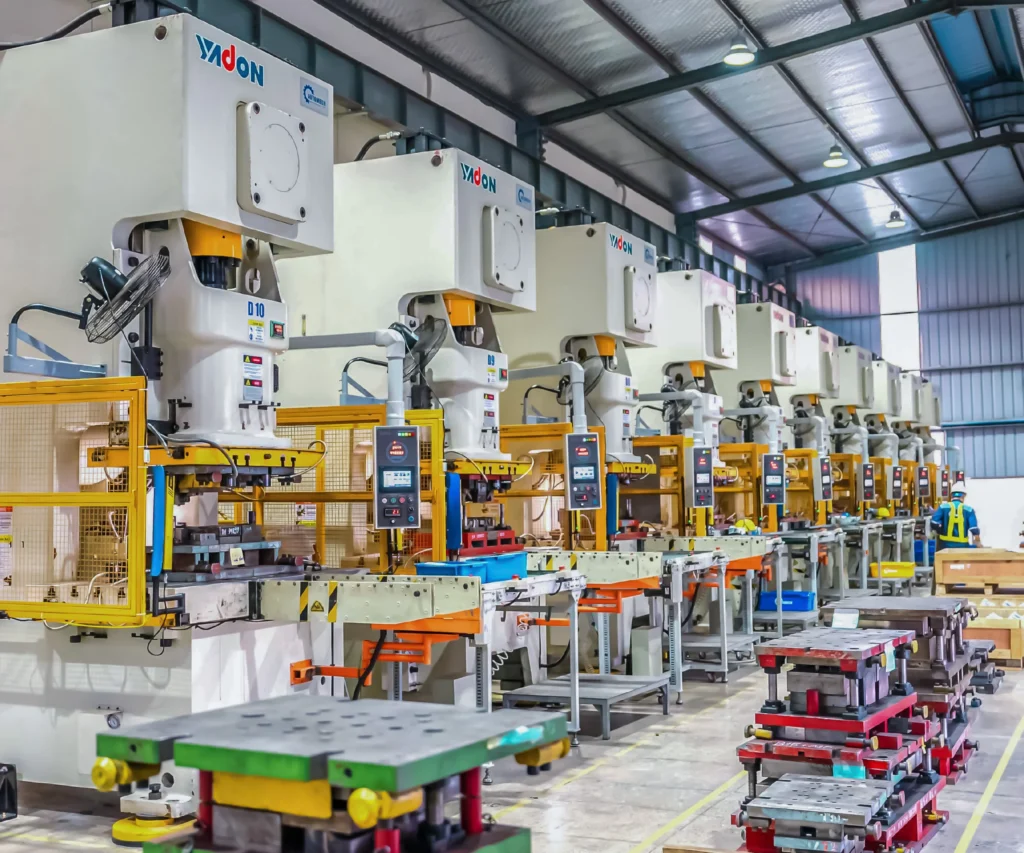
Heavy mechanical, hydraulic, and servo presses (400T to 2500T) feature electronic coil feeds, hydraulic die clamps, and automated tonnage monitoring systems to form structural body panels.
4.1.3 Progressive Stamping Equipment
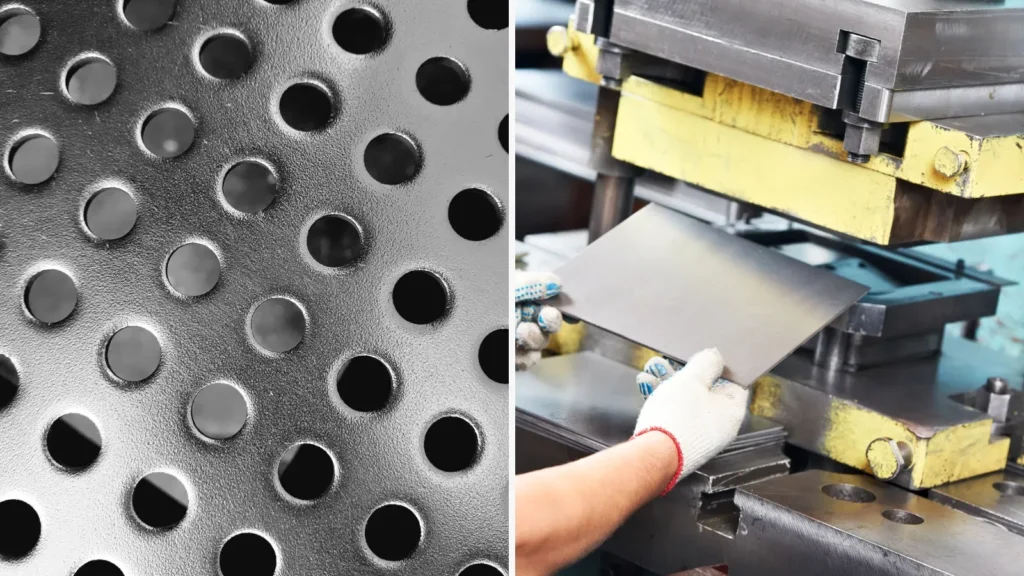
Progressive die lines combine multiple blanking, piercing, and bending stations inside a single die set, operating at high stroke speeds under continuous sensor monitoring.
4.2 Automated Welding and Assembly
4.2.1 Robotic Welding Cells
Multi-axis industrial robots (KUKA, ABB, Fanuc) perform Resistance Spot Welding (RSW), MIG/MAG arc welding, and laser welding inside enclosed safety cells.
4.2.2 Automated Assembly Lines
Synchronized assembly systems incorporate pick-and-place gantry robots, automated screw-driving spindles, and adhesive dispensing heads to assemble complex vehicle modules.
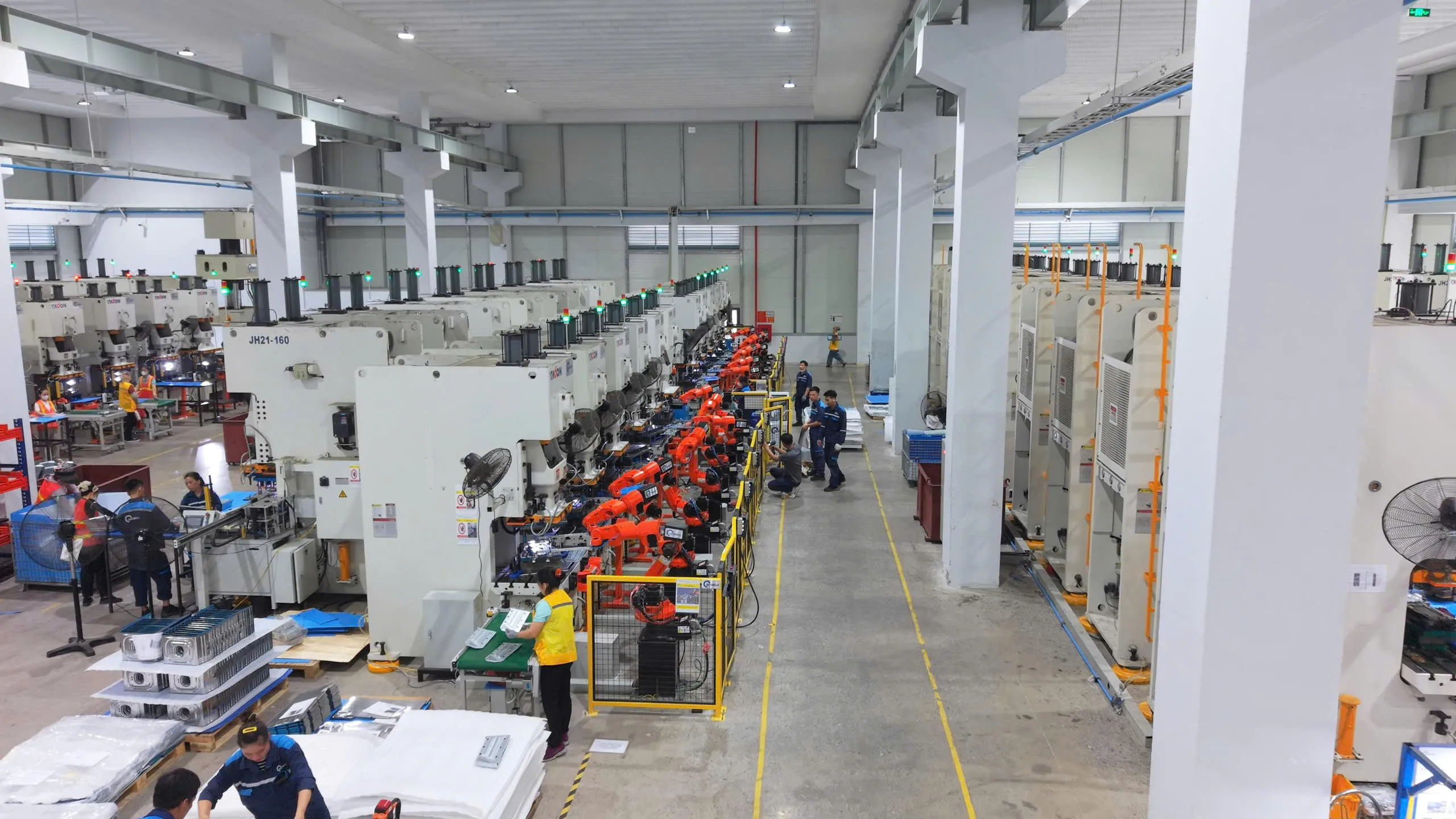
An overhead view of a highly automated factory floor, featuring heavy stamping machinery integrated with orange industrial robotic arms behind safety fencing
4.2.3 Conveyor and Material Handling Systems
Automated Guided Vehicles (AGVs), Autonomous Mobile Robots (AMRs), roller conveyors, and overhead monorail systems transport parts between production stations.
4.3 Automated Inspection Systems
4.3.1 Sensors and Measurement Systems
Laser displacement sensors, linear variable differential transformers (LVDTs), and touch probes measure critical dimensional tolerances online.
4.3.2 Vision Inspection
Industrial 2D and 3D camera systems run optical pattern-recognition algorithms to check weld seam continuity, hole counts, surface flaws, and weld nut presence in real time.
4.3.3 Production Quality Monitoring
Automated statistical process control (SPC) systems monitor manufacturing parameters (e.g., press tonnage curves, weld current logs) to flag out-of-spec parts instantly.
5. The Role of a Mechatroniker in Automotive Production
5.1 Supporting Automotive Manufacturing Equipment
5.1.1 Machine Installation and Commissioning
Setting up new production machinery on the factory floor, verifying power and pneumatic supplies, teaching robot position waypoints, and aligning mating conveyors.
5.1.2 Production Line Maintenance
Executing scheduled inspections and overhauls on high-speed transfer lines to ensure zero unbudgeted stops during active production shifts.
5.1.3 Equipment Troubleshooting
Responding quickly to line-stop alarms, locating broken sensor cables, replacing burnt-out servo drivers, or mechanically unjamming transfer arms.
5.2 Automation and Production Efficiency
5.2.1 Reducing Machine Downtime
Prompt fault isolation minimizes Mean Time to Repair (MTTR), directly increasing overall line throughput.
5.2.2 Improving Equipment Availability
Proactive preventive maintenance elevates Overall Equipment Effectiveness (OEE) metrics above target thresholds (>85%).
5.2.3 Optimizing Automated Production Processes
Fine-tuning robot path trajectories, accelerating pneumatic cylinder stroke times, and optimizing PLC scan times to shave fractions of a second off production cycle times.
5.3 Mechatronics in Vehicle Manufacturing
5.3.1 Metal Stamping
Maintaining automated coil levelers, transfer press grippers, optical sheet centering systems, and scrap removal belts.
5.3.2 Welding Automation
Servicing robotic weld water-cooling circuits, dressing resistance welding copper tips, cleaning MIG gas nozzles, and calibrating wire feeders.
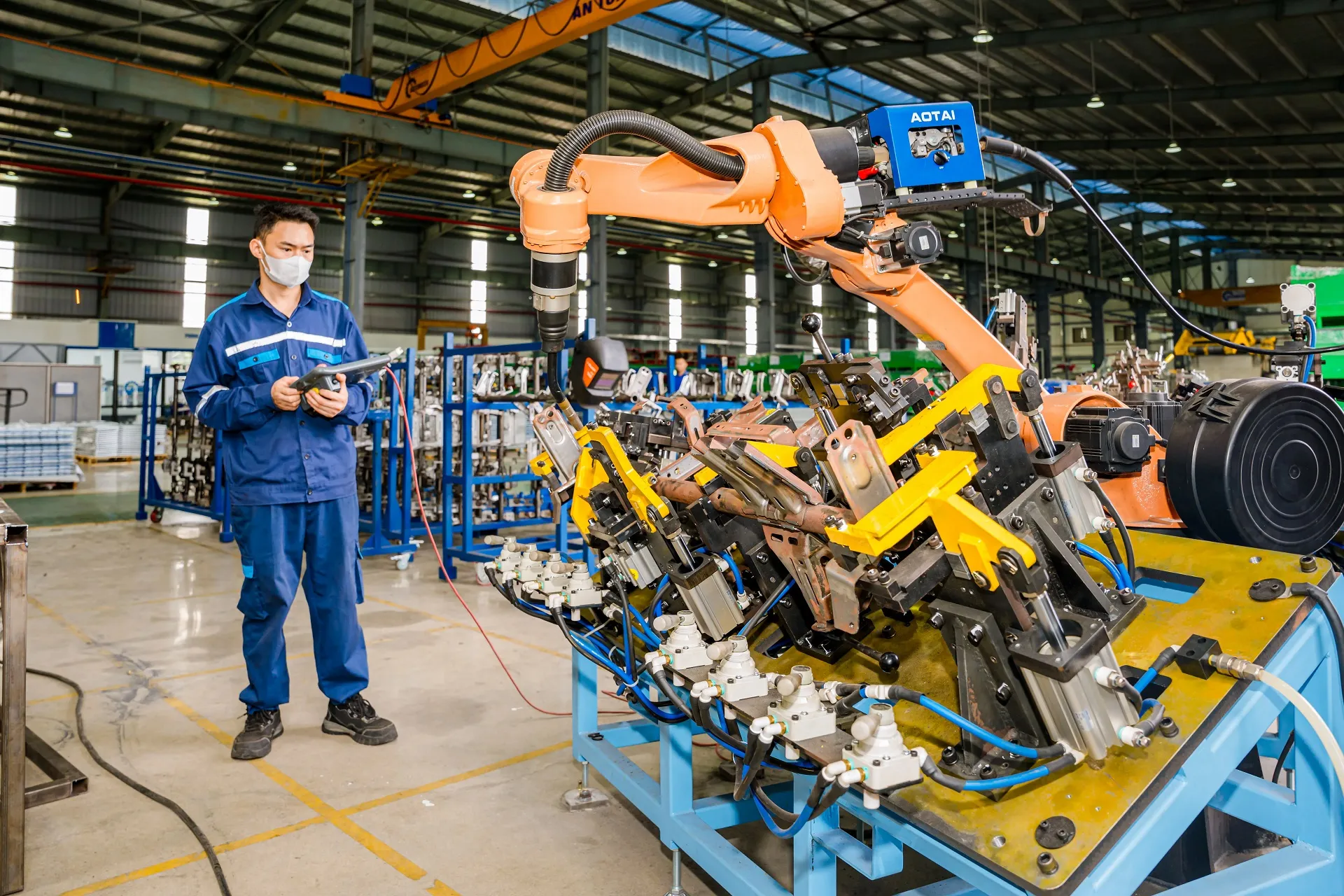
An engineer using a handheld teach pendant to program and control an industrial robotic welding arm
5.3.3 Assembly Automation
Maintaining automatic torque-controlled nut runners, vision-guided glass insertion robots, and cockpit installation manipulators.
5.3.4 BIW Manufacturing
Ensuring framing jigs, pneumatic clamps, and shuttle transfer rails maintain absolute geometric accuracy when locking the car chassis together.
6. Mechatroniker Working With CNC, Stamping and Welding Systems
6.1 CNC Machine Applications
6.1.1 CNC Machine Setup
Calibrating tool length sensors, setting work coordinate offsets (G54-G59), checking coolant pump pressures, and verifying hydraulic chuck clamping forces.
6.1.2 Sensors and Servo Systems
Maintaining glass optical scales, rotary encoders, thermal compensation probes, and high-dynamic AC brushless servo motors controlling linear axis axes (X,Y,Z,A,B).
6.1.3 CNC Troubleshooting and Maintenance
Diagnosing axis tracking errors, ball screw backlash issues, spindle drive overheating, and automatic tool changer (ATC) sequencing jams.
6.2 Stamping Machine Applications
6.2.1 Stamping Press Control Systems
Servicing press main drive VFDs, hydraulic clutch/brake valves, rotary cam limit switches, and electronic die protection systems.
6.2.2 Progressive Die Production Equipment
Maintaining high-speed strip feeders, scrap choppers, part ejector blow-offs, and in-die sensing systems that prevent die crashes.
6.2.3 Sensors and Safety Systems
Testing dual-channel safety light curtains, perimeter safety interlocking gates, flywheel brake monitors, and hydraulic overload protection circuits.
6.3 Welding System Applications
6.3.1 Robotic Welding Equipment
Maintaining 6-axis articulated robots, weld controller power modules, protective torch covers, and gas shielding flow meters.
6.3.2 Welding Fixtures and Positioning Systems
Servicing pneumatic clamping cylinders, proximity sensors embedded inside welding jigs, and heavy-duty motor-driven rotary positioners (turntables).
6.3.3 Welding Cell Monitoring and Maintenance
Monitoring weld current feedback logs, checking tip dress cutter blades, replacing spatter-damaged sensor faces, and cleaning optical laser seam tracking optics.
7. Mechatronics in Vehicle Body Manufacturing
7.1 Body-in-White Manufacturing
7.1.1 Automated BIW Production Lines
BIW production lines rely on interconnected robotic cells that transform raw flat sheet pressings into complete, unpainted vehicle body shells.
7.1.2 Robotic Welding Systems
Over 500 robots can operate on a modern BIW line, performing spot welding, laser brazing, structural adhesive dispensing, and flow-drill screwdriving.
7.1.3 Automated Body Structure Assembly
High-speed framing shuttles position floor pans, side frames, and roof structures in 3D space with high positional accuracy while robots apply framing welds.
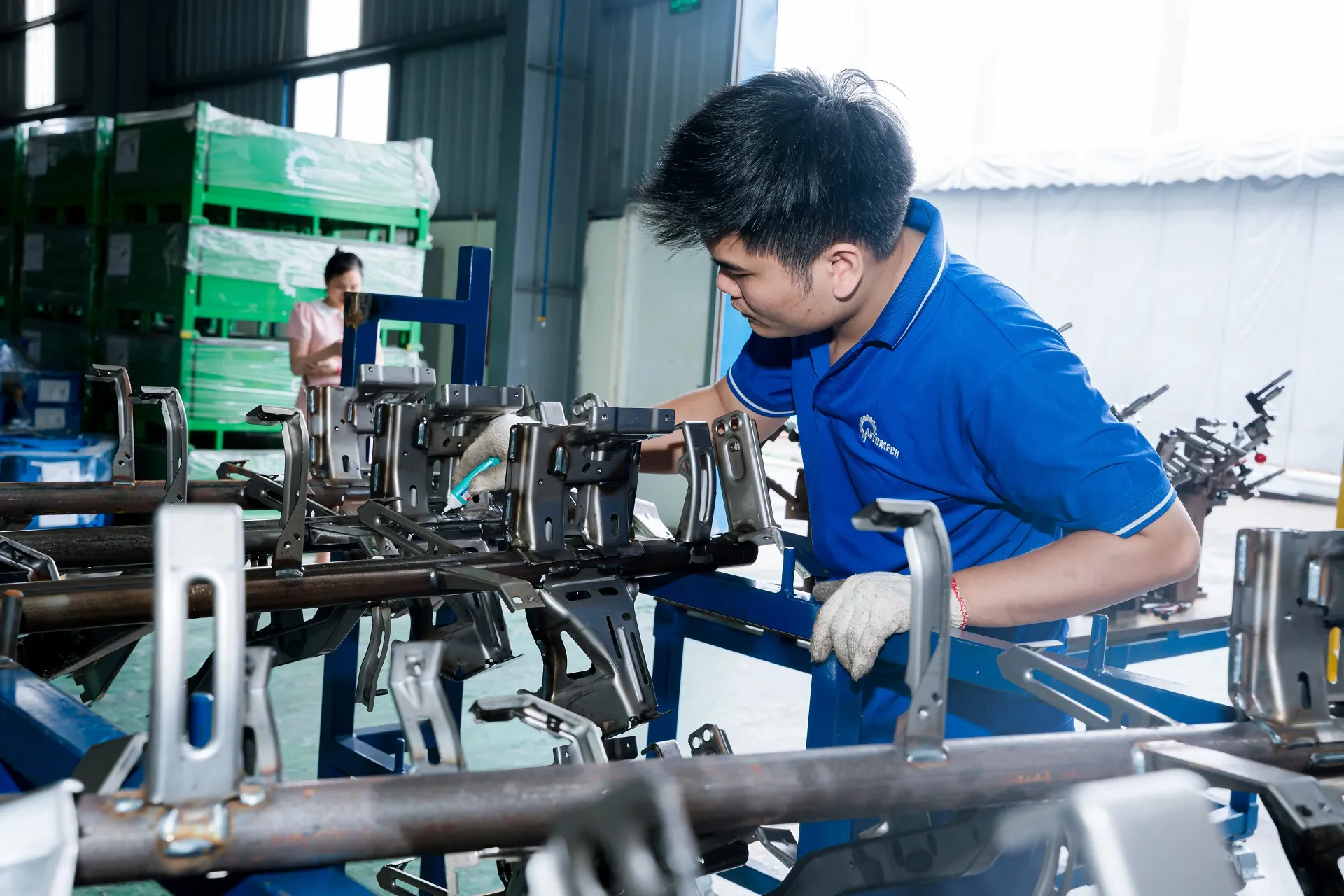
A technician carefully applying liquid sealant or lubricant to a metal frame assembly in the workshop
7.2 Vehicle Body Structure Equipment
7.2.1 Stamping Equipment
Large tandem press lines stamp structural floor pans, door inner/outer skins, fender panels, and A/B/C pillars from high-strength steel coils.
7.2.2 Welding Fixtures
Heavy-duty pneumatic assembly fixtures secure loose body panels in exact spatial coordinates prior to robotic joinery.
7.2.3 Automated Assembly Systems
Elevated monorails, roller bed shuttles, and industrial transfer robots transport semi-finished body shells down the assembly line.
7.3 Mechatronics and Production Quality
7.3.1 Automated Dimensional Inspection
Inline optical laser measuring tunnels check hundreds of geometric points on every welded body shell, comparing dimensions against original CAD models.
7.3.2 Process Monitoring
Real-time sensor networks log press tonnage, weld current, electrode force, and adhesive bead width for 100% of manufactured units.
7.3.3 Traceability and Production Data
Laser-etched QR codes and RFID tags mounted to body carriers track every car shell’s complete manufacturing history through the BIW line.
8. Mechatronics in Cross Car Beam Manufacturing
8.1 Cross Car Beam Production Equipment
8.1.1 Cross Car Beam Stamping Systems
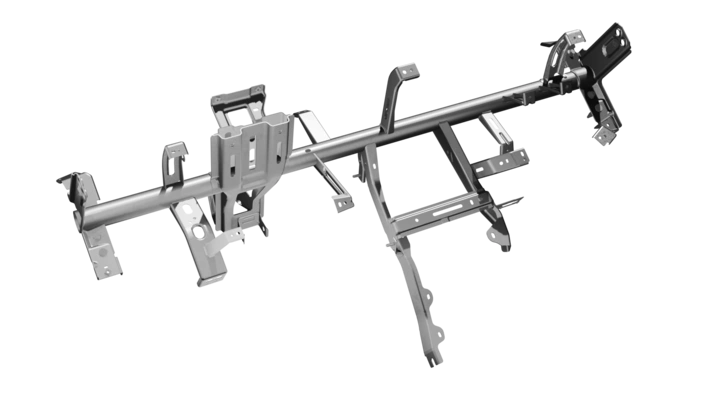
Heavy progressive and transfer press lines shape high-strength steel mounting brackets and end flanges used in Cross Car Beam (CCB) assemblies.
8.1.2 Cross Car Beam Welding Equipment
Automated robotic cells perform continuous MIG fillet welds and spot welds, fusing stamped brackets onto the main steel or aluminum CCB tube.
8.1.3 Cross Car Beam Assembly Systems
Integrated assembly machines press clinch nuts, route cable brackets, and install dampening bushings onto the welded CCB frame.
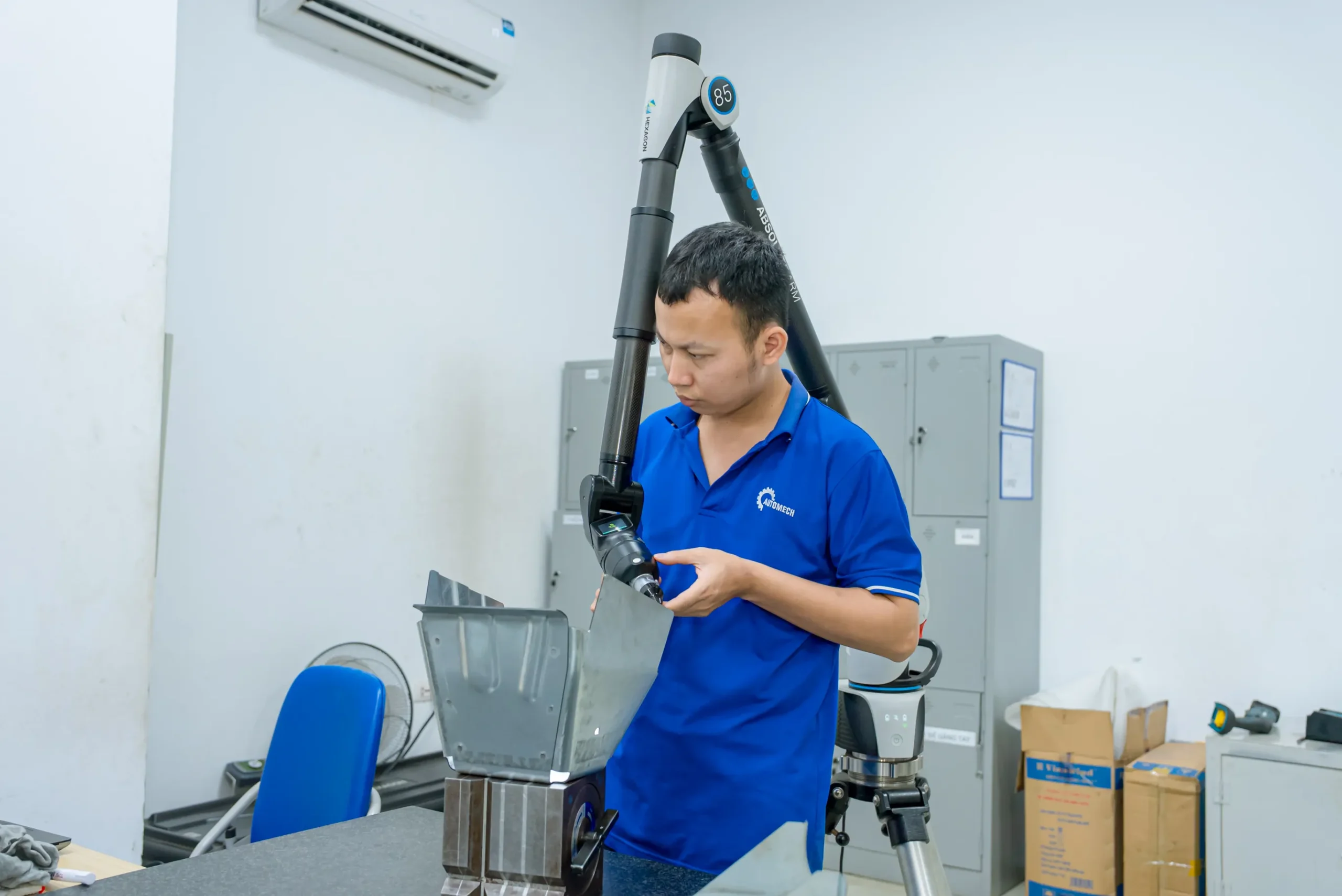
A technician in a blue shirt using a 3D articulated measuring arm (CMM arm) to inspect and measure the dimensional accuracy of a metal component
8.2 Automation Technologies for Cross Car Beam Production
8.2.1 Robotic Welding
Synchronized 6-axis robots execute precise weld paths along complex 3D contours, maintaining consistent weld penetration and minimal thermal distortion.
8.2.2 Automated Assembly
Precision pneumatic actuators and servo presses install heavy mounting studs and bushings with controlled press forces.
8.2.3 Sensors and Positioning Systems
Inductive sensors, laser positioning modules, and pneumatic clamps lock raw components into exact datum locations before welding.
8.2.4 PLC-Controlled Production Lines
Centralized PLCs orchestrate part loading, robot welding programs, vision inspection steps, and part ejection routines.
8.3 Mechatroniker Responsibilities in Cross Car Beam Manufacturing
8.3.1 Machine Maintenance
Regularly servicing tube bending hydraulics, stamping press dies, robotic welding torches, and automated checking fixtures.
8.3.2 Production Line Troubleshooting
Clearing part transfer jams, tracing false sensor signals inside welding jigs, and recalibrating robot TCPs (Tool Center Points) after torch collisions.
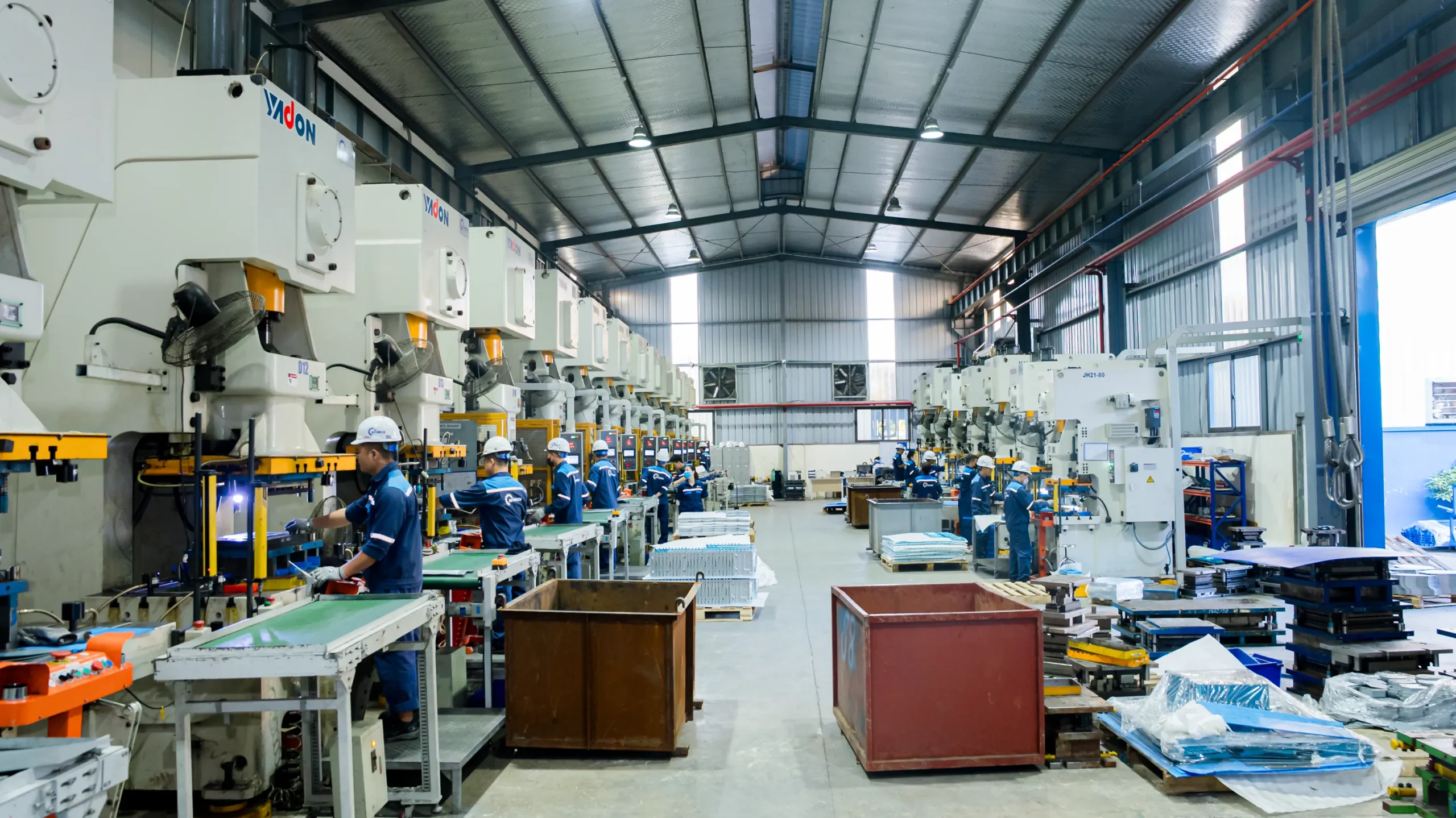
A modern mechanical manufacturing workshop featuring rows of large industrial stamping presses. Workers wearing protective uniforms and hard hats operate along the assembly lines
8.3.3 Automation Efficiency
Fine-tuning robot interlock signals, reducing pneumatic clamping times, and optimizing welding speeds to maintain line cycle targets.
8.3.4 Quality Inspection Equipment
Maintaining CMM checking fixtures, optical vision cameras, and weld nut push-out test rigs to guarantee 100% part quality.
8.4 Cross Car Beam Manufacturing Resources
- Cross Car Beam Supplier: Delivers fully assembled, welded, and painted CCBs directly to Tier-1 cockpit integrators.
- Cross Car Beam Manufacturer: Operates heavy press lines, tube bending cells, and robotic welding infrastructure for CCB production.
- Cross Car Beam Stamping: Precision metal forming of structural brackets and steering column supports from High-Strength Steel (HSS).
- Cross Car Beam Welding Assembly: Synchronized multi-robot cells fusing stamped brackets onto main structural tubes.
- Cross Car Beam Supplier Vietnam: Competitive contract manufacturing hubs like Automech providing high-precision CCB assemblies under IATF 16949 standards.
- Cross Car Beam OEM Manufacturer: Certified Tier-1/Tier-2 suppliers capable of co-engineering DFM designs and executing full Level 3 PPAP approvals for global car brands.
9. Mechatronics Technologies in Modern Automotive Factories
| Technology Category | Core Equipment / Protocols | Primary Industrial Function |
| Industrial Robotics | 6-Axis Articulated Robots, AGVs, AMRs | Welding, heavy part transfer, precision assembly, adhesive dispensing |
| Control Systems | Siemens S7-1500, Allen-Bradley, PROFINET, IO-Link | Real-time machine logic, device synchronization, I/O processing |
| Smart Manufacturing | IoT Sensors, SCADA, Predictive Analytics, Edge Computing | Condition monitoring, OEE tracking, zero-defect quality gating |
9.1 Industrial Robotics
9.1.1 Robotic Welding
Multi-axis robots deliver fast, highly repeatable spot and arc welds, eliminating manual fatigue and safety hazards in heavy welding environments.
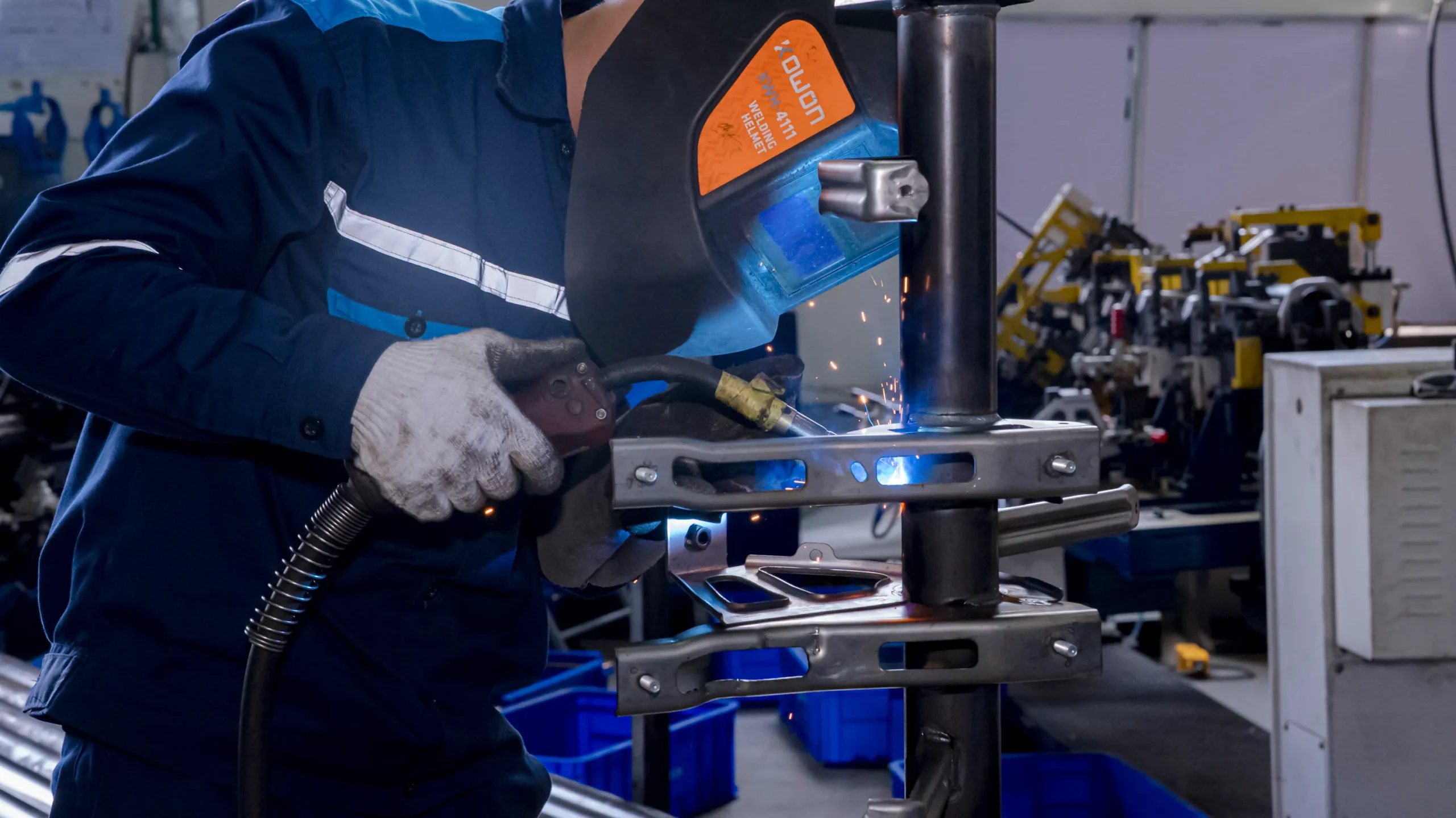
A close-up of a welder wearing protective gear and an auto-darkening helmet performing precision arc welding on a metal structural frame
9.1.2 Robotic Assembly
Robots equipped with force-torque sensors assemble delicate interior modules, install windshield glass, and mount engine powertrains with high precision.
9.1.3 Automated Material Handling
AGVs and robotic press transfer arms move heavy sheet metal stampings and body sub-assemblies across the plant touchlessly.
9.2 Industrial Control Systems
9.2.1 PLC
Programmable Logic Controllers serve as the brain of automated factory lines, executing millisecond-level logic cycles to coordinate thousands of inputs and outputs.
9.2.2 HMI
Human-Machine Interfaces provide graphical touchscreens for machine operators and Mechatronikers to monitor operating parameters, view active alarms, and adjust production settings.
9.2.3 Servo Control
Digital servo drives and brushless AC servo motors provide closed-loop control over speed, acceleration, and position across multi-axis machinery.
9.2.4 Machine Communication
Industrial Ethernet protocols (PROFINET, EtherNet/IP) enable high-speed, deterministic data exchange between PLCs, robots, vision systems, and motor drives.
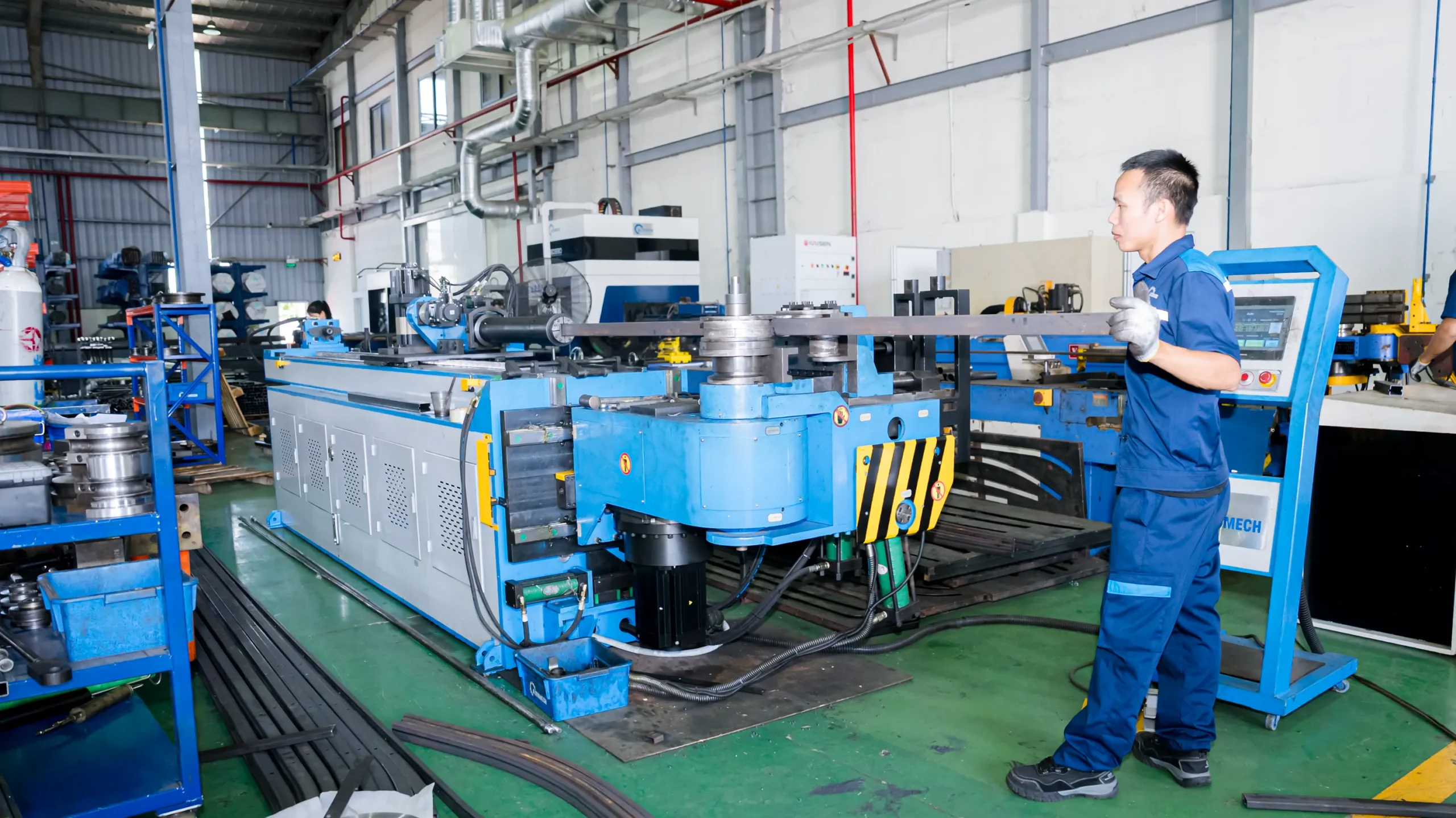
A technician operating a large industrial CNC pipe bending machine in a mechanical workshop, managing the process via a control interface
9.3 Smart Manufacturing
9.3.1 Production Monitoring
SCADA and MES platforms track real-time machine states, cycle counts, energy usage, and line downtime events across the entire facility.
9.3.2 Predictive Maintenance
IoT vibration sensors on motor bearings and thermal imaging cameras on electrical panels transmit data to AI platforms, predicting machine failures before line stops occur.
9.3.3 Machine Data Collection
Industrial edge computers capture high-frequency process data (stamping tonnage, weld current curves, screw tightening torques) for quality archiving.
9.3.4 Automation and Manufacturing Efficiency
Systematic data collection combined with expert shop-floor maintenance by Mechatronikers maximizes plant productivity and lowers overall conversion costs.
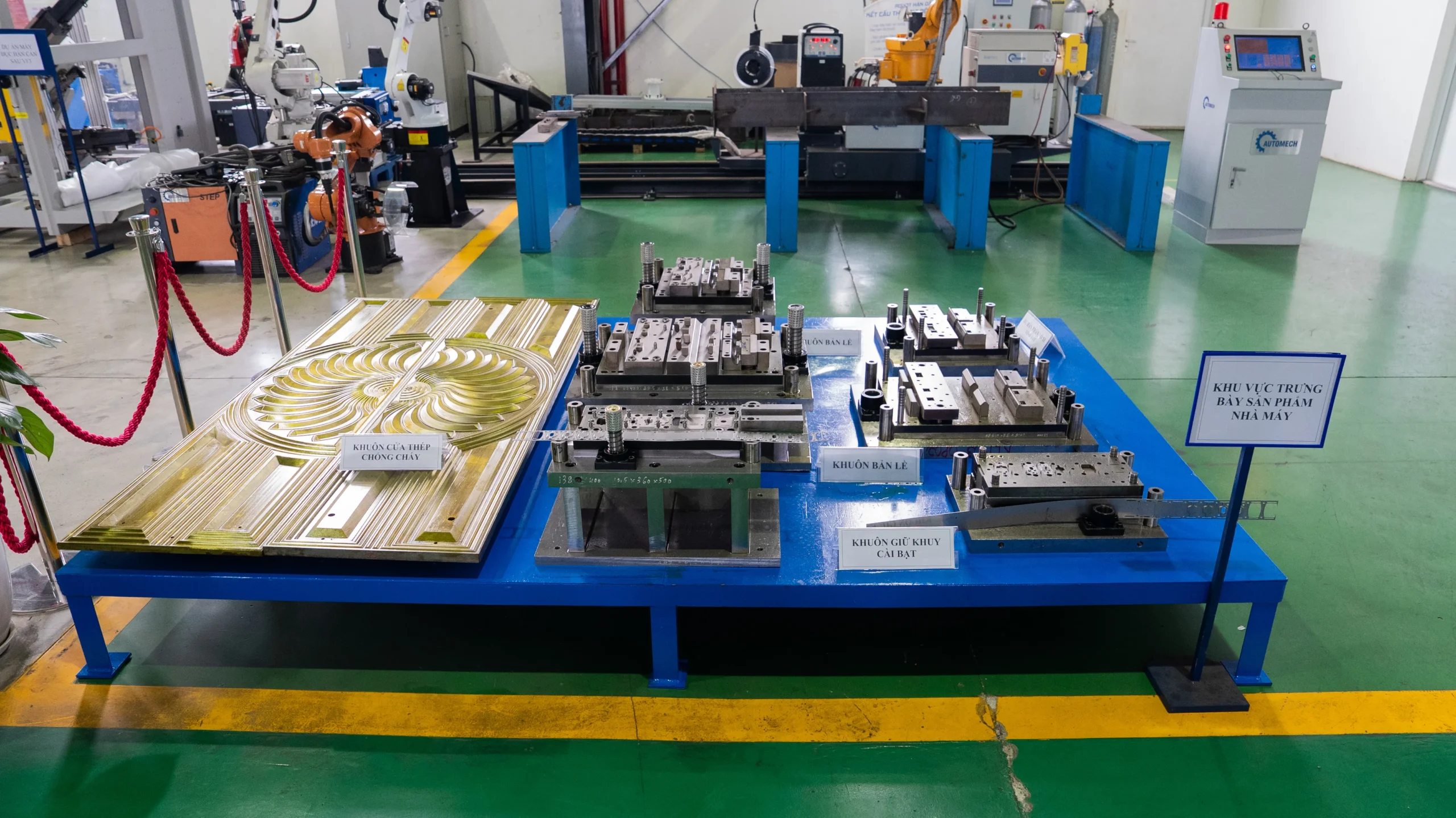
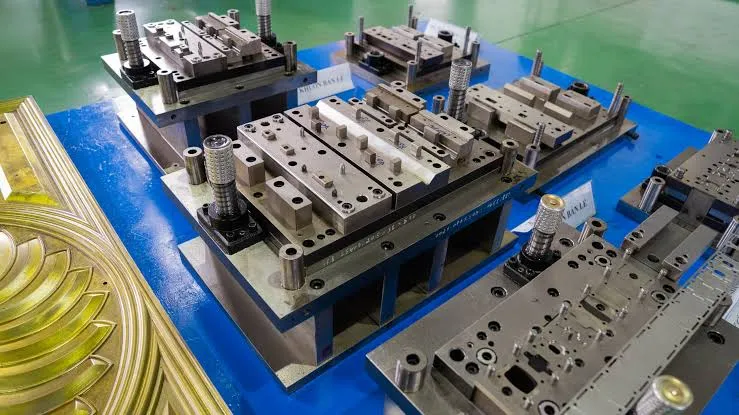
A display table showcasing precision mechanical molds and stamped metal components in the factory’s product exhibition area
10. Mechatroniker Ausbildung, Career and Work Environment
10.1 Mechatroniker Ausbildung
10.1.1 Mechatroniker Ausbildung Requirements
In Germany and dual-education systems globally, entering a Mechatroniker apprenticeship (Ausbildung) requires a solid secondary school diploma with strong foundations in mathematics, physics, and computer science.
10.1.2 Technical Training
Apprentices complete formal vocational school instruction covering electrical theory, mechanical drawing interpretation, control logic programming, hydraulics, and pneumatic circuit design.
10.1.3 Practical Industrial Training
Concurrent hands-on training takes place inside company workshops and active production lines, where apprentices learn metal machining, electrical cabinet wiring, PLC fault tracing, and robot programming under certified master trainers.
10.2 Mechatroniker Beruf
10.2.1 Typical Workplaces
Mechatronikers work in modern, highly automated industrial facilities across diverse sectors.
10.2.2 Automotive Manufacturing
Working in high-speed press shops, robotic BIW body plants, automated paint lines, and final vehicle assembly facilities.
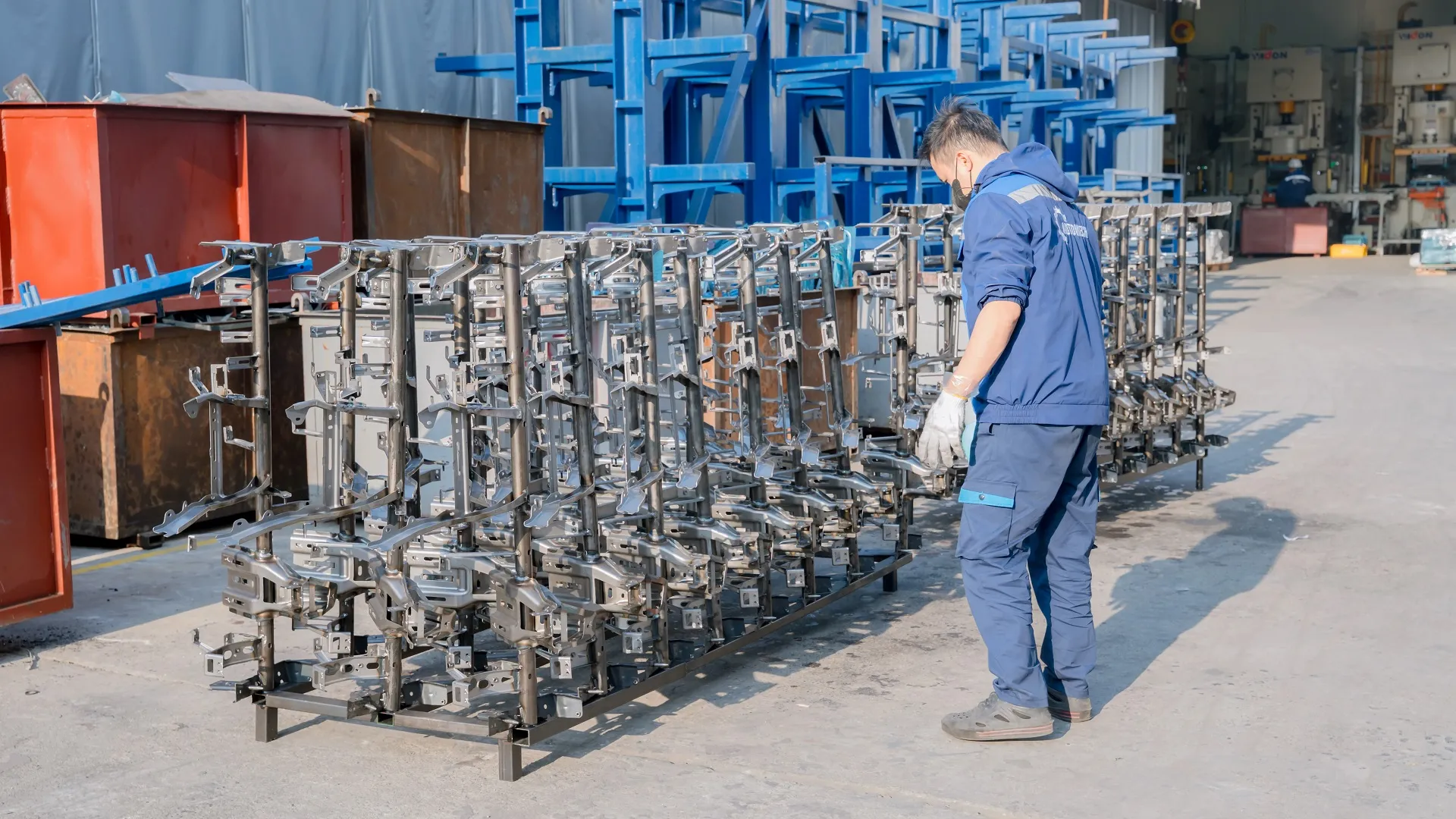
A worker inspecting stacked metal components and structural frames in an outdoor storage area of the plant
10.2.3 Industrial Automation
Employed by automation integrators building custom robotic assembly lines, packaging machinery, and material handling systems.
10.2.4 Machine and Equipment Manufacturing
Working for original equipment manufacturers (OEMs) building CNC machine tools, industrial presses, packaging lines, and medical equipment.
10.3 Mechatroniker Aufgaben
10.3.1 Maintenance and Repair
Performing routine mechanical/electrical overhauls and responding urgently to unbudgeted machine breakdowns.
10.3.2 Machine Installation
Assembling new production equipment, wiring control panels, piping fluid lines, and loading PLC/robot software.
10.3.3 Automation Troubleshooting
Systematically tracing hardware and software faults across complex automated production networks.
10.3.4 Production Equipment Optimization
Modifying machine guards, fine-tuning sensor positions, updating HMI screen layouts, and optimizing robot motion paths to improve productivity.
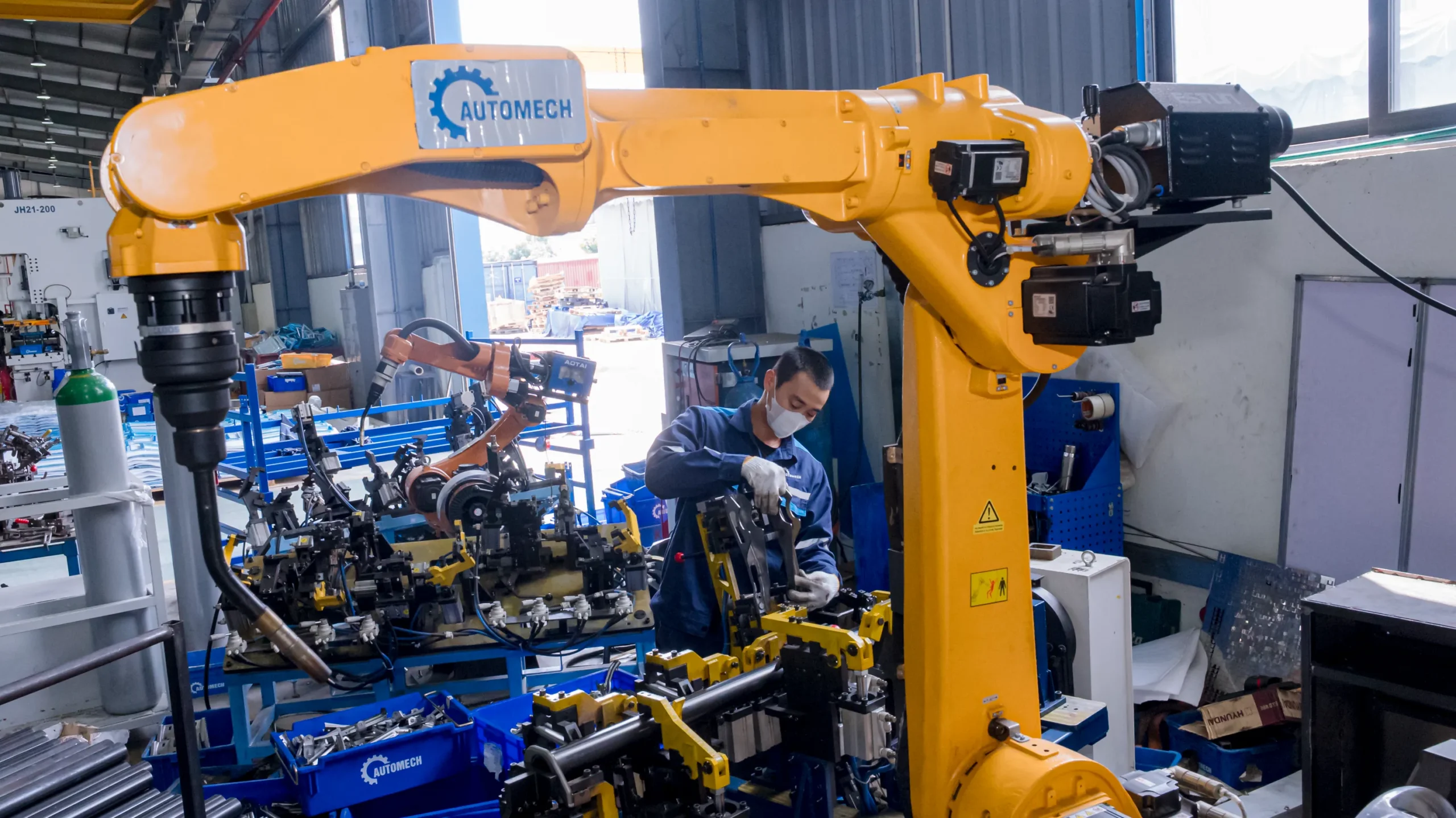
A masked technician adjusting and maintaining a yellow Automech automated robotic welding arm system
10.4 Mechatronik Career Opportunities
10.4.1 Automotive Industry
Career paths include Maintenance Team Lead, BIW Automation Specialist, Robotics Programmer, and Maintenance Manager.
10.4.2 Industrial Manufacturing
Opportunities as Factory Automation Technician, Service Engineer, Field Application Specialist, and Plant Maintenance Supervisor.
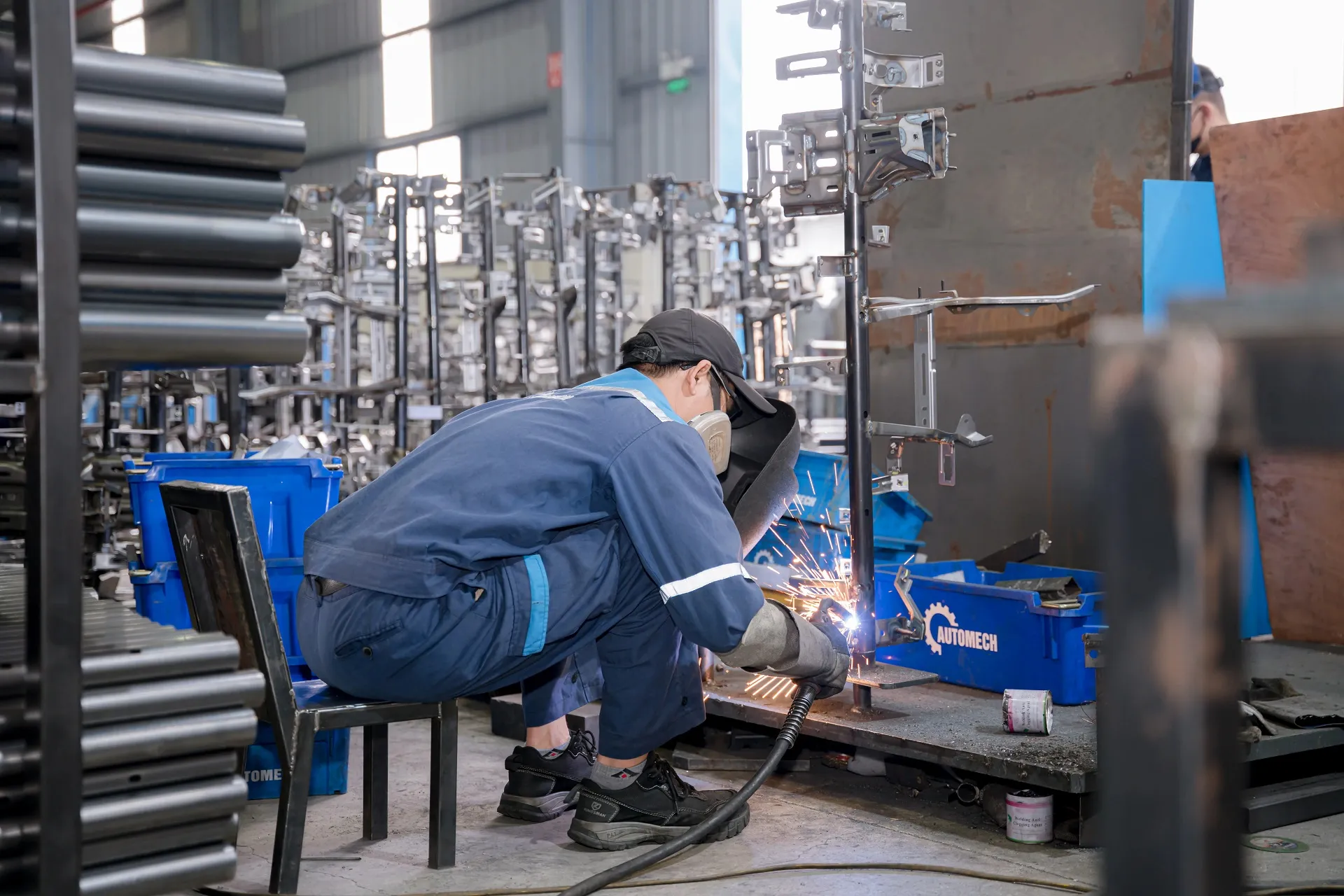
A technician wearing a welding helmet and protective gear performing manual arc welding on a metal frame structure
10.4.3 Robotics and Automation
Specializing in robot programming, vision system integration, motion control tuning, and smart factory system commissioning.
10.4.4 CNC and Production Technology
Advancing into CNC Service Specialist, Precision Tooling Maintenance Lead, and Automated Manufacturing Operations Supervisor.
11. FAQ About Mechatroniker
11.1 What Is a Mechatroniker?
A Mechatroniker (Mechatronics Technician) is a trained technical specialist who combines mechanical engineering, electronics, and automation control skills to build, install, maintain, and repair automated machinery.
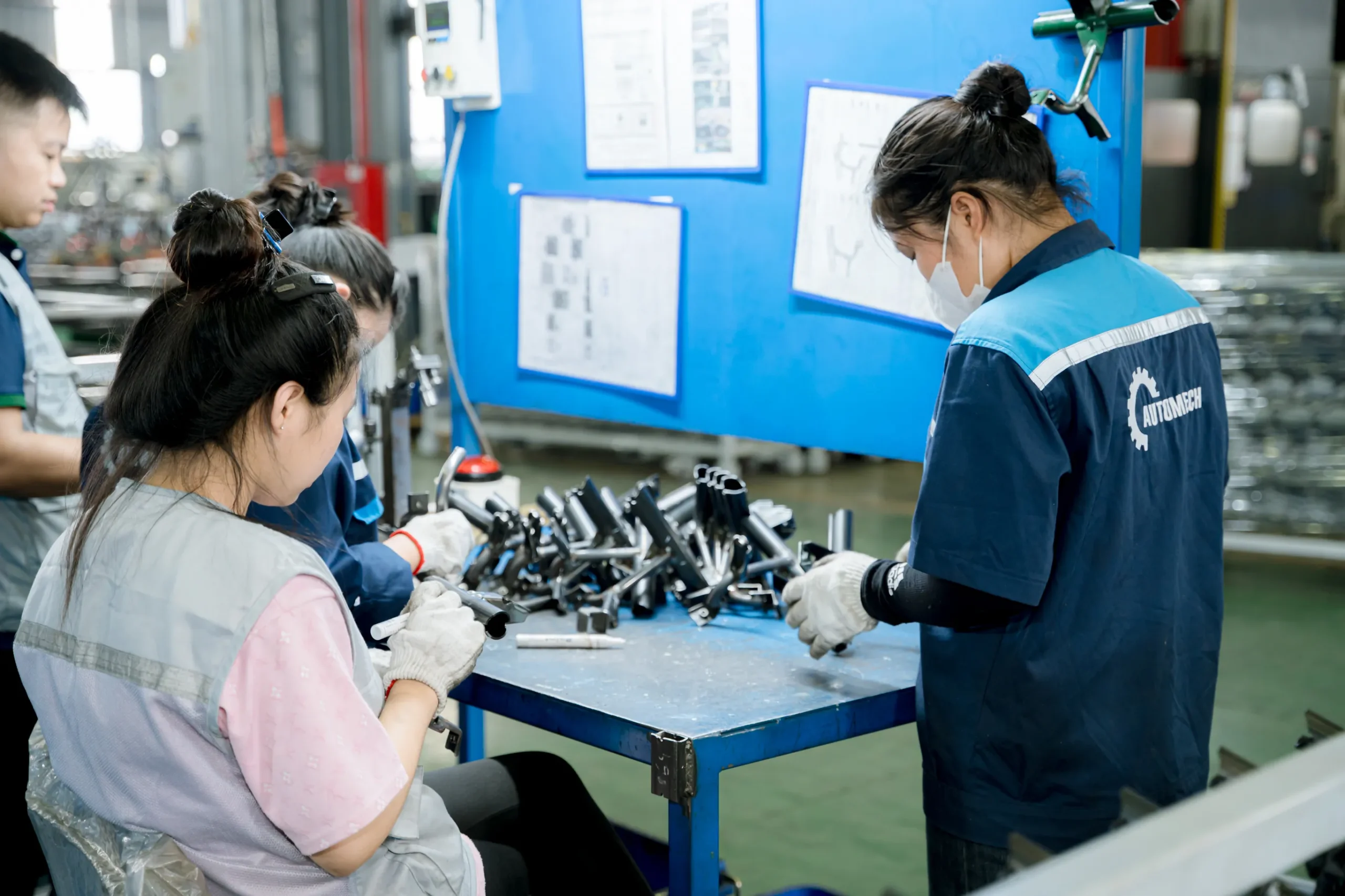
Female technicians wearing protective gear assembling and inspecting small metal parts at a workbench
11.2 What Does a Mechatroniker Do?
They install production equipment, assemble mechanical structures, wire electrical control panels, program and troubleshoot PLCs, service industrial robots, and perform preventive and corrective maintenance.
11.3 What Skills Does a Mechatroniker Need?
A Mechatroniker needs proficiency in mechanical assembly, fluid power (pneumatics/hydraulics), electrical circuit reading, PLC programming and fault tracing, industrial robotics, sensor calibration, and diagnostic problem-solving.
11.4 Where Can Mechatroniker Work?
They work in automotive manufacturing plants, industrial automation firms, CNC machining facilities, aerospace factories, medical equipment manufacturing, and machine building companies.
11.5 What Is the Role of a Mechatroniker in Automotive Manufacturing?
In automotive plants, they maintain high-volume automated systems—such as stamping press lines, robotic welding cells, BIW framing shuttles, and automated assembly conveyors—ensuring high line availability and zero downtime.
11.6 What Machines Does a Mechatroniker Work With?
They work with industrial robots, CNC machining centers, metal stamping presses, automated welding cells, PLC-controlled transfer lines, vision inspection systems, and automated guided vehicles (AGVs).
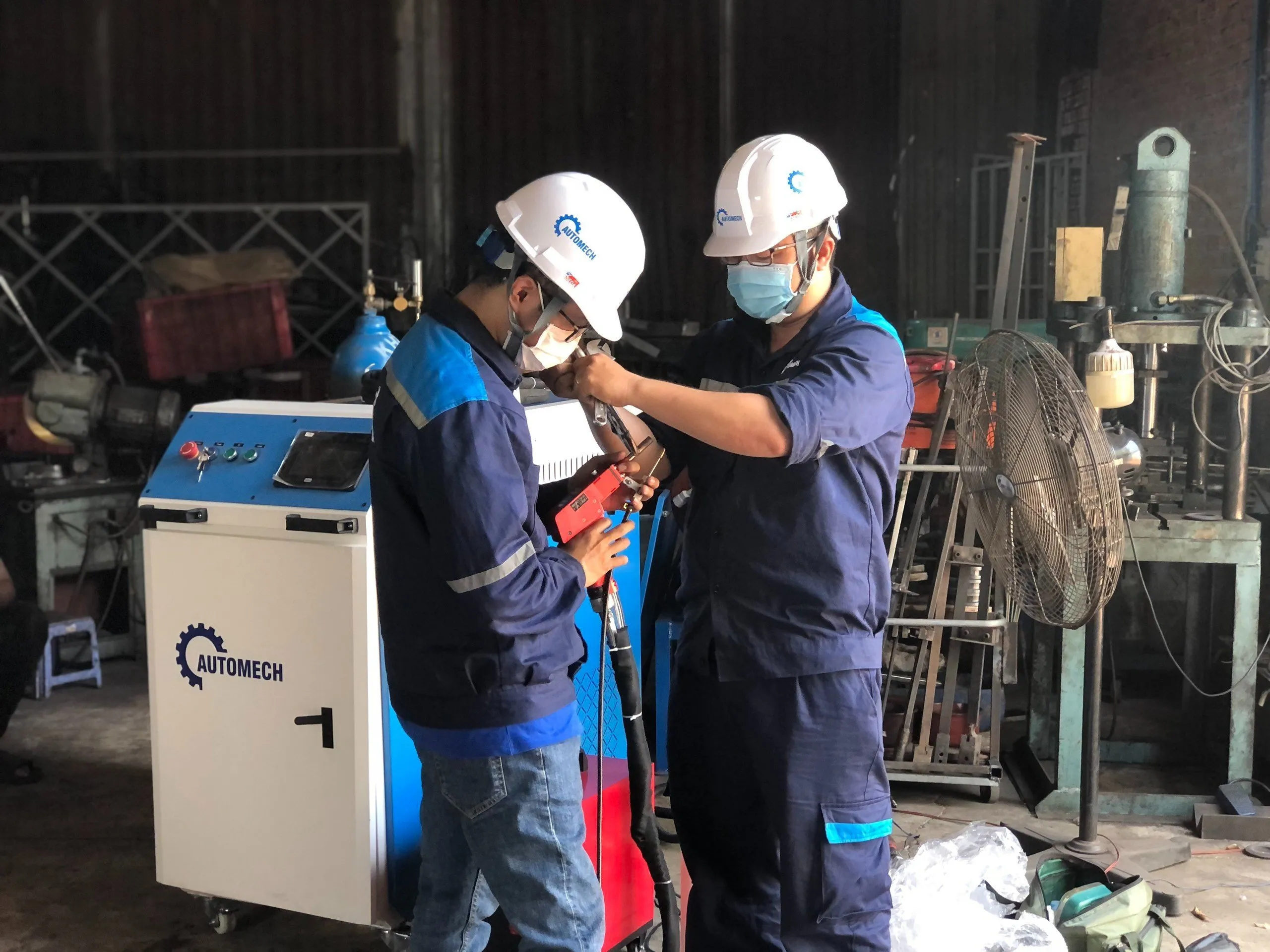
Two technicians wearing safety helmets and masks operating and adjusting a portable laser welding machine
11.7 What Is the Difference Between a Mechatroniker and a Mechatronics Engineer?
A Mechatroniker is a hands-on technician focused on shop-floor assembly, maintenance, troubleshooting, and machine operation. A Mechatronics Engineer holds an academic degree and focuses on theoretical design, CAD modeling, software architecture, and system integration.
Automech Mechanical Equipment and Solutions Joint Stock Company
Head Office: No. 285 Phuc Loi Street, Phuc Loi Ward, Hanoi City
Da Nang Branch: No. 20 Nguyen Sinh Sac Street, Hoa Khanh Ward, Da Nang City
Ho Chi Minh Branch: No. 84, Street No. 10, Van Phuc Urban Area, Hiep Binh Ward, Ho Chi Minh City
Factory No. 1: Automech Automation Equipment, Mold & Tool Manufacturing Factory – Automech Demo Center: Dinh Tram Industrial Park, Nenh Ward, Bac Ninh City, Vietnam
Factory No. 2: Automech Parts Manufacturing & Component Fabrication Factory: Viet Nhat Industrial Cluster, Xuan Cam Commune, Bac Ninh City, Vietnam
Hotline: 0902 997 331
Website: https://automechmfg.com/
Fanpage: https://www.facebook.com/automech.mfg/
YouTube: https://www.youtube.com/@Automechmfg