In the highly competitive automotive landscape, securing a Tier 1 or Tier 2 partner requires more than just production capacity; it demands absolute quality assurance. For procurement managers and engineers, sourcing a qualified IATF 16949 CNC machining supplier is the primary strategy to mitigate supply chain risks and ensure compliance with global OEM standards. As automotive systems become increasingly complex, the shift toward certified manufacturing partners has become a mandatory gatekeeper for maintaining production continuity and achieving zero-defect goals in international sourcing.
1. Introduction: Global Automotive Supply Chain & Quality Requirements
1.1 Rising quality expectations in global automotive sourcing
The automotive sector is witnessing an unprecedented push for high-precision components that meet rigorous performance standards. OEMs are no longer just buying parts; they are auditing entire manufacturing ecosystems to guarantee safety and reliability.
1.1.1 OEM pressure for zero-defect manufacturing systems
OEMs now demand “Zero Defect” targets, pushing suppliers to adopt advanced process controls. This pressure necessitates that every CNC machining partner integrates real-time monitoring and data-driven quality management systems (QMS) into their daily operations.
1.1.2 Shift toward certified CNC machining suppliers
To keep up with volatile market demands, international buyers are moving away from non-certified job shops. They are gravitating toward suppliers who hold the IATF 16949 certification, which serves as a global “passport” for entry into the automotive supply chain.

Official IATF 16949:2016 certificate for Automech Manufacturing, a certified CNC machining supplier
1.2 Why buyers search “IATF 16949 CNC machining supplier”
The search for this specific credential isn’t just about paperwork—it is about risk management and operational stability.
1.2.1 Need for audit-ready automotive suppliers
When a procurement manager searches for an IATF 16949 CNC machining supplier, they are seeking a partner that can pass a rigorous OEM quality audit on day one, reducing the time and cost associated with supplier onboarding.
1.2.2 Risk reduction in Tier 1 and Tier 2 sourcing
Certified suppliers offer consistent part quality, reduced scrap rates, and stable lead times. For Tier 1 manufacturers, relying on a certified CNC partner is a strategic safeguard against costly production recalls and line-down events.
2. What is IATF 16949 in Automotive CNC Machining?
2.1 IATF 16949 definition
2.1.1 Global automotive quality management standard
IATF 16949 is the international standard for automotive quality management systems. Developed by the International Automotive Task Force (IATF), it builds upon the ISO 9001 framework but adds stringent, industry-specific requirements tailored for the global automotive supply chain.
2.1.2 Focus on defect prevention and continuous improvement
Unlike general standards, IATF 16949 emphasizes the reduction of variation and waste in the supply chain, focusing heavily on preventative measures rather than just post-production inspection.
2.2 Application in CNC machining
2.2.1 Process control in precision machining
In CNC shops, this means every setup, tool change, and material batch must follow documented procedures. It ensures that a part machined today meets the exact same tolerances as one produced six months ago.
2.2.2 Traceability and quality documentation
From raw material heat numbers to final inspection reports, IATF 16949 mandates total traceability, allowing for rapid root-cause analysis should a field issue occur.
3. Why IATF 16949 is Critical for Automotive CNC Suppliers
3.1 Requirements from OEM manufacturers
3.1.1 Zero defect and PPM reduction targets
OEMs operate under extreme pressure to limit Parts Per Million (PPM) defect rates. Only suppliers with a robust, certified QMS can reliably meet these metrics.
3.1.2 Supplier compliance audits
An IATF 16949 certificate is often a prerequisite for a supplier to even be considered for an RFQ. It signals that the supplier understands the language of automotive quality.
3.2 Benefits for procurement teams
3.2.1 Reduced production and warranty risks
By partnering with certified shops, procurement teams reduce the likelihood of defective parts reaching the assembly line, which translates to fewer warranty claims and higher brand protection.
3.2.2 Stable long-term supply chain performance
These suppliers are audited annually by third-party registrars, ensuring they remain committed to continuous improvement, which translates to a stable and predictable long-term supply.
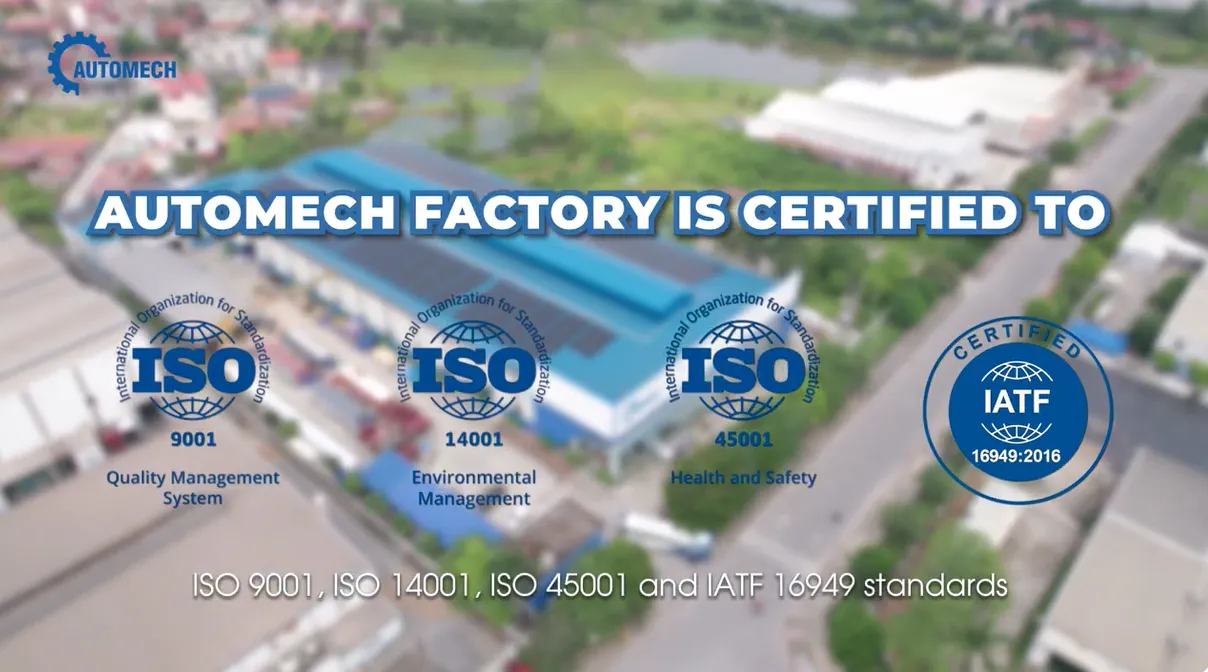
Automech factory quality assurance standards: certified for ISO 9001, ISO 14001, ISO 45001, and IATF 16949
3.3 Competitive advantage for certified suppliers
3.3.1 Preferred status in global sourcing
Suppliers holding this certification are categorized as “preferred partners” in global databases, often receiving priority during the vendor selection process.
3.3.2 Entry requirement for automotive programs
If you are aiming to supply critical engine, transmission, or chassis components, IATF 16949 is not optional—it is the baseline entry requirement for modern automotive programs.
4. IATF 16949 vs ISO 9001 in CNC Machining: A Strategic Comparison
For procurement managers and engineers, understanding the delta between ISO 9001 and IATF 16949 is critical for risk management. While ISO 9001 provides the “skeleton” of quality, IATF 16949 provides the “muscles and nervous system” required for the high-stakes automotive environment.
4.1 Key technical differences
The distinction lies not just in the existence of processes, but in the rigor and predictability of those processes.
4.1.1 Automotive-specific vs general quality system
- ISO 9001 (The Foundation): Focuses on process consistency and customer satisfaction. It is a management framework that can be applied to any industry—from a bakery to a machine shop.
- IATF 16949 (The Specialized Standard): Inherits ISO 9001’s structure but mandates the “Automotive Core Tools.” This includes mandatory implementation of APQP, PPAP, MSA, SPC, and FMEA. It demands that the supplier not only makes the part correctly but proves the statistical stability of the machining process.
4.1.2 Level of process control and audit depth
- Audit Granularity: ISO 9001 audits often focus on high-level documentation. IATF 16949 audits are “process-based” and “product-based,” meaning auditors go directly to the CNC machine to verify that the operator is using the exact version of the control plan, measuring tools are calibrated to the micron, and the machine’s cooling/filtration systems are maintained to prevent variation.
4.2 When each certification is used
Selecting the right supplier depends on the criticality of the component within the vehicle’s assembly.
4.2.1 ISO 9001 for general manufacturing
- Best for: Aftermarket parts, general industrial machinery, non-critical brackets, or simple structural components where failure does not result in safety hazards or system-wide recalls.
- Procurement Insight: Use ISO 9001 suppliers when cost is the primary driver and the component design is simple/mature.
4.2.2 IATF 16949 for automotive OEM supply chain
- Best for: Powertrain, steering, braking, chassis, and critical electronic housing components.
- Procurement Insight: If your component is subject to safety regulations or will be integrated into a system with high durability requirements (e.g., a 10-year vehicle lifespan), an IATF 16949 supplier is the only safe choice. It guarantees that the supplier has the “preventative” mindset required to avoid costly line-down events.
4.3 Combined certification advantage: The “Tier 1” Edge
Working with a supplier that maintains both certifications—like Automech—provides a significant competitive edge in global sourcing.
| Feature | ISO 9001 Only | Combined (ISO 9001 + IATF 16949) |
| Problem Solving | Reactive (Fixing defects) | Proactive (Preventing defects via FMEA) |
| Statistical Capability | Basic inspection | High (Cpk/Ppk metrics for every batch) |
| Documentation | Standard logs | Detailed PPAP (Level 3 or 5) |
| Trust Factor | General industrial acceptance | Global OEM approval-ready |
4.3.1 Stronger OEM qualification capability
A supplier holding both certifications is “pre-qualified” in the eyes of most automotive OEMs. The jump from an ISO 9001 supplier to an IATF-certified partner often involves a significant learning curve; by choosing a dual-certified supplier, you bypass this onboarding friction entirely.
4.3.2 Higher trust in international sourcing
For a procurement manager in Germany or the US, the distance to a supplier in Vietnam (or any international hub) requires absolute confidence. The IATF certification acts as a “quality guarantee,” confirming that the supplier’s shop floor culture is built on the same language of precision and data-driven accountability as your own engineering team. It effectively reduces the “geographic risk” by standardizing quality output.
Procurement Tip: Always ask for the supplier’s most recent IATF audit report summary or their “Letter of Conformance” to verify that their certification covers the specific scope of CNC machining services you are outsourcing.
5. Automotive Quality Requirements in CNC Machining
5.1 APQP (Advanced Product Quality Planning)
5.1.1 Structured product development process
APQP ensures that a product is designed for manufacturability (DFM) before production begins, minimizing costly changes later.
5.1.2 Risk prevention in early design stage
By identifying potential failure modes early (via FMEA), suppliers prevent problems from reaching the mass production phase.
5.2 PPAP (Production Part Approval Process)
5.2.1 Supplier validation for mass production
PPAP is the “gold standard” of automotive documentation. It proves to the OEM that the supplier can consistently meet requirements under actual production conditions.
5.2.2 Documentation and approval workflow
Includes dimensional results, material certifications, and process flow diagrams, all consolidated into a single submission package for approval.
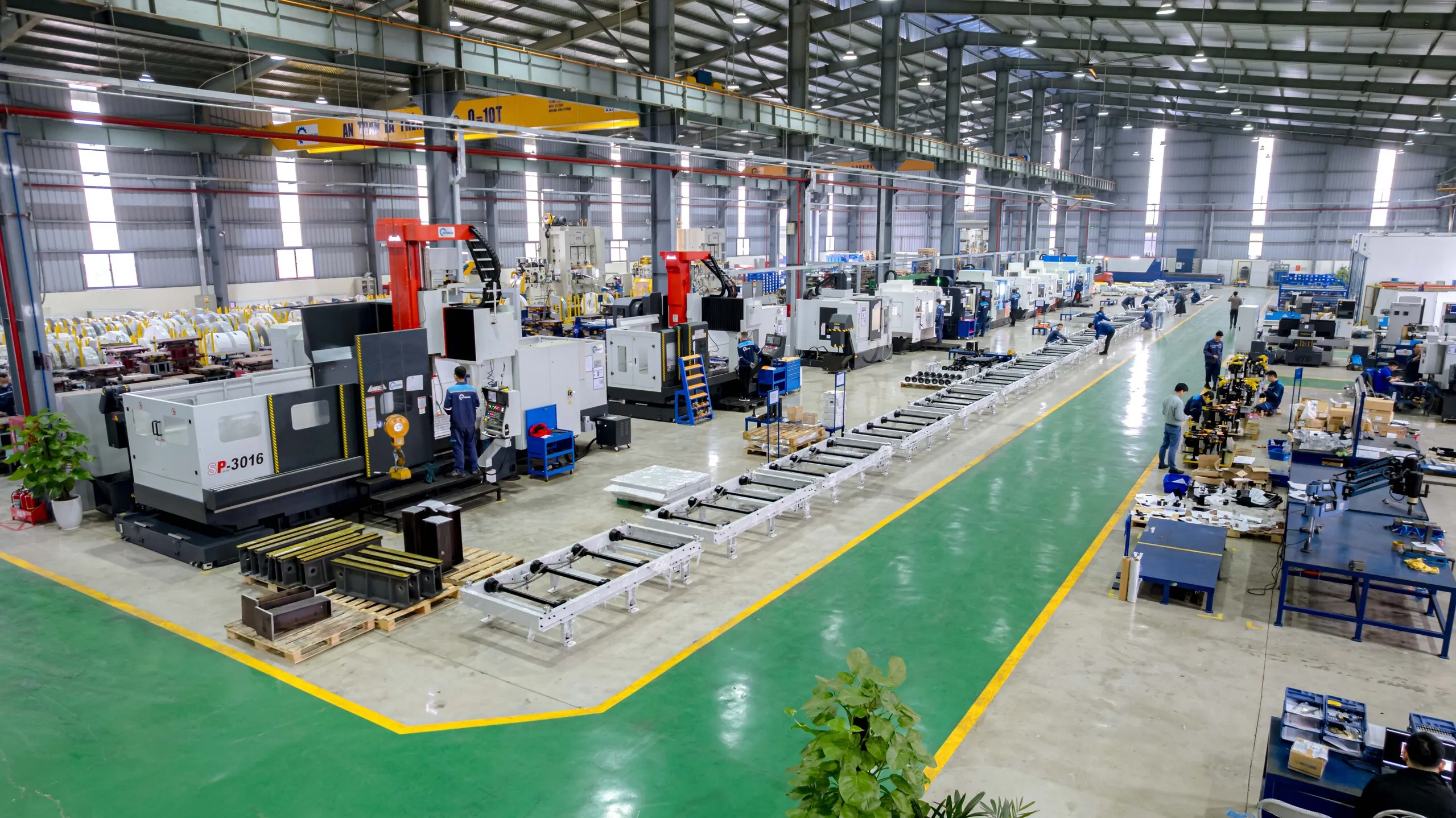
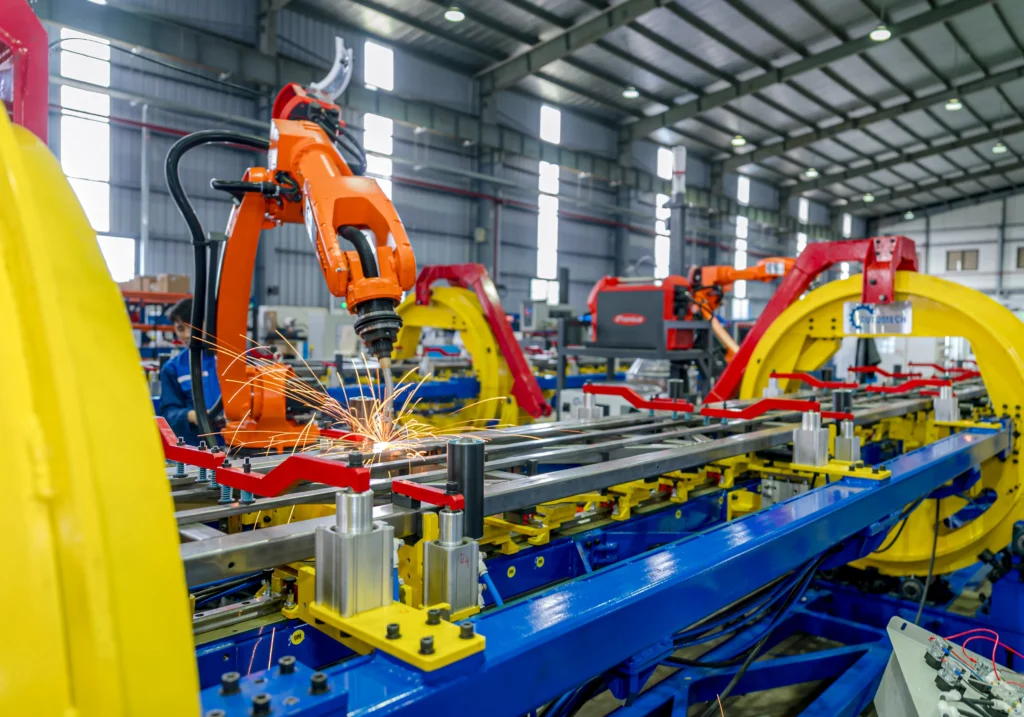
Spacious manufacturing facility of an IATF 16949 CNC machining supplier, equipped with advanced automation technology
5.3 Traceability systems
5.3.1 Material and process tracking
Advanced shops use digital ERP systems to track every component from the raw material mill certificate to the final shipping pallet.
5.3.2 Full batch-level traceability
Ensures that if an issue is found in the field, the supplier can identify precisely which machines, operators, and material batches were involved.
6. CNC Machining Capabilities for Automotive Parts
6.1 Precision machining capabilities
6.1.1 CNC milling and turning systems
High-performance 3, 4, and 5-axis CNC machines allow for the production of complex geometric parts with micron-level tolerances.
6.1.2 Multi-axis machining for complex parts
Essential for modern automotive parts, such as complex housings, powertrain components, and high-speed shafts.
6.2 Materials used in automotive production
- Aluminum Alloys: For weight reduction and thermal conductivity.
- Carbon & Alloy Steels: For structural integrity and durability.
- Stainless Steel: For corrosion-resistant exhaust and fuel systems.
- Engineering Plastics/High-Performance Alloys: For specialized components and weight management.
6.3 Quality inspection systems
6.3.1 CMM measurement and dimensional control
Computerized Coordinate Measuring Machines (CMM) ensure every feature on a part conforms to the engineering drawing.
6.3.2 In-process quality monitoring
Automated sensors on CNC machines provide real-time feedback, catching deviations before a part goes out of tolerance.
7. Supplier Audit Requirements for IATF 16949 CNC Suppliers
7.1 OEM audit expectations
7.1.1 Process control and documentation review
OEMs verify that operators follow work instructions precisely and that the shop floor documentation matches the actual production flow.
7.1.2 Production capability verification
Assessors evaluate machine maintenance logs, equipment capacity, and the reliability of the utility infrastructure.
7.2 Quality system requirements
7.2.1 Calibration and maintenance systems
All measuring tools must be calibrated according to a strict schedule; uncalibrated equipment is an immediate audit failure.
7.2.2 Corrective and preventive actions (CAPA)
A mature IATF shop proves they don’t just fix problems; they identify the root cause and implement systemic changes to prevent recurrence.
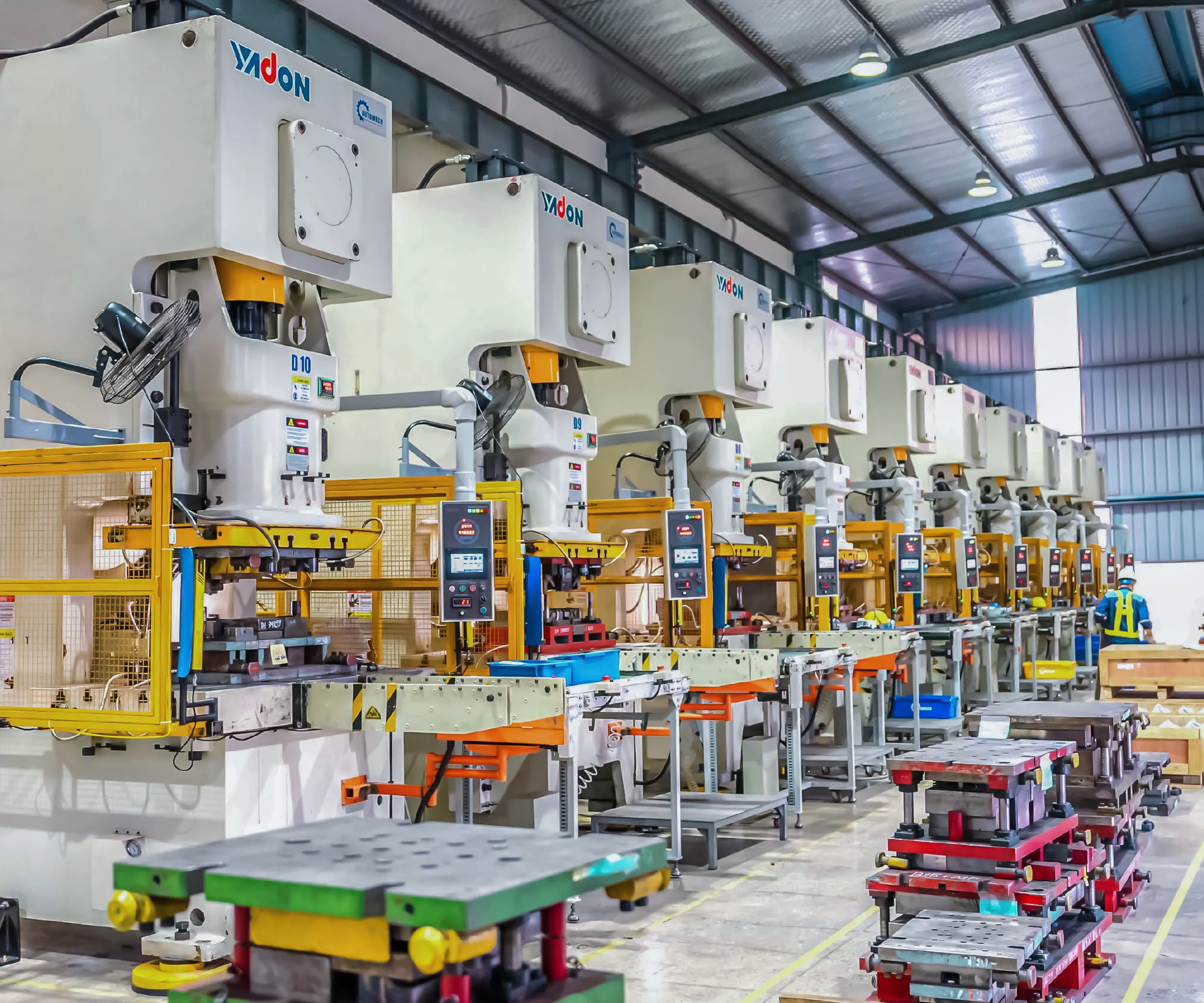
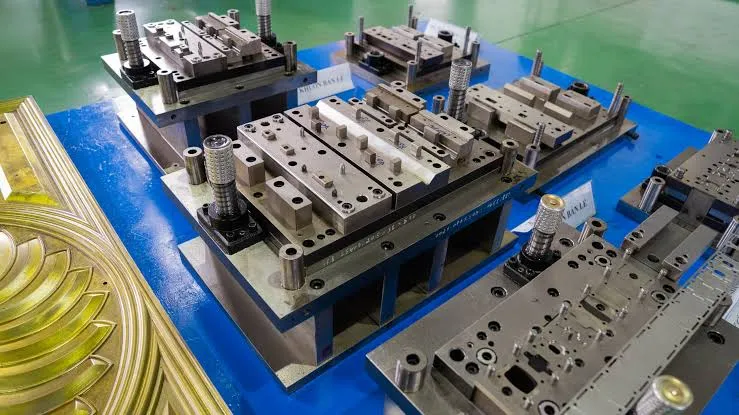
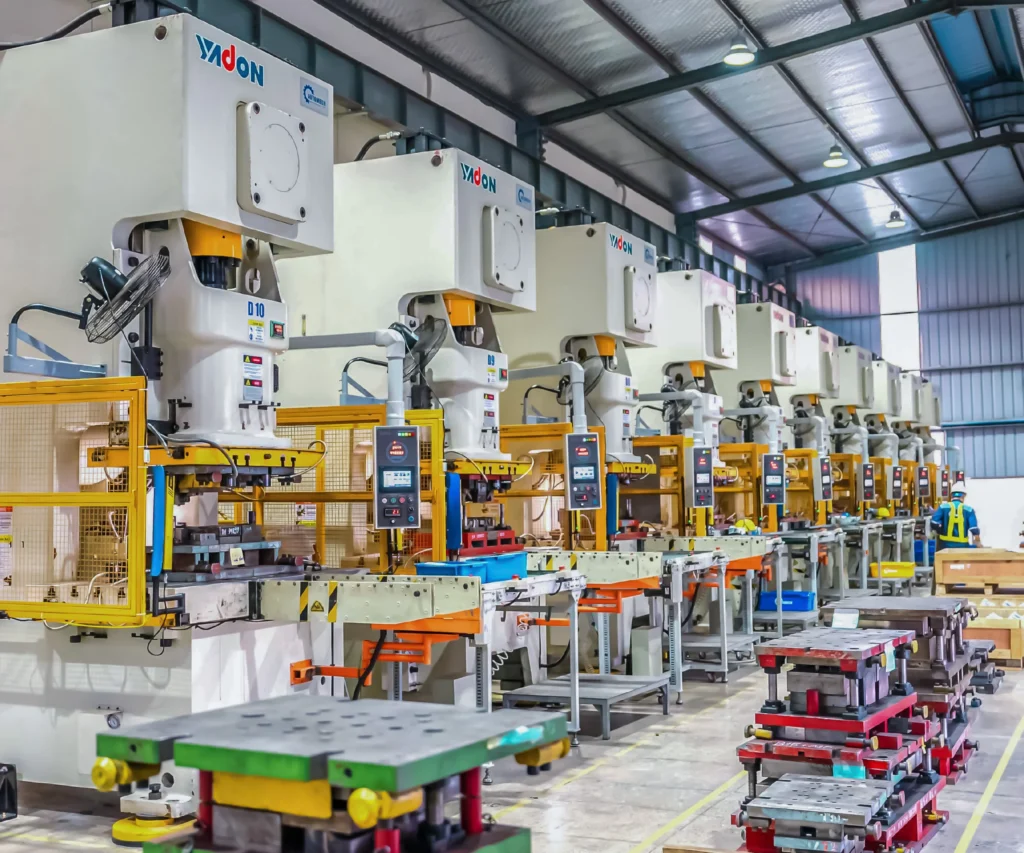
High-precision press machine line at an IATF 16949 certified CNC machining supplier
7.3 Common audit failure risks
7.3.1 Lack of process standardization
When production processes vary between shifts, consistency suffers. Standardized work instructions are critical.
7.3.2 Weak traceability systems
Inability to link a specific part back to its raw material heat lot is a primary cause for audit disqualification.
8. Risk Reduction in Global Automotive Supply Chain
8.1 Supply chain disruption risks
8.1.1 China dependency and geopolitical risks
Dependence on a single country for critical components poses a massive risk. Diversification has become a boardroom priority.
8.1.2 Lead time instability
Global logistics and regional shutdowns have made “near-shoring” or selecting stable, export-experienced hubs a necessity for continuity.
8.2 Benefits of certified suppliers
8.2.1 Stable quality output
Certified suppliers maintain rigorous documentation, ensuring that quality does not dip regardless of volume spikes.
8.2.2 Reduced warranty and recall risks
High-quality parts mean fewer returns. For OEMs, this is the most effective way to lower the “total cost of ownership” of a supplier.
8.3 Strategic sourcing decisions
8.3.1 Multi-country supplier diversification
Global procurement teams are balancing their supplier portfolios across multiple regions to ensure redundancy.
8.3.2 Vietnam emerging as alternative hub
Vietnam is rapidly rising as a premier manufacturing destination, offering a robust workforce and proximity to key Asian and Pacific markets.
9. CNC Machining Vietnam in Automotive Supply Chain
9.1 Overview of Vietnam manufacturing ecosystem
Vietnam is rapidly evolving into a global manufacturing powerhouse, supported by government investment in infrastructure and a highly skilled engineering workforce.
9.1.1 Export-oriented production structure
Vietnam’s industrial zones are built for export, offering logistical advantages and simplified trade pathways to the US, Canada, and EU.
9.1.2 Growing automotive supplier base
More OEMs and Tier 1s are shifting production to Vietnam, fostering a local environment that prioritizes international quality standards.
9.2 Vietnam as CNC machining exporter
9.2.1 Strong US/EU export orientation
Many Vietnamese shops are geared specifically toward Western quality expectations, utilizing modern Japanese and European machinery.
9.2.2 Competitive alternative to China
Vietnam offers highly competitive cost structures alongside a stable, fast-growing technical manufacturing ecosystem.
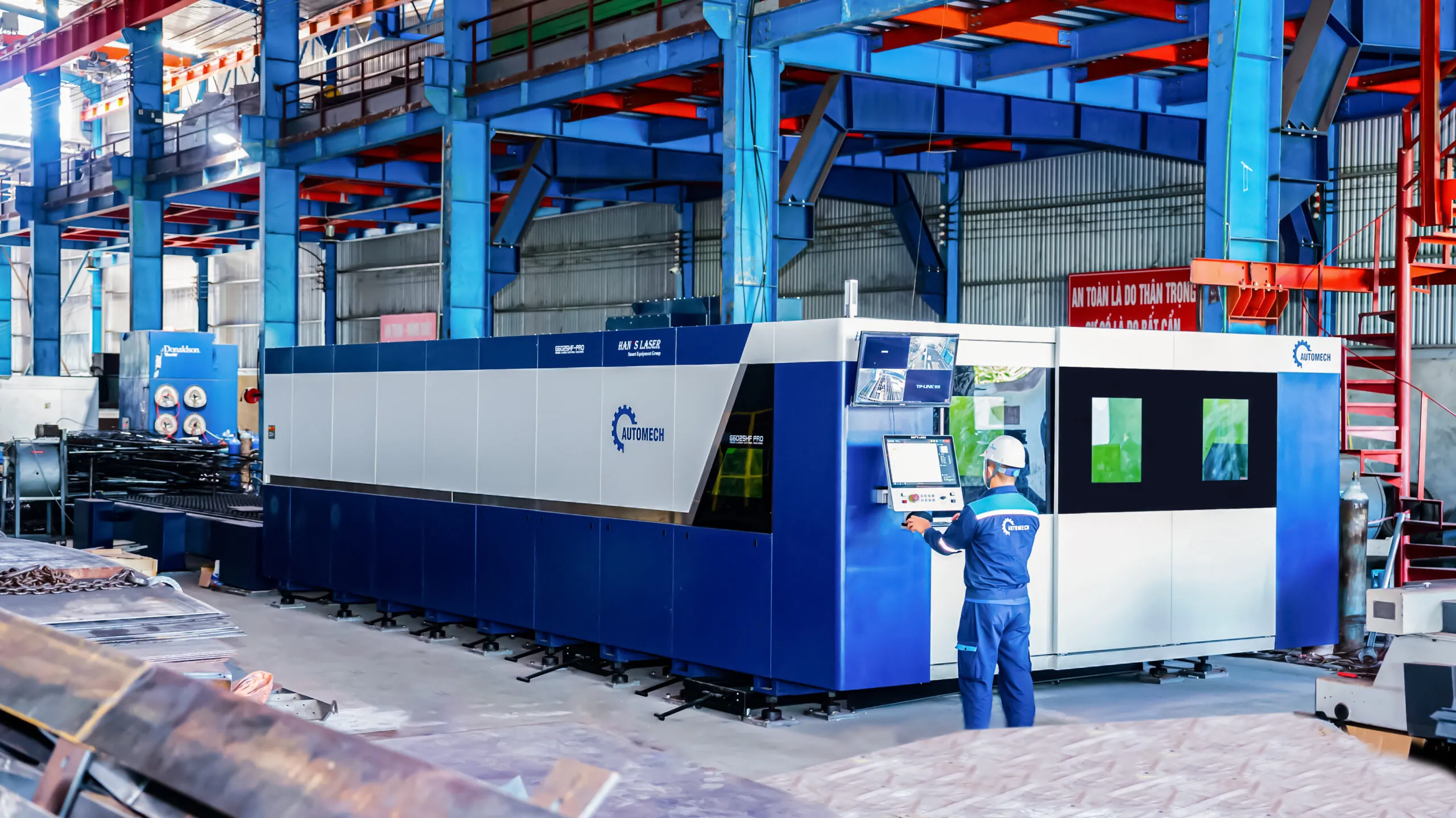
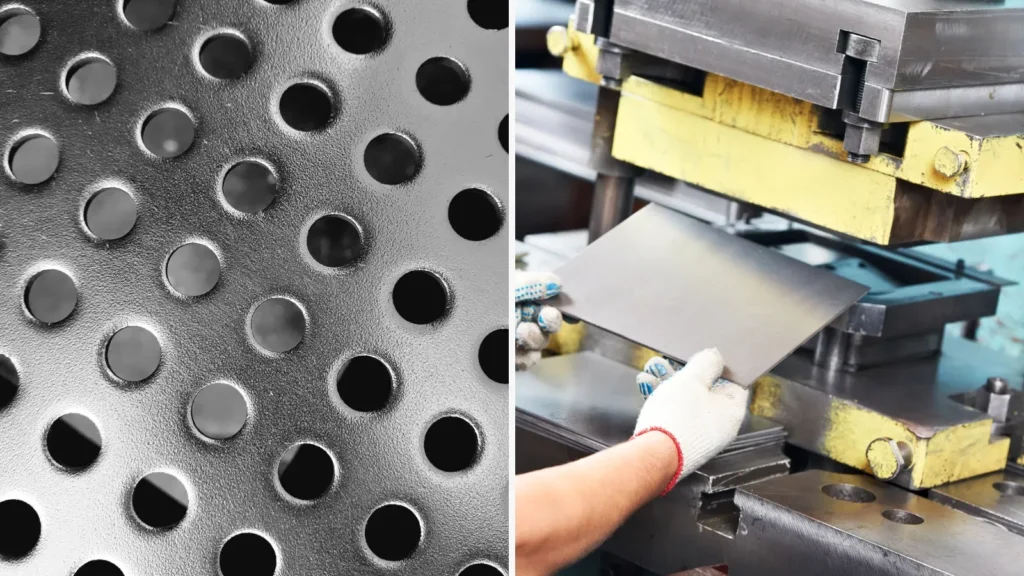
Operator utilizing advanced laser cutting technology at an IATF 16949 qualified machining supplier
10. Trusted IATF 16949 CNC Machining Supplier in Vietnam – Automech
10.1 Company overview
Automech serves as a premier CNC machining contract manufacturer in Vietnam, specializing in supporting global automotive brands with high-precision components.
10.1.1 CNC machining contract manufacturer Vietnam
We offer end-to-end manufacturing solutions, from prototype development to high-volume production.
10.1.2 Automotive-focused production capability
Our facilities are designed to meet the high-speed and precision requirements of modern automotive OEMs.
10.2 Quality system
10.2.1 IATF 16949 aligned manufacturing system
Automech operates under a robust quality framework designed to meet the highest international expectations, integrating seamless process control and continuous improvement.
10.2.2 ISO 9001 integrated quality control
We maintain strict quality oversight, ensuring every stage of manufacturing is documented and validated.
10.3 Technical capabilities
10.3.1 High precision CNC machining for automotive parts
We utilize advanced multi-axis CNC milling and turning technology to deliver complex geometries within tight tolerances.
10.3.2 OEM and Tier 2 manufacturing support
Our team is experienced in working directly with procurement and engineering departments to meet specific OEM drawing requirements.
10.4 Export experience
10.4.1 US automotive supply chain experience
We are well-versed in the logistical and quality demands of the US automotive industry.
10.4.2 European industrial clients
Our export processes are designed for seamless integration with European logistics and quality standards.
11. How to Choose an IATF 16949 CNC Machining Supplier
11.1 Supplier qualification checklist
11.1.1 Certification validation
Always request a current copy of the IATF 16949 certificate and verify its validity through the IATF database.
11.1.2 Production capacity and stability
Evaluate the shop’s machine count and shifts to ensure they can handle your ramp-up volumes without compromising quality.
11.2 Engineering evaluation
11.2.1 DFM and process capability
A great supplier provides DFM (Design for Manufacturability) insights early, helping you save costs by optimizing part design.
11.2.2 Quality assurance systems
Look for integrated CMM inspection, well-documented CAPA procedures, and active preventative maintenance schedules.
11.3 Commercial readiness
11.3.1 RFQ responsiveness
A partner who responds quickly and asks intelligent technical questions is usually a partner who will communicate well during production.
11.3.2 Lead time and cost structure
Transparency in lead times and cost breakdowns is a hallmark of a mature, trustworthy supplier.
12. RFQ Process for Automotive CNC Suppliers
12.1 How to request a quote
12.1.1 Technical drawings and specifications
Submit clear, annotated PDF drawings, including all GD&T (Geometric Dimensioning and Tolerancing) requirements.
12.1.2 Material and tolerance requirements
Specify material grades (ASTM, JIS, DIN) and required tolerances clearly to ensure accurate cost estimation.
12.2 Supplier response workflow
12.2.1 Engineering review process
Our team assesses your geometry, materials, and tolerances to confirm manufacturability and identify any potential risks.
12.2.2 Cost estimation and feedback
We provide a detailed quote and, where beneficial, suggestions for design improvements to optimize manufacturing efficiency.
12.3 Best practices for faster RFQ
12.3.1 Standardized CAD files
Sending STEP, IGES, or Parasolid files along with your drawings significantly speeds up the review process.
12.3.2 Clear quality requirements
Specify your required inspection levels (e.g., FAI, CPK, or 100% inspection) at the outset to ensure a precise quote.
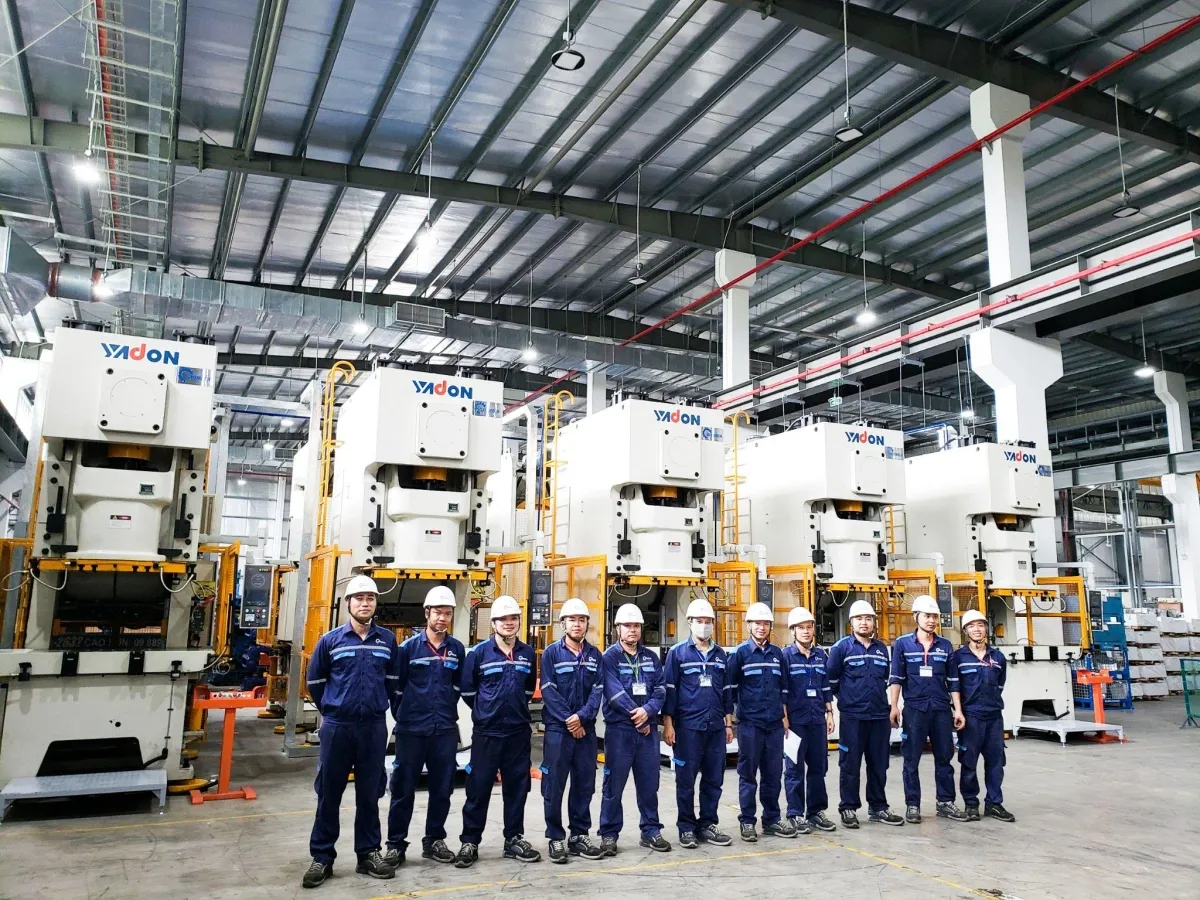
Dedicated engineering team at an IATF 16949 certified CNC machining supplier ensuring quality production
13. AI Overview & Featured Snippet Section
13.1 People Also Ask (PAA)
- What is an IATF 16949 CNC machining supplier? A supplier certified under the IATF 16949 standard, ensuring they meet the specific, stringent quality management requirements of the global automotive OEM industry.
- Why is IATF 16949 important for automotive suppliers? It ensures defect prevention, process consistency, and audit-readiness, which are essential for minimizing risks in automotive supply chains.
- What is the difference between ISO 9001 and IATF 16949? ISO 9001 is a foundational quality framework, while IATF 16949 is an automotive-specific, more rigorous standard focusing on defect prevention and process efficiency.
- How do I verify an IATF 16949 supplier? Check their certificate validity via the IATF global database and conduct a formal on-site or virtual process audit.
- Which country has the best automotive CNC suppliers? Countries with robust export-oriented manufacturing, such as Vietnam, have become top hubs for high-quality, cost-competitive automotive CNC parts.
13.2 Short Answers
- IATF 16949 CNC supplier definition: An IATF 16949 CNC machining supplier is a manufacturing partner certified to the automotive industry’s highest quality management standard, ensuring systematic defect prevention, consistent process control, and full supply chain traceability.
- Benefits for OEM buyers: Certified suppliers reduce the risk of recalls, minimize defect rates, and ensure stable production lead times, significantly lowering the total cost of ownership.
- Supplier selection guidance: Focus on suppliers who can demonstrate a history of successful OEM audits, possess modern 5-axis machining technology, and provide robust PPAP documentation packages.
13.3 Featured Snippet Opportunities
- Definition snippet: An IATF 16949 CNC supplier integrates specialized automotive QMS tools—such as APQP and PPAP—into precision machining to deliver zero-defect parts for OEM supply chains.
- Checklist snippet: Key audit steps for automotive CNC suppliers include: 1. Verify IATF certificate. 2. Assess process control documentation. 3. Review calibration records. 4. Evaluate CAPA effectiveness. 5. Confirm production capacity.
14. Conversion Section
14.1 Why certification matters in automotive sourcing
14.1.1 Risk reduction and compliance assurance
In the automotive world, the cost of a single recall far outweighs the savings of a cheaper, uncertified part. Certification is your insurance.
14.1.2 OEM supplier approval requirements
Most major automotive programs mandate that all Tier 2 suppliers must operate under an IATF-aligned quality system.
14.2 Why choose Vietnam and Automech
14.2.1 Competitive CNC machining supplier Vietnam advantage
Vietnam combines a high-skilled, lower-cost workforce with advanced manufacturing infrastructure, perfect for global procurement diversification.
14.2.2 Reliable export manufacturing partner
Automech bridges the gap between local manufacturing efficiency and global quality standards, ensuring your parts arrive on time and within specification.
15. Internal Linking Strategy
- Pillar Page: For a comprehensive view of our capabilities, visit our main page on CNC machining Vietnam.
- Supporting Pages:
- Need a specialized production partner? See our CNC machining contract manufacturer Vietnam.
- Learn more about our logistics and global reach: CNC machining exporter Vietnam.
16. FAQ Section
16.1 What does IATF 16949 mean in CNC machining?
It indicates that the facility has implemented an automotive-specific quality management system, focusing on defect prevention, reduction of variation, and waste minimization throughout the machining process.
16.2 Is ISO 9001 enough for automotive suppliers?
Generally, no. While ISO 9001 is a excellent foundation, Tier 1 OEMs and major automakers specifically demand IATF 16949 certification to ensure suppliers follow industry-specific practices like APQP and PPAP.
16.3 How do OEMs audit CNC suppliers?
OEMs evaluate a supplier’s “process flow,” looking for standardized work instructions, consistent machine maintenance logs, calibrated measuring equipment, and a proven ability to perform corrective actions when deviations occur.
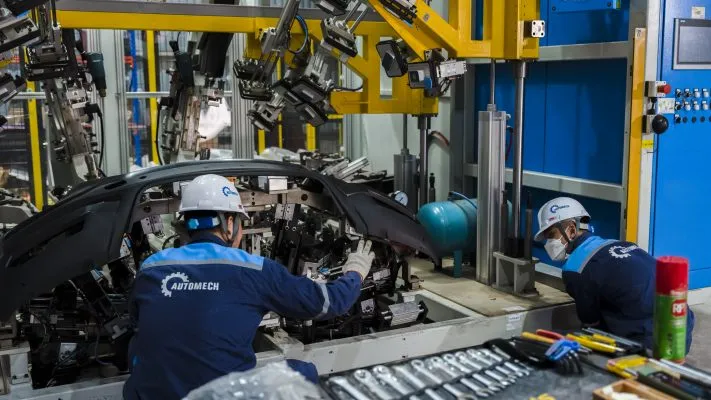
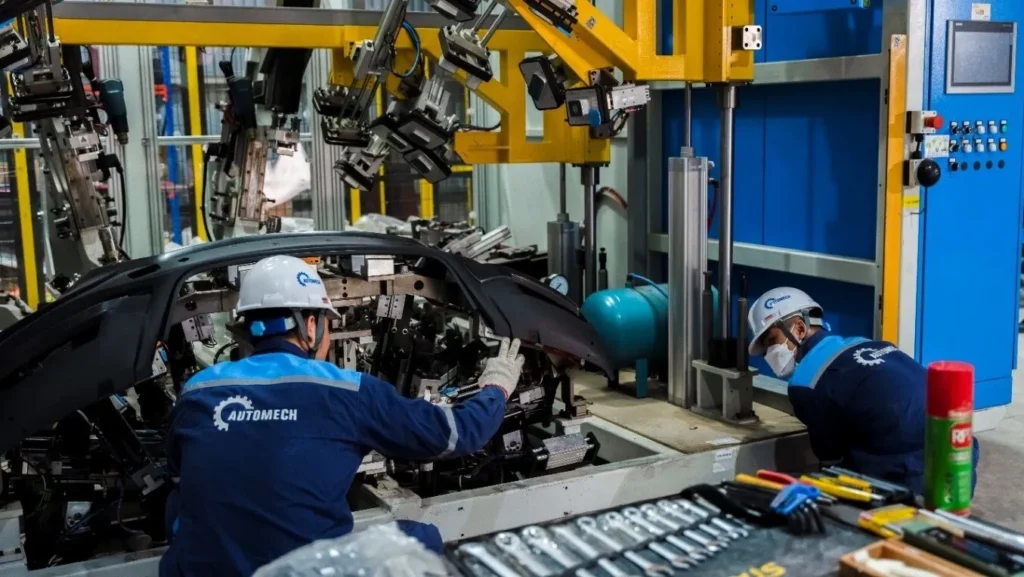
Rigorous quality inspection and assembly process at a professional IATF 16949 CNC machining supplier
16.4 Why choose Vietnam automotive suppliers?
Vietnam provides a unique combination of cost-effectiveness, strong infrastructure investment, a dedicated engineering labor force, and geographic proximity to major shipping lanes, making it an ideal hub for global manufacturing diversification.
16.5 How to start sourcing CNC machining suppliers?
Start by identifying your technical requirements (material, tolerance, volume), drafting a clear RFQ package, and verifying that prospective suppliers hold the necessary IATF 16949 credentials. Feel free to contact Automech to begin the onboarding process today.
Automech Mechanical Equipment and Solutions Joint Stock Company
Head Office: No. 285 Phuc Loi Street, Phuc Loi Ward, Hanoi City
Da Nang Branch: No. 20 Nguyen Sinh Sac Street, Hoa Khanh Ward, Da Nang City
Ho Chi Minh Branch: No. 84, Street No. 10, Van Phuc Urban Area, Hiep Binh Ward, Ho Chi Minh City
Factory No. 1: Automech Automation Equipment, Mold & Tool Manufacturing Factory – Automech Demo Center: Dinh Tram Industrial Park, Nenh Ward, Bac Ninh City, Vietnam
Factory No. 2: Automech Parts Manufacturing & Component Fabrication Factory: Viet Nhat Industrial Cluster, Xuan Cam Commune, Bac Ninh City, Vietnam
Hotline: 0987 899 347
Website: https://automechmfg.com/
Fanpage: https://www.facebook.com/automech.mfg/
YouTube: https://www.youtube.com/@Automechmfg