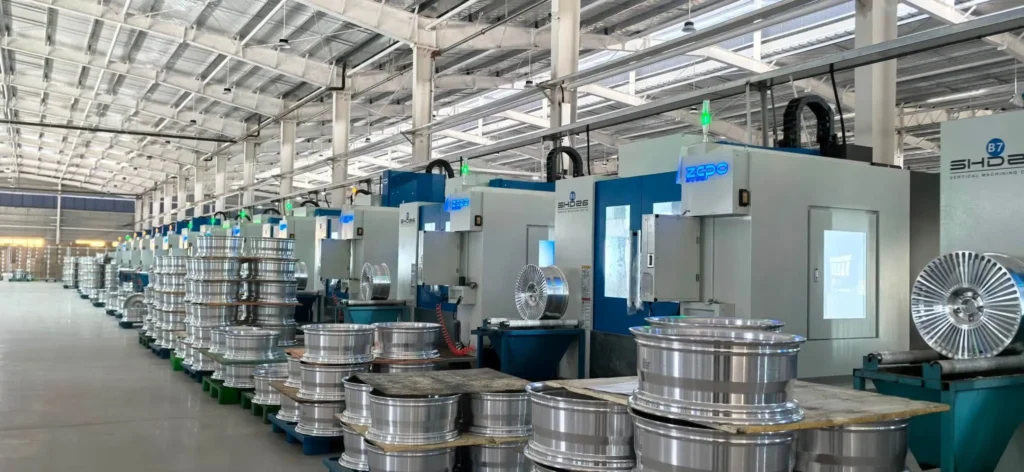
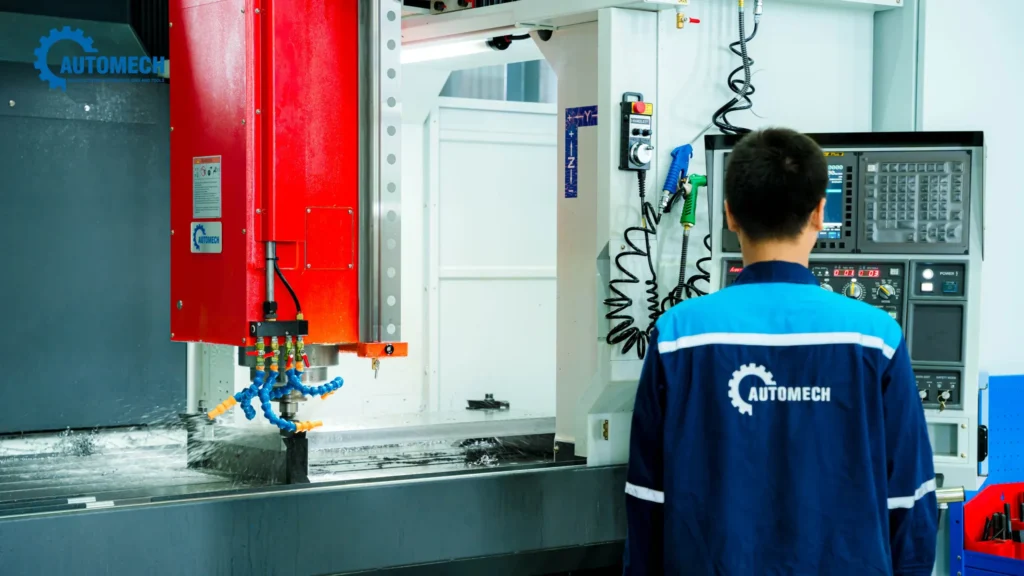
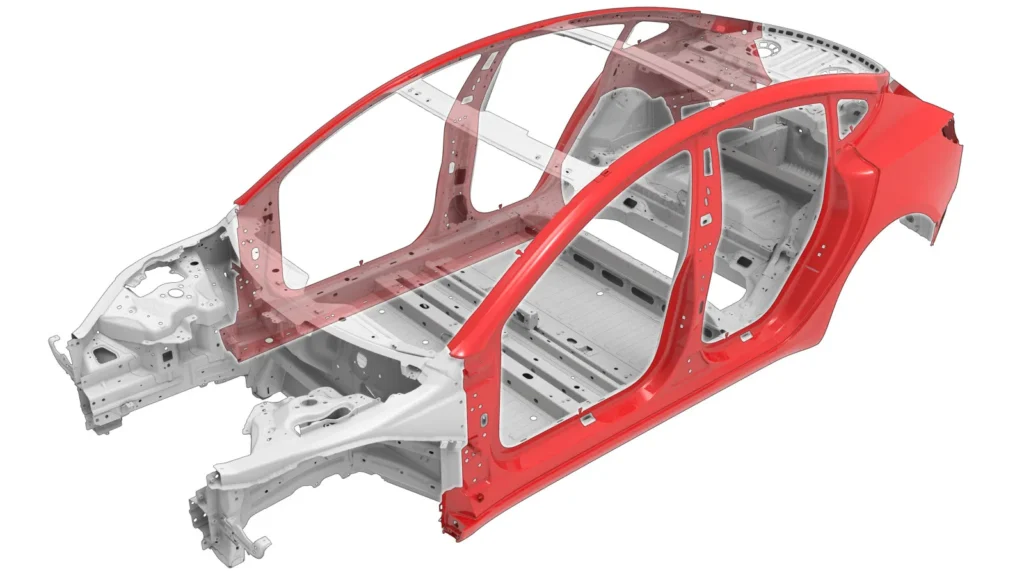
Metal stamping services play a fundamental role in modern industrial manufacturing, converting flat sheet metal coils or blanks into high-precision structural, mechanical, and functional components. As global OEMs in automotive, electronics, appliances, and industrial equipment seek cost-efficient production methods, high-speed stamping presses and custom tooling provide the ideal combination of dimensional accuracy and scalable throughput.
1. Metal Stamping Services Overview
1.1 What are metal stamping services?
1.1.1 Definition of metal stamping services
Metal stamping services encompass cold-forming manufacturing operations where high-tonnage mechanical or hydraulic press machines use specialized die sets to shape, shear, bend, or draw sheet metal workpieces into specific product geometries.
1.1.2 Role of metal stamping in industrial manufacturing
Industrial manufacturing relies heavily on metal stamping to mass-produce durable, lightweight, and complex structural parts. Stamping supports high-volume supply chains by producing thousands of identical components per hour with minimal human intervention.
1.1.3 Difference between stamped parts and machined parts
While CNC machining removes material from a solid block via cutting tools, metal stamping deforms or shears sheet metal using press force and dedicated dies. Stamping yields significantly faster cycle times and lower unit costs for high-volume runs, whereas machining is preferred for thick, low-volume, or intricate 3D block geometries.
1.2 Why global buyers need metal stamping services
1.2.1 High-volume production requirements
Automotive assembly lines and consumer electronics programs demand millions of identical parts annually. Stamping press systems accommodate these volumes seamlessly through continuous coil-feeding and multi-station tooling capabilities.
1.2.2 Cost-efficient metal part manufacturing
Stamping minimizes unit manufacturing costs by maximizing material utilization and reducing production cycle times. Once tooling investment is amortized, stamping provides one of the most economical piece-part rates in metalworking.
1.2.3 Consistent dimensional repeatability
Precision dies ensure that every part produced maintains identical dimensional tolerances across long production runs. High repeatability prevents assembly line bottlenecks and reduces warranty risks for Tier 1 and OEM buyers.
1.3 Metal stamping services in global supply chains
1.3.1 OEM and Tier supplier production needs
Global OEMs require contract stamping partners who can execute turnkey projects from die design and prototype validation to mass production, secondary assembly, and quality documentation.

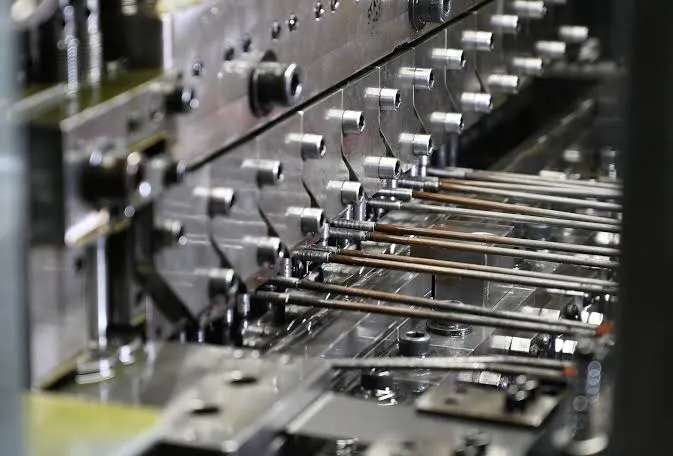
Metal Stamping Services provide efficient manufacturing solutions for producing precision sheet metal components
1.3.2 Automotive and industrial sourcing requirements
Tier suppliers demand strict adherence to international quality standards, robust defect-prevention controls, and traceable raw materials to support high-stress automotive chassis, battery systems, and industrial machinery.
1.3.3 Vietnam as an emerging metal stamping destination
Vietnam has established itself as an advantageous destination for metal stamping services. With expanding industrial infrastructure and skilled engineering talent, suppliers like Automech provide international buyers with high-precision stamping and toolmaking capabilities as part of robust “China+1” supply chain diversification strategies.
2. How Metal Stamping Works
2.1 Basic metal stamping process
2.1.1 Sheet metal preparation
The manufacturing process begins with selecting raw metal coils or pre-cut blanks matching specified thickness and metallurgical properties. Coils are loaded onto decoilers, straightened, and fed automatically into the press bed.
2.1.2 Die and press setup
Engineers mount hardened steel die sets onto the upper ram and lower bolster plate of mechanical or hydraulic stamping presses. Accurate tool alignment and shut-height settings are calibrated to prevent die wear and ensure uniform tonnage distribution.
2.1.3 Stamping, forming, and inspection
As the press ram descends, extreme mechanical force drives the upper die into the sheet metal, executing shearing, bending, or forming operations. In-line sensors and dimensional check fixtures validate part accuracy continuously.
2.2 Main stamping operations
2.2.1 Blanking
Blanking shears the outer perimeter of a flat sheet metal piece from a larger coil or sheet, producing a pre-formed flat workpiece (blank) ready for secondary forming steps.
2.2.2 Piercing
Piercing punches holes, slots, or internal openings into the workpiece while the surrounding material remains intact. Internal slugs are evacuated downward through the lower die cavity.
2.2.3 Bending
Bending deforms flat metal along a straight axis to form V-shapes, U-shapes, or complex channel profiles, requiring precise springback calculation to hold geometric angles.
2.2.4 Forming
Forming deforms metal along curved or multi-axis contours, stretching and shaping structural ribs, louvers, embossed logos, or shallow recessed details into the metal surface.
2.2.5 Drawing
Drawing forces flat sheet metal into a die cavity using a mechanical punch, stretching the material into hollow cylindrical, box-shaped, or cup-like enclosures without cracking.
2.3 From design to finished stamped part
2.3.1 Technical drawing review
Manufacturing engineers conduct thorough Design for Manufacturability (DFM) reviews on customer CAD files to verify bend radii, hole clearances, material stretch limits, and tolerance feasibility.

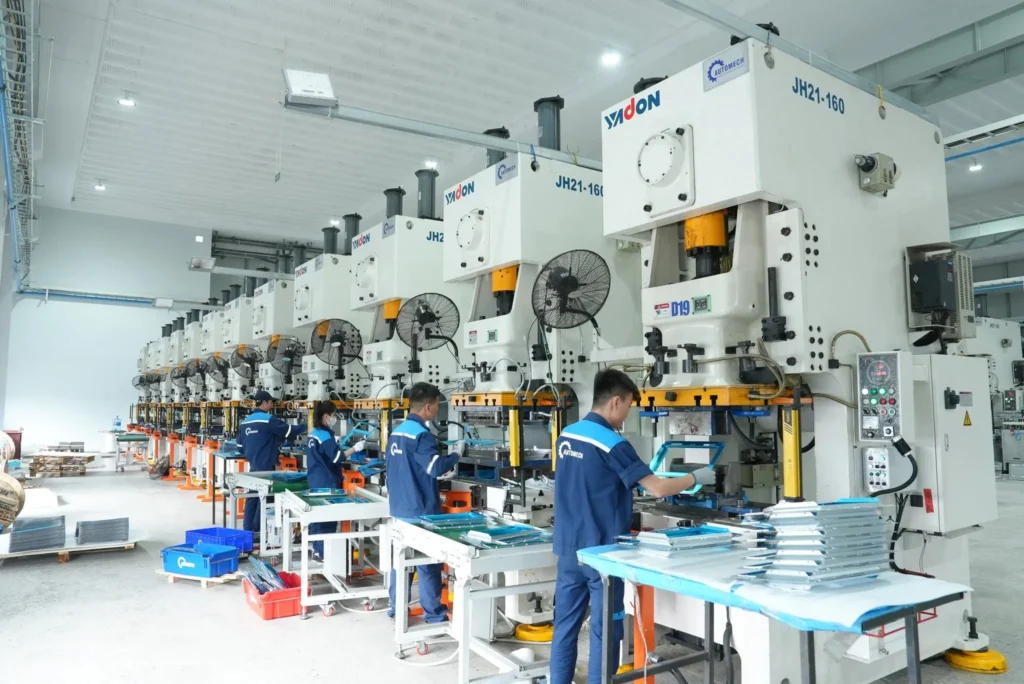
Professional Metal Stamping Services can handle both simple and complex component designs with consistent accuracy
2.3.2 Tooling design and manufacturing
Toolmakers design progressive or transfer dies using 3D CAD/CAM software. Die components are machined using high-precision CNC mills, wire EDM equipment, and heat-treatment furnaces to achieve long tool life.
2.3.3 Trial production and mass production
Initial tool trial runs (tryouts) produce sample parts for complete CMM inspection and First Article Inspection (FAI) validation. Upon customer approval, the stamping setup proceeds to full mass production.
3. Types of Metal Stamping Services
3.1 Sheet metal stamping
3.1.1 Flat sheet metal part production
Sheet metal stamping focuses on producing flat or simple curved parts from cold-rolled steel, stainless steel, or aluminum sheets using single-station or compound dies.
3.1.2 Brackets, covers, panels, and structural parts
Common sheet metal stamped components include mounting brackets, electronic covers, enclosure panels, and reinforcement plates utilized across industrial machinery and commercial hardware.
3.2 Precision metal stamping
3.2.1 Tight tolerance stamped components
Precision metal stamping caters to high-spec applications requiring tight tolerances (down to ± 0.01 mm to ± 0.02 mm), smooth sheared edges, and zero burr thresholds.
3.2.2 High repeatability production
Utilizing high-speed automatic presses and tungsten carbide die inserts, precision stamping guarantees flawless repeatability for delicate electrical terminals, connector clips, and micro-brackets.
3.3 Progressive die stamping
3.3.1 Multi-step stamping in one die system
Progressive die stamping feeds a continuous metal strip through a series of sequential stations within a single tool set. Each stroke executes distinct operations (piercing, notch-cutting, bending) as the strip advances.
3.3.2 High-volume production efficiency
The finished part is severed from the strip carrier at the final station. Progressive dies achieve exceptional production speeds (100 to 500+ strokes per minute), drastically lowering labor expenses for large orders.
3.4 Transfer stamping
3.4.1 Part transfer between multiple stations
Transfer stamping utilizes individual pre-cut blanks transferred mechanically between separate die stations via robotic fingers or mechanical transfer rails.
3.4.2 Suitable for larger or complex components
Unlike progressive stamping, parts are freed from a carrier strip immediately. Transfer stamping is ideal for large automotive frames, deep oil pans, and heavy-gauge structural housings.

Metal Stamping Services are widely used in the automotive, electronics, appliance, and industrial equipment industries
3.5 Deep drawing
3.5.1 Forming deep or hollow metal parts
Deep drawing presses flat sheet metal into cup, box, or vessel geometries where the depth of the part exceeds its internal diameter.
3.5.2 Applications in enclosures and housings
This process manufactures seamless, leak-proof housings such as automotive fuel tanks, motor shells, filter cans, and EV battery cell enclosures.
4. Sheet Metal Stamping Process
4.1 Material preparation
4.1.1 Sheet metal thickness selection
Engineers specify gauge thickness based on structural load requirements, balance of weight, and cold-formability, typically ranging from thin foil (0.1 mm) up to heavy plate (6.0 mm+).
4.1.2 Coil or blank preparation
Raw coils pass through uncoilers and precision roller straighteners to eliminate material curvature before automated servo feeders advance the strip into the press die.
4.2 Die setup and stamping operation
4.2.1 Press machine setup
Technicians secure upper and lower die shoes, connect pneumatic nitrogen springs, and set stroke parameters on mechanical or servo presses tailored to the part’s material thickness.
4.2.2 Die alignment and trial stamping
Die guide pins maintain micro-alignment between male punches and female cavities. Initial manual stroke cycles verify clearance and strip progression before engaging high-speed operation.
4.3 Forming and finishing
4.3.1 Bending and forming accuracy
Precision guide pads and springback compensation geometry in the die maintain exact bend angles and flat mating faces across varying raw material coil lots.
4.3.2 Burr removal and surface treatment
Post-stamping processing includes vibratory deburring, washing, and protective surface finishing such as zinc plating, powder coating, E-coating, or anodizing to enhance corrosion resistance.
4.4 Quality inspection
4.4.1 Dimensional inspection
Quality control teams perform statistical sampling using Coordinate Measuring Machines (CMM), optical profile projectors, and custom go/no-go pin gauges to verify drawing dimensions.
4.4.2 Surface and defect inspection
Visual and automated vision systems inspect stamped surfaces for cracks, burrs, die marks, scratches, or material thinning along drawn radii.

Advanced Metal Stamping Services support high-volume production while maintaining consistent dimensional quality
5. Precision Metal Stamping
5.1 What is precision metal stamping?
5.1.1 Stamping process for tight tolerance components
Precision metal stamping is an advanced cold-forming process designed to manufacture micro-components and complex structural parts that require extremely tight tolerances (down to ± 0.005 mm to ± 0.02 mm). It utilizes high-precision press machinery, ultra-rigid die sets, and specialized material feeding systems to achieve exact dimensional fidelity.
5.1.2 Repeatable production for complex parts
By combining multi-stage die configurations with automated press monitoring, precision stamping ensures that intricate geometries such as micro-connectors, deep-drawn cups, and fine-pitch terminals are produced with flawless batch-to-batch consistency across millions of strokes.
5.2 Precision requirements
5.2.1 Dimensional tolerance control
Maintaining tight dimensional control requires suppressing die vibration, managing thermal expansion within press components, and using high-grade tungsten carbide die inserts. In-die sensors continuously measure strip thickness and shut-height variation to prevent dimensional drift.
5.2.2 Burr control and edge quality
Precision stamped components demand clean sheared edges with minimal rollover and zero burrs. High-speed blanking punches with clearance tolerances held below 5% of material thickness yield clean shear zones, reducing the need for secondary edge finishing.
5.2.3 Surface finish requirements
Functional mating faces, electrical contact terminals, and sealing surfaces require pristine surface finishes free of scratches, galling, or oil staining. Utilizing specialized synthetic stamping lubricants and polished carbide die tooling ensures smooth surface topographies (Ra < 0.4 µm).
5.3 Precision stamping applications
5.3.1 Automotive components
Precision stamping manufactures critical automotive parts including ECU shield cases, sensor brackets, fuel injector clips, EV busbar connectors, and seatbelt mechanism latch plates where safety and tolerance compliance are non-negotiable.
5.3.2 Industrial equipment parts
Industrial machinery relies on precision stamped components for solenoid valves, pump diaphragms, control panel spring clips, and high-load thrust washers operating under severe mechanical environments.
5.3.3 Electrical and mechanical assemblies
The electronics and appliance sectors utilize precision metal stamping to mass-produce lead frames, battery contact terminals, switch contacts, micro-hinges, and PCB mounting shields.

Metal Stamping Services can process various materials, including steel, stainless steel, aluminum, copper, and brass
6. Progressive Die Stamping
6.1 What is progressive die stamping?
6.1.1 Continuous stamping process through multiple die stations
Progressive die stamping feeds a continuous coil of sheet metal through a series of aligned inline tool stations. With every stroke of the stamping press, each station performs a distinct operation such as piercing, notch cutting, embossing, or bending as the strip advances incrementally.
6.1.2 High-speed production for large volumes
Because multiple operations occur simultaneously across different stations within a single die block, progressive die stamping achieves high stroke rates (100 to 500+ strokes per minute), making it the most efficient manufacturing method for high-volume part orders.
6.2 Progressive die stamping process
6.2.1 Coil feeding
A mechanical or servo coil feeder unrolls the metal strip from a uncoiler, levels it through roller straighteners, and advances it into the die set with pitch accuracy controlled within micro-millimeters.
6.2.2 Sequential cutting, bending, and forming
In-die pilot pins enter pre-punched holes at every station to locate the strip accurately. As the press cycles, upper punches descend into lower die cavities to execute progressive material shearing, lancings, and formings.
6.2.3 Final part separation
At the final die station, a cutoff punch severs the completed component from the carrier strip holding it through the sequence. Finished parts drop through an evacuation chute into collection bins or automated conveyor lines.
6.3 Benefits of progressive die stamping
6.3.1 Lower unit cost at high volume
Amortizing initial die manufacturing costs over large production runs yields low piece-part prices due to minimal manual labor requirements and maximum machine cycle efficiency.
6.3.2 Better repeatability
Because the part remains attached to the carrier strip throughout all forming stages, mechanical location errors between stations are virtually eliminated, resulting in exceptional dimensional repeatability.
6.3.3 Reduced manual handling
Automated coil-to-part processing eliminates manual component transfers between press stations, improving workplace safety and preventing handling damage to delicate metal features.
6.4 Progressive die stamping vs sheet metal stamping
6.4.1 Process difference
Standard sheet metal stamping typically uses single-operation or compound dies where one part is formed per stroke in individual setups. Progressive die stamping completes complex multi-stage parts in a single continuous tool set.
6.4.2 Volume difference
Single-stage sheet metal stamping is cost-effective for prototype, low-volume, or short-run production. Progressive die stamping requires substantial initial tooling investments, making it suitable for medium to high-volume production runs (50,000+ units annually).

Reliable Metal Stamping Services help manufacturers reduce production costs and improve overall manufacturing efficienc
6.4.3 Cost and tooling difference
| Factor | Progressive Die Stamping | Single-Stage Sheet Metal Stamping |
| Tooling Complexity | High (Multi-station integrated block) | Low to Medium (Single-function die) |
| Initial Tooling Cost | High (High initial investment costs) | Low to Moderate |
| Production Speed | Very High (100 – 500+ parts/min) | Slow to Moderate (Manual or robotic feed) |
| Unit Cost (High Volume) | Very Low | Higher |
| Optimal Order Volume | > 50,000 pieces/year | < 10,000 pieces/year |
| Setup Time | Longer initial die calibration | Quick single-die mounting |
7. Metal Stamping Tooling
7.1 What is metal stamping tooling?
7.1.1 Die design and manufacturing
Metal stamping tooling refers to the custom-engineered die sets, punches, strippers, and die blocks mounted within stamping presses to form metal sheets. Tooling design involves precision CAD modeling, finite element simulation of metal flow, and CNC/wire EDM machining of hardened tool steels.
7.1.2 Tooling role in part accuracy and repeatability
The structural rigidity, guiding precision, and wear resistance of stamping tooling directly determine part accuracy, edge quality, and dimensional consistency over hundreds of thousands of production press cycles.
7.2 Types of stamping dies
7.2.1 Progressive dies
Multi-station tools that perform sequential cutting, forming, and bending operations along a single continuous metal strip, ideal for high-volume, multi-feature parts.
7.2.2 Transfer dies
Individual die sets arranged along a multi-press line where mechanical transfer fingers move discrete blanks from station to station, ideal for large structural panels or deep-drawn shells.
7.2.3 Compound dies
Single-station tools that perform multiple cutting operations (such as simultaneous external blanking and internal hole punching) in a single press stroke, delivering flat parts with excellent concentricity.

Custom Metal Stamping Services allow components to be produced according to specific drawings, dimensions, and tolerances
7.2.4 Forming dies
Dedicated tooling sets engineered specifically to execute single or compound bends, embossing, flange curling, or shallow stretch-forming without shearing the material.
7.3 Tooling design considerations
7.3.1 Material thickness and part geometry
Toolmakers calculate punch-to-die clearance based on raw material gauge and tensile strength. Thicker plates require larger cutting clearances to prevent punch overloading and excessive wear.
7.3.2 Springback control
Metal sheets exhibit elastic recovery (springback) after bending forces are released. Tool designers incorporate over-bending geometry, bottoming steps, or stress-relief ribs into the die design to hold exact final bend angles.
7.3.3 Tool life and maintenance planning
Selecting durable tool steels (D2, A2, SKD11) or tungsten carbide inserts, combined with PVD wear-resistant coatings (TiAlN), extends die life and establishes predictable sharpening schedules.
7.4 Tooling maintenance
7.4.1 Die inspection and repair
Preventive maintenance protocols include scheduled die disassembly, visual inspection of punch cutting edges under magnification, and dimensional measurement of critical wear components.
7.4.2 Wear control and preventive maintenance
Regrinding worn punch faces and die buttons removes fatigue micro-cracks, restoring sharp cutting edges, reducing punch tonnage requirements, and preventing burr formation on stamped parts.
7.4.3 Tooling cost optimization
Designing modular die inserts allows toolmakers to replace localized high-wear components without fabricating an entirely new die set, reducing long-term tooling maintenance expenses.
8. Materials Used in Metal Stamping
8.1 Common materials
8.1.1 Carbon steel
Cold-rolled carbon steel (SPCC, SECC) and hot-rolled steel (SPHC) offer high strength, versatile formability, and low raw material cost, making them the most widely stamped materials for structural brackets and housings.
8.1.2 Stainless steel
Austenitic grades (304, 316) and ferritic/martensitic grades (430, 410) provide outstanding corrosion resistance and high yield strength, suitable for harsh chemical, automotive exhaust, and medical environments.
8.1.3 Aluminum
Aluminum alloys (1100, 3003, 5052, 6061-T6) combine lightweight properties with high thermal conductivity, making them essential for automotive weight reduction, heat shields, and battery system components.

Metal Stamping Services can include processes such as blanking, punching, bending, forming, and deep drawing
8.1.4 Galvanized steel
Hot-dip galvanized (GI) and electro-galvanized (EG) steel sheets feature protective zinc coatings that resist environmental oxidation, widely used for outdoor enclosures, HVAC panels, and automotive body reinforcements.
8.2 Material selection criteria
8.2.1 Strength and formability
Engineers balance tensile strength against percentage elongation. High-strength low-alloy (HSLA) steels support heavy loads but require larger bend radii and higher press tonnage than soft cold-rolled steels.
8.2.2 Corrosion resistance
Operating environments dictate alloy choices. Stainless steel or post-stamping plated carbon steel is specified for outdoor or high-humidity applications to prevent rust degradation over time.
8.2.3 Thickness and dimensional stability
Uniform coil thickness tolerance (typically within ± 0.02 mm) is critical to maintaining consistent die clamping pressure, preventing material jam-ups, and holding predictable formed dimensions.
8.3 Material impact on stamping quality
8.3.1 Springback behavior
Materials with high yield-to-tensile strength ratios (e.g., high-strength steel, 6061-T6 aluminum) display higher elastic springback, requiring precise die compensation during tool tryout.
8.3.2 Burr formation
Ductile, soft materials (e.g., pure aluminum, soft copper) tend to roll over and form exit burrs more readily than harder steels if die punch clearances are not tightly maintained.
8.3.3 Surface finish consistency
Surface friction coefficients affect metal flow into die cavities during drawing or bending. Using consistent mill-applied oils or synthetic stamping lubricants prevents material galling and surface tearing.
9. Automotive Metal Stamping Applications
9.1 Automotive stamped parts
9.1.1 Automotive brackets
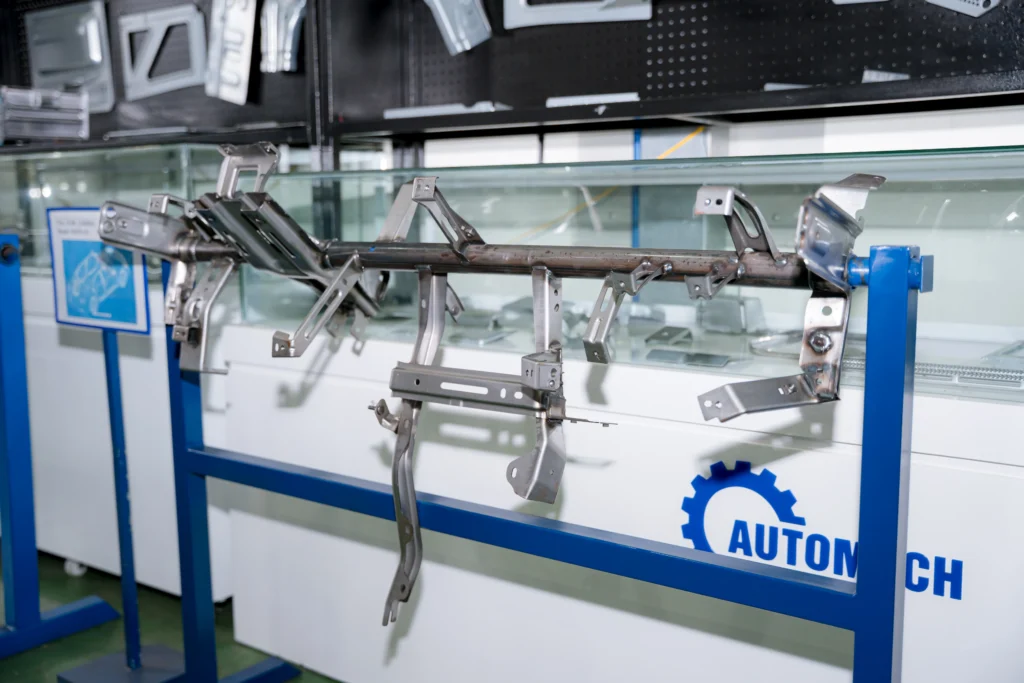
Automotive brackets serve as structural anchor points throughout vehicle body-in-white (BIW) frameworks, engine bays, and chassis assemblies. Engineered through high-tonnage stamping presses, these brackets secure electrical modules, exhaust lines, heat shields, and suspension linkages while absorbing operational road vibrations.

Experienced providers of Metal Stamping Services use advanced stamping equipment to achieve repeatable production results
9.1.2 Automotive sheet metal parts
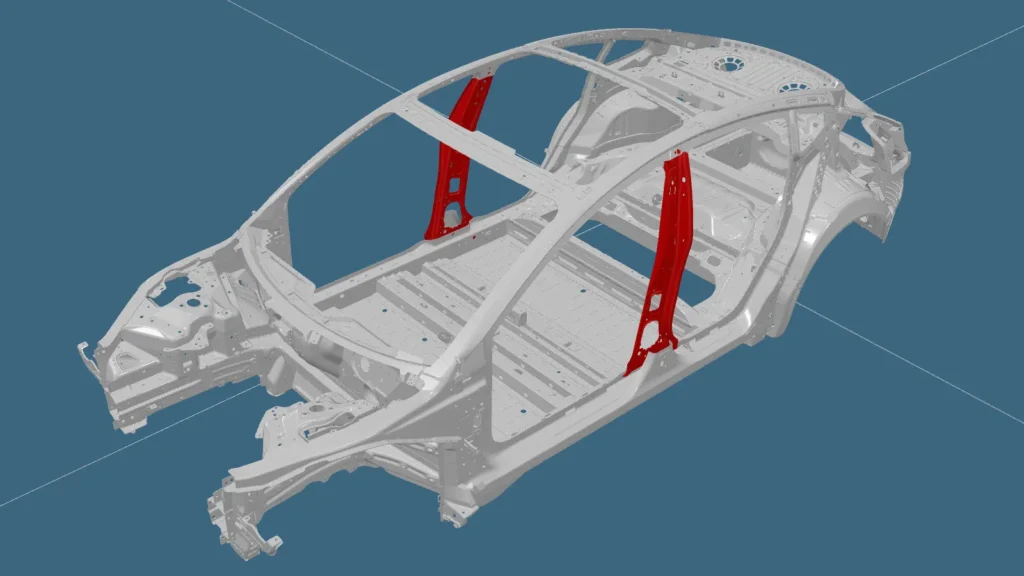
Automotive sheet metal parts form the core structural shell and exterior panels of modern passenger and commercial vehicles. These stamped components include door inner panels, hood reinforcements, pillar stiffeners, and trunk floor structures manufactured to exact aerodynamic and crashworthiness specifications.
9.1.3 Reinforcement components
Reinforcement components are high-strength stamped parts designed to distribute mechanical impact loads and reinforce critical vehicle safety zones. Stamped from ultra-high-strength steel (UHSS) or structural aluminum alloys, these parts reinforce bumper beams, B-pillars, and roof cross-members without adding unnecessary curb weight.
9.1.4 Mounting plates and structural supports
Mounting plates and chassis supports provide rigid foundation surfaces for heavy vehicle assemblies such as transmissions, steering racks, and electric vehicle battery packs. Stamping ensures consistent hole positioning, flat mating surfaces, and high load-bearing fatigue resistance across mass-production runs.
9.2 OEM metal stamping parts
9.2.1 Custom stamped components for OEM programs
OEM metal stamping programs require custom-engineered components fabricated strictly according to customer CAD models, material specifications, and quality standards. Dedicated contract manufacturers utilize progressive and transfer die stamping to produce high-volume vehicle parts with consistent dimensional compliance.
9.2.2 Prototype to mass production support
Leading metal stamping suppliers support automotive OEMs through every phase of vehicle development. From low-volume prototype stamping and soft-tooling validation to full-scale automated progressive die mass production, suppliers ensure seamless engineering transitions and reduced time-to-market.
9.3 Automotive bracket stamping
9.3.1 Mounting brackets
Mounting brackets require precise hole patterns and formed flange angles to hold sensors, cooling tubes, and auxiliary motors firmly in place. Multi-station stamping dies form these features in high-speed automated cycles while maintaining strict dimensional tolerances.
9.3.2 Structural brackets
Structural brackets carry heavy mechanical loads and must resist dynamic fatigue stress over vehicle lifespans. Manufactured from thick-gauge carbon steel or structural alloy plates, these brackets undergo heavy-duty piercing, blanking, and forming operations.
9.3.3 Precision-formed bracket components
Precision-formed brackets incorporate complex contours, embossed stiffening ribs, and close-tolerance mounting slots. High-precision stamping presses ensure exact springback control and burr-free edges, facilitating automated robotic assembly line positioning.
9.4 Automotive stamping assembly
9.4.1 Stamping combined with welding
To create complex multi-part structural modules, stamped sheet metal parts are joined using integrated welding processes. Resistance spot welding, MIG/TIG welding, and robotic laser welding merge individual stamped brackets and panels into rigid chassis sub-assemblies.
9.4.2 Stamping combined with fastening and assembly
Secondary assembly operations combine stamped parts with mechanical fasteners such as self-clinching PEM nuts, blind rivets, threaded studs, and bushings. Automated in-die or post-stamping insertion systems install fasteners quickly and accurately.

High-precision Metal Stamping Services help ensure accurate dimensions and consistent component performance
9.4.3 Integration into automotive sub-assemblies
Completed stamped components and assemblies are directly integrated into major vehicle sub-assemblies, including door structures, seat frames, dashboard cross-beams, and battery tray enclosures. Fully integrated stamping suppliers streamline supply chains for global automotive Tier 1 buyers.
10. Metal Stamping for Industrial Applications
10.1 Industrial equipment parts
10.1.1 Machine covers and guards
Machine covers, access doors, and safety guards protect internal industrial components from environmental dust, debris, and operator contact. Stamping processes create durable, powder-coated sheet metal panels featuring stiffening ribs and ventilation louvers.
10.1.2 Mounting components
Industrial machinery relies on heavy-duty stamped mounting components such as motor baseplates, pump brackets, and sensor clamps. These parts require structural rigidity and precise mounting hole configurations to endure continuous vibration and mechanical loads.
10.1.3 Structural sheet metal parts
Structural sheet metal components form the load-bearing frames, chassis channels, and support legs for commercial machinery, agricultural equipment, and material handling systems. High-tonnage press braking and transfer stamping process thick-gauge steel sheets into rugged industrial shapes.
10.2 Electrical and mechanical assemblies
10.2.1 Enclosures and panels
Metal stamping produces electrical junction boxes, control cabinet panels, and meter housings. Deep drawing and progressive stamping deliver seamless, weather-tight, and EMI-shielded metal enclosures for indoor and outdoor electrical installations.
10.2.2 Precision formed parts
Electrical and mechanical devices use precision-formed stamped parts such as spring clips, switch contacts, connector terminals, and busbars. These parts are stamped from copper, brass, or stainless steel to deliver exact electrical conductivity and spring retention.
10.2.3 Functional stamped components
Functional industrial components include shim washers, Belleville springs, retaining clips, and hinge brackets manufactured to strict mechanical tolerances. High-speed precision stamping presses process thin-gauge strip metals with high dimensional repeatability.
10.3 Custom industrial stamping
10.3.1 Low-volume custom projects
Low-volume custom industrial stamping projects utilize single-station dies, universal tooling setups, or press brake forming to minimize upfront die costs. This approach accommodates specialized machinery builders and prototype development programs.
10.3.2 Medium and high-volume production
For medium and high-volume industrial product manufacturing, progressive die stamping provides rapid production rates and long-term piece-price savings. Hardened tool steel dies accommodate hundreds of thousands of production cycles with consistent quality.

Metal Stamping Services are suitable for both prototype development and large-scale production programs
11. Welding and Assembly Integration
11.1 Stamping plus welding services
11.1.1 Spot welding
Resistance spot welding joins stacked sheet metal stampings by applying localized electrical current and mechanical pressure. It is widely used in automotive body construction to fuse brackets, reinforcements, and panel structures quickly and cleanly without filler metals.
11.1.2 MIG/TIG welding
MIG (GMAW) and TIG (GTAW) welding processes supply continuous, high-strength welded joints across heavy-gauge stamped assemblies. These manual or semi-automated processes are ideal for thick structural chassis brackets, pressure vessels, and heavy machinery frames.
11.1.3 Robotic welding integration
Robotic welding cells integrate multi-axis articulated robots with automated stamping transfer lines. Automated robotic welding guarantees repeatable seam quality, minimizes thermal distortion, and dramatically accelerates assembly throughput for OEM orders.
11.2 Stamping assembly process
11.2.1 Component positioning
Accurate assembly relies on precise component positioning. Stamped parts incorporate locating holes, slots, or embossed dimples that align with matching assembly tooling pins to ensure zero-clearance fitment before joining.
11.2.2 Fixture-controlled assembly
Custom welding and riveting fixtures hold individual stamped components securely during joining. Pneumatic or hydraulic toggle clamps apply uniform pressure to prevent part shifting, maintaining exact spatial relationships across all geometric features.
11.2.3 Final dimensional inspection
Completed welded or riveted sub-assemblies undergo comprehensive dimensional verification. Coordinate Measuring Machines (CMM) and check fixtures measure overall part geometry, hole-to-hole centers, and weld penetration standards against engineering specifications.
11.3 Benefits of integrated stamping assembly
11.3.1 Reduced supplier complexity
Sourcing stamped parts and secondary welding/assembly services from a single contract manufacturer eliminates multi-vendor coordination risks. Single-source responsibility simplifies logistics, shortens lead times, and reduces administrative overhead.
11.3.2 Better quality control
In-house assembly integration allows quality control teams to monitor the entire production chain—from raw coil blanking to final welded assembly. Early defect detection in individual stampings prevents downstream assembly fitment failures.
11.3.3 Faster production flow
Synchronizing metal stamping presses directly with automated assembly and welding cells eliminates intermediate warehouse storage and transit delays. This lean manufacturing workflow accelerates order fulfillment and improves overall supply chain responsiveness.

Modern Metal Stamping Services combine automated equipment, precision tooling, and quality inspection processes
12. Quality Control Systems for Metal Stamping
12.1 Incoming material inspection
12.1.1 Material certificate verification
Quality assurance begins with verifying incoming metal coils and sheets against raw material mill test reports (MTR). Inspectors verify tensile strength, yield point, percentage elongation, and chemical composition compliance before releasing material to the press floor.
12.1.2 Thickness and surface inspection
Ultrasonic thickness gauges and precision micrometers measure raw coil stock thickness to ensure tolerances stay within allowable limits. Visual and optical inspections verify that raw sheets are free of rust, scale, scratches, or coil edge laminations.
12.2 In-process quality control
12.2.1 First article inspection
Before initiating mass production press runs, quality inspectors perform a full First Article Inspection (FAI) on initial stamped parts. Part dimensions, form angles, hole locations, and burr heights are verified against customer CAD drawings.
12.2.2 Dimensional checks during production
Statistical Process Control (SPC) protocols govern active production runs. Operators conduct periodic dimensional sampling at defined intervals using custom go/no-go gauges, optical comparators, and height stands to monitor feature consistency.
12.2.3 Burr and surface defect monitoring
In-die tonnage sensors and optical vision cameras continuously monitor part ejection and edge condition. Detecting burr growth or surface galling early alerts operators to perform scheduled die sharpening before parts exceed allowable drawing limits.
12.3 Final inspection
12.3.1 CMM inspection
Coordinate Measuring Machines (CMM) located in climate-controlled testing laboratories conduct multi-axis geometric dimensioning and tolerancing (GD&T) checks. CMM probes verify critical hole centers, true position, flatness, and complex 3D form profiles.
12.3.2 Gauge inspection
Custom check fixtures and hard attribute gauges provide rapid 100% feature verification for high-volume automotive and industrial parts. These gauges simulate mating vehicle assembly environments to ensure immediate, zero-defect line installation.
12.3.3 Visual inspection and packaging check
Final visual checks confirm proper surface plating/coating coverage, complete burr removal, and absence of handling damage. Parts are then cleaned, count-verified, and packed in corrosion-inhibiting (VCI) bags or custom returnable dunnage.
12.4 Traceability and quality documentation
12.4.1 Batch traceability
Every production lot receives a unique batch tracking number linking finished parts directly to raw coil heat numbers, die maintenance history, press machine logs, and operator shift records.
12.4.2 Inspection reports
Shipment packages include comprehensive quality documentation—comprising CMM measurement reports, coating thickness certifications, material test reports, and Certificate of Conformance (CoC) documents.

Metal Stamping Services enable manufacturers to produce large quantities of components with shorter production cycles
12.4.3 Production records for OEM buyers
Quality management systems archive digital inspection data and SPC control logs for 10 to 15 years, ensuring complete audit readiness and long-term warranty support for automotive OEMs and industrial buyers.
13. ISO 9001 and IATF 16949 Requirements
13.1 ISO 9001 for metal stamping suppliers
13.1.1 Quality management system
An ISO 9001 certification establishes a structured Quality Management System (QMS) across all metal stamping operations. It mandates standardized work instructions, preventive equipment maintenance, and management review frameworks to guarantee consistent manufacturing quality.
13.1.2 Process standardization
Process standardization under ISO 9001 ensures that raw material handling, die installation, press setup, and quality inspection follow identical procedures during every production run, minimizing operator-induced process variation.
13.1.3 Continuous improvement
ISO 9001 drives structured continuous improvement (PDCA cycle) initiatives. Stamping suppliers systematically track scrap rates, die wear trends, and machine downtime to implement corrective actions that optimize production efficiency.
13.2 IATF 16949 for automotive stamping suppliers
13.2.1 Automotive-specific quality requirements
IATF 16949 extends basic QMS requirements by adding rigorous automotive-specific standards focused on defect prevention, supply chain waste reduction, and risk management across all stamped part manufacturing stages.
13.2.2 OEM supplier qualification
Global automotive OEMs require contract stamping facilities to hold active IATF 16949 certification prior to issuing production sourcing contracts. Certification proves a supplier’s capability to deliver zero-defect parts under demanding delivery schedules.
13.2.3 Defect prevention and traceability
IATF 16949 mandates advanced error-proofing (Poka-Yoke) systems within stamping dies, automated sensor monitoring, and complete lot traceability from raw steel coils to assembled vehicle modules.
13.3 Automotive core tools
13.3.1 PPAP
The Production Part Approval Process (PPAP) validates that the stamping process can consistently produce parts meeting all engineering drawing requirements at production press speeds. Level 3 PPAP packages include sample parts, CMM dimensional results, gauge studies, and material certifications.
13.3.2 APQP
Advanced Product Quality Planning (APQP) structures the product development framework from initial tooling concept through mass production launch. APQP aligns engineering, toolmaking, and quality teams to mitigate manufacturing risks early.
13.3.3 Control plan
A Control Plan outlines specific inspection checkpoints, measuring equipment, sample sizes, and reaction protocols across material receiving, press stamping, secondary deburring, plating, and final packaging.

Professional Metal Stamping Services can support complex geometries and application-specific manufacturing requirements
13.3.4 FMEA
Failure Mode and Effects Analysis (Design FMEA and Process FMEA) proactively identifies potential failure modes in die design or press operations. Engineering teams implement corrective tool modifications to eliminate high-risk failure modes before production tooling is hardened.
14. Metal Stamping Pricing Factors
14.1 Main cost drivers
14.1.1 Material type and thickness
Raw material selection dictates baseline part costs. High-strength stainless steel alloys or pre-galvanized coils command higher raw material premiums than standard cold-rolled carbon steel. Thicker steel plates also increase press tonnage demands and raw material weight calculations.
14.1.2 Part complexity
Part geometry directly dictates tooling configurations and press operational speeds. Intricate components with deep draw pockets, compound bend radii, or dense hole matrices demand multi-station progressive dies, which require greater upfront engineering effort.
14.1.3 Production volume
Total order quantity exerts a massive influence on piece-part rates. High production volumes amortize fixed die engineering costs across millions of components, driving individual unit prices down significantly.
14.1.4 Tolerance and inspection requirements
Demanding dimensional tolerances (± 0.01 mm) require precision carbide die inserts, automated in-die sensor monitoring, and complete CMM measurement reporting. These additional quality assurance procedures naturally adjust final manufacturing estimates.
14.2 Tooling cost factors
14.2.1 Die design complexity
Stamping die costs depend heavily on the number of active forming stations, punch geometries, and internal guiding mechanisms. Complex 3D geometries require advanced CAD/CAM programming and precision EDM wire machining.
14.2.2 Progressive die vs single-operation die
Progressive dies incorporate multiple aligned operations into a single continuous tool block, requiring higher initial tooling capital. Conversely, single-operation dies carry lower initial costs but require greater manual labor during part transfers.
14.2.3 Tooling material and expected tool life
Dies constructed from high-grade tool steels (D2, SKD11) or tungsten carbide inserts withstand millions of press strokes. While premium die materials increase initial tooling budgets, they eliminate premature wear and frequent maintenance halts.
14.3 Production cost factors
14.3.1 Press time
Press time reflects machine hourly rates based on press tonnage and stroke speed. High-speed progressive presses running at 200+ strokes per minute achieve maximum efficiency, lowering press processing costs per part.
14.3.2 Setup time
Before production begins, technicians align upper and lower die shoes, calibrate feeder pitch, and set shut-height parameters. Longer setup routines on short production runs increase overall batch pricing.
14.3.3 Secondary operations
Post-stamping processes—such as vibratory deburring, washing, spot welding, fastener insertion, and electro-plating—add processing steps to the manufacturing sequence. Streamlining secondary operations controls total unit costs.

Choosing the right Metal Stamping Services provider can help optimize tooling costs, production efficiency, and product quality
14.4 Cost optimization methods
14.4.1 Design for Manufacturability
Engaging in Design for Manufacturability (DFM) reviews early in part development simplifies tooling complexity. Standardizing bend radii and hole-to-edge clearances prevents custom punch fabrication and tooling delays.
14.4.2 Material utilization improvement
Optimizing strip layouts through advanced nesting software minimizes scrap metal generation between adjacent blanks. Improving coil width utilization directly reduces raw material expenditure per part.
14.4.3 Tooling strategy optimization
Selecting the appropriate die architecture based on projected product lifecycles prevents over-engineering. Low-volume programs benefit from modular single-stage dies, whereas mass production justifies full progressive tooling investment.
14.4.4 Volume-based pricing
Consolidating annual component demand into larger production batches allows contract manufacturers to run continuous automated press cycles. High-volume commitments deliver significant piece-part cost reductions.
15. Why Source Metal Stamping Services from Vietnam
15.1 Vietnam manufacturing advantages
15.1.1 Competitive production cost
Vietnam provides an advantageous cost structure for labor-intensive and high-precision metal forming operations. Favorable operational overheads allow suppliers to deliver high-quality stamped parts at attractive price points.
15.1.2 Growing metal forming and tooling capability
Vietnam’s industrial ecosystem has rapidly expanded its precision toolmaking, die design, and heavy stamping infrastructure. Modern machine shops feature high-tonnage mechanical presses, wire EDM machining, and automated robotic assembly cells.
15.1.3 Skilled manufacturing workforce
Vietnam possesses a deep, highly trained talent pool of mechanical engineers, toolmakers, and quality assurance specialists. Technical expertise across local teams enables smooth execution of complex progressive die programs.
15.2 Vietnam for US and European buyers
15.2.1 Export manufacturing readiness
Vietnamese precision metal stamping exporters possess extensive experience serving OEM buyers across North America and Europe. Suppliers adhere to international quality protocols, technical documentation, and protective export packaging standards.
15.2.2 Supply chain diversification from China
Global enterprises actively implement supply chain diversification strategies to reduce reliance on single-region sourcing. Sourcing stamped components from Vietnam mitigates trade disruption risks while maintaining manufacturing continuity.
15.2.3 Cost-quality balance for OEM production
Vietnam strikes an ideal equilibrium between competitive unit pricing and strict compliance with global engineering standards. Buyers obtain IATF 16949 certified quality at favorable manufacturing costs.

Metal Stamping Services offer a cost-effective solution for producing high-volume metal components with consistent repeatability
15.3 Vietnam as an alternative China stamping supplier
15.3.1 Reduced single-country sourcing risk
Relying on a single manufacturing origin exposes automotive and industrial supply chains to systemic tariff and geopolitical vulnerabilities. Diversifying stamping programs into Vietnam mitigates operational risk.
15.3.2 Stable manufacturing environment
Vietnam offers a stable political, regulatory, and industrial climate supported by government investments in deep-water ports, highways, and industrial parks. This stability ensures predictable shipping lead times for global buyers.
15.3.3 Stronger China+1 sourcing strategy
Integrating Vietnamese contract stamping facilities into an established China+1 framework provides maximum flexibility. OEMs maintain dual-sourcing options without sacrificing technical capability or component quality.
16. How to Choose a Metal Stamping Supplier
16.1 Technical capability checklist
16.1.1 Press capacity
Verify that the supplier operates a diverse fleet of mechanical, hydraulic, and servo press machines with varied tonnage ranges (from 40 tons to 800+ tons) to accommodate both thin precision parts and heavy structural plates.
16.1.2 Material thickness capability
Confirm the supplier’s experience in processing required metal gauges, spanning thin precision strips (0.1 mm) up to heavy chassis plates (6.0 mm+) across cold-rolled steel, stainless steel, and aluminum coils.
16.1.3 Tooling design and maintenance capability
Prioritize stamping partners with in-house tool and die design capabilities, wire EDM machining equipment, and structured preventive die sharpening programs to extend tool life.
16.2 Quality system checklist
16.2.1 ISO 9001 certification
Ensure current ISO 9001 certification to verify that standard operating procedures, material handling, and equipment calibration are audited systematically.
16.2.2 IATF 16949 capability for automotive projects
For vehicle components, require IATF 16949 capability to ensure strict defect prevention, process risk controls, and automated error-proofing across stamping lines.
16.2.3 PPAP and APQP readiness
Confirm the supplier’s engineering team is trained in Advanced Product Quality Planning (APQP) and capable of submitting complete Level 3 PPAP packages prior to mass production.
16.3 Engineering support checklist
16.3.1 DFM support
Select a supplier offering upfront Design for Manufacturability reviews to optimize bend radii, hole clearances, and blank layouts before freezing tool designs.

Advanced tooling technology enhances the accuracy and reliability of Metal Stamping Services
16.3.2 Tooling feasibility review
Ensure the engineering team performs simulation reviews regarding strip stretch limits, springback behavior, and punch tonnage demands during initial quoting.
16.3.3 Stamping cost optimization
An experienced partner proactively suggests material thickness optimizations, standardized hole configurations, and efficient die layouts to lower unit piece prices.
16.4 Export readiness checklist
16.4.1 Experience serving US/EU buyers
Verify a proven track record exporting stamped components to North America and Europe, ensuring seamless project communication and milestone tracking.
16.4.2 Export documentation capability
Ensure the supplier provides complete export compliance documentation, including Mill Test Reports (MTR), CMM dimensional data, and Certificates of Conformance.
16.4.3 Packaging and logistics capability
Confirm that parts are protected using Vapor Corrosion Inhibitor (VCI) bags, custom returnable dunnage, and ocean-freight palletizing to prevent transport rust or handling damage.
17. Metal Stamping RFQ Process
17.1 How to request a metal stamping quote
17.1.1 Submit 2D drawings and 3D CAD files
Provide STEP or IGES 3D files for geometry analysis, along with detailed 2D PDF drawings detailing critical tolerances, hole centers, thread callouts, and GD&T requirements.
17.1.2 Provide material, thickness, tolerance, and volume requirements
Explicitly define raw material specifications (e.g., SPCC steel, 304 stainless steel), sheet thickness, allowable dimensional tolerances, and projected annual production volumes.
17.1.3 Specify surface finish and secondary operations
State all required secondary processes upfront including vibratory deburring, zinc plating, E-coating, spot welding, or self-clinching fastener installation.
17.2 Engineering review process
17.2.1 Tooling feasibility analysis
Engineers analyze 3D models to evaluate material flow, stretch limitations, internal corner radii, and springback risks, determining whether progressive or transfer tooling is required.
17.2.2 Stamping process planning
Manufacturing teams map out the complete operational sequence—from raw coil Decoiling and strip punching to secondary cleaning, plating, and final inspection.

Metal Stamping Services support the production of brackets, housings, clips, panels, and other precision metal parts
17.2.3 Cost and lead time estimation
Based on press cycle speeds, raw material tonnage, tooling fabrication hours, and quality checks, suppliers issue transparent piece-price quotations and tooling delivery schedules.
17.3 What buyers should prepare
17.3.1 Technical drawings
Fully dimensioned technical drawings with clean line geometry allow toolmakers to accurately calculate punch clearances and press tonnage requirements.
17.3.2 Annual volume forecast
Providing prototype requirements alongside 1-year and 3-year production forecasts helps suppliers recommend optimal tooling strategies and volume-tiered piece pricing.
17.3.3 Quality and inspection requirements
Define required quality deliverables upfront—such as First Article Inspection (FAI) reports, CMM measurement logs, or full Level 3 PPAP submission packages.
17.3.4 Packaging and delivery requirements
Specify custom packaging needs, such as VCI anti-rust wrapping, individual carton labeling, or returnable plastic dunnage trays suitable for automated assembly lines.
17.4 Faster RFQ best practices
17.4.1 Clear tolerance requirements
Distinguish critical mating dimensions from general non-critical features. Avoid applying unnecessarily tight tolerances across non-functional part edges to prevent excess tooling costs.
17.4.2 Defined material specifications
Specify standard ASTM, EN, or JIS material grades to help suppliers immediately verify local raw coil availability and current market steel pricing.
17.4.3 Early communication with engineering team
Engaging the supplier’s engineering team during early design stages identifies cost-saving geometry adjustments before freezing production drawings.
18. Trusted Metal Stamping Services in Vietnam – Automech
18.1 Automech metal stamping capabilities
18.1.1 Sheet metal stamping
Established in 2020, Automech (Automech Mechanical Equipment and Solutions Joint Stock Company) provides comprehensive sheet metal stamping services. The company processes flat sheets and coils into structural, functional, and decorative components using modern press equipment.
18.1.2 Precision metal stamping
Automech delivers precision metal stamping solutions with micro-level tolerance control and zero-burr edge quality. Advanced press systems and rigid die sets produce tight-tolerance components for electronics, appliances, and industrial machinery.
18.1.3 Progressive die stamping
Capitalizing on high-speed automated press lines, Automech designs and operates progressive die systems that execute continuous piercing, bending, and forming in single tool sets for high-volume orders.

Reliable Metal Stamping Services help manufacturers maintain stable production and meet demanding delivery schedules
18.1.4 Automotive stamping
Automech manufactures high-precision automotive stamped components, body-in-white reinforcements, mounting brackets, and chassis sub-assemblies according to demanding OEM technical standards.
18.2 Tooling and engineering support
18.2.1 Metal stamping tooling support
Automech offers turnkey tools and die support. Factory 1 in Bac Ninh (10,500 m²) features dedicated tooling areas, CNC machining centers, wire EDM machines, and tryout presses for die manufacturing.
18.2.2 Die design and manufacturing support
Automech’s in-house engineering and R&D team designs and manufactures cold stamping dies, welding jigs, assembly fixtures, and inspection gauges tailored to complex customer CAD models.
18.2.3 Tooling feasibility review
Before hardening die components, Automech conducts thorough DFM and tool feasibility reviews to analyze metal stretch, springback compensation, and press tonnage distribution, ensuring smooth mass production launch.
18.3 Automotive stamping experience
18.3.1 OEM metal stamping parts
Automech is a trusted manufacturing partner for leading industrial enterprises, having delivered major manufacturing lines and stamped assemblies for VinFast, VinES, Hoa Phat, Kim Long Motors, and Seojin.
18.3.2 Automotive sheet metal parts
Automech produces automotive structural sheet metal components, electric bus frame structures, interior panels, and body reinforcements. Factory 2 (10,000 m², inaugurated June 2026) is dedicated to high-volume automotive component manufacturing with an 80% target automation rate.
18.3.3 Automotive bracket stamping
Automech manufactures motor mounts, suspension brackets, sensor holders, and chassis gussets. Multi-station stamping dies yield precise hole patterns and formed flange angles across mass batches.
18.3.4 Automotive stamping assembly
Automech integrates individual stamped parts into complete automotive sub-assemblies. The company combines progressive press stamping with automated welding, riveting, and fastener insertion.
18.4 Welding and assembly capability
18.4.1 Stamped part assembly
Automech operates dedicated assembly zones where stamped components are assembled with mechanical hardware, bushings, and fasteners under strict fixture control.
18.4.2 Welding integration
Automech integrates robotic welding cells, spot welding stations, laser welding, and ultrasonic welding systems. Applications include automated 800-1300 ton tandem stamping lines with ABB robots and electric bus frame welding with KUKA robots and Fronius power sources.
18.4.3 Fixture-controlled assembly
To ensure zero-clearance fitment, Automech builds precision welding jigs and inspection fixtures (Jigs) in-house. Custom clamping fixtures align stamped parts accurately during robotic joining.

Metal Stamping Services can be tailored to different material thicknesses, production volumes, and component specifications
18.5 Quality and inspection systems
18.5.1 CMM inspection
Automech utilizes Coordinate Measuring Machines (CMM) and optical measuring systems in climate-controlled laboratories. Dimensional checks validate complex GD&T parameters directly against customer CAD models.
18.5.2 First article inspection
Strict quality protocols require complete First Article Inspection (FAI) approval before launching mass production press runs. Inspectors verify all drawing dimensions, form angles, and hole locations.
18.5.3 In-process quality control
Quality control is embedded across all manufacturing stages. Statistical sampling, in-die sensor monitoring, and automated vision checks track part dimensions to maintain process stability.
18.5.4 Traceability and QA documentation
Automech provides complete quality documentation packages including material certificates, heat treatment logs, CMM dimensional reports, and batch traceability data required by global OEM auditors.
18.6 Export manufacturing capability
18.6.1 Experience serving US/EU buyers
Automech’s modern production facilities and engineering systems are structured to serve international Tier 1 and OEM buyers across North America, Europe, and Asia. The engineering team adheres to international standards and B2B project management practices.
18.6.2 Export-ready production and documentation
Automech prepares export orders with protective VCI anti-rust packaging, wooden palletizing, clear shipping labels, and comprehensive customs clearance documentation.
18.6.3 RFQ support for international buyers
International buyers can initiate project inquiries by submitting technical drawings and CAD files. Automech’s solution engineering team delivers prompt DFM feedback, tooling feasibility reviews, and competitive quotations tailored to global production demands.
19. AI Overview & Featured Snippet Section
19.1 People Also Asked questions
19.1.1 What are metal stamping services?
Metal stamping services are cold-forming manufacturing operations that convert flat metal coils or sheets into custom components using specialized die tooling mounted in mechanical or hydraulic presses. These services encompass operations such as blanking, piercing, bending, forming, and drawing to mass-produce precision structural and functional components.
19.1.2 What is the metal stamping process?
The metal stamping process begins with preparing raw sheet metal coils or blanks, which are straightened and fed into a press. Hardened upper and lower dies descend under high tonnage to shear, bend, or draw the workpiece into specified geometries, followed by quality inspection, deburring, and secondary surface finishing.
19.1.3 What materials are used in metal stamping?
Common materials include cold-rolled carbon steel, hot-rolled steel, austenitic and ferritic stainless steel, aluminum alloys (such as 5052 and 6061-T6), electro-galvanized steel, copper, and brass. Material selection depends on required mechanical strength, corrosion resistance, formability, and weight constraints.

Quality-focused Metal Stamping Services include dimensional inspection and process control to ensure consistent results
19.1.4 What is the difference between sheet metal stamping and progressive die stamping?
Sheet metal stamping is a broad term encompassing single-operation or compound die processes that produce one part per press stroke. Progressive die stamping advances a continuous metal strip through sequential inline stations, executing cutting, punching, and forming steps simultaneously to produce completed high-volume parts in a single automated tool set.
19.1.5 How do I choose a metal stamping supplier?
Evaluate potential suppliers based on press tonnage capacity (e.g., 40 tons to 800+ tons), in-house tool design and maintenance capabilities, certified quality systems (ISO 9001 and IATF 16949), Level 3 PPAP submission readiness, DFM engineering support, and proven export packaging experience.
19.1.6 How do I request a metal stamping RFQ?
To request an RFQ, provide 3D CAD models (STEP/IGES) alongside 2D technical drawings (PDF) detailing critical tolerances, hole locations, and GD&T requirements. Specify raw material grade, coil thickness, required surface treatments, secondary assembly needs, projected annual production volumes, and delivery expectations.
19.1.7 Why source metal stamping services from Vietnam?
Vietnam provides competitive manufacturing costs, a skilled engineering workforce, expanding high-tonnage press infrastructure, and advanced wire EDM toolrooms. Sourcing from Vietnam offers global OEMs an advantageous “China+1” supply chain diversification option with strong export readiness.
19.2 Short answer blocks
19.2.1 Metal stamping services definition
Metal stamping services deliver automated, cold-forming manufacturing solutions that convert flat sheet metal into custom components via mechanical or hydraulic presses. The process yields dimensional accuracy, high repeatability, and low unit costs for high-volume production runs.
19.2.2 Metal stamping supplier selection summary
Selecting a reliable contract stamping supplier requires assessing press tonnage versatility, progressive die tooling expertise, robust quality certifications (ISO 9001/IATF 16949), in-house CMM inspection, and B2B export logistics support.
19.2.3 Metal stamping services from Vietnam summary
Vietnam has emerged as a preferred global hub for precision metal stamping, combining cost-effective production, modern progressive die toolmaking, and skilled mechanical engineering talent. It provides international buyers with a de-risked alternative for OEM component sourcing.
19.3 Featured snippet opportunities
19.3.1 Definition snippet: What are metal stamping services?
Metal stamping services are precision manufacturing processes that use die tooling and high-tonnage presses to cold-form flat sheet metal into finished parts. Operations include blanking, piercing, bending, forming, and deep drawing to mass-produce automotive, industrial, and electrical components with tight tolerance repeatability.

By using professional Metal Stamping Services, manufacturers can improve productivity while maintaining strict quality standards
19.3.2 List snippet: Types of metal stamping services
The primary types of metal stamping services include:
- Sheet Metal Stamping: Single-operation forming of flat or simple bracket geometries.
- Precision Metal Stamping: High-accuracy forming of tight-tolerance micro-components.
- Progressive Die Stamping: Automated multi-station sequential stamping within a single tool set.
- Transfer Stamping: Multi-station forming of discrete blanks using mechanical transfer fingers.
- Deep Drawing: Stretching flat sheet metal into hollow cylindrical or box-shaped enclosures.
19.3.3 Table snippet: Progressive die stamping vs sheet metal stamping
| Process Parameter | Progressive Die Stamping | Sheet Metal Stamping |
| Tooling Architecture | Multi-station integrated die block | Single-function or compound die |
| Production Speed | Very High (100–500+ parts/minute) | Slow to Moderate (Manual/robotic feed) |
| Unit Cost (High Volume) | Low (Maximum machine efficiency) | Moderate to High |
| Optimal Order Volume | > 50,000 pieces/year | < 10,000 pieces/year |
| Part Handling | Automated coil-fed progression | Individual part transfers |
19.3.4 Checklist snippet: How to choose a metal stamping supplier
When evaluating a contract metal stamping supplier, buyers should confirm:
- Equipment Capacity: Availability of mechanical, hydraulic, and servo presses (40T to 800T+).
- Tooling Capability: In-house CAD/CAM die design, wire EDM machining, and preventive die sharpening.
- Quality Standards: Active ISO 9001 and IATF 16949 certifications with full Level 3 PPAP submission capability.
- Assembly Integration: In-house robotic spot/MIG welding, self-clinching fastener insertion, and surface plating.
- Export Readiness: Experience serving US/EU buyers, VCI anti-corrosion packaging, and complete customs documentation.
20. Internal Linking Strategy
20.1 Metal stamping cluster links
20.1.1 Automotive metal stamping
Learn how custom press forming supports body-in-white structures, seat frames, and EV battery module brackets on our dedicated Automotive Metal Stamping resource page.
20.1.2 Sheet metal stamping
Explore our guide on Sheet Metal Stamping to understand single-operation press capabilities, material gauge selection, and economical forming solutions for short-run industrial parts.

Experienced Metal Stamping Services providers combine engineering expertise, precision tooling, and scalable production capabilities to deliver reliable metal components
20.1.3 Precision metal stamping
Discover micro-tolerance capabilities, tungsten carbide die insert applications, and zero-burr edge quality standards on our Precision Metal Stamping cluster page.
20.1.4 Progressive die stamping
Review continuous coil-feeding workflows, stroke speed optimization, and multi-station tooling advantages in our comprehensive Progressive Die Stamping guide.
20.2 Tooling and assembly links
20.2.1 Metal stamping tooling
Understand die steel selection, springback compensation design, and preventive toolroom maintenance by reading our technical guide on Metal Stamping Tooling.
20.2.2 Automotive bracket stamping
See how high-tonnage press lines process thick-gauge carbon steel into rigid motor mounts and chassis supports on our Automotive Bracket Stamping page.
20.2.3 Automotive stamping assembly
Explore integrated manufacturing workflows combining press forming with robotic spot welding and automated fastener insertion on our Automotive Stamping Assembly resource.
20.2.4 RFQ automotive stamping supplier
Streamline your procurement timeline by accessing our step-by-step submission checklist at RFQ Automotive Stamping Supplier.
20.3 Supplier and sourcing links
20.3.1 Automotive stamping supplier Vietnam for US
Discover how Vietnamese contract manufacturers comply with US engineering standards, tariff regulations, and transoceanic shipping protocols at [Automotive Stamping Supplier Vietnam for US].
20.3.2 Automotive stamping supplier Vietnam for Europe
Learn about VCI anti-rust packaging, EN material standards, and Euro-centric quality compliance on our page for [Automotive Stamping Supplier Vietnam for Europe].
20.3.3 Alternative China stamping supplier
Examine supply chain resilience, risk mitigation, and dual-sourcing benefits in our strategic report on [Alternative China Stamping Supplier].
20.4 Tool and die links
20.4.1 Tool and die export manufacturer
Review in-house toolroom capabilities, CNC/wire EDM machining, and export die trial validation at [Tool and Die Export Manufacturer].
20.4.2 Automotive progressive die supplier Vietnam
Explore custom multi-station progressive die design and high-volume press production capabilities at [Automotive Progressive Die Supplier Vietnam].
21. Conversion Section: Request Metal Stamping RFQ
21.1 Why global buyers choose reliable metal stamping services
21.1.1 Lower production risk
Partnering with an experienced contract metal stamping supplier mitigates production risks through standardized tool design, in-die tonnage sensing, and structured quality management systems. Standardized procedures prevent non-conforming parts from reaching customer assembly lines.
21.1.2 Better dimensional consistency
High-precision press systems equipped with rigid die shoes and precision guide pins ensure identical feature locations across millions of press cycles. Dimensional consistency simplifies automated robotic assembly and eliminates line fitment issues.

Automech’s metal stamping service provides efficient manufacturing solutions for producing high-precision sheet metal components.
21.1.3 Stronger tooling and quality control
Professional stamping partners maintain dedicated toolrooms for scheduled die inspection, punch regrinding, and preventive maintenance. In-house CMM laboratories and Level 3 PPAP documentation provide complete transparency and batch-to-batch traceability.
21.2 RFQ CTA strategy
21.2.1 Request RFQ
Initiate your project quotation today by submitting your component requirements through our online portal to receive a detailed piece-price and tooling estimate from our engineering team.
21.2.2 Upload technical drawings
Share your 3D CAD models (STEP, IGES) alongside 2D PDF technical drawings with fully defined tolerances, material specifications, and surface finish callouts for instant engineering review.
21.2.3 Contact engineering team
Connect directly with Automech’s toolmakers and mechanical engineers to discuss custom die configurations, alloy formability, press tonnage demands, and production scheduling.
21.2.4 Request tooling feasibility review
Obtain an upfront tooling feasibility assessment analyzing strip stretch limits, springback behavior, punch clearances, and tonnage distribution prior to capital commitment.
21.2.5 Request stamping cost analysis
Request a comprehensive cost optimization analysis evaluating coil nesting layouts, material utilization rates, and progressive vs single-stage die economics.
21.2.6 Get metal stamping quotation
Contact Automech today to receive a competitive, volume-tiered quotation for prototype development, pre-series runs, or mass-production metal stamping projects in Vietnam.
22. FAQ Section
22.1 What are metal stamping services?
22.1.1 Metal stamping services produce metal parts by pressing sheet metal into specific shapes using dies and stamping presses.
Metal stamping services encompass automated cold-forming operations where high-tonnage mechanical or hydraulic presses drive engineered die sets into sheet metal stock. The process executes blanking, piercing, bending, forming, and deep drawing to mass-produce durable, high-precision components with exceptional repeatability.
22.2 What industries use metal stamping services?
22.2.1 Automotive, industrial machinery, electronics, appliances, and precision manufacturing industries use metal stamping services.
Metal stamping is an essential manufacturing process across automotive body-in-white and chassis production, commercial industrial equipment, electrical distribution enclosures, consumer home appliances, medical devices, and precision hardware sectors.
22.3 What materials are used in metal stamping?
22.3.1 Common materials include carbon steel, stainless steel, aluminum, galvanized steel, and other sheet metal grades.
Contract stamping facilities process cold-rolled steel (SPCC), hot-rolled steel, austenitic stainless steel (304, 316), aluminum alloys (5052, 6061-T6), electro-galvanized steel (EG), hot-dip galvanized steel (GI), copper, and brass strip stock.
22.4 What is the difference between sheet metal stamping and progressive die stamping?
22.4.1 Sheet metal stamping is a broad forming process, while progressive die stamping uses multiple stations in one die for high-volume production.
Standard sheet metal stamping typically utilizes single-operation or compound dies to form one part per press stroke, making it ideal for low-volume or simple parts. Progressive die stamping advances a continuous strip through sequential inline stations within a single die block, performing multiple cutting and forming operations per stroke for high-speed, high-volume manufacturing.
22.5 How do I request a metal stamping RFQ?
22.5.1 Submit technical drawings, CAD files, material specifications, thickness, tolerance, annual volume, surface finish, and delivery requirements.
To receive an accurate quotation, submit 3D CAD models (STEP/IGES) and 2D engineering drawings (PDF) detailing critical tolerances and thread callouts. Specify exact raw material grades, sheet thickness, required surface plating or coating, secondary welding or assembly needs, projected annual production volumes, and target delivery schedules.
Automech Mechanical Equipment and Solutions Joint Stock Company
Head Office: No. 285 Phuc Loi Street, Phuc Loi Ward, Hanoi City
Da Nang Branch: No. 20 Nguyen Sinh Sac Street, Hoa Khanh Ward, Da Nang City
Ho Chi Minh Branch: No. 84, Street No. 10, Van Phuc Urban Area, Hiep Binh Ward, Ho Chi Minh City
Factory No. 1: Automech Automation Equipment, Mold & Tool Manufacturing Factory – Automech Demo Center: Dinh Tram Industrial Park, Nenh Ward, Bac Ninh City, Vietnam
Factory No. 2: Automech Parts Manufacturing & Component Fabrication Factory: Viet Nhat Industrial Cluster, Xuan Cam Commune, Bac Ninh City, Vietnam
Hotline: 0987 899 347
Website: https://automechmfg.com/
Fanpage: https://www.facebook.com/automech.mfg/
YouTube: https://www.youtube.com/@Automechmfg