In today’s global manufacturing landscape, choosing a reliable ISO 9001 CNC machining supplier is no longer optional—it is a critical factor for ensuring consistent quality, reducing production risks, and meeting international standards. As OEMs and industrial buyers increasingly demand certified partners, suppliers with proven quality management systems stand out as trusted long-term collaborators.
1. Introduction: Why ISO 9001 Matters in CNC Machining Supply Chain
1.1 Global demand for certified CNC machining suppliers
The global manufacturing landscape is shifting toward higher quality standards, making certified suppliers a critical requirement for OEMs and industrial buyers.
1.1.1 Increasing quality expectations from US/EU OEMs
Manufacturers in the US and Europe demand strict compliance with international standards to ensure product consistency, safety, and reliability across supply chains.
1.1.2 Risk reduction in global outsourcing decisions
Working with an ISO 9001 CNC machining supplier helps reduce production risks, ensuring predictable quality and minimizing costly defects or delays.
1.2 Why buyers search “ISO 9001 CNC machining supplier”
1.2.1 Need for verified quality systems
Buyers need assurance that a supplier’s quality claims are backed by an independent, third-party audit. ISO 9001 provides this verified proof of a systematic approach to quality.
1.2.2 Compliance requirements in automotive and industrial sectors
Many advanced industries, particularly automotive, aerospace, and heavy industrial equipment, mandate that all tier suppliers maintain certified Quality Management Systems (QMS) to ensure safety and regulatory compliance across the entire supply chain.
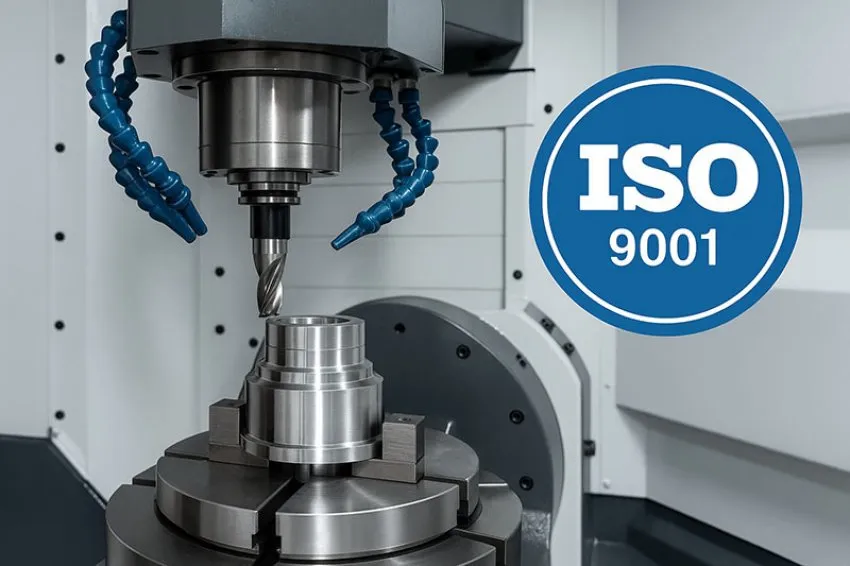
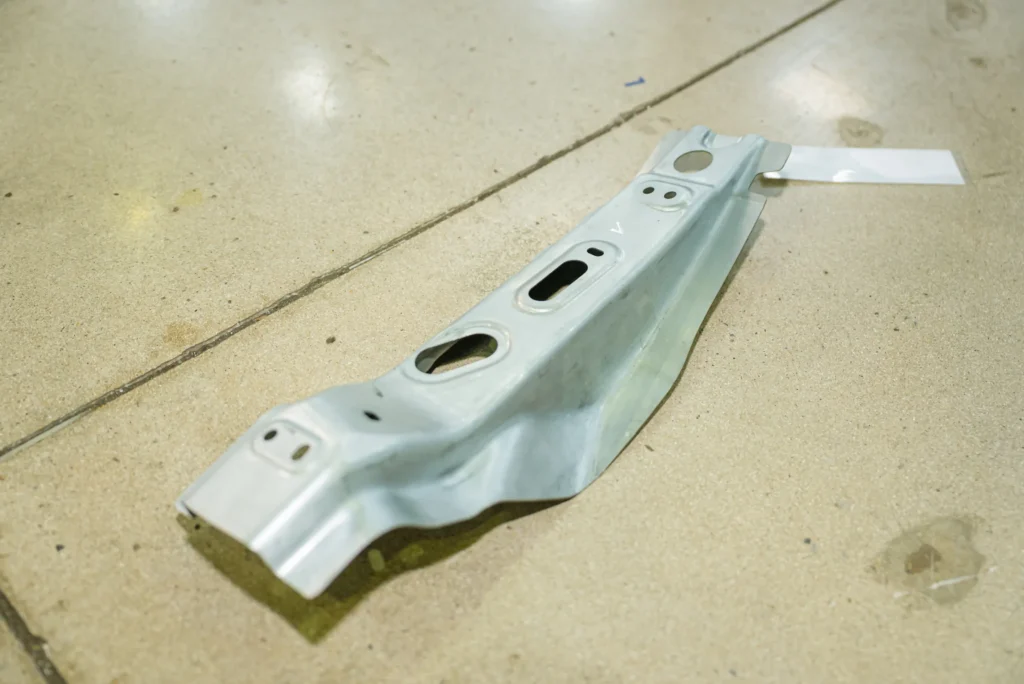
ISO 9001 CNC machining supplier ensures consistent quality through certified management systems
2. What is ISO 9001 in CNC Machining?
2.1 ISO 9001 definition for manufacturing suppliers
2.1.1 Quality management system (QMS) standard
ISO 9001 is the most widely recognized quality management system (QMS) standard worldwide. For manufacturing suppliers, it acts as a blueprint for building a resilient quality framework that dictates how a business operates, from quoting to final delivery.
2.1.2 Focus on consistency, traceability, and process control
The standard does not specify how to machine a part; rather, it ensures that a company has standardized processes to consistently meet customer requirements, trace materials and steps, and control every variable in production.
2.2 ISO 9001 application in CNC machining
2.2.1 Production process standardization
ISO 9001 ensures machining processes are clearly defined, monitored, and repeatable across production runs.
2.2.2 Quality assurance and inspection systems
A certified CNC machining supplier implements rigorous First Article Inspections (FAI), in-process checks, and final quality assurance using calibrated CMMs (Coordinate Measuring Machines) and precision tools to guarantee dimensional accuracy.
3. Why ISO 9001 is Critical for CNC Machining Suppliers
3.1 Benefits for OEM and industrial buyers
3.1.1 Reduced defect rates and production risks
A documented QMS catches errors before they leave the factory floor, significantly reducing the scrap rate and the risk of receiving unusable parts.
3.1.2 Stable and repeatable manufacturing quality
For high-volume production, repeatability is key. ISO 9001 ensures that the processes yielding successful initial samples are locked in for the entire production run.
3.2 Supplier reliability and compliance
3.2.1 Documentation and traceability systems
In the event of a product recall or failure, an ISO 9001 supplier can trace back the exact batch of raw material used, the machine operator, and the inspection reports for that specific run.
3.2.2 Audit readiness for international clients
Certified suppliers are accustomed to rigorous audits, making the onboarding and continuous evaluation processes much smoother for international OEMs.
4. ISO 9001 vs IATF 16949 in CNC Machining
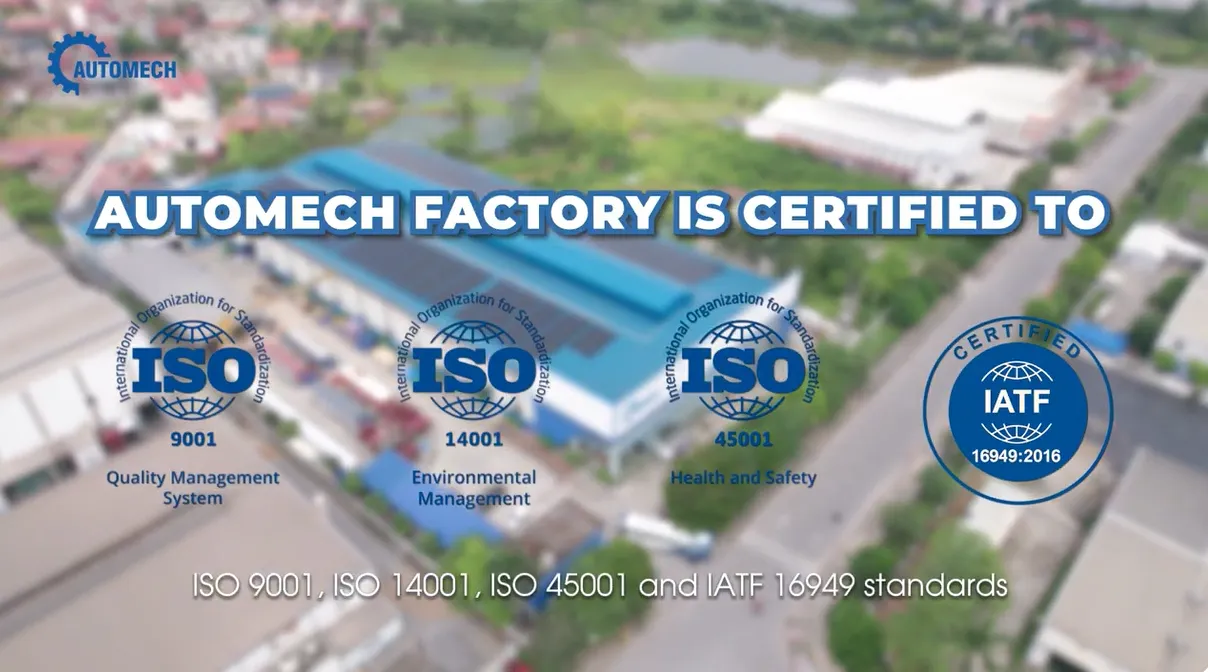
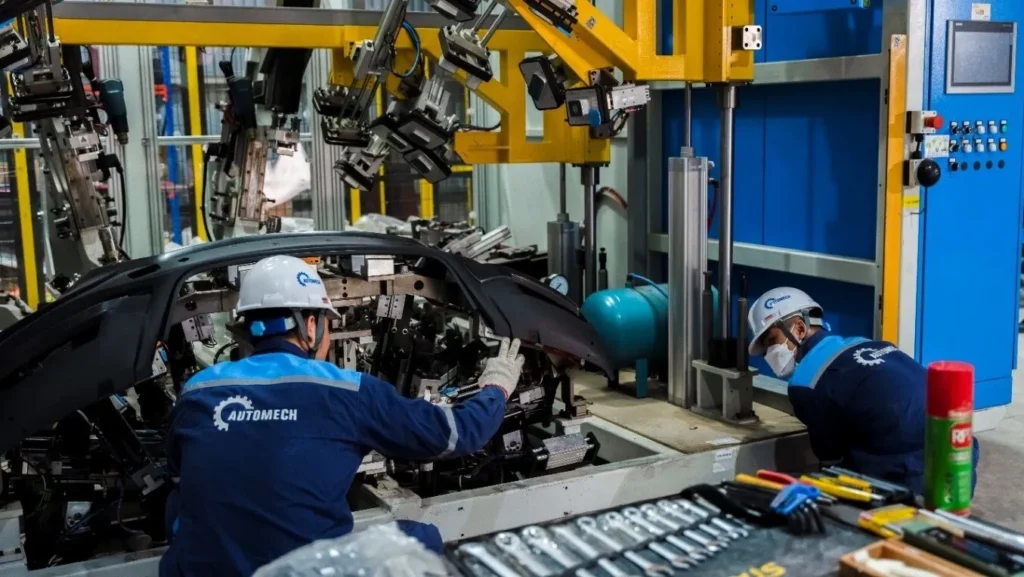
As an ISO 9001 CNC machining supplier, AUTOMECH delivers precision engineering you can trust
4.1 Key differences between ISO 9001 and IATF 16949
4.1.1 General manufacturing vs automotive-specific standard
| Feature | ISO 9001:2015 | IATF 16949:2016 |
| Applicability | All industries | Automotive supply chain only |
| Base standard | Standalone | Built on ISO 9001 |
| Defect prevention tools | General QMS | APQP, PPAP, FMEA required |
| Customer-specific requirements | Not specified | Must be addressed |
| Audit frequency | Less stringent | More frequent, stricter |
4.1.2 Level of quality control requirements
IATF 16949 demands more advanced statistical tools, such as FMEA (Failure Mode and Effects Analysis), PPAP (Production Part Approval Process), and continuous defect prevention, going beyond the basic process controls of ISO 9001.
4.2 When each certification is required
4.2.1 OEM industrial applications (ISO 9001)
Ideal for general industrial machinery, standard equipment, consumer goods, and non-critical components.
4.2.2 Automotive supply chain (IATF 16949)
Mandatory for tier 1, 2, and 3 suppliers providing components directly integrated into vehicles.
4.3 Combined certification advantage
4.3.1 Higher trust for global OEM sourcing
Suppliers holding robust quality certifications demonstrate a commitment to excellence that global OEMs demand.
4.3.2 Competitive advantage in Vietnam CNC machining supplier market
In emerging manufacturing hubs like Vietnam, holding globally recognized certifications immediately elevates a supplier above local competitors, proving export-readiness.
5. Requirements for ISO 9001 Certified CNC Machining Suppliers
5.1 Quality management system structure
5.1.1 Process documentation and control
Certified suppliers must maintain detailed standard operating procedures (SOPs) for every phase of their business.
5.1.2 Continuous improvement (PDCA cycle)
Suppliers are required to employ the Plan-Do-Check-Act methodology to continually enhance their processes, reduce waste, and improve part quality.
5.2 Production and inspection standards
5.2.1 In-process and final inspection
Inspections are not an afterthought; they are integrated directly into the machining cycle and verified before shipment.
5.2.2 Calibration and measurement systems
All gauges, micrometers, and CMMs must be regularly calibrated against international standards to ensure measurements are accurate and reliable.
5.3 Workforce and engineering capability
5.3.1 Skilled CNC operators and engineers
The standard requires that personnel performing tasks affecting product quality are highly competent.
5.3.2 Training and quality awareness programs
The standard requires that personnel performing tasks affecting product quality are highly competent.
6. How to Verify an ISO 9001 CNC Machining Supplier

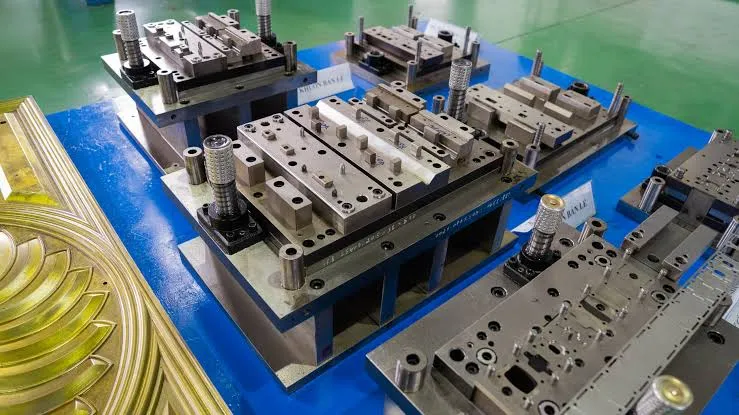
ISO 9001 CNC machining supplier standards guarantee reliable and repeatable production outcomes
6.1 Certification validation process
6.1.1 Checking certificate validity and issuing body
A valid ISO 9001 certificate typically includes:
- The name of the certification body (e.g., Bureau Veritas, SGS, TÜV, DNV)
- A unique certificate number
- The defined scope of certification
- The issue date and expiry date (usually a 3-year cycle with annual surveillance audits)
6.1.2 Scope of certification (CNC machining included)
This is a crucial step that is often overlooked. The scope statement on the certificate defines exactly what activities are certified. A supplier may hold ISO 9001 for “assembly operations” but not for “CNC machining.” Ensure the certificate scope explicitly covers the manufacturing processes relevant to your requirement.
6.2 Supplier audit checklist
6.2.1 Production capability verification
Assess their machine park. Do they have the 3-axis, 4-axis, or 5-axis CNC machines required for your complex parts?
6.2.2 Quality control system inspection
Review their inspection room. The presence of advanced metrology equipment is a strong indicator of real capability.
6.3 Red flags when choosing suppliers
6.3.1 Fake or outdated certifications
Certificates come with defined expiration dates. Beware of suppliers providing expired or improperly branded certificates.
6.3.2 Lack of export experience
A local company might have ISO 9001 but lack the logistics, packaging, and communication skills necessary for smooth US/EU exports.
7. CNC Machining Capabilities in Vietnam
7.1 Overview of CNC machining Vietnam industry
7.1.1 Export-oriented manufacturing ecosystem
Vietnam has rapidly evolved into a powerhouse for mechanical manufacturing, driven by strong government support and a highly skilled workforce.
7.1.2 Growing role in global supply chain
As companies adopt “China Plus One” strategies, Vietnam has become the premier destination for diversifying supply chain risks.
7.2 Key capabilities
7.2.1 CNC milling and turning
Vietnamese facilities are heavily invested in modern Japanese and European CNC multi-axis milling and turning centers.
7.2.2 High precision CNC machining for automotive
The sector has matured to handle tight-tolerance components required by the automotive and aerospace industries.
7.3 Vietnam as CNC machining exporter
7.3.1 Strong supply chain for US/EU markets
Vietnam benefits from established shipping routes and favorable trade agreements with the West.
7.3.2 Competitive alternative to China
Offering favorable labor costs alongside uncompromising quality, Vietnam provides a highly competitive and politically stable alternative for global OEMs.
8. Trusted ISO 9001 CNC Machining Supplier in Vietnam – Automech
8.1 Overview of Automech
Automech (Automech Mechanical Equipment and Solutions JSC) is a Vietnam-based contract manufacturer and precision CNC machining supplier serving international OEM customers across automotive, industrial automation, electronics, and transportation sectors.
With a team of experienced engineers and technical specialists, Automech has successfully executed large-scale manufacturing projects for customers requiring precision machined components, automated production solutions, and complex assembly work. The company’s customer base spans automotive OEMs, elevator manufacturers, HVAC and appliance brands, and industrial machinery companies.
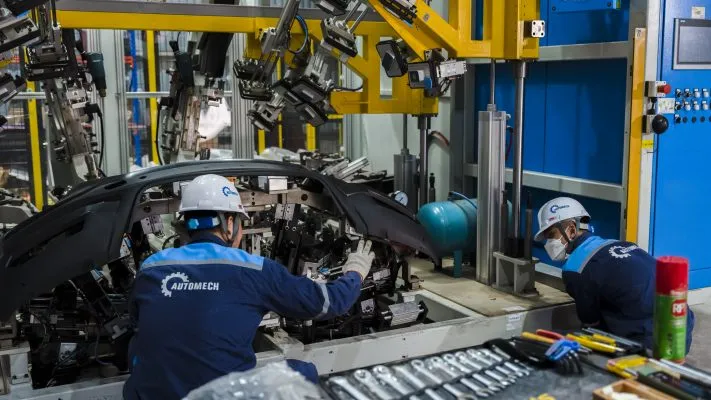
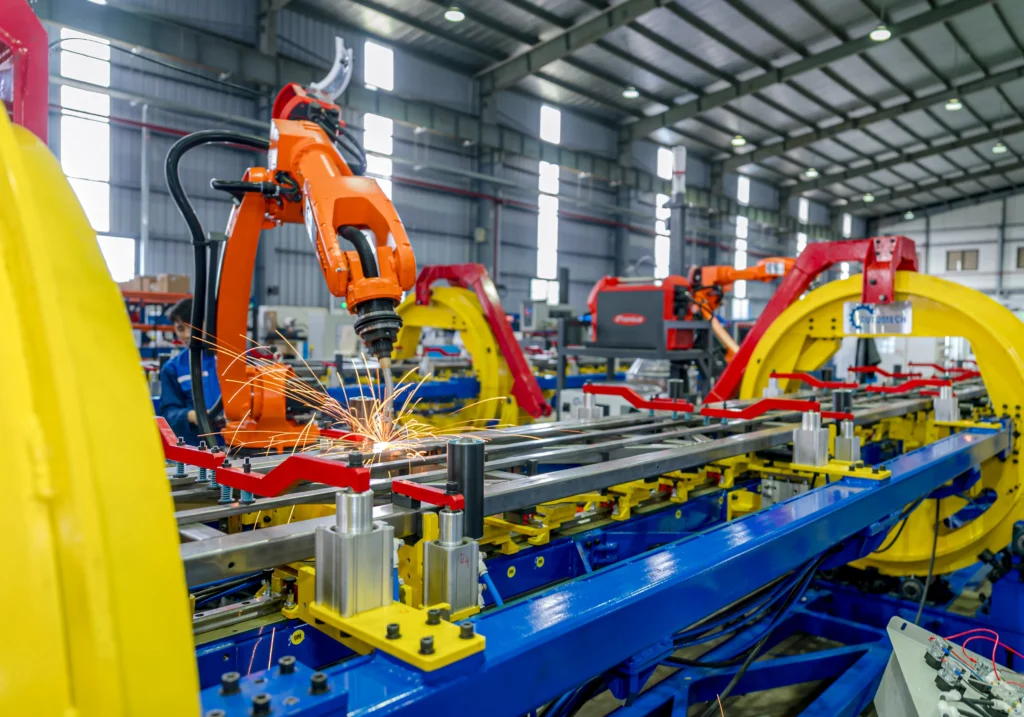
AUTOMECH stands out as an ISO 9001 CNC machining supplier with strong automation capabilities
8.1.1 CNC machining contract manufacturer Vietnam
Automech is a leader in providing comprehensive manufacturing solutions, specializing in custom machining, sheet metal, and automation.
8.1.2 Export-focused manufacturing for US/EU clients
Automech operates as an export-focused contract manufacturer, with processes, documentation, and communication standards designed to meet the expectations of international customers. Engineering communication is conducted in English, and all quality documentation is prepared to international standards.
8.2 Quality and certification
8.2.1 ISO 9001 certified quality management system
Automech’s quality management system is certified to ISO 9001, providing customers with documented assurance of process control, inspection standards, and continuous improvement practices. The QMS covers the full scope of CNC machining operations from order review and production planning through in-process inspection, final inspection, and shipping.
8.2.2 Process control and inspection standards
Automech’s inspection capabilities include coordinate measuring machines (CMMs), calibrated dimensional gauges, surface measurement instruments, and material verification equipment. All inspection equipment is maintained under a calibration management program, with records available for customer review.
8.3 Technical capabilities
8.3.1 High precision CNC machining for automotive
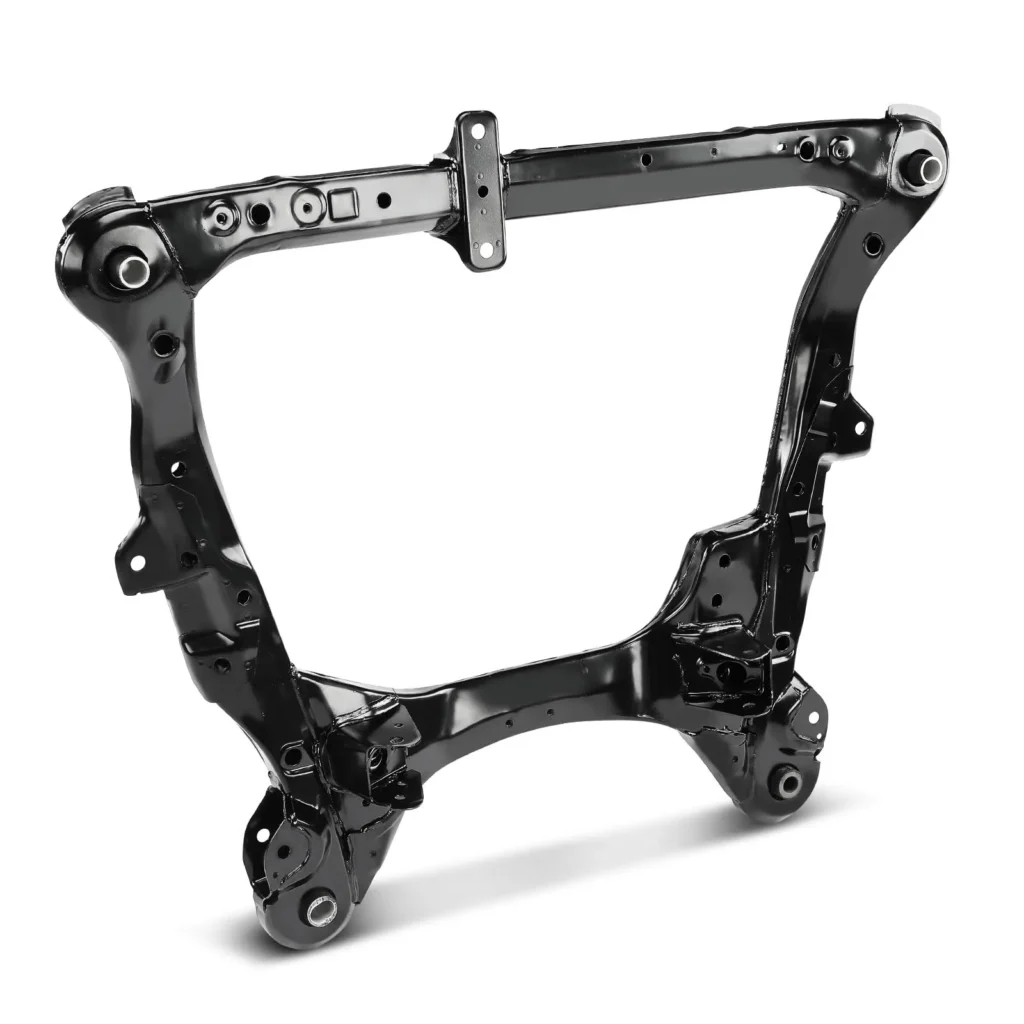
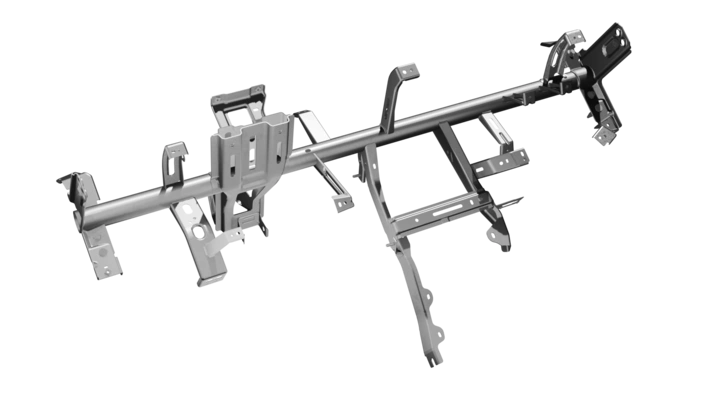
Automech’s machining capabilities include multi-axis CNC milling, CNC turning, and combined mill-turn operations for complex part geometries. The company regularly manufactures components to tight tolerances for automotive and industrial applications, including structural components, housings, brackets, shafts, and precision assemblies.
8.3.2 OEM and contract manufacturing solutions
Automech supports both prototype and production volume requirements, with capacity planning and scheduling systems designed to meet customer delivery commitments. Engineering support includes DFM (Design for Manufacturability) review, tolerance analysis, and process optimization recommendations.
8.4 Industry experience
8.4.1 Automotive and industrial components
Automech’s project portfolio includes machined components and assemblies for automotive systems, industrial automation equipment, transportation infrastructure, sheet metal fabrication machinery, elevators, consumer appliances (HVAC and refrigeration), and electrical/electronic equipment.
8.4.2 International sourcing projects
Automech has experience supporting international sourcing projects that require supplier qualification documentation, PPAP submission, first article inspection reports, and ongoing quality performance reporting. The company’s export experience enables efficient handling of international shipping, customs documentation, and compliance requirements.
9. How to Choose an ISO 9001 CNC Machining Supplier
9.1 Supplier evaluation checklist
When evaluating an ISO 9001 CNC machining supplier, use the following checklist as a starting point:
Certification authenticity
- Issued by a certification body accredited by the IAF
- Currently valid and not expired
- Scope covers CNC machining operations
- Certificate number verifiable on certification body’s website
Production capacity and lead time
- Machine list and capacity adequate for your part complexity
- Demonstrated experience with your materials and tolerances
- Realistic lead times confirmed for your order volumes
- Capacity for scalability as volumes grow

Choosing an ISO 9001 CNC machining supplier helps minimize risks and improve product quality
9.2 Engineering capability assessment
DFM (Design for Manufacturability) support
A capable supplier will proactively review your drawings before quoting and flag any features that may be difficult or costly to machine, suggest alternative approaches that reduce cost without sacrificing function, and identify potential issues with tolerances or surface finish callouts.
DFM support is a strong indicator of engineering depth – suppliers who provide it are invested in a successful outcome for the buyer, not just a quick sale.
Quality assurance process
Ask the supplier to describe their process from receipt of order to shipment. Key questions include: How is the first article inspection conducted? Who approves production to begin? How are in-process deviations handled? Which documents are included with each shipment?
9.3 Export readiness
Experience with US/EU clients
Suppliers experienced with US and EU customers understand the documentation requirements, communication standards, and quality expectations of these markets. References from existing international customers are a valuable indicator of export readiness.
Strong logistics and regulatory compliance capabilities
Export-ready suppliers maintain relationships with international freight forwarders, understand Incoterms, and can provide complete export documentation including commercial invoices, packing lists, certificates of origin, and material certifications. Some applications may require additional compliance documentation.
10. RFQ Process for ISO Certified CNC Machining Suppliers
10.1 How to request a quote (RFQ)
Detailed technical drawings and specifications
To receive an accurate quotation from a CNC machining supplier, provide complete technical drawings in PDF or STEP format. Drawings should include all dimensional callouts, GD&T (Geometric Dimensioning and Tolerancing) requirements, surface finish specifications, and any notes on critical features or inspection requirements.
Specified material, tolerance, and production volume requirements
Clearly specify the required material (alloy and grade), the tightest tolerances in the part, the required surface finish (Ra value), any post-machining requirements (heat treatment, coating, plating), and the required order quantity and annual volume. This information allows the supplier to assess machine selection, tooling requirements, and cycle time – all of which directly affect pricing.
10.2 What suppliers need from buyers
Engineering data and requirements clarity
Ambiguous or incomplete drawings are the most common source of RFQ delays and quoting errors. Suppliers need: fully dimensioned drawings, explicit tolerance callouts (not “to industry standard”), material specifications by ASTM, ISO, or JIS standard, and clear definition of critical dimensions and inspection requirements.
Expected quality standards
Specify your quality requirements upfront: Do you require first article inspection (FAI)? PPAP documentation? Specific measurement reports? Certificate of Conformance)? Material certifications? Knowing these requirements allows the supplier to build the appropriate quality plan into their quote
10.3 Faster quotation best practices
Standardized drawing formats
2D drawings in PDF format accompanied by 3D models in STEP or IGES format enable faster and more accurate quoting. Suppliers can use the 3D model for CAM programming and the 2D drawing for inspection.
Clearly define expectations and maintain transparent communication
Set up clear communication channels and response time expectations from the beginning. A pre-RFQ call or email to discuss the project scope, timeline, and quality requirements can significantly reduce the back-and-forth that delays quotation.
11. Overview & Featured Snippet Section
11.1 People Also Ask (PAA)
- What is an ISO 9001 CNC machining supplier? A machine shop certified to international quality standards ensuring consistent, high-precision manufacturing.
- Why is ISO 9001 important in CNC machining? It guarantees traceability, reduces defect rates, and ensures systematic process control.
- What distinguishes ISO 9001 from IATF 16949? ISO 9001 is a general standard; IATF 16949 is stricter and specifically tailored for the automotive supply chain.
- How can you verify an ISO 9001 certification? Request the certificate from the supplier and cross-check the certificate number against the issuing body’s online database.
- Which country has the best ISO CNC suppliers? While traditionally Western countries and Japan led the market, Vietnam has rapidly become a premier, cost-effective hub for highly certified CNC suppliers.
11.2 Short Answers
- ISO 9001 CNC supplier definition: A manufacturer of precision machined parts operating under an internationally audited quality management system.
- Benefits for OEM buyers: Risk mitigation, stable part quality, seamless supply chain integration, and reduced overall procurement costs.
- Supplier selection guidance: Always prioritize vendors with verifiable certifications, DFM engineering support, and proven export experience to your region.
11.3 Featured Snippet Opportunities
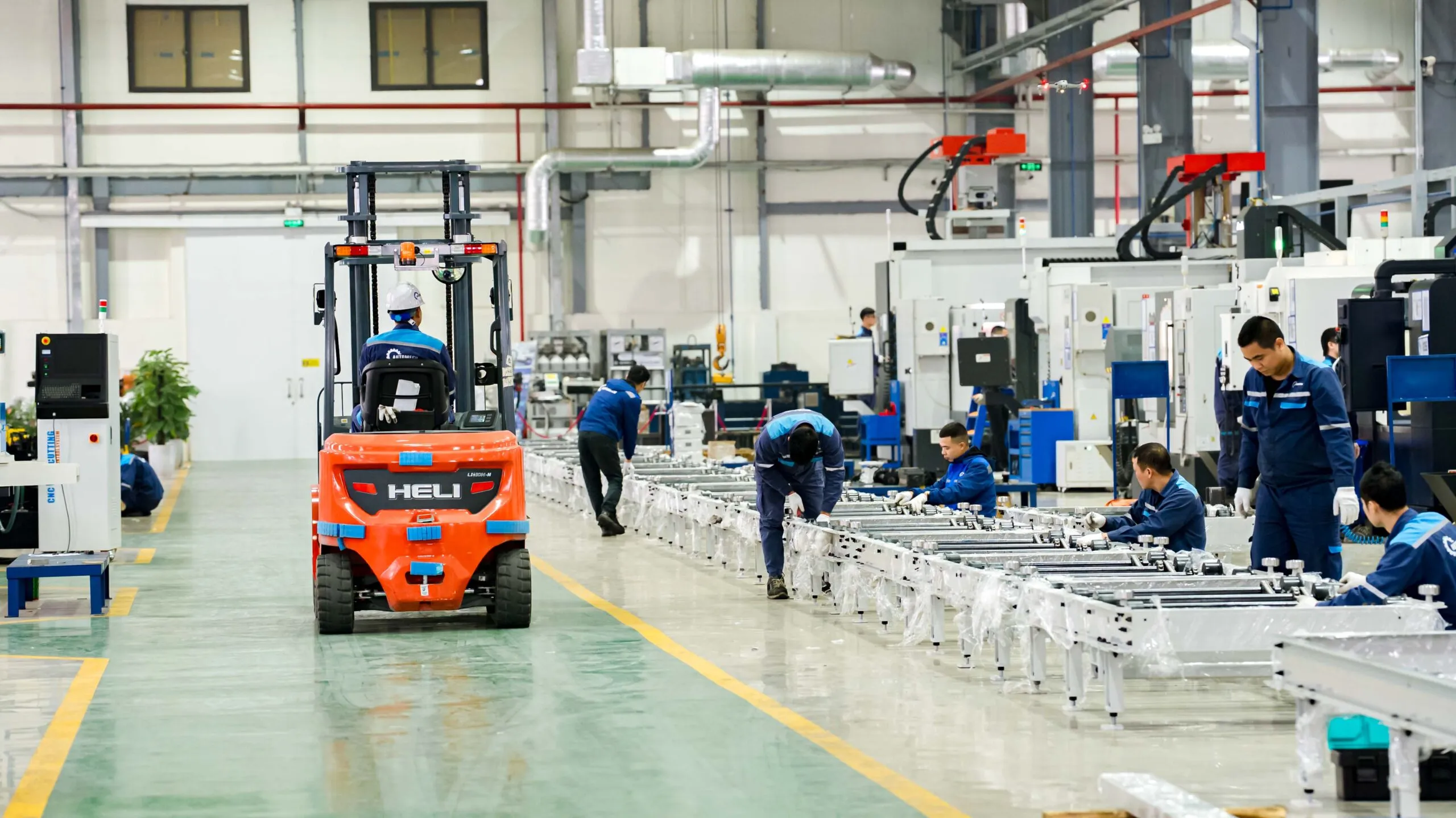
Partner with AUTOMECH, an ISO 9001 CNC machining supplier, for certified quality and long-term performance
Definition snippet — ISO 9001 CNC supplier: An ISO 9001 CNC machining supplier is a contract manufacturer that produces precision CNC machined components under a certified Quality Management System (QMS), ensuring consistent quality, process traceability, and documented inspection at every stage of production.
Checklist snippet — Supplier evaluation steps:
- Validate the ISO 9001 certificate’s validity and defined scope
- Ensure the certification body is accredited by the IAF
- Evaluate production capabilities and available machinery
- Review inspection equipment and calibration records
- Request sample inspection reports or FAI documentation
- Verify export experience and international client references
- Assess DFM support and the quality of engineering communication
Comparison snippet — ISO 9001 vs IATF 16949:
| ISO 9001 | IATF 16949 | |
| Industry | All industries | Automotive only |
| QMS tools | General | APQP, PPAP, FMEA, SPC |
| Audit rigor | Standard | High frequency |
| Required for | Industrial OEM | Automotive OEM |
12. Conversion Section
12.1 Why choose a certified CNC machining supplier
Choosing a certified CNC machining supplier helps minimize risks in global sourcing by ensuring your production schedules are protected and disruptions are kept under control. At the same time, it guarantees consistent quality for OEM manufacturing, allowing you to protect your brand reputation with precision-engineered parts that meet specifications reliably in every production run.
12.2 Why Vietnam and Automech
Competitive CNC machining supplier Vietnam advantage
Vietnam offers OEM buyers a combination of technical capability, competitive pricing, and improving quality standards that is hard to match elsewhere in the region. The country’s manufacturing workforce is technically educated, the industrial infrastructure is well-developed, and the trade policy environment is favorable.
A dependable partner for export manufacturing
Automech combines Vietnam’s cost and quality advantages with the engineering depth, export experience, and quality certification that US and EU buyers require. The company is structured to support international customers from RFQ through production and ongoing supply with clear communication, reliable documentation, and consistent quality output.
12.3 Call to Action
Ready to source precision CNC machined components from a certified supplier in Vietnam?
- Request a Quote: Submit your drawing for a fast, accurate CNC machining quotation.
- Upload Your Drawing: Send your 2D PDF and 3D STEP files to begin the RFQ process.
- Contact Our Engineering Team: Discuss your project requirements directly with Automech’s engineering team.
13. Internal Linking Strategy
13.1 CNC Machining Vietnam
Vietnam is rapidly becoming a key hub for global CNC machining, offering a strong balance between cost efficiency, technical capability, and export readiness. If you want to explore the full landscape, including industry advantages and supplier insights, visit: https://automechmfg.com/about-us/
13.2 Supporting Pages
CNC Machining Contract Manufacturer Vietnam
Choosing a contract manufacturer requires a clear understanding of production capabilities, engineering support, and scalability. Automech provides end-to-end solutions, from design consultation to mass production, ensuring efficiency and quality at every stage.
CNC Machining Exporter Vietnam
For international buyers, working with a supplier that has strong export experience is essential. Automech supports global clients with standardized processes, quality compliance, and reliable logistics for smooth delivery to US and EU markets.
14. FAQ Section
14.1 What does ISO 9001 mean for CNC machining suppliers?
It means the supplier has implemented a rigorous Quality Management System. Every process, from raw material intake to the final shipment, is controlled, documented, and continuously improved, ensuring you receive consistent precision parts.
14.2 Is ISO 9001 enough for automotive manufacturing?
For non-critical, general automotive components or aftermarket parts, ISO 9001 is often sufficient. However, for critical systems directly integrated into OEM vehicle assembly lines, tier suppliers are typically required to hold the stricter IATF 16949 certification.
14.3 How do I verify a supplier’s ISO certificate?
Ask the supplier for a copy of their certificate. Note the name of the certification body (like SGS, Bureau Veritas) and the certificate number. Visit the issuing body’s official website validation portal and input the number to confirm its current status.
14.4 Why choose Vietnam ISO CNC suppliers?
Vietnam offers a “sweet spot” for global sourcing. You receive highly competitive pricing compared to Western markets, coupled with world-class quality systems and a strong, export-ready logistical infrastructure that serves the US and EU markets seamlessly.
14.5 How to start working with a CNC supplier in Vietnam?
Start by sending a clear RFQ. Provide your 2D/3D CAD models, material specifications, and volume requirements. A reputable supplier like Automech will promptly review your files, offer an engineering assessment (DFM), and provide a transparent, detailed quotation.
Automech Mechanical Equipment and Solutions Joint Stock Company
Head Office: No. 285 Phuc Loi Street, Phuc Loi Ward, Hanoi City
Da Nang Branch: No. 20 Nguyen Sinh Sac Street, Hoa Khanh Ward, Da Nang City
Ho Chi Minh Branch: No. 84, Street No. 10, Van Phuc Urban Area, Hiep Binh Ward, Ho Chi Minh City
Factory No. 1: Automech Automation Equipment, Mold & Tool Manufacturing Factory – Automech Demo Center: Dinh Tram Industrial Park, Nenh Ward, Bac Ninh City, Vietnam
Factory No. 2: Automech Parts Manufacturing & Component Fabrication Factory: Viet Nhat Industrial Cluster, Xuan Cam Commune, Bac Ninh City, Vietnam
Hotline: 0987 899 347
Website: https://automechmfg.com/
Fanpage: https://www.facebook.com/automech.mfg/
YouTube: https://www.youtube.com/@Automechmfg