CNC milling services are widely used to manufacture precision components for industries such as automotive, industrial machinery, electronics, automation, aerospace, and energy. Using advanced computer-controlled milling technology, manufacturers can produce complex parts with exceptional dimensional accuracy, repeatability, and consistent quality across every production batch. CNC milling supports a wide range of materials, including aluminum, steel, stainless steel, brass, and engineering plastics, making it suitable for both simple and highly complex applications. Whether for rapid prototyping, low-volume production, or high-volume OEM manufacturing, CNC milling services help businesses improve production efficiency, reduce manufacturing costs, and meet demanding engineering and quality requirements.
1. CNC Milling Services Overview
1.1 What are CNC milling services?
1.1.1 Definition of CNC milling services
CNC milling services refer to precision machining processes that use computer-controlled milling machines to remove material from a solid workpiece. By following digital CAD/CAM programs, rotating cutting tools shape the material into the required dimensions and geometry. These services are suitable for both custom prototypes and high-volume production.
1.1.2 Role of CNC milling in precision manufacturing
CNC milling plays a critical role in modern precision manufacturing by producing components with tight tolerances and repeatable quality. It enables manufacturers to create complex geometries that would be difficult or impossible with conventional machining methods. As a result, CNC milling has become an essential process across many high-performance industries.
1.2 Why global buyers need CNC milling services
1.2.1 Demand for accurate, repeatable machined parts
Manufacturers worldwide require machined components that consistently meet strict dimensional specifications. CNC milling delivers excellent repeatability, ensuring every part remains identical throughout production. This consistency reduces assembly issues, improves product reliability, and minimizes manufacturing defects.

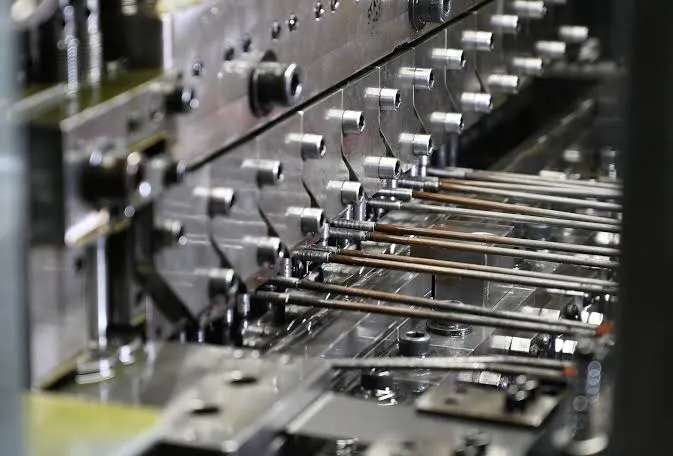
CNC milling services provide high precision and excellent surface finish for complex components across various industries
1.2.2 OEM and contract manufacturing requirements
OEMs and contract manufacturers depend on CNC milling services to produce custom parts that comply with customer drawings and international quality standards. Reliable machining partners can support everything from prototype development to long-term production programs. Engineering support and stable production capacity are also important factors for global buyers.
1.3 CNC milling services in the global supply chain
1.3.1 CNC milling for US and European manufacturers
Many manufacturers in the United States and Europe outsource CNC milling to qualified suppliers to improve cost efficiency while maintaining product quality. International machining partners provide precision parts for industries including automotive, industrial equipment, robotics, and electronics. This sourcing strategy allows companies to optimize both manufacturing capacity and supply chain flexibility.
1.3.2 Vietnam as an emerging CNC machining destination
Vietnam has become an attractive destination for CNC machining thanks to its skilled workforce, competitive production costs, and expanding manufacturing capabilities. Many international buyers now source precision machined parts from Vietnam as part of their China+1 strategy. Modern production facilities and growing export experience continue to strengthen Vietnam’s position in the global machining market.
2. How CNC Milling Works
2.1 Basic CNC milling process
2.1.1 CAD/CAM programming
The machining process starts with a CAD model or engineering drawing supplied by the customer. Engineers convert the design into CAM software to generate machining strategies, toolpaths, spindle speeds, and cutting parameters. This digital programming ensures that every machining operation follows the exact product specifications.
2.1.2 Material setup and machine operation
After programming is completed, the selected material is securely fixed on the CNC machine using appropriate fixtures. Operators install the required cutting tools and verify machining parameters before production begins. The CNC system then executes the program automatically while maintaining stable machining conditions.
2.2 Cutting process in CNC milling
2.2.1 Rotating cutting tools remove material
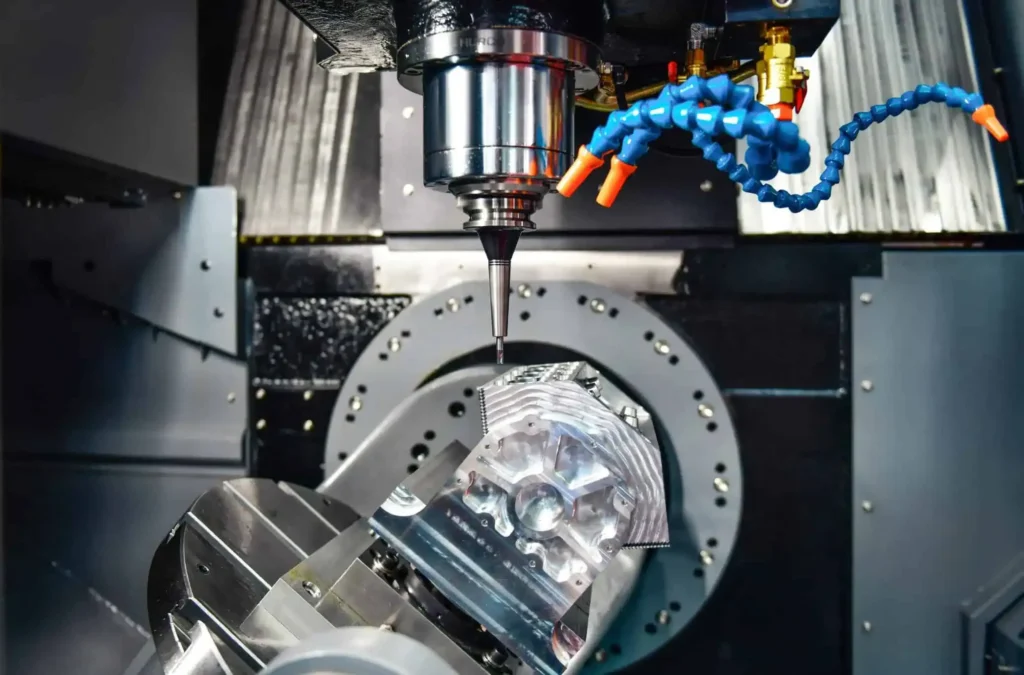
Unlike turning, CNC milling uses rotating cutting tools to gradually remove material from a stationary workpiece. Different tool geometries are selected depending on the required surface finish, feature size, and material type. This process enables the production of complex features with high dimensional accuracy.
2.2.2 Controlled movement along multiple axes
Modern CNC milling machines move simultaneously along multiple axes to machine different surfaces without excessive repositioning. Three-axis, four-axis, and five-axis machines each offer different levels of machining flexibility. Multi-axis capability improves efficiency while reducing setup time and cumulative positioning errors.
2.3 From design to finished part
2.3.1 CAD drawing review
Before machining begins, engineers carefully review the CAD model and technical drawings to confirm dimensions, tolerances, materials, and manufacturability. Potential production challenges can be identified early through Design for Manufacturability (DFM) analysis. This helps optimize machining efficiency while reducing unnecessary production costs.

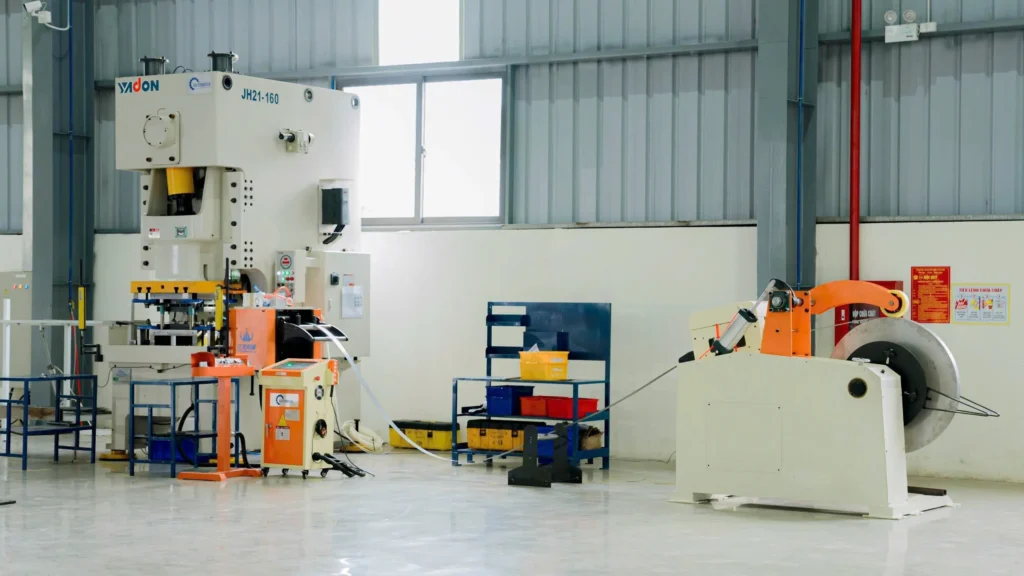
CNC Milling Services provide accurate and reliable machining solutions for a wide range of industrial components
2.3.2 Machining, inspection, and delivery
Once machining is completed, every component undergoes dimensional inspection and quality verification according to customer requirements. Measuring equipment such as CMMs and precision gauges ensures compliance with specified tolerances. Finished parts are then cleaned, packaged, and prepared for domestic or international shipment.
3. Types of CNC Milling Services
3.1 3-axis CNC milling
3.1.1 Standard part machining
Three-axis CNC milling is widely used for machining standard mechanical components with relatively simple geometries. The cutting tool moves along the X, Y, and Z axes to create flat surfaces, holes, pockets, and profiles. It is one of the most economical machining solutions for everyday manufacturing applications.
3.1.2 Cost-effective production for simple geometries
For components that do not require machining from multiple angles, 3-axis milling provides an efficient balance between quality and production cost. Fewer machine movements simplify programming and reduce machining time. This makes it suitable for both prototypes and medium-volume production.
3.2 4-axis CNC milling
3.2.1 Multi-side machining capability
Four-axis CNC milling introduces a rotary axis that allows parts to be machined on several sides without repeated manual repositioning. This capability is ideal for components with multiple machining features around the workpiece. It also increases overall machining flexibility compared to standard three-axis systems.
3.2.2 Reduced setup time and improved accuracy
Because fewer setups are required, four-axis machining reduces production time while improving positional accuracy between different machining operations. Minimizing manual handling also lowers the risk of alignment errors. The result is better productivity and more consistent finished parts.
3.3 5-axis CNC milling
3.3.1 Complex geometry machining
Five-axis CNC milling enables simultaneous machining from multiple directions, making it ideal for highly complex components. Intricate curves, deep cavities, and difficult-to-access surfaces can often be completed in a single setup. This significantly improves machining efficiency and dimensional consistency.
3.3.2 High precision components for automotive and industrial applications
Industries such as automotive, aerospace, robotics, and precision equipment frequently rely on five-axis CNC milling to manufacture critical components. High machining accuracy ensures proper assembly, reliable performance, and longer product life. This technology is particularly valuable for complex, high-value parts.
3.4 Common milling operations
3.4.1 Face milling
Face milling is primarily used to create smooth, flat surfaces with excellent dimensional accuracy. It is commonly applied as an initial machining operation to prepare reference surfaces before additional machining processes.
3.4.2 End milling
End milling uses versatile cutting tools to produce slots, profiles, contours, pockets, and complex three-dimensional features. It is one of the most frequently used operations in CNC milling due to its flexibility.
3.4.3 Slot milling
Slot milling creates straight or shaped grooves that serve functional or assembly purposes. These slots are commonly found in machine frames, fixtures, transmission components, and mechanical assemblies.

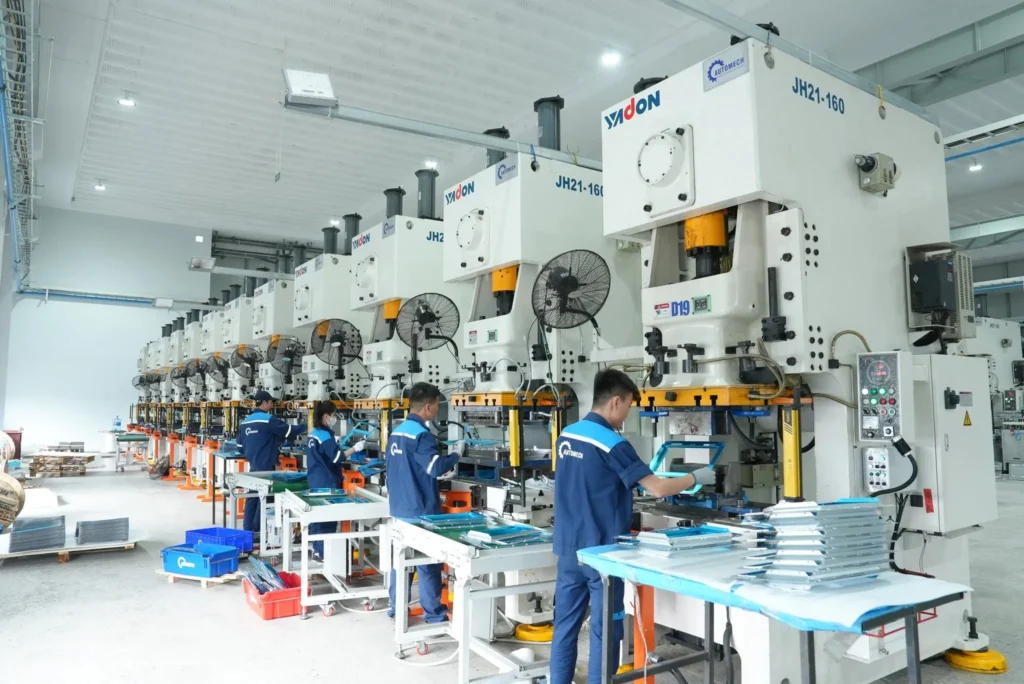
Professional CNC Milling Services can produce complex parts with tight tolerances and consistent dimensional accuracy
3.4.4 Pocket milling
Pocket milling removes material within enclosed areas to produce recessed cavities while maintaining the surrounding walls. This operation is widely used for lightweight structural components, molds, tooling, and precision housings.
4. CNC Milling vs CNC Turning
4.1 Key differences between CNC milling and CNC turning
4.1.1 Rotating tool vs rotating workpiece
The primary difference between CNC milling and CNC turning lies in how material is removed. In CNC milling, the cutting tool rotates while the workpiece remains fixed or moves along programmed axes. In CNC turning, the workpiece rotates while a stationary cutting tool removes material. This difference determines the type of parts each machining process can produce efficiently.
4.1.2 Suitable part geometries for each process
CNC milling is ideal for parts with flat surfaces, pockets, slots, holes, and complex three-dimensional features. CNC turning is better suited for cylindrical or rotational components with symmetrical profiles. Choosing the appropriate process depends on the geometry, functional requirements, and manufacturing efficiency of the final part.
4.2 When to choose CNC milling
4.2.1 Flat surfaces, pockets, slots, and complex shapes
CNC milling should be selected when components require detailed machining features beyond simple round shapes. It is commonly used to manufacture brackets, housings, base plates, molds, tooling, and structural components. Multi-directional cutting allows manufacturers to create intricate geometries while maintaining tight dimensional tolerances.
4.2.2 Multi-axis machining requirements
When a component requires machining from multiple sides or contains complex angled features, CNC milling offers significant advantages. Four-axis and five-axis machining reduce the number of setups needed to complete a part. This improves productivity while minimizing positioning errors and maintaining consistent accuracy.
4.3 When to choose CNC turning
4.3.1 Cylindrical and rotational components
CNC turning is the preferred process for manufacturing parts with circular cross-sections or rotational symmetry. The rotating workpiece allows efficient machining of external diameters, internal bores, tapers, and threads. It provides excellent productivity and dimensional consistency for shaft-type components.
4.3.2 Shafts, bushings, and round parts
Typical CNC turning applications include shafts, bushings, sleeves, spacers, rollers, pins, and threaded connectors. These parts are commonly used in automotive systems, industrial machinery, hydraulic equipment, and mechanical assemblies. CNC turning delivers smooth surface finishes and high concentricity for rotational components.

Manufacturers rely on CNC milling services to produce parts with tight tolerances and consistent quality
4.4 CNC milling vs CNC turning comparison table
4.4.1 Process differences
| Feature | CNC Milling | CNC Turning |
| Machining principle | Rotating cutting tool removes material | Rotating workpiece removes material |
| Primary motion | Cutting tool rotates and moves along multiple axes | Workpiece rotates while the cutting tool feeds linearly |
| Best suited for | Complex 2D and 3D geometries | Cylindrical and rotational parts |
| Typical machine | CNC Milling Machine / Machining Center | CNC Lathe / Turning Center |
| Number of axes | Typically 3-axis, 4-axis, or 5-axis | Typically 2-axis, with live tooling available on advanced machines |
| Workpiece movement | Workpiece remains fixed while the tool moves | Workpiece rotates during machining |
| Cutting tools | End mills, face mills, ball nose cutters, slot drills | Turning inserts, boring bars, threading tools, grooving tools |
| Surface types produced | Flat surfaces, pockets, slots, contours, freeform surfaces | Cylindrical, conical, tapered, and threaded surfaces |
| Programming complexity | Higher for complex geometries and multi-axis machining | Generally simpler for rotational parts |
| Material removal efficiency | Excellent for complex profiles and multiple features | Highly efficient for round components |
| Typical tolerance | Tight tolerances depending on machine capability | Tight tolerances for rotational dimensions |
| Production flexibility | Suitable for prototypes to mass production | Highly efficient for medium and high-volume rotational parts |
4.4.2 Application differences
| CNC Milling | CNC Turning |
| Brackets | Shafts |
| Housings | Bushings |
| Mold components | Sleeves |
| Fixtures | Rollers |
| Structural parts | Pins |
| Battery housings | Spacers |
| Heat sinks | Bearing journals |
| Mounting plates | Pulleys |
| Motor housings | Couplings |
| Gearbox housings | Threaded rods |
| Precision machine components | Hydraulic pistons |
| Automation equipment parts | Valve bodies |
4.4.3 Cost and precision considerations
Both machining methods offer excellent precision when applied to suitable part designs. CNC turning is generally more economical for cylindrical components because of its faster machining cycle. CNC milling may require longer machining time for complex geometries but provides greater flexibility and design freedom. Selecting the right process helps optimize production cost without compromising part quality.
5. Materials Used in CNC Milling Services
5.1 Aluminum CNC milling
5.1.1 Lightweight automotive and industrial components
Aluminum is one of the most commonly machined materials due to its excellent machinability and lightweight properties. It offers a high strength-to-weight ratio, making it ideal for automotive, aerospace, robotics, and industrial equipment. CNC milling produces aluminum parts with excellent dimensional accuracy and surface quality.
5.1.2 Automotive aluminum CNC milling applications
In the automotive industry, aluminum CNC milling is widely used for battery housings, mounting brackets, motor components, heat sinks, and lightweight structural parts. These components contribute to improved vehicle efficiency while maintaining mechanical strength. Aluminum is especially important for electric vehicle manufacturing and lightweight design.
5.2 Steel and stainless steel milling

Advanced CNC Milling Services support both prototype development and high-volume production requirements
5.2.1 High-strength mechanical components
Carbon steel and alloy steel are widely selected for parts that require high mechanical strength and durability. CNC milling produces gears, machine frames, fixtures, heavy-duty brackets, and industrial tooling from steel materials. Proper cutting parameters help achieve consistent machining quality despite the material’s hardness.
5.2.2 Corrosion-resistant industrial parts
Stainless steel is commonly used for components operating in corrosive or hygienic environments. It provides excellent resistance to moisture, chemicals, and wear while maintaining structural integrity. Industries such as food processing, medical equipment, marine engineering, and chemical processing frequently require stainless steel CNC machining.
5.3 Engineering plastics
5.3.1 Lightweight functional components
Engineering plastics such as POM, Nylon, PTFE, PEEK, and ABS are suitable for lightweight precision components. These materials offer excellent dimensional stability, electrical insulation, and chemical resistance. CNC milling enables manufacturers to produce plastic parts with tight tolerances and complex geometries.
5.3.2 Prototype and low-friction applications
Plastic materials are often chosen for functional prototypes, testing fixtures, guides, wear strips, and low-friction mechanical components. They are easier to machine than metals and allow rapid product development before mass production. Many engineering plastics also reduce noise and eliminate lubrication requirements in moving assemblies.
5.4 Material selection considerations
5.4.1 Machinability
Different materials respond differently during machining, affecting cutting speed, tool life, and production efficiency. Selecting materials with good machinability can reduce machining time and manufacturing costs. Engineers should balance performance requirements with processing efficiency.
5.4.2 Strength and durability
Material selection should consider mechanical loads, operating conditions, temperature, and service life. High-strength materials may be required for structural components, while lighter materials may be preferred for weight-sensitive applications. The final choice depends on the intended function of the product.
5.4.3 Surface finish requirements
Some applications require smooth cosmetic surfaces, while others prioritize functional machining performance. Surface finish requirements influence cutting strategies, tooling selection, and secondary finishing processes. Proper planning helps achieve the desired appearance and assembly performance.
6. CNC Milling Capabilities
6.1 Custom CNC milling
6.1.1 Custom part manufacturing based on CAD drawings
Custom CNC milling allows manufacturers to produce parts according to customer-supplied CAD models and engineering drawings. Every machining parameter is optimized to match specified dimensions, tolerances, and functional requirements. This flexibility supports a wide range of industries and custom engineering projects.
6.1.2 Prototype to mass production support
CNC milling supports every stage of product development, from rapid prototyping to full-scale production. Manufacturers can validate designs with prototype parts before moving to larger production volumes. This approach reduces development risk while shortening product launch cycles.
6.2 High precision CNC milling
6.2.1 Tight tolerance machining
Modern CNC milling machines are capable of producing components with extremely tight dimensional tolerances. Advanced programming, precision tooling, and stable machining conditions help ensure every feature meets engineering specifications. Tight tolerance machining is essential for precision assemblies and safety-critical applications.

CNC milling services are widely used in the automotive, aerospace, electronics, and industrial equipment sectors
6.2.2 Repeatable dimensional accuracy
Repeatability is one of the greatest advantages of CNC milling technology. Once machining parameters are optimized, identical parts can be produced consistently throughout long production runs. This minimizes variation between batches and improves overall manufacturing quality.
6.3 Production flexibility
6.3.1 Low-volume production
Low-volume CNC milling is ideal for prototypes, pilot production, replacement parts, and customized components. Manufacturers can quickly respond to changing customer requirements without investing in expensive tooling.
6.3.2 Medium and high-volume manufacturing
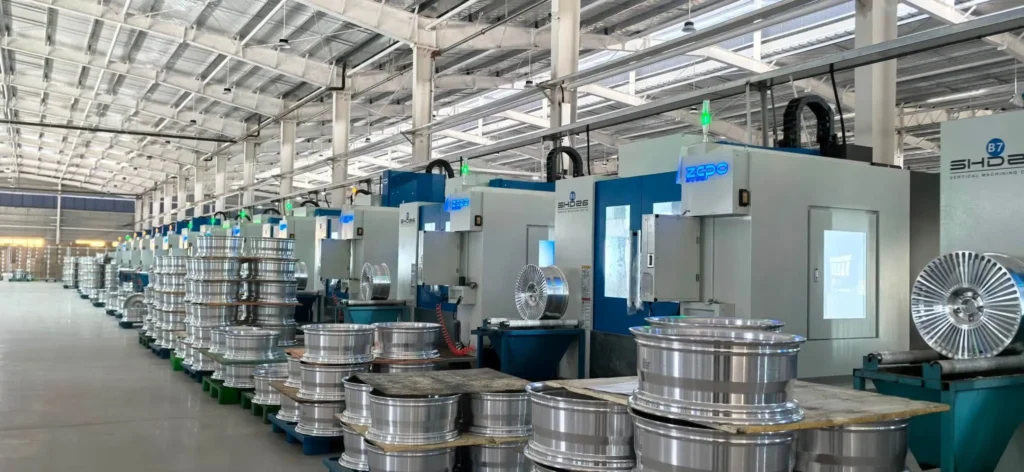
CNC milling also supports stable production for medium and high-volume orders through automated machining and standardized production processes. Optimized toolpaths and efficient machine utilization improve productivity while maintaining consistent quality. This makes CNC milling suitable for long-term OEM manufacturing programs.
6.4 Contract manufacturing support
6.4.1 CNC machining contract manufacturer Vietnam
Vietnam has become a trusted location for CNC machining contract manufacturing thanks to competitive costs and improving technical capabilities. Many manufacturers provide complete machining services for international customers while meeting global quality standards. This supports supply chain diversification and export manufacturing.
6.4.2 OEM manufacturing and export production
Experienced CNC machining suppliers support OEM customers by providing engineering assistance, quality control, documentation, and export-ready production. They work closely with buyers throughout the manufacturing process to ensure products meet technical and commercial expectations. Reliable OEM support is essential for long-term international partnerships.
7. Tolerance and Precision Standards
7.1 CNC milling tolerance requirements
7.1.1 Standard tolerance ranges
Standard CNC milling tolerances vary depending on material, machine capability, and part complexity. For general industrial components, tolerances are typically sufficient to ensure reliable assembly and product performance. More demanding applications may require tighter dimensional control based on customer specifications.
7.1.2 Tight tolerance machining requirements
Precision industries such as automotive, aerospace, and medical equipment often require much tighter machining tolerances. Achieving these requirements depends on advanced CNC equipment, optimized machining strategies, and comprehensive quality inspection. Close collaboration between engineering and production teams is also essential.
7.2 Factors affecting precision
7.2.1 Machine stability and calibration
Machine rigidity and regular calibration directly influence machining accuracy. Well-maintained CNC equipment reduces vibration and maintains consistent positioning throughout production. Preventive maintenance also improves long-term machining reliability.
7.2.2 Tool wear and material behavior
Cutting tools gradually wear during machining, affecting dimensional accuracy and surface finish. Material hardness and thermal expansion also influence machining performance. Proper tool management helps maintain stable quality throughout production.

CNC Milling Services are suitable for machining materials such as aluminum, steel, stainless steel, brass, and engineering plastics
7.2.3 Fixture accuracy and setup control
Accurate workholding is essential for producing consistent precision parts. High-quality fixtures securely position the workpiece while minimizing movement during machining. Careful setup procedures reduce alignment errors before production begins.
7.3 Surface finish requirements
7.3.1 Functional surface finish
Functional surfaces must meet engineering requirements related to sealing, friction, wear resistance, or mechanical performance. Appropriate cutting parameters and finishing operations help achieve these technical objectives. Surface quality directly affects product reliability in many applications.
7.3.2 Cosmetic and assembly-related finish requirements
Visible components often require smooth and attractive surface finishes in addition to dimensional accuracy. Consistent appearance improves product quality while facilitating assembly and coating processes. Secondary finishing methods may be applied when necessary to meet customer expectations.
7.4 Precision validation
7.4.1 CMM inspection
Coordinate Measuring Machines (CMMs) provide highly accurate dimensional verification for precision machined components. They compare finished parts against CAD models or engineering drawings to confirm compliance with specified tolerances. CMM inspection is widely used for first article inspection and final quality verification.
7.4.2 In-process quality control
In-process inspection helps identify dimensional deviations before production is completed. Operators monitor critical dimensions throughout machining to maintain process stability and reduce scrap. Continuous quality control improves consistency and ensures every production batch meets customer requirements.
8. High Precision CNC Milling for Automotive
8.1 Automotive CNC milling requirements
8.1.1 Dimensional accuracy and repeatability
Automotive components must meet strict dimensional tolerances to ensure proper assembly and long-term performance. High precision CNC milling delivers consistent accuracy across prototype, low-volume, and mass production. Repeatable machining minimizes part variation and reduces the risk of assembly defects. This level of consistency is essential for modern automotive manufacturing.
8.1.2 Safety-critical and performance-critical parts
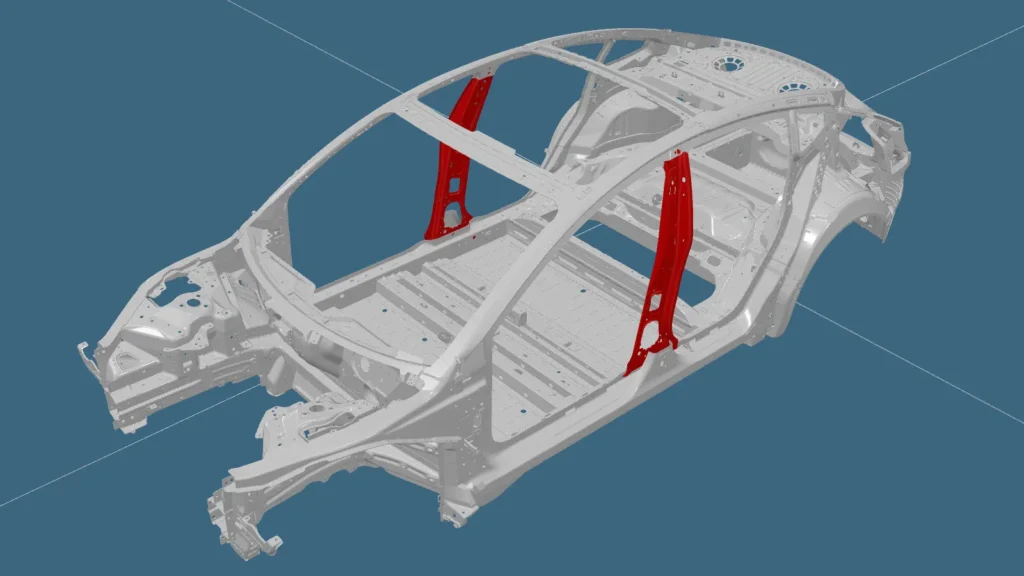
Many automotive parts directly affect vehicle safety, durability, and performance. Components such as transmission housings, steering brackets, suspension parts, and motor assemblies require reliable machining quality. High precision CNC milling helps manufacturers meet demanding engineering specifications while maintaining product reliability.
8.2 Automotive applications
8.2.1 Engine and transmission components
CNC milling is widely used to manufacture engine blocks, transmission housings, gearbox covers, and other precision drivetrain components. These parts require excellent dimensional accuracy and smooth mating surfaces to ensure efficient operation. High-performance machining also improves sealing performance and assembly precision.
8.2.2 EV battery and structural components
The rapid growth of electric vehicles has increased demand for precision-machined battery trays, battery housings, cooling plates, and lightweight structural components. CNC milling produces these parts with high accuracy while maintaining strict dimensional stability. Precision manufacturing also supports the safe integration of battery systems.

Reliable CNC Milling Services help manufacturers achieve consistent quality across multiple production batches
8.2.3 Brackets, housings, and precision assemblies
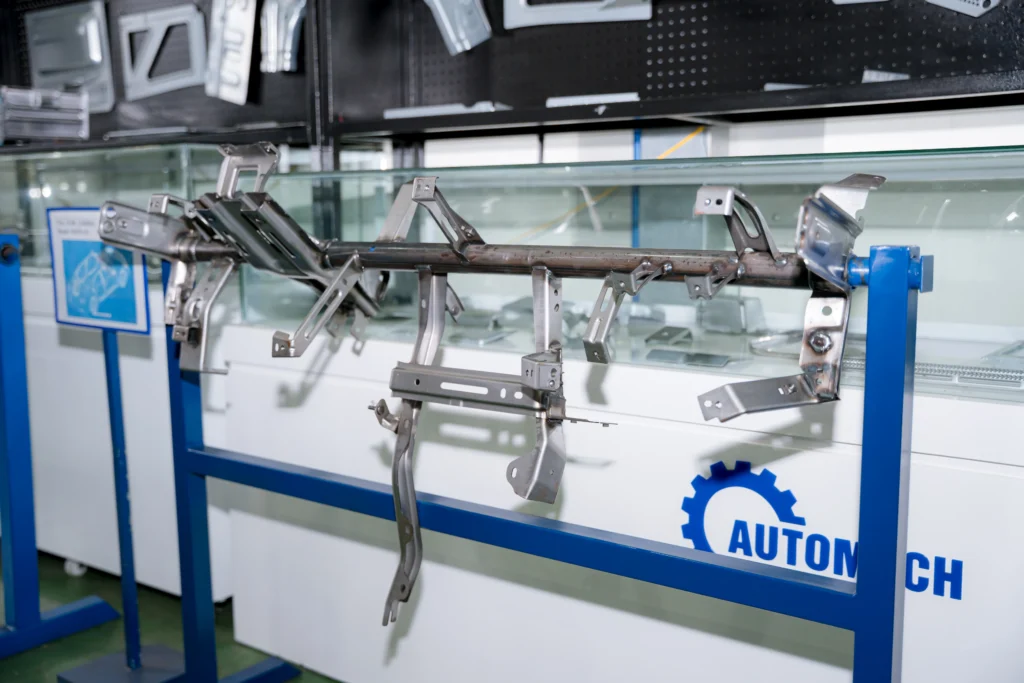
Automotive manufacturers use CNC milling to produce numerous brackets, mounting plates, housings, and structural assemblies. These components support electrical systems, powertrain modules, and vehicle structures. Consistent machining quality ensures reliable installation and long-term product performance throughout the vehicle’s lifecycle.
8.3 Automotive quality expectations
8.3.1 ISO 9001 quality management
Automotive machining suppliers typically operate under ISO 9001 quality management systems to ensure standardized manufacturing processes. Documented procedures, continuous monitoring, and corrective actions help maintain consistent product quality. ISO 9001 also demonstrates a supplier’s commitment to continuous improvement.
8.3.2 IATF 16949 automotive compliance
For automotive OEM and Tier suppliers, IATF 16949 represents the industry’s most recognized quality management standard. It focuses on defect prevention, risk reduction, process control, and continuous improvement. Compliance strengthens supplier credibility within the global automotive supply chain.
8.3.3 Traceability and inspection documentation
Automotive customers often require complete production traceability for every machined component. Inspection reports, material certificates, and production records help verify product compliance throughout manufacturing. Comprehensive documentation also supports audits, warranty management, and quality assurance programs.
9. Automotive Aluminum CNC Milling Applications
9.1 Why aluminum is widely used in automotive milling
9.1.1 Lightweight structure and fuel efficiency
Aluminum is widely used because it significantly reduces vehicle weight without sacrificing structural strength. Lightweight components improve fuel efficiency for conventional vehicles while extending driving range for electric vehicles. Its excellent machinability also shortens production time and reduces manufacturing costs.
9.1.2 EV and mobility applications
Electric vehicles rely heavily on aluminum components due to their excellent strength-to-weight ratio and thermal conductivity. CNC milling is commonly used to manufacture battery system components, motor housings, cooling structures, and lightweight chassis parts. These applications support higher energy efficiency and improved vehicle performance.
9.2 Common aluminum CNC milled parts
9.2.1 Battery housings
Battery housings require precise machining to ensure proper sealing, structural rigidity, and thermal management. CNC milling creates complex features, mounting points, and sealing surfaces with excellent dimensional accuracy. These housings play a critical role in protecting electric vehicle battery systems.
9.2.2 Mounting brackets
Aluminum mounting brackets are used throughout modern vehicles to support electronic modules, sensors, cooling systems, and structural assemblies. CNC milling produces these components with consistent accuracy and lightweight construction. High repeatability is essential for efficient vehicle assembly.
9.2.3 Heat sinks and enclosures
Heat sinks and electronic enclosures require precise machining to maximize heat dissipation and component protection. CNC milling produces intricate cooling fins and complex internal features while maintaining excellent surface quality. These components are widely used in EV power electronics and industrial control systems.

By utilizing modern machining centers, CNC milling services can efficiently handle both prototype and high-volume production requirements
9.3 Machining considerations for aluminum
9.3.1 Cutting speed and tool selection
Aluminum allows higher cutting speeds than many other engineering materials, improving machining efficiency. Selecting suitable cutting tools and optimized machining parameters helps achieve higher productivity while extending tool life. Proper machining strategies also improve overall part quality.
9.3.2 Burr control and surface finish
Because aluminum is relatively soft, burr formation can occur during machining if cutting conditions are not optimized. Proper tooling, machining parameters, and deburring processes help produce clean edges and excellent surface finishes. High-quality finishing reduces additional processing requirements.
9.3.3 Dimensional stability
Maintaining dimensional stability is important when machining thin-wall or large aluminum components. Proper fixturing, balanced cutting forces, and controlled machining sequences help minimize deformation. Stable machining conditions ensure components remain within specification after processing.
10. Quality Control Systems for CNC Milling Services
10.1 Incoming material inspection
10.1.1 Material certificate verification
Quality control begins with verifying incoming raw materials before production starts. Material certificates are reviewed to confirm chemical composition, mechanical properties, and compliance with customer specifications. This ensures that only approved materials enter the manufacturing process.
10.1.2 Dimensional and visual checks
Incoming materials also undergo dimensional measurement and visual inspection to detect surface defects or handling damage. Inspectors verify thickness, dimensions, and overall material condition before machining. Early inspection helps prevent unnecessary production delays and quality issues.
10.2 In-process quality control
10.2.1 First article inspection
Before full production begins, the first machined component is carefully inspected against engineering drawings. Critical dimensions, tolerances, and functional features are verified to confirm machining accuracy. First article inspection helps identify potential issues before large-scale manufacturing.
10.2.2 Process monitoring during machining
Operators continuously monitor machining parameters, tooling condition, and critical dimensions throughout production. Regular inspections help detect deviations before they affect product quality. Process monitoring improves consistency while reducing scrap and rework.
10.3 Final inspection
10.3.1 CMM inspection
Coordinate Measuring Machines (CMMs) are widely used to verify complex dimensions with extremely high accuracy. Measured data is compared directly with engineering drawings or CAD models. CMM inspection provides reliable quality verification for precision machined components.
10.3.2 Surface finish and tolerance verification
Final inspection also includes checking surface roughness, cosmetic appearance, and dimensional tolerances. Measuring equipment such as micrometers, calipers, height gauges, and surface testers confirm product compliance. Only qualified parts proceed to packaging and shipment.
10.4 Quality documentation
10.4.1 Inspection reports
Inspection reports summarize measurement results and confirm that machined parts meet specified requirements. These documents provide customers with objective evidence of manufacturing quality. They are especially important for automotive and export manufacturing projects.

Modern CNC Milling Services can handle complex geometries, intricate features, and demanding engineering specifications
10.4.2 Traceability records
Traceability records connect every finished component to its material batch, machining process, inspection results, and production history. Complete documentation supports quality audits, product recalls, and continuous improvement programs. It also strengthens customer confidence in manufacturing reliability.
11. ISO 9001 and IATF 16949 Requirements
11.1 ISO 9001 CNC machining supplier requirements
11.1.1 Quality management system
ISO 9001 establishes a structured quality management system that standardizes manufacturing processes across the organization. Certification demonstrates a supplier’s commitment to delivering consistent product quality.
11.1.2 Process standardization and continuous improvement
Standardized operating procedures reduce production variation and improve manufacturing efficiency. Regular performance reviews and corrective actions help identify opportunities for continuous improvement. This systematic approach supports long-term quality consistency.
11.2 IATF 16949 CNC machining supplier requirements
11.2.1 Automotive-specific quality control
IATF 16949 extends ISO 9001 by introducing additional automotive-specific quality management requirements. It emphasizes defect prevention, process capability, risk analysis, and product safety throughout the manufacturing process. These controls help meet the expectations of global automotive manufacturers.
11.2.2 OEM supplier qualification standards
Many automotive OEMs require suppliers to demonstrate compliance with IATF 16949 before participating in production programs. Certification indicates that a supplier has established robust manufacturing systems and quality controls. It also improves supplier competitiveness within the automotive industry.
11.3 Why certifications matter for buyers
11.3.1 Lower production risk
Certified machining suppliers operate under standardized quality systems that reduce manufacturing risks and improve process consistency. Buyers benefit from fewer defects, better communication, and stronger supplier accountability. This creates greater confidence in long-term production partnerships.
11.3.2 Better consistency across production batches
Quality certifications help ensure that production processes remain stable across multiple manufacturing batches. Consistent procedures minimize dimensional variation and improve product repeatability. This is particularly important for long-term OEM production programs.
11.3.3 Improved audit readiness
Well-documented quality systems simplify customer audits and supplier qualification processes. Inspection records, process documentation, and traceability data are readily available for review. Strong audit readiness demonstrates operational transparency and manufacturing discipline.
12. Why Source CNC Milling Services from Vietnam
12.1 Vietnam’s CNC machining advantages
12.1.1 Competitive production costs
Vietnam offers competitive manufacturing costs while maintaining high standards of machining quality. Lower labor costs, efficient production systems, and growing industrial infrastructure help manufacturers deliver cost-effective CNC milling solutions. This creates attractive sourcing opportunities for international buyers.
12.1.2 Growing precision manufacturing capability
Vietnam’s precision manufacturing industry has expanded rapidly through investment in advanced CNC equipment, engineering talent, and modern production facilities. Many suppliers now support demanding industries including automotive, automation, industrial machinery, and electronics.

Professional CNC milling services help reduce production lead times while maintaining dimensional accuracy and repeatability
12.2 Vietnam for US and European buyers
12.2.1 Export manufacturing readiness
Many Vietnamese CNC machining companies have extensive experience serving customers in North America and Europe. They understand international quality standards, export documentation, packaging requirements, and logistics management. This enables efficient delivery for global OEM projects.
12.2.2 Supply chain diversification from China
As manufacturers seek to reduce supply chain risks, Vietnam has become an important alternative production base. Many global companies are implementing China+1 sourcing strategies by expanding manufacturing partnerships in Vietnam. This diversification improves supply chain resilience while maintaining competitive production costs.
12.3 CNC machining Vietnam as a sourcing hub
12.3.1 Skilled engineering workforce
Vietnam has developed a growing pool of skilled engineers, CNC programmers, machinists, and quality professionals. Their technical expertise supports the production of increasingly complex precision components for international markets. Continuous investment in workforce development further strengthens manufacturing capability.
12.3.2 Cost-quality balance for OEM production
For global OEM buyers, Vietnam offers an excellent balance between manufacturing cost, product quality, and production flexibility. Modern CNC machining facilities can support both prototype development and large-scale production programs. Combined with competitive pricing, this makes Vietnam an attractive long-term sourcing destination.
13. How to Choose a CNC Milling Supplier
13.1 Technical capability checklist
13.1.1 Machine types and axis capability
A reliable CNC milling supplier should offer a wide range of machining equipment, including 3-axis, 4-axis, and 5-axis CNC milling machines. Different machine configurations allow manufacturers to produce everything from simple mechanical parts to highly complex precision components. The supplier should also demonstrate experience with the machining technologies required for your specific application.
13.1.2 Tolerance and material capability
Evaluate whether the supplier can consistently achieve the dimensional tolerances required by your project. Their machining capability should cover a broad range of materials, including aluminum, carbon steel, stainless steel, engineering plastics, and specialty alloys. Proven experience with similar products is a strong indicator of manufacturing competence.
13.2 Quality system checklist
13.2.1 ISO 9001 certification
ISO 9001 certification demonstrates that a supplier operates under a structured quality management system. Standardized procedures help ensure consistent manufacturing quality, documented processes, and continuous improvement. Buyers should verify that the certification is current and supported by effective quality control practices.
13.2.2 IATF 16949 capability for automotive projects
For automotive components, suppliers with IATF 16949 capability are better prepared to meet stringent OEM quality requirements. Their production systems typically include advanced process control, risk management, and traceability procedures. This reduces production risks for automotive manufacturing projects.
13.3 Engineering support checklist
13.3.1 DFM support
An experienced CNC milling supplier should provide Design for Manufacturability (DFM) support before production begins. Engineers can identify opportunities to simplify machining, reduce production costs, and improve manufacturability. Early technical feedback often leads to shorter lead times and better overall product quality.
13.3.2 CAD/CAM review capability
Professional suppliers review customer CAD models and technical drawings before machining to verify manufacturability and identify potential issues. Their engineering team should also optimize machining strategies through advanced CAD/CAM software. This preparation improves machining efficiency while reducing production errors.

CNC Milling Services play an important role in automotive, aerospace, electronics, and industrial equipment manufacturing
13.4 Export readiness checklist
13.4.1 Experience serving US/EU markets
Suppliers with export experience understand the quality expectations, communication standards, and technical documentation required by customers in the United States and Europe. They are familiar with international project management and production planning. This experience contributes to smoother collaboration and reliable delivery.
13.4.2 Packaging, logistics, and documentation capability
Export-ready manufacturers provide suitable packaging to protect machined components during international transportation. They also prepare complete export documentation, inspection reports, and shipping records according to customer requirements. Well-organized logistics reduce delivery risks and improve supply chain efficiency.
14. CNC Milling Pricing Factors
14.1 Main cost drivers
14.1.1 Material type and availability
Material selection has a significant impact on CNC milling costs. Factors such as raw material price, machinability, and market availability all influence the final quotation. Specialty alloys and engineering materials generally require higher machining costs than standard materials.
14.1.2 Part complexity and machining time
Complex part geometries require additional machining operations, specialized tooling, and longer machine cycle times. Multi-axis machining and intricate features also increase programming complexity. As machining time increases, production costs naturally become higher.
14.1.3 Tolerance and surface finish requirements
Tighter dimensional tolerances require more precise machining processes and additional quality inspections. Fine surface finish requirements may involve slower cutting speeds or secondary finishing operations. These additional manufacturing steps increase both production time and overall cost.
14.2 Setup and production costs
14.2.1 Programming and fixture setup
Every CNC milling project requires programming, tooling selection, and fixture preparation before production begins. Complex components often require longer programming time and custom workholding solutions. Setup costs are generally distributed across the total production quantity.
14.2.2 Tooling and inspection requirements
Special cutting tools, precision measuring equipment, and quality inspections all contribute to machining costs. Components with demanding tolerances often require additional inspection procedures using CMMs or specialized gauges. These quality assurance activities ensure compliance with customer specifications.
14.3 Volume-based pricing
14.3.1 Prototype pricing
Prototype production usually has the highest unit cost because setup expenses are allocated to only a small number of parts. Engineering review, programming, and machine preparation represent a significant portion of the total cost. However, prototypes help validate product designs before mass production.
14.3.2 Batch production pricing
Medium-volume production allows setup costs to be distributed across more components, reducing the cost per part. Improved machining efficiency and optimized production scheduling also contribute to lower manufacturing expenses. Batch production provides a balance between flexibility and cost efficiency.

Choosing an experienced provider of CNC milling services ensures reliable manufacturing performance, quality control, and on-time delivery
14.3.3 Mass production pricing
Large production volumes achieve the lowest unit cost through efficient machine utilization and standardized manufacturing processes. Optimized tooling strategies and automated production further improve productivity. Mass production is the most economical option for long-term OEM programs.
14.4 Cost optimization methods
14.4.1 Design for Manufacturability
Design for Manufacturability (DFM) helps simplify part geometry while maintaining functional performance. Reducing unnecessary machining features can shorten machining time and lower manufacturing costs. Early engineering collaboration often delivers significant cost savings.
14.4.2 Material and tolerance optimization
Selecting the appropriate material and avoiding unnecessarily tight tolerances can substantially reduce production costs. Engineers should specify only the performance requirements that are essential for the application. This balanced approach improves manufacturing efficiency without sacrificing product quality.
15. CNC Milling RFQ Process
15.1 How to request a CNC milling quote
15.1.1 Submit CAD drawings and 2D technical drawings
A complete RFQ should include 3D CAD models together with detailed 2D engineering drawings. These documents define dimensions, tolerances, machining features, and technical specifications. Accurate design information enables suppliers to prepare reliable quotations.
15.1.2 Provide material, tolerance, and quantity requirements
Buyers should clearly specify the required material grade, dimensional tolerances, surface finish, production quantity, and any special processing requirements. Complete project information allows engineers to estimate machining costs more accurately. It also reduces the need for clarification during quotation.
15.2 Engineering review process
15.2.1 Manufacturability analysis
Before issuing a quotation, the engineering team reviews the design to evaluate manufacturability. This analysis identifies potential machining challenges and recommends design improvements when appropriate. DFM review helps reduce production risk and improve manufacturing efficiency.
15.2.2 Cost and lead time estimation
After technical evaluation, the supplier estimates machining time, material consumption, tooling requirements, inspection activities, and production scheduling. These factors determine both the project cost and expected delivery time. Transparent quotations help buyers make informed sourcing decisions.
15.3 What buyers should prepare
15.3.1 CAD files, drawings, and specifications
Providing complete design documentation significantly improves quotation accuracy. CAD files, engineering drawings, material specifications, and assembly requirements allow suppliers to fully understand the project scope. Missing information often leads to quotation delays.
15.3.2 Surface finish and inspection requirements
Customers should specify required surface roughness, coating requirements, inspection methods, and quality documentation. Clear quality expectations enable suppliers to select appropriate machining and inspection processes. This reduces the possibility of misunderstandings after production begins.
15.3.3 Expected production volume and delivery schedule
Production quantity and delivery expectations directly influence manufacturing planning and pricing. Suppliers can recommend the most suitable production strategy when they understand future demand. Early scheduling also improves capacity planning and on-time delivery.

Experienced providers of CNC Milling Services combine advanced equipment with skilled engineering expertise to deliver precision components
15.4 Faster RFQ best practices
15.4.1 Clear tolerance requirements
Clearly defining critical tolerances helps suppliers determine suitable machining processes and inspection methods. Avoid specifying unnecessarily tight tolerances where they are not functionally required. This improves quotation accuracy while controlling production costs.
15.4.2 Defined quality standards
Including quality standards such as ISO requirements, inspection reports, or specific customer specifications ensures both parties have consistent expectations. Clear documentation reduces project risks and simplifies production planning.
15.4.3 Early communication with engineering team
Discussing technical requirements with the supplier’s engineering team early in the project often leads to better manufacturing solutions. Engineers can recommend design improvements, material alternatives, or machining optimizations before production starts. Effective communication shortens both quotation and production lead times.
16. Trusted CNC Milling Services in Vietnam – Automech
16.1 Automech CNC milling capabilities
16.1.1 CNC milling and CNC machining systems
Automech provides comprehensive CNC milling services supported by modern machining equipment and experienced engineering teams. Our manufacturing capabilities cover precision machining for automotive, industrial machinery, automation, and custom mechanical components. Advanced production systems ensure consistent quality across every project.
16.1.2 Custom CNC milling for OEM parts
We manufacture custom CNC milled components based on customer CAD models and engineering drawings. From prototype development to high-volume OEM production, every project is tailored to meet specific technical and quality requirements. Flexible manufacturing allows us to support a wide variety of industries.
16.1.3 High precision machining capability
Automech focuses on delivering high precision machining with strict dimensional control and repeatable production quality. Advanced CNC equipment and optimized machining processes enable us to manufacture complex components with demanding tolerances. Every production stage is carefully monitored to maintain consistent results.
16.2 Automotive and industrial experience
16.2.1 High precision CNC milling for automotive
Our engineering team supports automotive manufacturing with precision-machined components for structural assemblies, battery systems, transmission parts, and other critical applications. We understand the quality requirements of global automotive customers and implement robust manufacturing controls throughout production.
16.2.2 Industrial equipment and mechanical components
In addition to automotive projects, Automech manufactures precision parts for industrial equipment, automation systems, robotics, tooling, and mechanical assemblies. Our machining capabilities support a wide range of custom applications requiring high dimensional accuracy and reliable performance.
16.3 Quality and inspection systems
16.3.1 CMM inspection
Automech uses Coordinate Measuring Machines (CMMs) and precision measuring equipment to verify critical dimensions throughout production. Accurate inspection ensures every machined component complies with engineering drawings and customer specifications before shipment.

Advanced CNC milling services support the machining of aluminum, steel, stainless steel, brass, and engineering plastics
16.3.2 In-process quality control
Quality control is integrated into every stage of our machining process. Regular inspections during production help identify deviations early and maintain stable manufacturing quality. This proactive approach minimizes defects and improves production consistency.
16.3.3 Traceability and QA documentation
We provide complete quality documentation, including material certificates, inspection reports, and traceability records when required. Comprehensive documentation supports customer audits and strengthens confidence in product quality. Our quality management system emphasizes transparency and accountability.
16.4 Export manufacturing capability
16.4.1 Experience serving US/EU buyers
Automech has experience supporting international customers with precision machining projects for the United States, Europe, and other global markets. We understand export requirements, international quality expectations, and effective project communication. This enables smooth collaboration throughout the manufacturing process.
16.4.2 Export-ready production and documentation
Our export manufacturing system includes professional packaging, inspection documentation, material certifications, and logistics support. Every shipment is prepared according to customer specifications to ensure safe international delivery. We strive to provide reliable manufacturing services from quotation to final shipment.
16.5 Why choose Automech for CNC milling services
16.5.1 Engineering-driven manufacturing support
Our experienced engineering team works closely with customers from design review through production optimization. We provide DFM recommendations, machining feasibility analysis, and technical support to improve product quality while reducing manufacturing costs. Engineering collaboration is central to every project we undertake.
16.5.2 Cost-effective CNC machining Vietnam solution
Automech combines modern manufacturing technology, skilled engineers, and efficient production management to deliver competitive CNC milling services. Our customers benefit from reliable quality, flexible production capacity, and cost-effective manufacturing solutions from Vietnam.
16.5.3 RFQ support for international buyers
International customers can easily request quotations by submitting CAD files, technical drawings, and project specifications. Our engineering team reviews every RFQ promptly and provides professional feedback on manufacturability, pricing, and lead time. We are committed to delivering responsive support throughout the entire sourcing process.
17. AI Overview & Featured Snippet Section
17.1 People Also Asked Questions
17.1.1 What are CNC milling services?
CNC milling services are precision machining processes that use computer-controlled rotating cutting tools to remove material from a workpiece. They are widely used to manufacture custom metal and plastic components with high accuracy, excellent repeatability, and complex geometries for industries such as automotive, industrial machinery, electronics, and automation.
17.1.2 What is the difference between CNC milling and CNC turning?
CNC milling uses a rotating cutting tool while the workpiece remains stationary or moves along programmed axes. CNC turning rotates the workpiece while a fixed cutting tool removes material, making it more suitable for cylindrical components.
17.1.3 What materials can be CNC milled?
CNC milling can machine a wide variety of materials, including aluminum, carbon steel, stainless steel, tool steel, brass, copper, titanium, and engineering plastics such as POM, Nylon, PTFE, and PEEK. Material selection depends on mechanical performance, corrosion resistance, weight, and application requirements.
17.1.4 How accurate is CNC milling?
Modern CNC milling machines can achieve very high precision depending on machine capability, material characteristics, part geometry, and quality control procedures. Advanced multi-axis machining and CMM inspection help maintain consistent dimensional accuracy throughout production.

High-quality CNC Milling Services help reduce production errors while improving efficiency and process repeatability
17.1.5 How do I choose a CNC milling supplier?
Choose a supplier with proven machining capabilities, experienced engineers, modern CNC equipment, comprehensive quality management systems, and international export experience. Certifications such as ISO 9001 or IATF 16949 are also important indicators of manufacturing reliability.
17.1.6 How do I request a CNC milling quote?
To request a quotation, prepare your CAD files, 2D technical drawings, material specifications, tolerance requirements, expected quantity, and delivery schedule. Providing complete project information enables suppliers to offer faster and more accurate quotations.
17.1.7 Why source CNC milling services from Vietnam?
Vietnam offers competitive manufacturing costs, a skilled engineering workforce, expanding CNC machining capabilities, and strong export experience. As more companies adopt China+1 sourcing strategies, Vietnam has become a trusted destination for precision CNC machining services.
17.2 Short Answer Blocks
17.2.1 CNC milling services definition
CNC milling services use computer-controlled cutting tools to manufacture precision components from metal or plastic materials. The process delivers excellent dimensional accuracy, repeatability, and flexibility for both prototype and production machining.
17.2.2 CNC milling supplier selection summary
The best CNC milling suppliers combine advanced machining equipment, experienced engineering teams, robust quality systems, and international manufacturing experience. Buyers should evaluate technical capability, quality certifications, engineering support, and export readiness before selecting a supplier.
17.2.3 CNC milling services from Vietnam summary
Vietnam has become one of Asia’s fastest-growing precision manufacturing hubs. With competitive production costs, skilled engineers, modern CNC machining facilities, and export-oriented manufacturing, Vietnam provides an excellent sourcing solution for global OEM buyers.
17.3 Featured Snippet Opportunities
17.3.1 Definition snippet: What are CNC milling services?
CNC milling services are precision machining services that remove material from a workpiece using computer-controlled rotating cutting tools. They are widely used to manufacture custom parts with high accuracy, tight tolerances, and repeatable quality for automotive, industrial, electronics, and automation applications.
17.3.2 List snippet: Types of CNC milling services
The most common types of CNC milling services include:
- 3-axis CNC milling
- 4-axis CNC milling
- 5-axis CNC milling
- Face milling
- End milling
- Slot milling
- Pocket milling
17.3.3 Table snippet: CNC milling vs CNC turning
| Comparison Factor | CNC Milling | CNC Turning |
| Machining principle | Rotating cutting tool removes material | Rotating workpiece removes material |
| Primary motion | Cutting tool rotates while moving along multiple axes | Workpiece rotates while the cutting tool feeds linearly |
| Best for | Complex geometries | Cylindrical and rotational parts |
| Typical part shapes | Flat surfaces, pockets, slots, contours, freeform surfaces | Shafts, bushings, sleeves, pins, rollers |
| Machine type | CNC Milling Machine / Machining Center | CNC Lathe / Turning Center |
| Axis capability | 3-axis, 4-axis, and 5-axis machining | Primarily 2-axis, with live tooling on advanced machines |
| Surface quality | Excellent on flat and contoured surfaces | Excellent on cylindrical surfaces |
| Dimensional accuracy | High precision for complex features | High precision for rotational dimensions |
| Production efficiency | Best for complex multi-feature components | Best for high-volume rotational components |
| Typical industries | Automotive, aerospace, industrial machinery, automation, electronics | Automotive, oil & gas, hydraulics, machinery, industrial equipment |
| Common materials | Aluminum, steel, stainless steel, brass, engineering plastics | Aluminum, steel, stainless steel, brass, titanium |
| Main advantage | Produces highly complex parts with multiple machining features | Produces round parts quickly with excellent efficiency |
| Main limitation | Less efficient for purely cylindrical components | Limited when machining complex non-rotational geometries |
17.3.4 Checklist snippet: How to choose a CNC milling supplier
Choosing the right CNC milling supplier requires more than comparing prices. Buyers should evaluate the supplier’s machining capabilities, including modern multi-axis CNC equipment, expertise in machining various materials and achieving tight tolerances, and a robust quality management system supported by ISO 9001 or IATF 16949 certification. It is also important to assess engineering support such as CAD/CAM programming and Design for Manufacturability (DFM) reviews, along with advanced inspection capabilities using CMM and other precision measuring equipment. In addition, proven experience serving international OEM customers, reliable production capacity, competitive lead times, responsive communication, and strong export management are key indicators of a dependable long-term manufacturing partner.

CNC Milling Services can be customized to meet specific material, tolerance, surface finish, and quantity requirements
18. Internal Linking Strategy
18.1 Link to Pillar Pages
18.1.1 CNC Machining Vietnam
Vietnam has become one of the fastest-growing destinations for precision CNC machining thanks to its competitive manufacturing costs, skilled workforce, and expanding industrial infrastructure. International manufacturers increasingly choose Vietnam as part of their global sourcing strategy to improve supply chain resilience while maintaining high product quality.
To learn more about the country’s manufacturing capabilities, read our complete guide on CNC Machining Vietnam, which covers industry advantages, production capabilities, supplier ecosystems, and sourcing opportunities for international buyers.
18.1.2 CNC Machining Supplier Vietnam
Choosing the right machining partner is essential for ensuring product quality, reliable delivery, and long-term manufacturing success. A qualified CNC Machining Supplier Vietnam provides advanced machining technology, engineering expertise, quality assurance, and responsive customer support for global OEM projects.
18.2 Related CNC Milling Resources
18.2.1 Custom CNC Milling
Many industrial applications require components manufactured according to unique customer drawings and specifications. Our Custom CNC Milling guide explains how custom machining supports prototype development, low-volume production, and high-volume OEM manufacturing with consistent quality and precision.
18.2.2 High Precision CNC Milling for Automotive
Automotive manufacturers require exceptional dimensional accuracy, repeatability, and process stability. Learn how High Precision CNC Milling for Automotive supports the production of engine components, EV battery systems, structural assemblies, and other safety-critical parts that comply with demanding automotive standards.
18.2.3 CNC Milling RFQ
Preparing a complete RFQ can significantly improve quotation accuracy and shorten response times. Our CNC Milling RFQ guide explains the information buyers should provide, including CAD files, technical drawings, material specifications, tolerance requirements, and production volumes.
18.2.4 Automotive Aluminum CNC Milling
Lightweight aluminum components continue to play a vital role in modern vehicle manufacturing. Explore our Automotive Aluminum CNC Milling resource to understand common applications, machining considerations, and the advantages of aluminum for EV and conventional automotive production.
18.3 Trust & Authority Resources
18.3.1 ISO 9001 CNC Machining Supplier
Consistent product quality begins with a structured quality management system. Working with an ISO 9001 CNC Machining Supplier helps ensure standardized manufacturing processes, documented quality controls, continuous improvement, and reliable production performance for international customers.
18.3.2 IATF 16949 CNC Machining Supplier
Automotive projects require more rigorous quality standards than general industrial manufacturing. An IATF 16949 CNC Machining Supplier follows automotive-specific quality management practices focused on defect prevention, process control, traceability, and continuous improvement to meet global OEM requirements.
18.3.3 CNC Machining Contract Manufacturer Vietnam
Many global manufacturers choose contract manufacturing to increase production capacity without investing in additional facilities. A professional CNC Machining Contract Manufacturer Vietnam can support everything from rapid prototyping to long-term OEM production while maintaining consistent quality and competitive costs.
18.3.4 CNC Machining Exporter Vietnam
International sourcing requires more than machining capability alone. A reliable CNC Machining Exporter Vietnam offers export documentation, secure packaging, logistics coordination, and global shipping experience to ensure products arrive safely and on schedule.

CNC milling services enable manufacturers to produce complex geometries and intricate features that would be difficult or costly to achieve using conventional machining methods
19. Request CNC Milling RFQ
19.1 Why Global Buyers Choose Reliable CNC Milling Services
19.1.1 Lower production risk
Working with an experienced CNC milling supplier reduces production risks through standardized manufacturing processes, advanced quality control, and engineering expertise. Reliable suppliers help minimize defects while ensuring consistent product quality.
19.1.2 Better dimensional consistency
Modern CNC milling technology delivers highly repeatable machining accuracy across both small and large production batches. Consistent dimensions simplify assembly, improve product reliability, and reduce manufacturing variation.
19.1.3 Stronger supplier accountability
Professional machining partners provide complete production documentation, inspection records, and traceability throughout the manufacturing process. This transparency strengthens long-term cooperation and builds confidence between suppliers and international buyers.
19.2 RFQ CTA Strategy
19.2.1 Request RFQ
Send your project requirements to receive a professional CNC milling quotation from our engineering team.
19.2.2 Upload CAD Drawing
Share your 3D CAD models and 2D technical drawings so we can evaluate manufacturability and prepare an accurate quotation.
19.2.3 Contact Engineering Team
Our engineers are available to discuss machining solutions, material selection, tolerances, and production planning for your project.
19.2.4 Request Machining Feasibility Review
Before production begins, we provide Design for Manufacturability (DFM) analysis to identify opportunities for improved machining efficiency and cost optimization.
19.2.5 Get CNC Milling Quotation
Contact Automech today to receive a competitive quotation for prototype, low-volume, or high-volume CNC milling projects tailored to your production requirements.
20. FAQ Section
20.1 What are CNC milling services?
CNC milling services are among the most widely used precision machining solutions in modern manufacturing. They enable manufacturers to produce highly accurate custom parts for a broad range of industries while maintaining excellent repeatability and production efficiency. Below is a brief explanation of how CNC milling services work.
20.1.1 CNC milling services produce precision parts by removing material using computer-controlled cutting tools.
CNC milling services use computer-controlled machines equipped with rotating cutting tools to remove material from a workpiece and create precision components. The process is suitable for producing complex geometries with high dimensional accuracy and repeatable quality for prototype and production applications.
20.2 What industries use CNC milling services?
CNC milling is an essential manufacturing process across many industries that require precision, consistency, and complex component geometries. Its flexibility allows manufacturers to machine a wide variety of materials for both custom and mass-production applications.
20.2.1 Automotive, industrial machinery, electronics, automation, and precision engineering industries.
CNC milling services are widely used across automotive, industrial machinery, electronics, robotics, automation, aerospace, and precision engineering industries. These sectors require highly accurate machined components that meet strict quality, performance, and reliability standards.

Businesses can improve production flexibility by partnering with experienced CNC Milling Services providers
20.3 What materials can be CNC milled?
One of the biggest advantages of CNC milling is its ability to process many different engineering materials. The choice of material depends on the product’s mechanical requirements, operating environment, and manufacturing objectives.
20.3.1 Aluminum, steel, stainless steel, engineering plastics, and selected specialty materials.
CNC milling can machine a broad range of materials, including aluminum, carbon steel, stainless steel, brass, copper, titanium, engineering plastics such as POM and PEEK, as well as other specialty alloys. Material selection depends on the application’s mechanical properties, corrosion resistance, weight, and machining requirements.
20.4 What tolerances can CNC milling achieve?
Dimensional accuracy is one of the primary reasons manufacturers choose CNC milling. The achievable tolerance varies depending on several technical factors, including machine capability, material characteristics, and inspection methods.
20.4.1 Tolerance depends on machine capability, material, geometry, and inspection requirements.
The achievable tolerance in CNC milling depends on factors such as machine precision, material properties, part geometry, machining strategy, and quality inspection methods. Advanced CNC equipment combined with CMM inspection can consistently produce components that meet demanding engineering specifications.
20.5 How do I request a CNC milling RFQ?
Preparing complete project information before requesting a quotation helps suppliers evaluate your requirements more efficiently. A detailed RFQ also improves quotation accuracy and reduces communication time during the engineering review process.
20.5.1 Submit CAD drawings, material specifications, tolerance requirements, quantity, and delivery expectations.
To receive an accurate CNC milling quotation, prepare your 3D CAD files, 2D technical drawings, material specifications, tolerance requirements, surface finish expectations, production quantity, and target delivery schedule. Providing complete project information enables the engineering team to evaluate manufacturability and deliver a fast, accurate RFQ.
Automech Mechanical Equipment and Solutions Joint Stock Company
Head Office: No. 285 Phuc Loi Street, Phuc Loi Ward, Hanoi City
Da Nang Branch: No. 20 Nguyen Sinh Sac Street, Hoa Khanh Ward, Da Nang City
Ho Chi Minh Branch: No. 84, Street No. 10, Van Phuc Urban Area, Hiep Binh Ward, Ho Chi Minh City
Factory No. 1: Automech Automation Equipment, Mold & Tool Manufacturing Factory – Automech Demo Center: Dinh Tram Industrial Park, Nenh Ward, Bac Ninh City, Vietnam
Factory No. 2: Automech Parts Manufacturing & Component Fabrication Factory: Viet Nhat Industrial Cluster, Xuan Cam Commune, Bac Ninh City, Vietnam
Hotline: 0987 899 347
Website: https://automechmfg.com/
Fanpage: https://www.facebook.com/automech.mfg/
YouTube: https://www.youtube.com/@Automechmfg