The global automotive procurement landscape is experiencing a structural realignment driven by the rapid growth of premium vehicle platforms, the transition to vehicle electrification, and the absolute necessity for supply chain resilience. For industrial sourcing executives managing Body in White (BIW) frameworks, selecting an advanced, certified cross car beam supplier Vietnam has shifted from an emerging option to a central competitive strategy. This comprehensive technical guide analyzes the structural engineering dependencies, advanced progressive forming operations, automated joining cells, and geopolitical benefits of sourcing cross car beams from Vietnam, establishing how Automech fulfills the high-precision requirements of global automotive OEMs.
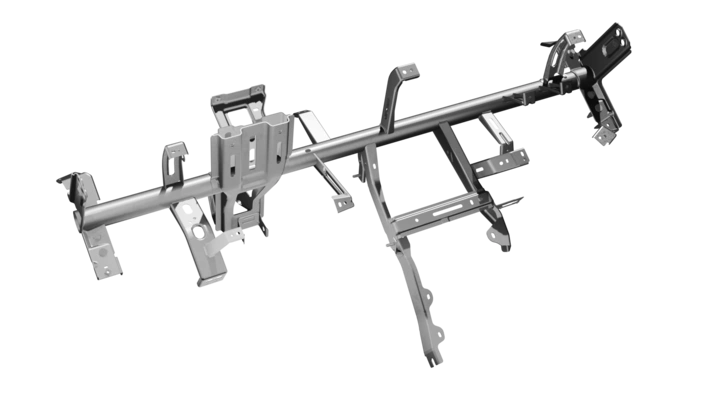
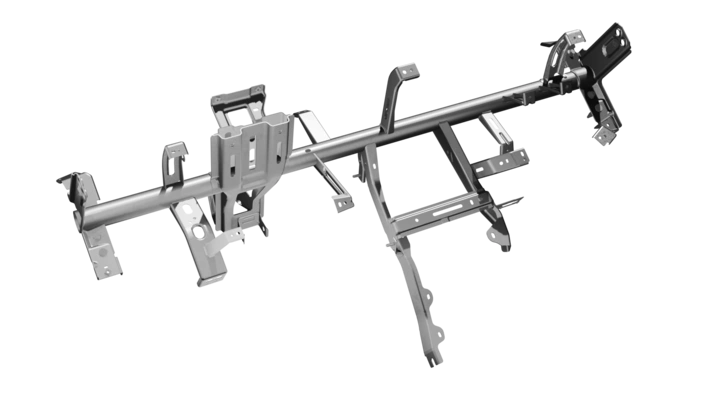
A comprehensive 3D CAD model rendering of a complete dashboard structure assembly by a leading cross car beam supplier Vietnam.
1. Introduction: Growing Demand for Cross Car Beam Suppliers in Vietnam
1.1 Global automotive supply chain transformation
1.1.1 Shift of automotive manufacturing to Southeast Asia
Rising operational overheads, strict emissions frameworks, and localized workforce shortages in traditional industrial hubs have triggered a structural migration of automotive component manufacturing toward Southeast Asia. The region has transitioned rapidly from a destination for localized vehicle assembly into a primary global manufacturing hub for advanced vehicular structural components, precision stamping, and complex mechanical hardware.
1.1.2 China+1 sourcing strategy in automotive industry
To isolate production schedules from regional supply disruptions, localized trade policies, and unexpected logistic blocks, global original equipment manufacturers (OEMs) are aggressively deploying the “China+1” sourcing model. Sourcing directors are actively establishing highly competent secondary manufacturing nodes across the ASEAN region, ensuring that high-volume vehicle assembly plants in North America and Western Europe can maintain unbroken material streams.
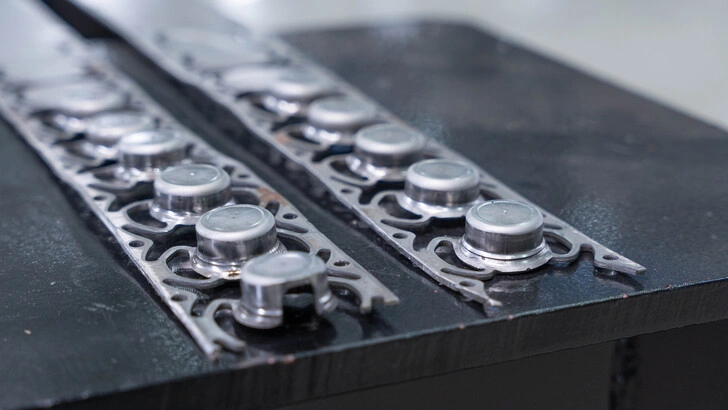
Close-up of a progressive metal stamping strip showcasing precision-formed components from a top-tier cross car beam supplier Vietnam.
1.2 Why OEMs are searching for cross car beam supplier Vietnam
1.2.1 Cost optimization and supply chain diversification
A cross car beam is a large, structurally vital sub-assembly that heavily impacts a vehicle’s overall material cost structure. By evaluating a specialized cross car beam supplier in Vietnam, procurement teams secure an optimized manufacturing environment that combines modern infrastructure with competitive labor and operational costs, successfully diversifying their tier-supplier networks while driving down total acquisition costs.
1.2.2 Rising demand for BIW structural component suppliers
Body in White (BIW) structural parts require technical capabilities far exceeding those of commercial sheet metal fabrication. Sourcing managers look for qualified partners who can process advanced metallurgy, manage tight geometric dimensioning and tolerancing (GD&T) callouts, and deliver fully certified automotive structural components ready for direct feed onto automated primary vehicle assembly lines.
2. What is a Cross Car Beam?
2.1 Definition of cross car beam in automotive
2.1.1 Structural component mounted behind dashboard systems
In modern automotive architecture, the cross car beam (CCB) is a critical safety and structural component in automotive engineering that spans the full lateral width of the vehicle cabin behind the dashboard. It serves as the primary structural backbone for the cockpit, providing high-precision mounting interfaces for the steering column, passenger airbag module, HVAC blower, and instrument displays, while acting as a vital lateral cross-brace that reinforces the cabin structure to absorb and distribute kinetic energy during side-impact collisions.
2.1.2 Integration between cockpit and vehicle body structure
The cross car beam acts as the central interface connecting the driver and passenger utility assemblies to the main vehicle chassis. It integrates a heavy-duty structural main body with dozens of complex stamped components—such as steering column plates, airbag modules, climate control frames, and electronic modules—unifying the internal cockpit components with the structural skeleton of the automobile.
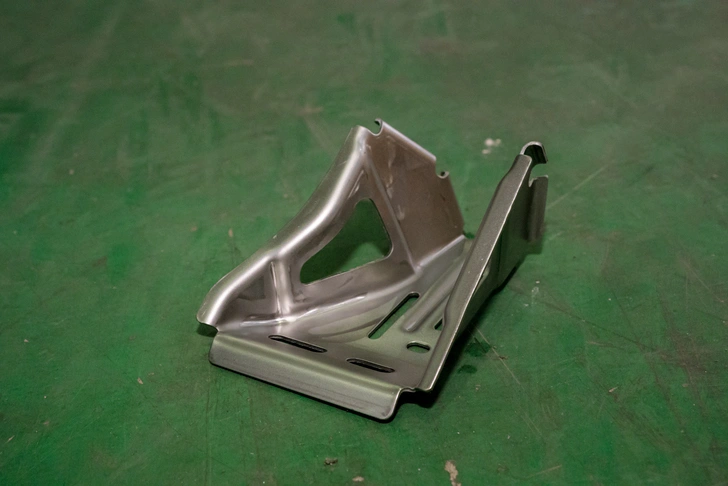
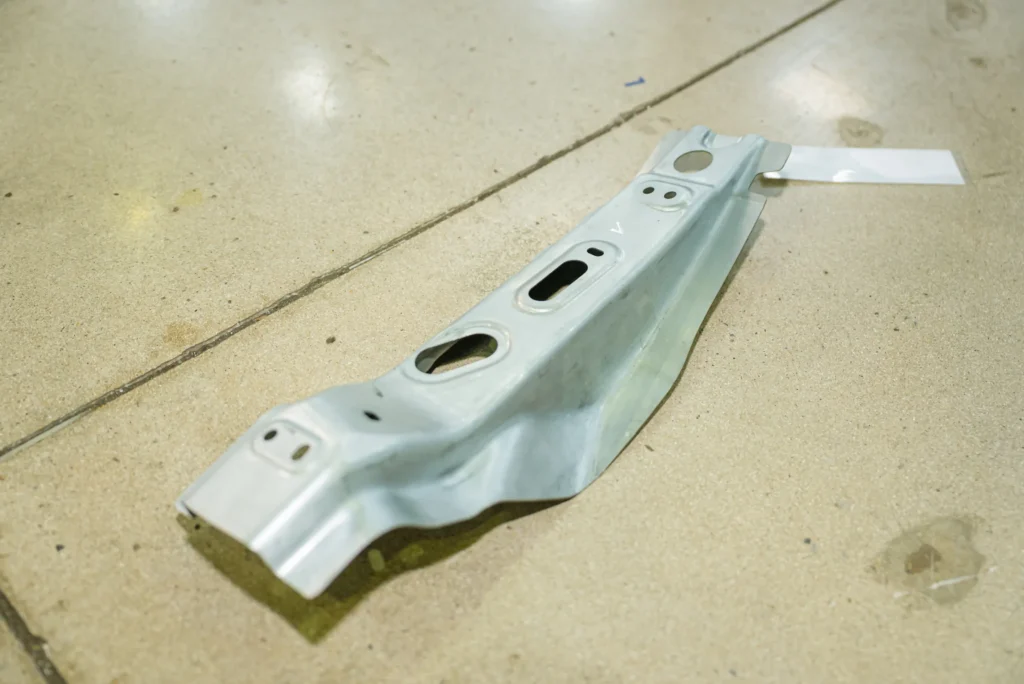
Inner view of a custom-stamped automotive sheet metal bracket with specialized mounting holes, crafted by a professional cross car beam supplier Vietnam.
2.2 Functions of a cross car beam
2.2.1 Structural rigidity and load distribution
The primary mechanical function of the cross car beam is to maximize the lateral and torsional stiffness of the vehicle’s forward cabin. When the car navigates uneven road surfaces, turns aggressively, or experiences structural stress, the cross car beam resists physical twisting, distributing localized structural loads evenly across the vehicle’s forward body panels.
2.2.2 Support for dashboard and cockpit systems
The cross car beam acts as the internal structural engine that supports the entire weight of the completed dashboard. It provides high-strength, permanent mounting platforms for heavy internal components—including the HVAC blower module, the instrumentation electronics, center console touchscreens, and complex wire harness paths—ensuring they remain held securely across years of operation.
2.2.3 Safety and NVH performance contribution
The cross car beam provides dual critical functions in the domain of vehicular dynamics and crash protection. By offering an unyielding lateral barrier between the left and right front pillars, it resists severe lateral cabin intrusion during collision events, while its carefully engineered natural frequencies actively suppress structural vibrations that cause cockpit noise, rattle, and harshness.
3. Role of Cross Car Beam in Vehicle Structure
3.1 Cross car beam within BIW structure
3.1.1 Relationship with body in white manufacturing
Within the Body in White (BIW) production flow, the cross car beam represents an essential structural cross-member. It is manufactured, welded, and fully certified as a complete sub-assembly before being routed to the primary vehicle frame assembly line, where it serves as one of the central horizontal stabilizers of the unpainted vehicle chassis.
3.1.2 Structural integration with vehicle cabin frame
The cross car beam assembly is rigidly secured to the internal metal structures of both the left and right A-pillars. This strategic positioning establishes a continuous structural connection across the forward cabin area, tying into the lower bulkhead panel and floor pan grids to create a robust, energy-absorbing closed loop around the driver and front passenger.
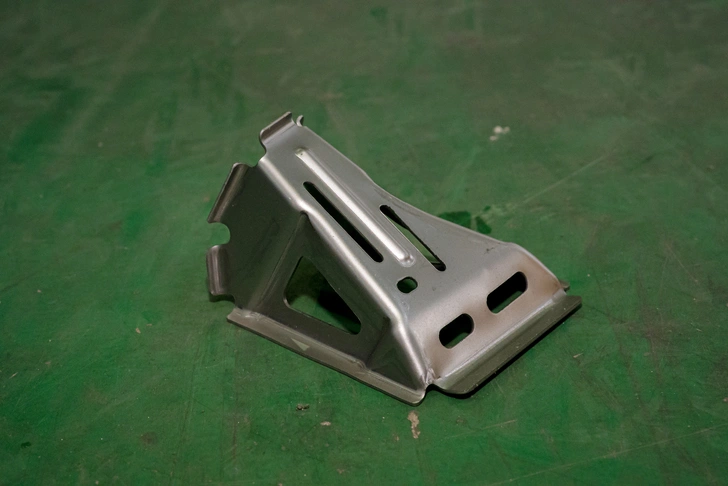
Outer structural view of a heavy-duty stamped steel reinforcement bracket from an OEM-grade cross car beam supplier Vietnam.
3.2 Automotive engineering importance
3.2.1 Crash performance reinforcement
During severe side-impact collisions, such as an IIHS or Euro NCAP side pole crash test, the cross car beam acts as an essential energy transfer link. As the external impact crushes the door frame, the beam resists the inward force, transferring the extreme kinetic energy directly across the vehicle structure to the opposite pillar, protecting occupants from cabin intrusion.
3.2.2 Driver safety and cabin stability
By maintaining absolute dimensional stability around the front cockpit zone, the cross car beam ensures that safety-critical systems deploy successfully during a crash. It keeps the steering column stable and holds the passenger airbag module securely at its exact engineered deployment angle, maximizing the effectiveness of the vehicle’s passive safety infrastructure.
3.2.3 Noise, vibration, and harshness (NVH) control
Modern vehicles must deliver a quiet, comfortable interior environment. A poorly designed or low-stiffness cross car beam can vibrate in harmony with engine cycles or road feedback, leading to steering column buzz and dashboard squeaks. Advanced automotive suppliers engineer cross car beams with exceptionally high natural frequencies to eliminate these resonances, directly optimizing cabin NVH performance.
4. Cross Car Beam Manufacturing Process
4.1 Automotive stamping process
4.1.1 Sheet metal blank preparation
The production cycle begins in the raw press shop, where automated decoiling systems unroll massive coils of high-strength structural steel or specialized aluminum alloys. The metal strip passes through precision leveling machines to remove residual stresses before entering high-speed blanking dies that cut the raw material into optimized geometric flat shapes designed to minimize web scrap.
4.1.2 Progressive die stamping operations
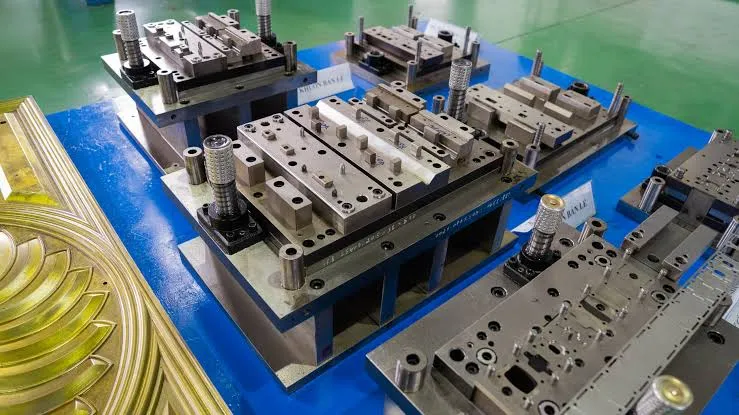
The prepared metal blanks are transferred to high-tonnage stamping press lines running complex progressive dies. As the metal moves sequentially through multiple independent tooling stations inside a single press, it is subjected to synchronized drawing, piercing, bending, and flanging steps, transforming the flat sheet into highly intricate structural components with high efficiency.
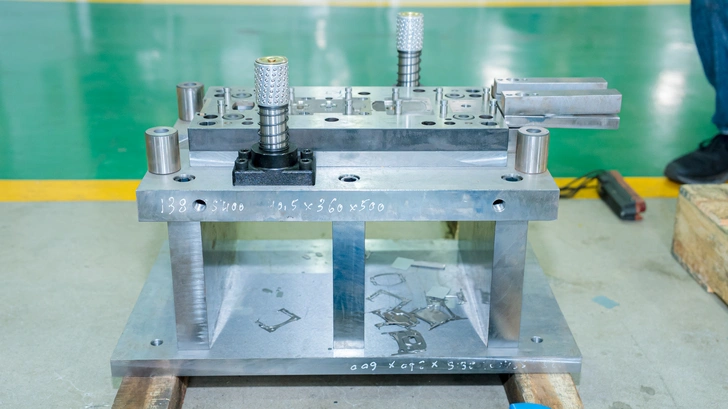
Heavy-duty progressive stamping die blocks engineered for high-volume production in the facility of a cross car beam supplier Vietnam.
4.2 Welding assembly process
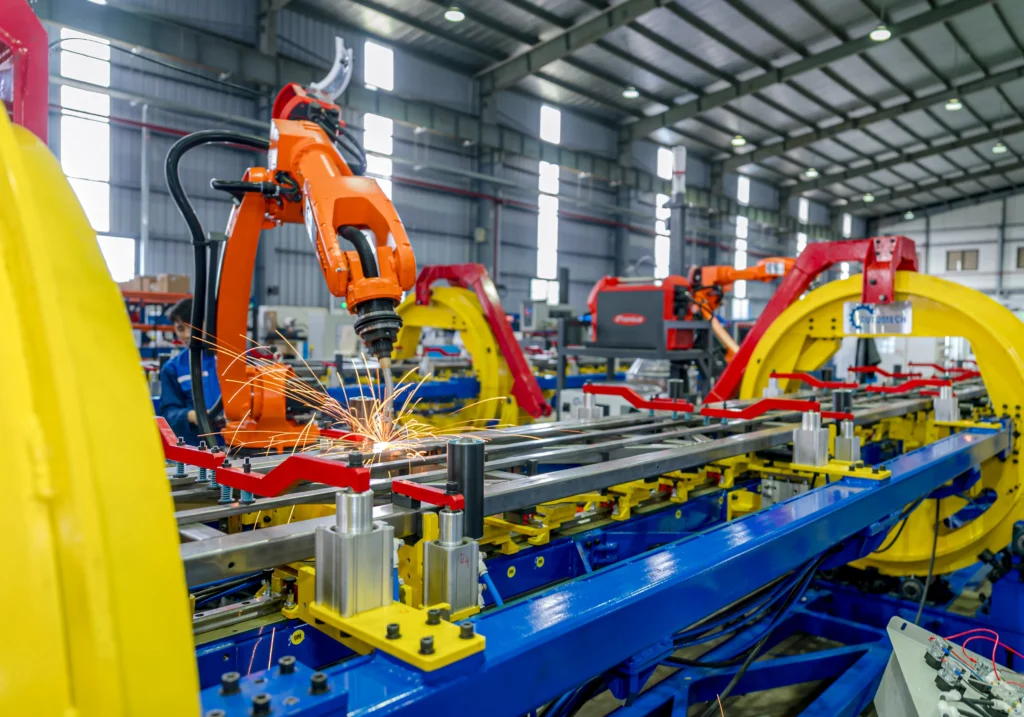
4.2.1 Robotic MIG/TIG welding systems
Given the high structural loads applied to the cross car beam, manual welding is insufficient for mass production. Automated multi-axis industrial robots equipped with advanced Metal Inert Gas (MIG) or Tungsten Inert Gas (TIG) torches are deployed. These robots follow synchronized, pre-programmed digital paths to apply continuous structural welds with precise energy input, ensuring flawless thermal joint fusion.
4.2.2 Spot welding and assembly integration
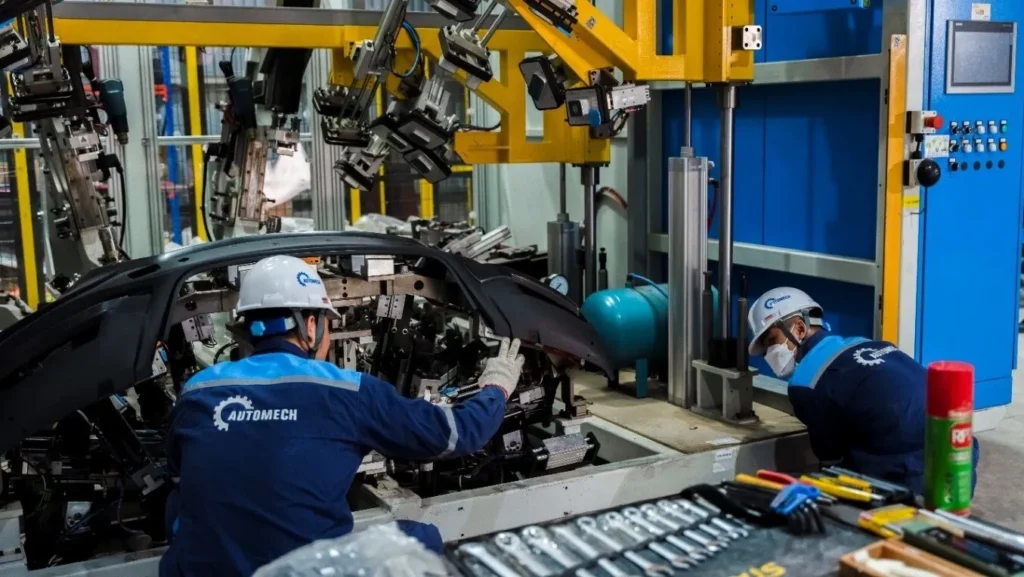
Smaller sheet metal utility brackets and harness grounding clips are integrated using automated resistance spot welding guns. Stamped sub-components are placed inside heavy pneumatic fixtures that lock each part securely at its exact 3D coordinates, allowing the robotic lines to execute rapid, uniform spot weld sequences without inducing part distortion or thermal warping.
4.3 Final assembly and inspection
4.3.1 Dimensional verification using CMM
Following anti-corrosion Cathodic Electrodeposition (CED/E-coating), completed assemblies enter the metrology laboratory. Quality technicians utilize high-precision Coordinate Measuring Machines (CMM) and non-contact blue-light 3D laser scanners inside temperature-regulated rooms to capture precise dimensions, cross-referencing findings directly against the master OEM CAD data.
4.3.2 Structural and weld integrity testing
Weld strength is continuously monitored using rigorous destructive and non-destructive testing (NDT) programs. Quality engineers perform non-destructive ultrasonic checks to monitor joint density and identify internal porosity, complemented by systematic macro-section testing where welded joints are physically cut, polished, and etched to examine structural penetration under high-power microscopes.
5. Cross Car Beam Stamping & Welding Assembly
5.1 Cross car beam stamping process
5.1.1 High precision automotive metal stamping
Cross car beam components require exceptional metal forming precision. Automech operates high-tonnage mechanical and hydraulic press shops ranging from $1000\text{ to }2500\text{ tons}$. These robust press configurations allow for precise control over deformation rates, enabling the clean forming of thick-walled structural steel and complex channels without causing localized tearing or material thinning.
5.1.2 Structural forming and reinforcement design
To maximize component stiffness while minimizing material mass, advanced cross car beam stampings incorporate complex cross-sections, structural swages, and embossed reinforcement channels. Tooling engineers use sophisticated metal flow simulation software to optimize these features within the progressive die layouts, precisely accounting for material springback to deliver highly accurate part shapes.
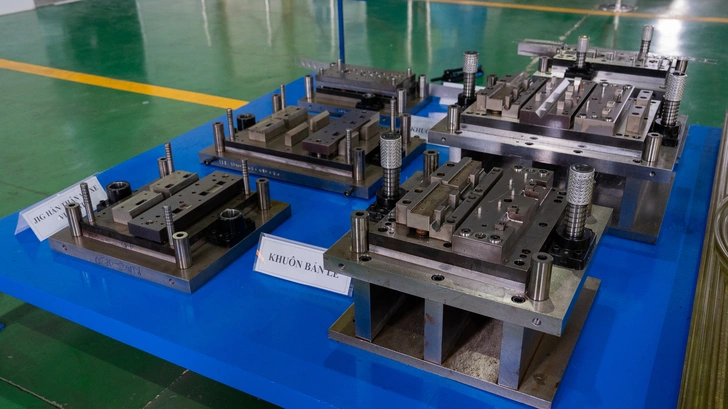
A showroom display of precision engineering mold bases and stamping tooling sets at a premier cross car beam supplier Vietnam.
5.2 Cross car beam welding assembly
5.2.1 Automated welding systems
Automech’s welding department features multi-axis robotic assembly lines integrated with real-time process monitoring. These intelligent robotic systems maintain absolute consistency across all welding paths, applying uniform wire-feed speeds and stable voltage arcs to eliminate human variables and guarantee robust structural joint strength across mass production runs.
5.2.2 Fixture-controlled dimensional stability
Maintaining sub-millimeter tolerances across a large welded assembly requires exceptional fixture engineering. Automech designs and builds precision-ground pneumatic welding fixtures equipped with hard locating pins and automated toggle clamps. These heavy jigs hold all stamped brackets firmly in 3D space during robotic joining, managing tolerance stack-up and preventing structural warping.
5.3 Assembly quality requirements
5.3.1 Weld penetration and structural consistency
Automotive structural safety standards allow zero tolerance for joining defects. The robotic cells are calibrated to achieve complete, deep weld penetration along critical stress vectors, such as the steering column mount and airbag support brackets, ensuring the completed cross car beam assembly maintains total structural consistency through millions of dynamic vehicle loading cycles.
5.3.2 OEM dimensional tolerance compliance
Sourcing teams require absolute compliance with tight geometric callouts to ensure smooth vehicle assembly. Automech’s automated manufacturing lines achieve high process capability indices ($C_{pk} \ge 1.67$), guaranteeing that critical-to-quality interfaces—such as master indexing holes and main chassis mounting faces—comply perfectly with strict OEM dimensional specifications.
6. Materials Used in Cross Car Beam Production
6.1 Automotive structural steel applications
6.1.1 High-strength steel (HSS)
High-Strength Steel (HSS) variants provide an exceptional, cost-effective baseline for high-volume cross car beam applications. These micro-alloyed steel grades provide excellent yield strength and great cold formability, allowing the stamping press lines to form crisp profiles and intricate mounting brackets efficiently without incurring excessive tooling wear.
6.1.2 Advanced high-strength steel (AHSS)
To satisfy aggressive weight reduction mandates without compromising vehicle crash performance, modern cross car beams utilize Advanced High-Strength Steels (AHSS), such as Dual-Phase (DP) or Martensitic grades with tensile strengths exceeding $1000\text{ MPa}$. AHSS allows for significantly thinner metal sheets to be specified, shaving critical mass from the vehicle cabin while providing superior energy-absorption capabilities during side pole impacts.
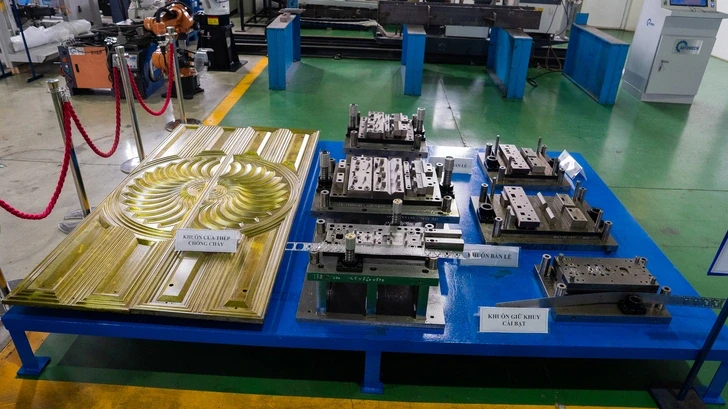
Overview of Automech’s advanced mold-making division and product exhibition floor, highlighting capabilities as a trusted cross car beam supplier Vietnam.
6.2 Lightweight material trends
6.2.1 Aluminum structural beam applications
In premium vehicle segments and range-sensitive electric vehicle designs, lightweight aluminum alloys (such as the 6000 and 7000 series) are increasingly substituting steel elements. Aluminum cross car beams can be formed via advanced multi-stage stamping or deep drawing, delivering a complete assembly that can cut structural mass by up to $30\% – 40\%$ compared to traditional steel layouts.
6.2.2 Weight reduction for EV platforms
Electric vehicles carry heavy internal battery packs, making structural weight optimization a primary engineering goal to extend driving range. Sourcing teams prioritize cross car beam manufacturers capable of processing lightweight aluminum alloys or handling complex multi-material hybrid layouts, using advanced fastening methods to combine thin steel tubes with lightweight aluminum mounts safely.
6.3 Material performance requirements
6.3.1 Crash resistance
The primary material performance benchmark for a cross car beam is its dynamic crash resistance under extreme compressive loads. Sourcing engineers utilize finite element analysis (FEA) to verify that the specified alloys exhibit high ultimate tensile strength alongside sufficient material ductility, preventing brittle material fractures under high-speed collision forces.
6.3.2 Corrosion resistance and durability
Cross car beams operate enclosed inside the vehicle cockpit, exposing them to interior humidity and moisture condensation from adjacent climate control lines. Stamped components must possess exceptional material durability and receive advanced surface treatments—such as full Cathodic Electrodeposition (CED)—to prevent environmental degradation and guarantee lifetime structural protection.
7. BIW (Body in White) Integration
7.1 What is BIW manufacturing
7.1.1 Definition of Body in White structure
Body in White (BIW) manufacturing represents the core automotive production phase where individual sheet metal panels, structural stampings, and sub-assemblies are joined together to construct the bare structural frame of a vehicle, prior to painting, powertrain installation, or interior trim integration.
7.1.2 Structural assembly in automotive production
The BIW workshop is a highly automated environment relying on high-speed robotic assembly networks. Every structural component introduced into this line must conform to rigid dimensional benchmarks; a single out-of-spec structural part can cause line stoppages, misalign robotic grippers, or disrupt automated welding cycles, making high tier-supplier precision vital.
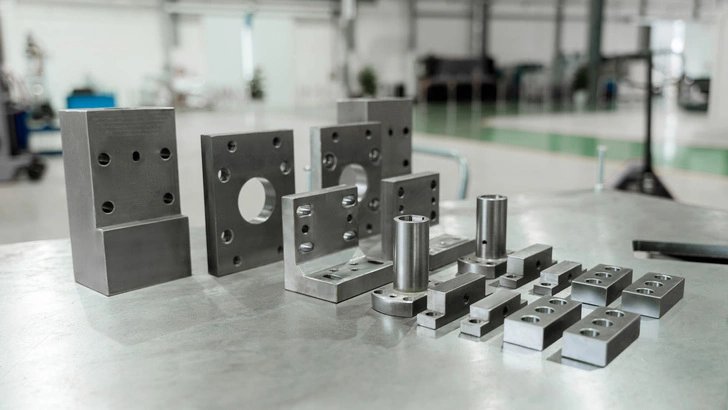
An array of precision CNC machined steel blocks and alignment fixtures utilized by a high-tech cross car beam supplier Vietnam.
7.2 Cross car beam within BIW assembly
7.2.1 Vehicle cabin integration
During the central cabin assembly phase of BIW manufacturing, the completed cross car beam is transferred into the bare chassis frame. It sits precisely aligned between the left and right front pillar shells, functioning as a primary horizontal structural stabilizer that reinforces the vehicle frame before exterior body skin panels are attached.
7.2.2 Dashboard and cockpit structure support
The cross car beam serves as the unyielding physical foundation that supports the entire weight of the cockpit infrastructure. Stamped and welded accurately, it ensures that when the car advances to final assembly, the complete dashboard module slides into position effortlessly, aligning perfectly with internal firewall boundaries and matching up with pedal box mounts.
7.3 BIW welding assembly systems
7.3.1 Robotic assembly lines
Modern BIW assembly zones utilize synchronized robotic handling gantries and multi-axis joining cells. Cross car beam suppliers must design components featuring clean welding flanges and precise indexing hole positions, allowing robotic arms to easily grip, position, and weld the assembly into the vehicle frame with sub-millimeter repeatable accuracy.
7.3.2 Dimensional control systems
To manage tolerance variations across high-volume production, BIW assembly lines utilize advanced in-line optical measurement frames and laser scanning arrays. These digital quality systems measure the position of the cross car beam in real-time as it is integrated into the chassis, immediately flagging any geometric deviations to maintain total structural quality control.
8. Technical Requirements for Automotive Cross Car Beams
8.1 Structural strength requirements
8.1.1 Load-bearing capacity standards
The cross car beam must possess exceptional static and dynamic load-bearing capacity. It is engineered to support the heavy, cantilevered weight of the complete steering gear, passenger airbag, and climate control infrastructure without experiencing mechanical sagging or structural deflection under continuous vehicular operating loads.
8.1.2 Crash performance validation
Before an automotive structural part can be cleared for commercial mass production, it must pass rigorous physical verification. Actuators exert extreme compressive forces along the beam’s lateral axis to simulate side pole collision dynamics, confirming the component can effectively absorb and deflect energy paths to satisfy international crash safety standards.
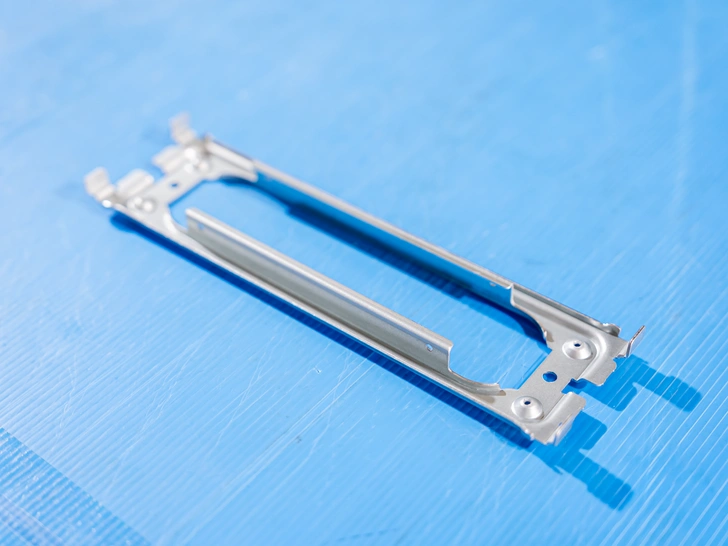
Close-up of a lightweight, high-strength stamped metal frame component on a production line from an automotive cross car beam supplier Vietnam.
8.2 Dimensional accuracy requirements
8.2.1 Tight tolerance control
Cross car beams require exceptional geometric precision due to the high density of mating components that anchor across their surface. Critical interfaces—such as the steering column mounting face—regularly demand true position tolerances within a tight radial zone of $\pm 0.5\text{ mm}$ relative to the master datum reference frame of the vehicle chassis.
8.2.2 Fixture and inspection systems
Maintaining this precision across high-volume production requires advanced quality infrastructure. Suppliers integrate heavy-duty mechanical attribute checking gauges directly next to the manufacturing lines for immediate part validation, backed by automated Coordinate Measuring Machine (CMM) routines to inspect completed lots thoroughly.
8.3 NVH engineering considerations
8.3.1 Vibration reduction strategies
To eliminate annoying cockpit vibrations, automotive engineers design cross car beams with exceptionally high natural resonant frequencies. Sourcing teams look for cross car beam suppliers who utilize precise automated welding to ensure ultra-stiff joints, which actively prevents the assembly from vibrating in response to engine cycles or rough road inputs.
8.3.2 Cabin noise optimization
By optimizing the structural rigidity of the cross car beam assembly, manufacturers can minimize unwanted microscopic movement between adjacent plastic dashboard moldings and internal structural brackets. This advanced engineering control eliminates squeaks, clicks, and rattles within the cockpit, directly enhancing passenger comfort and interior vehicle refinement.
9. Automotive Quality Standards & OEM Requirements
9.1 ISO 9001 manufacturing systems
9.1.1 Process standardization
Maintaining an active ISO 9001 certification represents the baseline operational requirement for any supplier entering the automotive sector. This international quality standard guarantees that the manufacturer has established standardized, documented procedures across all operational stages, from raw material procurement to final shipping.
9.1.2 Quality management procedures
ISO 9001 drives a structured management approach across the organization. Automech leverages standardized workflows, clear operational instructions, and robust employee training programs to eliminate variation on the factory floor, ensuring a stable and reliable manufacturing environment for complex structural parts.
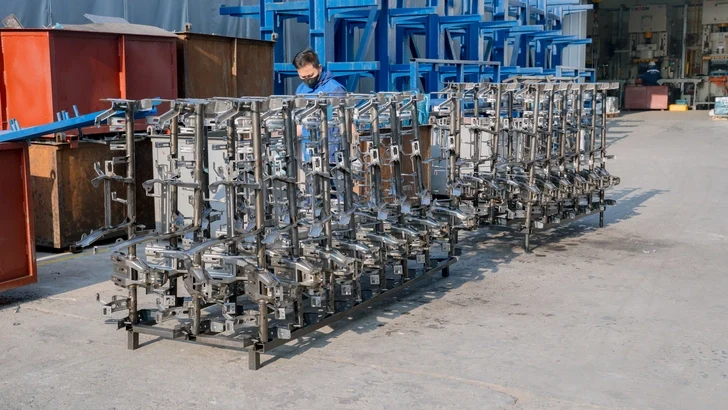
A batch of fully welded car dashboard metal frameworks organized on racks, manufactured by a high-capacity cross car beam supplier Vietnam.
9.2 IATF 16949 automotive compliance
9.2.1 Automotive supplier qualification
To qualify as an approved Tier-1 or Tier-2 supplier for international automotive OEMs, full compliance with IATF 16949 is mandatory. This specialized standard builds upon ISO 9001, introducing stringent requirements focused on defect prevention, waste reduction, and the systematic minimization of process variation across the entire automotive supply chain.
9.2.2 OEM quality assurance requirements
IATF 16949 compliance requires deep operational integration of specialized quality processes. Sourcing teams review the manufacturer’s internal quality manuals, process capabilities, and historical audit logs to verify that advanced automotive core tools are systematically utilized across all engineering and production workflows.
9.3 Automotive core tools
9.3.1 PPAP and APQP systems
Automech systematically utilizes advanced quality core tools to manage new product development. Sourcing projects follow the Advanced Product Quality Planning (APQP) framework through every development gate, culminating in the submission of a comprehensive Production Part Approval Process (PPAP) Level 3 package to verify mass production readiness.
9.3.2 Traceability and process documentation
Total manufacturing traceability is an unyielding requirement for modern automotive compliance. Every cross car beam assembly produced at Automech is permanently laser-etched with a unique 2D DataMatrix code, linking the part directly to its complete manufacturing history—including raw material coil certifications, stamping parameters, and robotic welding data.
10. Vietnam Automotive Manufacturing Ecosystem
10.1 Growth of automotive manufacturing Vietnam
10.1.1 Expansion of Tier 1 and Tier 2 suppliers
Over the past decade, the automotive manufacturing ecosystem in Vietnam has experienced rapid development. Proactive economic policies and strategic infrastructure construction have attracted significant investments from major international Tier-1 and Tier-2 component suppliers, building a highly integrated local supply chain capable of executing complex manufacturing programs completely in-country.
10.1.2 Increasing automotive export capabilities
Vietnam’s leading industrial plants are designed from the ground up for global export. Local factories operate under advanced international quality systems and leverage modern automated equipment, allowing components produced in Vietnam—from complex wiring systems to safety-critical structural frames—to integrate seamlessly into final vehicle assembly lines worldwide.
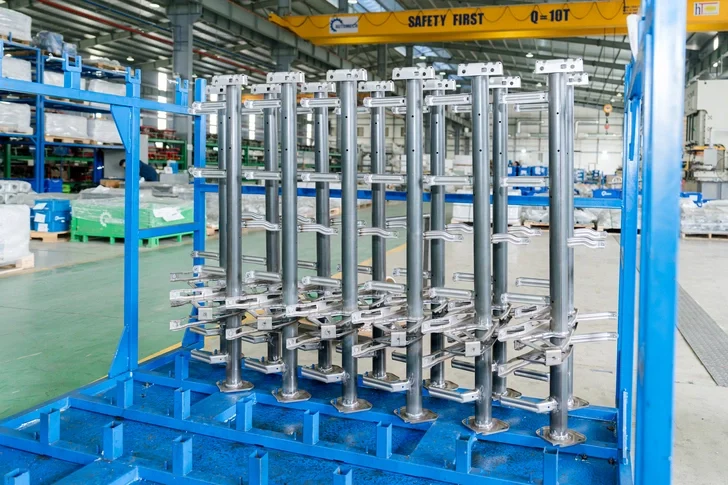
Main steel support tubes positioned vertically on storage pallets inside the factory of an automotive cross car beam supplier Vietnam.
10.2 Vietnam as a BIW manufacturing hub
10.2.1 Competitive labor and production costs
Vietnam provides international procurement teams with an exceptionally competitive operational cost structure. Sourcing from Vietnam combines highly competitive technical labor rates with optimized factory overheads and high-speed automated equipment, enabling significant savings on upfront tooling investments and long-term per-unit production costs.
10.2.2 Strategic export location for US/EU markets
Supported by expansive, modern deep-water shipping terminals like Haiphong and Cat Lai, Vietnam serves as a highly strategic global export hub. Sourcing managers secure streamlined, reliable ocean freight access to major automotive assembly centers across North America, Europe, and Asia, ensuring reliable integration into global logistics networks.
10.3 Vietnam vs China automotive sourcing
10.3.1 Cost and stability comparison
Sourcing structural automotive components from Vietnam provides procurement teams with significant advantages in terms of long-term cost stability. Vietnam provides highly competitive, stable manufacturing cost structures, shielding international buyers from the rising inflation, escalating labor rates, and volatile tariff adjustments often encountered in traditional production regions.
10.3.2 Supply chain diversification benefits
Partnering with an advanced cross car beam supplier in Vietnam delivers immediate supply chain diversification benefits. It reduces concentration risk and insulates global automotive brands from regional geopolitical disruptions, establishing a highly resilient secondary production node that ensures an uninterrupted supply of critical components.
11. Why Global OEMs Source Cross Car Beams from Vietnam
11.1 Manufacturing competitiveness
11.1.1 Lower production cost vs China
Vietnam offers highly competitive direct production economics relative to traditional manufacturing regions. Combining highly optimized operational overheads with advanced automation allows local suppliers to deliver substantial cost savings across both high-volume progressive tooling programs and ongoing per-part manufacturing runs.
11.1.2 Flexible production scalability
Vietnam’s manufacturing sector is backed by a highly driven engineering workforce and scalable industrial infrastructure. Local factories operate flexible production models, allowing automotive suppliers to quickly scale up production volumes or adapt manufacturing schedules to handle sudden shifts in OEM vehicle delivery timelines efficiently.
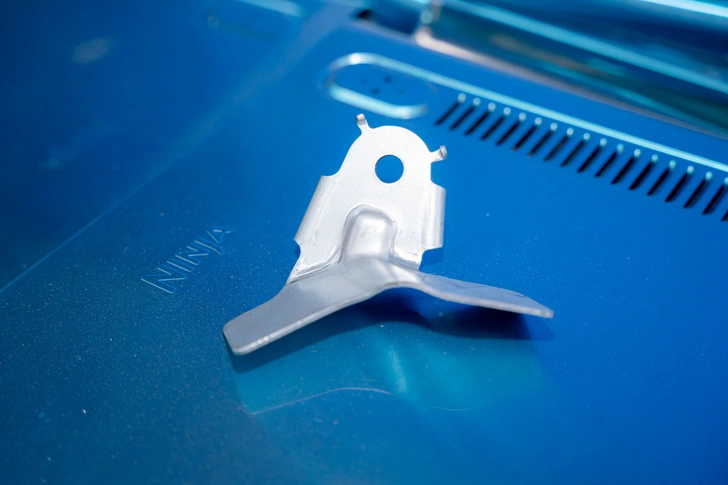
Close-up of a precision-formed silver bracket with custom bends resting on a blue protective sheet metal surface from a cross car beam supplier Vietnam.
11.2 Export manufacturing advantages
11.2.1 International trade integration
Vietnam is deeply integrated into global trade networks, supported by an expansive matrix of bilateral and multilateral free trade agreements (including the EVFTA, CPTPP, and RCEP). This comprehensive trade integration ensures duty-free, streamlined customs clearance when shipping automotive components to major international markets.
11.2.2 Export-ready automotive supply chain
Modern manufacturing plants across Vietnam operate in strict compliance with international regulatory frameworks and shipping protocols. From standardized rust-preventative packaging, container tracking systems, to electronic advanced shipping notices (ASN), local suppliers deliver a seamless, export-ready supply chain experience for global OEM buyers.
11.3 Supply chain resilience
11.3.1 China+1 automotive sourcing strategy
Global automotive brands are rapidly expanding their procurement networks outside traditional manufacturing regions to protect their production lines from supply disruptions. Establishing a high-precision structural component program in Vietnam satisfies the core goals of the “China+1” strategy, delivering high-quality production within a stable, highly competitive manufacturing environment.
11.3.2 Reduced geopolitical sourcing risks
By diversifying structural component sourcing into Vietnam, international procurement teams effectively isolate their supply chains from complex geopolitical tensions and volatile tariff frameworks, securing a highly predictable, reliable, and secure long-term sourcing base for critical Body in White assemblies.
12. Cross Car Beam Supplier Qualification Checklist
12.1 Manufacturing capability evaluation
12.1.1 Stamping press capacity
OEM procurement teams must verify that a prospective cross car beam supplier in Vietnam operates the necessary heavy mechanical or servo press lines exceeding $1000\text{ to }2500\text{ tons}$. This high-tonnage framework is critical to manage the extreme compressive forces required to stamp heavy structural sheet metal components and advanced alloys without causing structural cracking. Sourcing teams should audit the press shop to ensure these systems are fully backed by automated decoiling, multi-roller sheet leveling, and precision servo feeding machinery to guarantee smooth, continuous material processing.
12.1.2 Welding assembly automation level
Because a complete cross car beam requires fusing dozens of unique brackets, the level of welding automation is a key qualification gate. Sourcing teams evaluate the factory floor to ensure that manual joining variables are replaced by multi-axis industrial robotic arms configured for automated MIG, TIG, and resistance spot welding. The robotic cells must be integrated with laser-guided seam-trackers and mounted over custom pneumatic clamping fixtures to eliminate human positioning errors and guarantee absolute structural repeatability across high-volume automotive production runs.
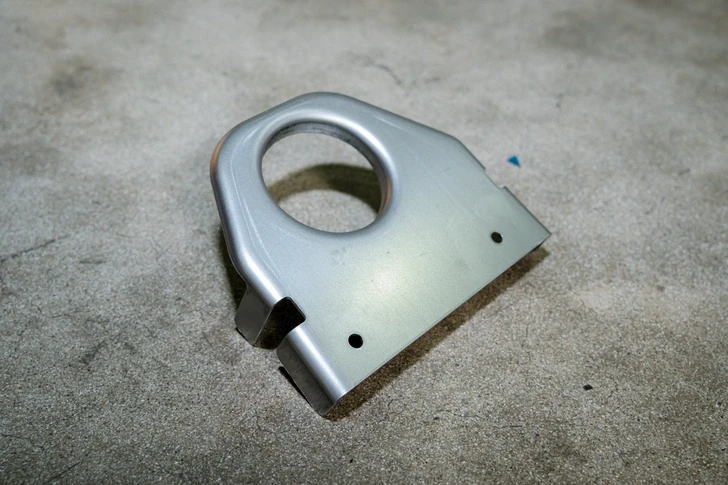
A stamped metal structural plate featuring a large center circle cutout, crafted by a reliable cross car beam supplier Vietnam.
12.2 Quality system evaluation
12.2.1 ISO 9001 and IATF 16949 certification
An active, third-party audited IATF 16949 certification—built upon the ISO 9001 quality management standard—is an absolute prerequisite for supplier qualification. Sourcing directors must examine the manufacturer’s active credentials, look into past audit performance sheets, and review internal non-conformance logs. This validation proves that the factory operations comply with the highest automotive-grade regulations regarding defect prevention, variation reduction, and structural waste elimination across the entire tier-supplier network.
12.2.2 PPAP and APQP capability
A qualified automotive structural component supplier must demonstrate complete mastery over advanced automotive core tools. Sourcing managers evaluate the engineering team’s capability to execute structured Advanced Product Quality Planning (APQP) phases through every development gate, culminating in the submission of a comprehensive Level 3 Production Part Approval Process (PPAP) package. This technical documentation includes physical material certifications, FMEA analysis, control plans, and initial process capability metrics to prove mass production readiness.
12.3 Engineering and tooling capability
12.3.1 Fixture and die manufacturing expertise
The supplier must operate an advanced in-house tooling and die center capable of designing, machining, and maintaining massive progressive dies and automated assembly fixtures. Sourcing teams audit the tooling lab to confirm the presence of high-speed multi-axis CNC machines and vacuum heat-treatment systems. The engineering team must also possess deep expertise in custom welding fixture engineering, integrating smart pneumatic toggle clamps and electronic poka-yoke proximity sensors to lock sub-components perfectly in 3D space during robotic assembly.
12.3.2 Automotive engineering support
Hardware capacity must be backed by advanced predictive engineering capabilities. Sourcing teams evaluate whether the supplier’s design specialists can perform rigorous Design for Manufacturing (DFM) reviews using advanced metal forming simulation software like AutoForm. This digital capability allows engineers to analyze material flow, predict localized thinning, and calculate exact tool springback compensation factors before cutting any tool steel, helping to optimize component geometries and reduce program development costs.
12.4 Export readiness evaluation
12.4.1 OEM documentation systems
Doing business with global automotive brands demands precise communication and compliance with international administrative frameworks. Sourcing specialists review the supplier’s data tracking infrastructure to confirm that raw material certifications, CMM metrology data, and robotic welding logs are digitally archived against laser-etched 2D DataMatrix codes on each part. This advanced documentation system ensures total component traceability and provides immediate data access during any OEM quality audit or field review.
12.4.2 International logistics capability
Automotive main assembly lines operate on strict, highly synchronized Just-In-Time (JIT) delivery systems. Sourcing teams evaluate the supplier’s international logistics infrastructure, export packaging standards, and past experience shipping structural parts to demanding global markets like North America and Western Europe. The qualified export manufacturer must maintain strong partnerships with international freight networks and possess the capability to manage buffer stocks or regional warehouses near the OEM facilities to guarantee uninterrupted delivery.
13. RFQ Process for Automotive Structural Components
13.1 Preparing RFQ documents
13.1.1 CAD drawings and 3D models
The Request for Quote (RFQ) process begins with the transmission of highly detailed engineering data. Sourcing teams provide comprehensive 3D CAD models (typically in STEP, IGES, or native CATIA file formats) alongside fully annotated 2D technical drawings that define the complete geometric profile of the cross car beam assembly.
13.1.2 Material and tolerance requirements
The RFQ documentation must explicitly state the required material grades (such as specific AHSS or aluminum alloys), sheet thickness specifications, and required surface treatments. Clearly defined GD&T callouts and critical-to-quality (CTQ) tolerance requirements allow the engineering team to accurately analyze the program.
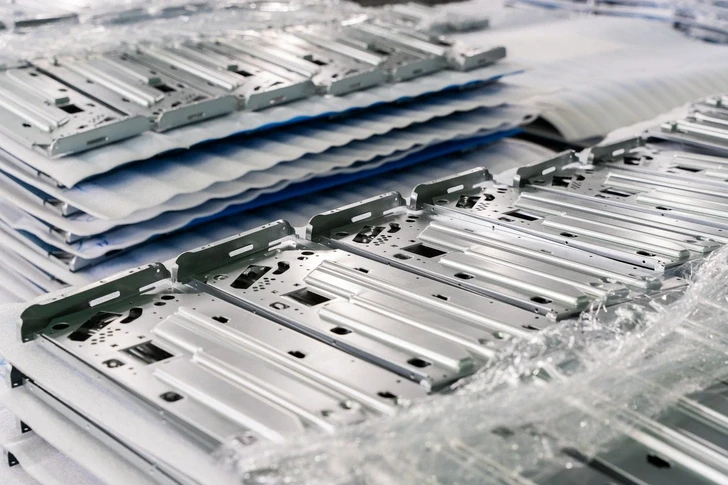
Hundreds of finished progressive metal panels stacked neatly and wrapped for shipment by an OEM cross car beam supplier Vietnam.
13.2 Supplier quotation evaluation
13.2.1 Tooling cost analysis
Automech provides a transparent, comprehensive cost breakdown in response to the RFQ. This detailed quotation separates upfront capital expenditures—such as the design and machining of high-volume progressive dies, automated pneumatic welding fixtures, and metrology checking gauges—from ongoing per-unit production costs.
13.2.2 Production lead time evaluation
The quotation includes a detailed project timeline mapping out every major milestone from program kick-off to launch. This clear schedule outlines specific timelines for initial tool design, CNC die fabrication, tool trial phases (T1 through T3), sample part PPAP submission, to the final start of mass production (SOP), giving procurement teams complete visibility.
13.3 Prototype and mass production planning
13.3.1 Sample validation process
Upon initial tooling completion, the program enters the strict sample validation phase. Automech produces a preliminary pilot lot of components using the new progressive dies and welding fixtures. These parts undergo comprehensive dimensional verification via CMM and rigorous destructive weld strength testing to confirm complete adherence to all engineering specifications.
13.3.2 SOP production readiness
Once the sample lot passes all customer inspections, Automech submits full PPAP Level 3 documentation for formal sign-off. Upon receiving customer approval, the manufacturing lines are released for the formal Start of Production (SOP), transitioning to high-speed mass production runs to feed the OEM’s vehicle integration facilities seamlessly.
14. Trusted Cross Car Beam Supplier Vietnam – Automech
14.1 Automech automotive manufacturing capabilities
14.1.1 Automotive metal stamping systems
Automech is a premier provider of automotive structural component manufacturing in Vietnam. The company operates a modern, state-of-the-art production facility equipped with high-tonnage mechanical and hydraulic stamping press lines engineered to process high-strength steel (HSS), advanced high-strength steel (AHSS), and lightweight aluminum alloys with exceptional geometric precision.
14.1.2 Robotic welding assembly lines
To guarantee flawless structural joint performance, Automech operates a dedicated robotic welding department featuring multi-axis industrial robots configured for automated MIG/TIG and resistance spot welding. These advanced automated systems are integrated with laser seam-trackers and custom pneumatic fixtures featuring electronic sensors, ensuring robust joint strength and zero-defect welding assembly.
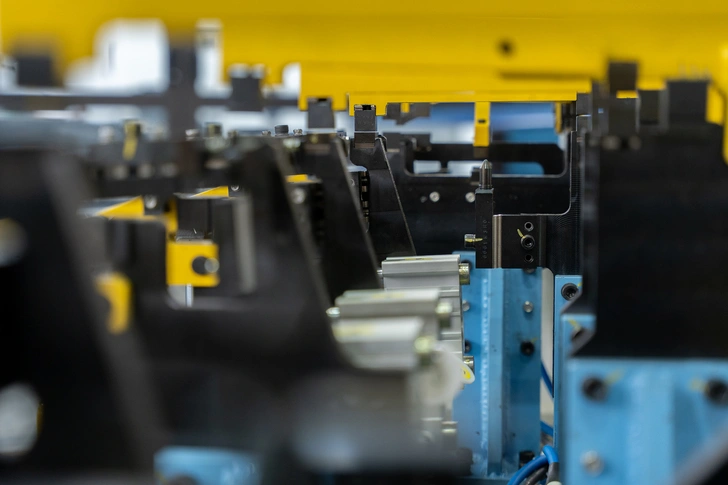
Deep-dive view into the intricate mechanisms of a multi-stage progressive stamping die system at a leading cross car beam supplier Vietnam.
14.2 BIW manufacturing expertise
14.2.1 Cross car beam assembly capability
Automech combines advanced industrial automation with deep metallurgy expertise to deliver fully integrated cross car beam welding assemblies. Our modern manufacturing lines handle everything from heavy progressive stamping to complex multi-component joining, satisfying the rigorous engineering demands of global automotive buyers.
14.2.2 Automotive structural component production
Our production infrastructure is designed from the ground up to support safety-critical Body in White (BIW) production programs. From deep-drawn reinforcement channels, dashboard cross-members, to complex cockpit brackets, Automech delivers high-precision structural components that conform perfectly to strict international automotive standards.
14.3 Tooling and fixture capability
14.3.1 Automotive die manufacturing
Automech features an advanced, in-house tooling center staffed by experienced die design and machining engineers. Utilizing advanced simulation software like AutoForm, our engineering team conducts comprehensive metal flow and springback analysis during the design phase, allowing Automech to fabricate and validate complex progressive dies entirely in-house.
14.3.2 Welding fixture and inspection jig systems
Beyond stamping dies, Automech designs and builds custom pneumatic welding fixtures and attribute checking gauges in-house. These advanced jigs incorporate integrated electronic sensors and mechanical interlocks to provide complete mistake-proofing (poka-yoke) during assembly, ensuring every stamped bracket remains held at its exact coordinate positions.
14.4 Quality assurance systems
14.4.1 CMM dimensional inspection
The factory features a temperature-controlled metrology laboratory equipped with high-precision Coordinate Measuring Machines (CMM) and high-speed 3D laser scanners for precise dimensional verification. This advanced metrology infrastructure allows our quality technicians to capture high-density geometric data points, validating that every feature conforms perfectly to engineering tolerances.
14.4.2 Traceability and process control systems
Automech enforces a zero-defect philosophy supported by a fully digitized component traceability system. Every cross car beam produced is permanently laser-etched with a unique 2D DataMatrix code, linking the individual component directly to its complete manufacturing history—including raw material coil certificates, stamping press parameters, robotic welding data, and final inspection logs.
14.5 Export manufacturing experience
14.5.1 Automotive export projects for US/EU markets
Automech possesses extensive experience successfully delivering complex structural component programs for international automotive markets, including North America and Europe. The company’s project management and engineering teams are fully bilingual and accustomed to working under strict international standards, ensuring smooth technical alignment and seamless project execution.
14.5.2 OEM and Tier supplier support capability
Understanding the fast-paced nature of global automotive programs, Automech provides comprehensive engineering and logistical support. Sourcing projects follow the structured APQP development framework from initial concept to launch, backed by full PPAP Level 3 documentation, real-time SPC process capability monitoring, and agile project support to guarantee a successful program launch.
15. Why Vietnam is Emerging as an Automotive Structural Manufacturing Hub
15.1 Growth of supporting industries Vietnam
15.1.1 Automotive component localization
Vietnam’s industrial sector has experienced a profound structural transformation, driven by massive government localization initiatives and strategic foreign direct investment. Domestic and international tier-suppliers have established deeply integrated production clusters across the country, building a comprehensive local ecosystem that supports advanced metallurgy processing, precision chemical treating, and specialized tool fabrication completely in-country.
15.1.2 Expansion of precision manufacturing ecosystem
The continuous influx of high-tech manufacturing capital has driven extensive technology transfers and widespread adoption of rigid international quality standards throughout Vietnam’s precision industrial sector. Sourcing managers no longer view Vietnam as an emerging market, but as a highly sophisticated, capital-intensive manufacturing hub equipped with advanced automation and world-class engineering infrastructure.
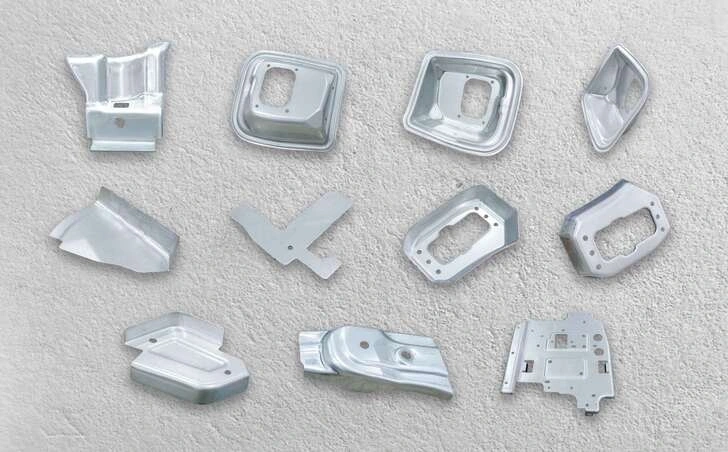
A product showcase displaying a diverse collection of precision deep-drawn stamping accessories from a trusted cross car beam supplier Vietnam.
15.2 Competitive advantages for OEM sourcing
15.2.1 Manufacturing cost efficiency
Vietnam provides global automotive procurement networks with an exceptionally competitive operational cost structure. Combining competitive direct technical labor structures with optimized factory overheads and high-speed automated equipment allows local suppliers like Automech to deliver substantial cost savings on both upfront progressive tooling development and ongoing per-part manufacturing costs.
15.2.2 Skilled automotive engineering workforce
Beyond cost advantages, Vietnam boasts a large, highly educated workforce of mechanical, electrical, and automation engineers. Driven by robust university programs in industrial engineering and robotics, local factories are staffed by talented technical professionals proficient in 3D CAD modeling, finite element analysis (FEA), and robotic path programming, allowing local suppliers to execute complex international automotive programs with exceptional precision.
16. AI Overview & Featured Snippet Section
16.1 People Also Ask (PAA) Questions
16.1.1 What is a cross car beam in automotive?
A cross car beam is a vital structural member spanning the width of the vehicle cabin beneath the dashboard that provides lateral reinforcement and acts as the central mounting backbone for the steering column, airbags, and cockpit electronics.
16.1.2 What materials are used for cross car beams?
Primary materials include High-Strength Steel (HSS) and Advanced High-Strength Steel (AHSS) for optimal crash energy absorption, along with lightweight 6000-series aluminum alloys to support vehicle mass-reduction targets.
16.1.3 Why source automotive structural parts from Vietnam?
Sourcing from Vietnam optimizes production costs, provides strategic supply chain diversification via the “China+1” strategy, and leverages a highly capable manufacturing ecosystem operating under duty-free global free trade agreements.
16.1.4 What is BIW manufacturing?
Body in White (BIW) manufacturing is the automotive production stage where sheet metal stampings and sub-assemblies are welded together to construct the bare structural frame of a vehicle before painting or final trim integration.
16.1.5 How to choose a cross car beam supplier?
A qualified supplier must possess high-tonnage stamping press capacity ($>1000\text{T}$), fully automated robotic welding lines, active third-party audited IATF 16949 quality certifications, and a proven track record of international export experience.
16.1.6 What is cross car beam welding assembly?
It is the automated joining process where individual stamped sheet metal brackets, reinforcement plates, and steering mounts are precision-welded onto the main cross car beam tube using multi-axis robotic spot and MIG welding cells.
16.1.7 What certifications should automotive suppliers have?
Automotive suppliers must maintain active ISO 9001 quality management certificates alongside full third-party compliance with the stringent IATF 16949 automotive manufacturing quality standard.
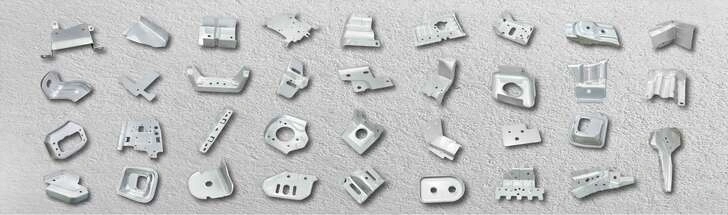
An expansive grid layout of various sheet metal automotive mounting hardware items engineered by a professional cross car beam supplier Vietnam.
16.2 Short Answers
16.2.1 Cross car beam definition
The cross car beam is a high-precision lateral structural component connecting the vehicle’s front A-pillars, engineered to eliminate steering vibrations and safeguard occupants by resisting lateral compartment intrusion during side crashes.
16.2.2 Vietnam automotive manufacturing advantages
Vietnam delivers advanced manufacturing capabilities, excellent cost structures, a deeply skilled engineering workforce, modern port infrastructure, and duty-free export access to major global automotive markets.
16.2.3 BIW supplier evaluation summary
A comprehensive BIW supplier evaluation prioritizes technical hardware capacity, in-house progressive tooling and fixture engineering, robust IATF 16949 process control, full component traceability, and proven international project management experience.
16.3 Featured Snippet Opportunities
16.3.1 Definition snippet (cross car beam)
What is a cross car beam?
A cross car beam (CCB) is a critical safety and structural component in automotive engineering that spans the full lateral width of the vehicle cabin behind the dashboard. It serves as the primary structural backbone for the cockpit, providing high-precision mounting interfaces for the steering column, passenger airbag module, HVAC blower, and instrument displays, while acting as a vital lateral cross-brace that reinforces the cabin structure to absorb and distribute kinetic energy during side-impact collisions.
16.3.2 List snippet (cross car beam manufacturing process)
What is the cross car beam manufacturing process?
- Coil Decoiling & Leveling: Feeding raw high-strength steel or aluminum coils through roller levelers to eliminate material residual stresses.
- Progressive Press Stamping: Utilizing high-tonnage press lines 1000 – 2000T and multi-stage progressive dies to stamp structural channels and brackets.
- Smart Fixture Clamping: Loading stamped components into precision pneumatic jigs equipped with electronic poka-yoke proximity sensors.
- Robotic Path Welding: Deploying multi-axis industrial robots for automated, laser-guided resistance spot welding and MIG welding.
- Anti-Corrosion CED Coating: Immersing the welded assembly in a Cathodic Electrodeposition line to apply a uniform protective epoxy layer.
- CMM Dimensional Metrology: Verifying component critical dimensions inside a climate-controlled laboratory using automated Coordinate Measuring Machines against master CAD files.
- Digital DataMatrix Traceability: Laser-etching a unique scannable 2D barcode onto the beam to link the component to its complete manufacturing history database.
16.3.3 Comparison table (Vietnam vs China automotive sourcing)
| Sourcing Optimization Metric | Sourcing from Cross Car Beam Supplier Vietnam | Sourcing from Traditional China Supply Base |
| Geopolitical & Tariff Risks | Ultra-Low (Stable trade environment; extensive FTAs) | Elevated due to volatile international trade adjustments |
| Manufacturing Overhead Cost | Exceptionally Competitive (Highly optimized overhead) | Escalating due to rising labor rates and industrial cost shifts |
| Supply Chain Concentration | Low (Establishes highly resilient secondary node) | High (Vulnerable to single-region disruptions) |
| Quality Framework Maturity | Outstanding (Full IATF 16949 core tools integration) | Mature (Highly capable but subject to capacity bottlenecks) |
| Engineering Team Availability | High (Large workforce of highly skilled professionals) | Massive (Expanding rapidly but facing high turnover rates) |
| Logistics Integration | Seamless via major deepwater ports (Haiphong/Cat Lai) | Extensive infrastructure but facing regional port congestion |
17. Internal Linking Strategy
17.1 Parent pillar links
17.1.1 Cross car beam manufacturer
To evaluate Automech’s broad corporate capabilities, heavy asset investments, and multi-year supply capacities, review our primary summary at cross car beam manufacturer.
17.1.2 BIW automotive manufacturer Vietnam
Discover why global OEMs partner with Automech to execute complex sheet metal contracts in Southeast Asia by visiting our regional page at BIW automotive manufacturer Vietnam.
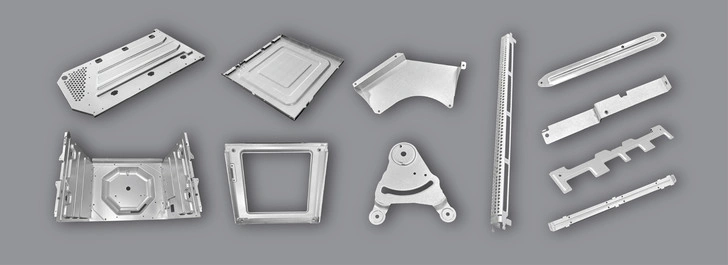
Product matrix image illustrating structural automotive brackets, long perforated profiles, and housing stampings from an industrial cross car beam supplier Vietnam.
17.2 Supporting cluster links
17.2.1 Cross car beam welding assembly
Analyze our technical breakdown of multi-axis robotic joining cells, laser-guided tracking parameters, and structural weld inspections via cross car beam welding assembly.
17.2.2 Body in white manufacturing
Review our facility capabilities regarding bare automotive chassis fabrication, multi-part body assembly, and heavy material handling gantries under body in white manufacturing.
17.2.3 Automotive stamping supplier Vietnam
Examine our complete press shop capabilities, including heavy hydraulic and mechanical progressive forming lines, at automotive stamping supplier Vietnam.
17.3 Supporting authority links
17.3.1 Automotive welding fixture
Learn how Automech integrates electronic mistake-proofing sensors and pneumatic clamping blocks into our in-house assembly jigs at automotive welding fixture.
17.3.2 Automotive tooling manufacturer
Explore our complete toolroom capabilities, multi-axis CNC machining, and AutoForm metal forming simulation workflows under automotive tooling manufacturer.
17.3.3 Automotive assembly fixture exporter
Review our international tracking capabilities, rust-preventative shipping packaging, and compliance metrics for shipping heavy tools globally via automotive assembly fixture exporter.
18. Conversion Section
18.1 Why choose Vietnam cross car beam suppliers
18.1.1 Cost, quality, and export advantages
Sourcing cross car beams from Vietnam provides global automotive brands with an exceptional combination of advanced manufacturing capabilities and optimized production economics. Local suppliers offer state-of-the-art automated infrastructure and highly competitive labor structures, enabling significant savings on upfront progressive tooling development and long-term per-unit production costs.
18.1.2 Automotive manufacturing scalability
Vietnam’s leading factories feature highly scalable industrial infrastructure and flexible operational models, backed by an extensive local supporting industry. This agile manufacturing ecosystem allows local suppliers to quickly adapt production volumes to support fluctuating market demands and handle sudden shifts in OEM vehicle delivery timelines efficiently.
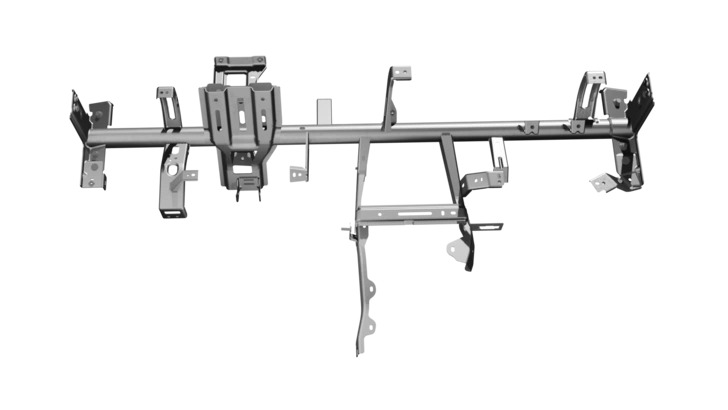
An isolated studio shot of an OEM automotive dashboard support structure engineered by a premier cross car beam supplier Vietnam.
18.2 Why choose Automech
18.2.1 Engineering-driven automotive manufacturing partner
Automech combines advanced industrial automation, high-tonnage metal forming assets, and deep automotive engineering expertise. Sourcing your cross car beam program from Automech ensures absolute control over structural weld safety, micron-level dimensional precision, and total component traceability.
18.2.2 Export-ready OEM support systems
From executing detailed metal forming simulations using advanced software to the delivery of full IATF 16949 core tools documentation and Level 3 PPAP packages, Automech provides international OEM buyers with comprehensive engineering and logistical support through every phase of the product development lifecycle.
18.3 CTA Strategy
18.3.1 Request RFQ
Ready to optimize your automotive structural supply chain with a highly capable strategic partner in Vietnam? Sourcing managers are invited to contact Automech’s business engineering division today to submit a formal request for quotation (RFQ) for your cross car beam program.
18.3.2 Upload technical drawings
Speed up your product development cycle. Securely transmit your 2D technical blueprints and 3D CAD assemblies directly to our tooling center. Our engineering team will review your files and provide a comprehensive manufacturing and cost assessment within days.
18.3.3 Contact automotive engineering team
Have specific technical questions regarding high-strength steel formability, tool springback compensation, or robotic welding fixture requirements? Contact Automech’s dedicated automotive engineering team directly to schedule a detailed technical consultation.
18.3.4 Request manufacturing feasibility analysis
Partner with Automech to leverage our advanced computer-aided engineering systems. Contact us today to request a comprehensive AutoForm metal forming simulation and a detailed tooling feasibility analysis for your upcoming high-volume structural vehicle programs.A
———————————————————————————————
Automech Mechanical Equipment and Solutions Joint Stock Company
Head Office: No. 285 Phuc Loi Street, Phuc Loi Ward, Hanoi City
Da Nang Branch: No. 20 Nguyen Sinh Sac Street, Hoa Khanh Ward, Da Nang City
Ho Chi Minh Branch: No. 84, Street No. 10, Van Phuc Urban Area, Hiep Binh Ward, Ho Chi Minh City
Factory No. 1: Automech Automation Equipment, Mold & Tool Manufacturing Factory – Automech Demo Center: Dinh Tram Industrial Park, Nenh Ward, Bac Ninh City, Vietnam
Factory No. 2: Automech Parts Manufacturing & Component Fabrication Factory: Viet Nhat Industrial Cluster, Xuan Cam Commune, Bac Ninh City, Vietnam
Hotline: 0396 886 852
Website: https://automechmfg.com/
Fanpage: https://www.facebook.com/automech.mfg/
YouTube: https://www.youtube.com/@Automechmfg