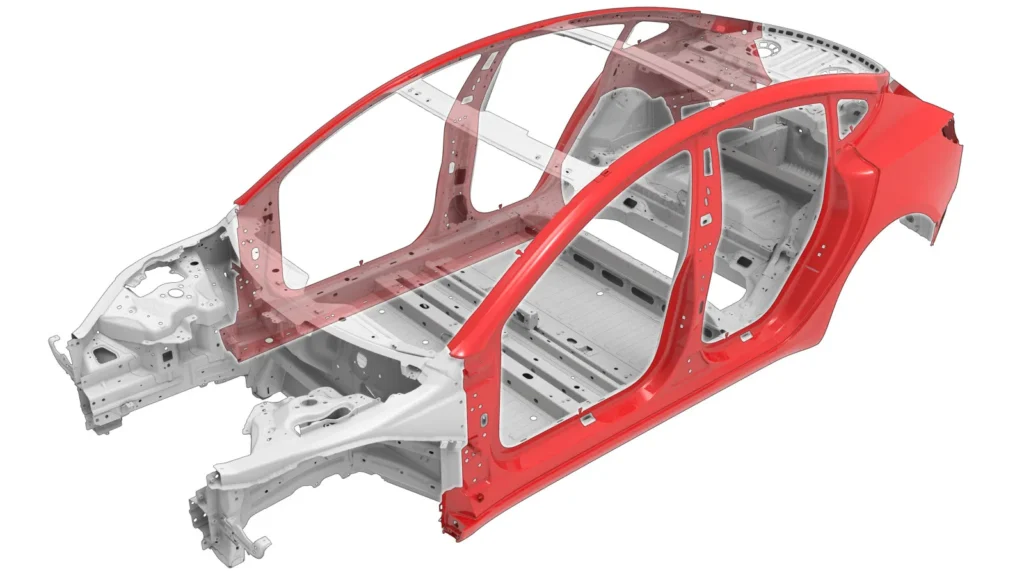
Custom CNC milling has become an essential manufacturing solution for companies that need precise, flexible, and project-specific machined parts. Unlike standard machining for common components, custom CNC milling is designed around each customer’s CAD drawings, technical specifications, material requirements, and production goals. For OEMs, industrial manufacturers, and global buyers, this process helps improve part performance, shorten development cycles, and support reliable production from prototype to mass manufacturing.
1. Introduction: Why Custom CNC Milling Is Essential for Modern Manufacturing
1.1 Growing Demand for Custom CNC Milling
1.1.1 Increasing complexity of OEM components
Modern OEM components are becoming more complex in terms of geometry, tolerance, material, and functional requirements. Many parts now require precise surfaces, multiple machining features, lightweight structures, and strict assembly compatibility. Custom CNC milling allows manufacturers to produce these engineered components according to exact design requirements.
1.1.2 Product customization across global industries
Global industries are moving away from one-size-fits-all components toward more customized product designs. Automotive, automation, electronics, machinery, and energy companies often require parts tailored to specific equipment, assemblies, or operating conditions. Custom CNC milling supports this trend by enabling flexible production based on customer drawings.
1.2 Supply Chain Transformation
1.2.1 China+1 manufacturing strategy
Many global manufacturers are restructuring their supply chains through the China+1 strategy to reduce dependency on a single production base. This shift has increased demand for reliable CNC machining suppliers in alternative manufacturing destinations. Custom CNC milling plays an important role because it supports engineered parts, prototypes, and OEM production programs.

Custom CNC Milling enables manufacturers to produce components tailored to specific design and performance requirements
1.2.2 Why manufacturers are sourcing custom CNC milling from Vietnam
Vietnam is becoming a strong sourcing destination for custom CNC milling due to its competitive production costs and growing precision manufacturing capability. The country has developed a skilled engineering workforce and an increasingly mature industrial supply chain. For international buyers, Vietnam offers a practical balance between cost, quality, and delivery reliability.
1.3 Benefits of Custom CNC Milling for OEMs
1.3.1 Engineering flexibility
Custom CNC milling gives OEMs greater freedom to develop components based on specific performance and assembly needs. Engineers can adjust dimensions, materials, tolerances, and machining features during the product development process. This flexibility is especially valuable for prototypes, design improvements, and customized production parts.
1.3.2 Faster product development and market launch
With CAD/CAM programming and automated CNC machining, custom parts can be developed and produced faster than many traditional manufacturing methods. Prototype parts can be machined, tested, modified, and improved before moving to batch or mass production. This shortens the engineering cycle and reduces delays in product launch. For competitive industries, faster development can create a significant business advantage.
2. What Is Custom CNC Milling?
2.1 Definition of Custom CNC Milling
2.1.1 CNC milling based on customer-specific CAD drawings
Custom CNC milling is a precision machining process that produces parts based on customer-specific CAD models, 2D drawings, and technical requirements. Instead of manufacturing standard parts, the process is tailored to each project. Engineers review the drawing, select the right machining strategy, and program the CNC machine accordingly.
2.1.2 Precision manufacturing for customized components
Custom CNC milling is used to manufacture precision components that require exact dimensions, specific materials, and reliable quality. It is suitable for complex shapes, tight tolerance features, mounting surfaces, holes, pockets, slots, and multi-side machining. The process supports both functional prototypes and end-use production parts.
2.2 How Custom CNC Milling Works
2.2.1 CAD/CAM programming
The custom CNC milling process begins with CAD/CAM programming. Engineers convert the customer’s 3D model or technical drawing into machining instructions, including toolpaths, cutting speeds, tool selection, and machining sequences. CAM programming helps optimize accuracy, cycle time, and surface quality.
2.2.2 Automated machining with CNC milling centers
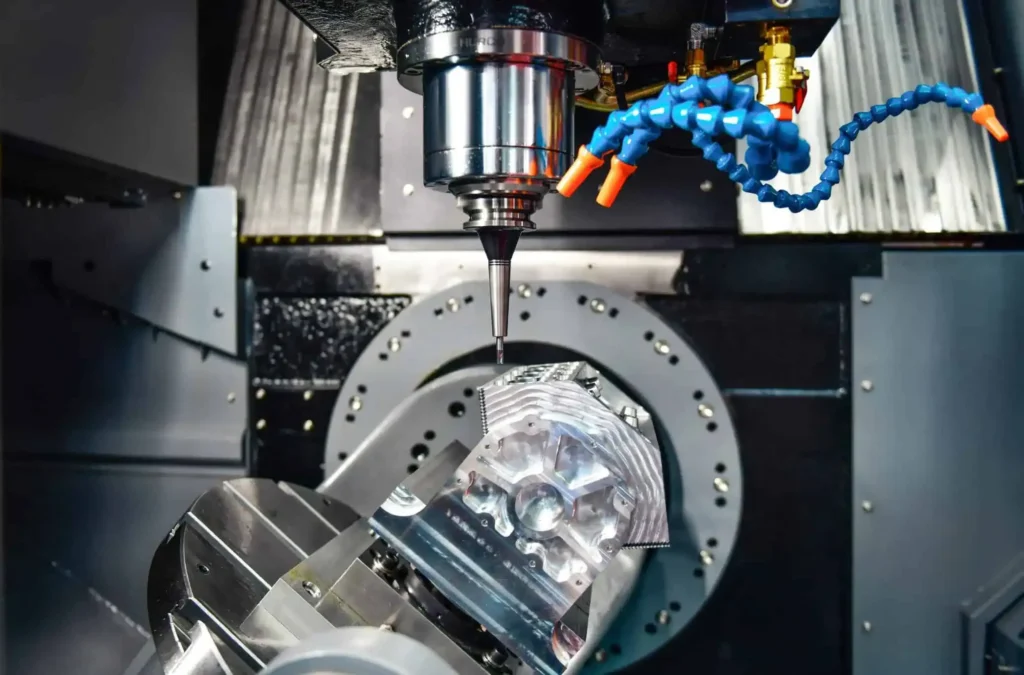
Once programming and setup are completed, the CNC milling center performs the machining process automatically. Cutting tools remove material from the workpiece according to the programmed toolpaths. Depending on part complexity, production may use 3-axis, 4-axis, or 5-axis CNC milling machines.
2.3 Key Benefits of Custom CNC Milling
2.3.1 High precision and repeatability
Custom CNC milling delivers excellent precision because each machining movement is controlled by a digital program. Once the process is optimized, the same part can be produced repeatedly with consistent dimensions and quality. This repeatability is important for OEM production, where every component must fit correctly within larger assemblies.
2.3.2 Flexible production from prototype to mass production
Custom CNC milling supports a wide range of production volumes, from one-off prototypes to medium and high-volume manufacturing. Manufacturers can start with prototype samples, validate the design, and then scale up to batch or mass production. This flexibility reduces development risk and allows buyers to adjust production according to demand.

Custom CNC Milling provides tailored machining solutions for components with unique design and performance requirements
2.3.3 Reduced assembly and manufacturing costs
Accurate custom CNC milled parts can reduce assembly issues, minimize manual adjustment, and improve production efficiency. When components are manufactured to the correct dimensions from the beginning, downstream processes become more stable. DFM review can also simplify part geometry and reduce unnecessary machining time.
3. Custom CNC Milling vs Standard CNC Milling
3.1 Key Differences
3.1.1 Standardized parts vs engineered custom parts
Standard CNC milling is often used to produce common parts with predefined dimensions or simple machining requirements. Custom CNC milling, on the other hand, is designed for engineered parts based on specific customer drawings and applications. It considers unique geometry, tolerance, material, and functional requirements.
3.1.2 Fixed production vs project-specific manufacturing
Standard milling typically follows fixed machining processes for repeated or general-purpose components. Custom CNC milling requires a project-specific approach, including drawing review, programming, fixture planning, material selection, and inspection requirements. Each project may need different tools, setups, and quality controls. This approach gives customers greater control over the final part design and performance.
3.2 Advantages of Custom CNC Milling
3.2.1 Design flexibility
Custom CNC milling allows engineers to create parts that match specific assembly, performance, and installation requirements. Features such as pockets, slots, holes, contours, and complex surfaces can be designed according to the application. This design flexibility is difficult to achieve with standard parts.
3.2.2 Better product performance
Because custom CNC milled parts are designed for a specific purpose, they often deliver better performance than standard components. Material, geometry, tolerance, and surface finish can all be optimized for the operating environment. This leads to improved durability, fit, and reliability. For critical applications, custom machining helps ensure that each part performs exactly as required.
3.2.3 Faster engineering modifications
When a design needs to be improved, custom CNC milling allows fast engineering modifications through CAD/CAM updates. Changes can be made to the digital model and machining program without creating expensive molds or dies. This shortens the product improvement cycle and supports faster design validation.
3.3 Limitations and Considerations
3.3.1 Engineering preparation requirements
Custom CNC milling requires clear engineering information before production begins. Buyers should provide complete CAD files, 2D drawings, material specifications, tolerances, and surface finish requirements. Missing information may delay quotation, programming, and production.
3.3.2 Programming and setup costs
Because each custom part requires individual programming, fixture setup, and machining planning, initial costs can be higher than standard production. These costs are especially noticeable for prototypes or small batches. However, they can be reduced when production volume increases or when designs are optimized for manufacturability.
3.4 Comparison Table
3.4.1 Custom CNC Milling vs Standard CNC Milling
| Criteria | Custom CNC Milling | Standard CNC Milling |
| Design basis | Customer-specific CAD drawings and requirements | Standard dimensions or simple specifications |
| Best for | OEM parts, prototypes, complex components | General-purpose or repeated simple parts |
| Engineering input | High, with DFM and CAD/CAM review | Lower, often based on existing process |
| Flexibility | Excellent flexibility in design and material selection | Limited customization |
| Setup requirement | Project-specific setup and programming | More standardized setup |
| Cost structure | Higher initial setup, better for optimized custom production | Lower setup for simple standard parts |
| Typical applications | Automotive, automation, machinery, electronics, tooling | Basic plates, simple brackets, standard machined parts |
4. Complete Custom CNC Milling Manufacturing Workflow

Companies rely on Custom CNC Milling to create complex parts with tight tolerances and exceptional dimensional accuracy
4.1 Customer Requirement Analysis
4.1.1 Drawing review
Every custom CNC milling project begins with a detailed review of the customer’s CAD files and technical drawings. Engineers evaluate dimensions, tolerances, materials, machining features, and assembly requirements. This review ensures the design can be manufactured efficiently while meeting all functional specifications.
4.1.2 Technical requirement clarification
After reviewing the drawings, engineers confirm important technical details with the customer. These may include material grades, surface finish requirements, inspection methods, production quantity, and delivery schedules. Clear communication minimizes misunderstandings and helps establish an efficient production plan from the start.
4.2 Design for Manufacturability (DFM)
4.2.1 Machining feasibility review
A Design for Manufacturability (DFM) review evaluates whether the part can be machined efficiently using available CNC equipment. Engineers assess machining accessibility, tool selection, fixture requirements, and production risks.
4.2.2 Cost optimization recommendations
DFM also provides recommendations for reducing production costs while maintaining part performance. Engineers may suggest modifying machining features, adjusting tolerances, or selecting more suitable materials.
4.3 Material Selection
4.3.1 Material performance analysis
Selecting the right material is essential for ensuring product performance and durability. Engineers evaluate strength, hardness, corrosion resistance, weight, and thermal properties according to the application. The final material should balance engineering requirements with manufacturing efficiency.
4.3.2 Material certification requirements
Many OEM projects require certified raw materials to ensure product quality and traceability. Material certificates verify chemical composition, mechanical properties, and compliance with customer specifications.
4.4 CAD/CAM Programming
4.4.1 Toolpath optimization
CAM engineers develop optimized toolpaths to maximize machining efficiency and part quality. Proper toolpath planning reduces machining time, improves cutting stability, and extends tool life. Optimized programming also contributes to better surface finishes and dimensional accuracy.
4.4.2 Machining simulation
Before production begins, machining simulations verify that toolpaths are safe and collision-free. Engineers can detect programming errors, optimize machining sequences, and improve cycle times virtually. Simulation reduces production risks while improving manufacturing reliability.

Custom CNC Milling enables manufacturers to produce complex parts with tight tolerances and high dimensional accuracy
4.5 Fixture Design
4.5.1 Custom workholding solutions
Complex custom parts often require specially designed fixtures to secure the workpiece during machining. Proper workholding prevents movement and ensures stable cutting conditions throughout production. Custom fixtures also improve repeatability for batch manufacturing.
4.5.2 Dimensional stability
Fixture design directly affects machining accuracy and dimensional consistency. Well-designed fixtures minimize vibration, deformation, and positioning errors during machining. Stable workholding is especially important for thin-wall or high-precision components.
4.6 CNC Milling Production
4.6.1 Prototype machining
Prototype machining allows manufacturers to verify part dimensions, assembly fit, and overall functionality before mass production. Design improvements can be implemented quickly based on prototype evaluation.
4.6.2 Batch production
After prototype approval, production moves to batch manufacturing for small or medium production volumes. Standardized machining processes ensure consistent quality across all parts. Batch production also provides flexibility for changing customer demand.
4.6.3 Mass production
For long-term OEM projects, CNC milling supports efficient mass production with stable machining parameters and optimized workflows. Automated machining and standardized quality control improve productivity while maintaining repeatable accuracy.
4.7 Inspection and Quality Verification
4.7.1 In-process inspection
Critical dimensions are monitored throughout machining to ensure production remains within specified tolerances. Operators perform regular inspections using precision measuring equipment before production continues. Early inspection minimizes scrap and improves manufacturing consistency.
4.7.2 Final inspection
Finished components undergo comprehensive dimensional and visual inspection before shipment. CMMs and other precision instruments verify compliance with customer drawings and quality requirements. Only qualified parts proceed to packaging and delivery.
4.8 Packaging and Export
4.8.1 Export packaging standards
Precision machined components are carefully packaged to prevent damage during transportation. Packaging methods are selected based on product size, weight, material, and shipping conditions. Proper protection ensures parts arrive in excellent condition.
4.8.2 Global logistics support
Export-ready manufacturers provide complete logistics support, including documentation, customs preparation, and international shipping coordination. Professional logistics management helps ensure on-time delivery and smooth international transactions.
5. CNC Milling Capabilities

Custom CNC Milling supports a wide range of materials, including aluminum, steel, stainless steel, brass, and engineering plastics
5.1 3-Axis CNC Milling
5.1.1 Standard precision components
Three-axis CNC milling is ideal for manufacturing standard precision components with relatively simple geometries. It efficiently machines flat surfaces, holes, slots, and pockets while maintaining excellent dimensional accuracy.
5.1.2 Cost-effective production
Because of its straightforward setup and machining process, 3-axis milling offers an economical solution for many production projects. It delivers high productivity while keeping programming and machining costs relatively low.
5.2 4-Axis CNC Milling
5.2.1 Multi-side machining
Four-axis CNC milling enables machining on multiple sides of a component without repeated manual repositioning. This capability improves productivity while allowing more complex machining operations.
5.2.2 Reduced setup time
Fewer setups reduce cumulative positioning errors and improve dimensional consistency. Shorter setup times also increase machine utilization and production efficiency. This results in lower manufacturing costs for medium-complexity components.
5.3 5-Axis CNC Milling
5.3.1 Complex geometry machining
Five-axis CNC milling is designed for highly complex components requiring simultaneous machining from multiple directions. Intricate contours, deep cavities, and angled features can often be completed in a single setup. This significantly improves precision and machining efficiency.
5.3.2 Aerospace and automotive applications
Industries such as aerospace and automotive frequently require five-axis machining for high-value precision components. These applications demand exceptional dimensional accuracy and superior surface quality. Five-axis technology supports the production of critical parts with demanding engineering requirements.
5.4 Production Capacity
5.4.1 Prototype manufacturing
Prototype machining allows customers to evaluate product performance before full-scale production. Rapid turnaround supports faster product development and engineering validation. This stage reduces technical risks before production expansion.
5.4.2 Low-volume production
Low-volume production is ideal for customized products, replacement parts, and pilot manufacturing. Flexible CNC milling processes allow manufacturers to produce small quantities efficiently without expensive tooling. This supports projects with variable demand.
5.4.3 High-volume OEM manufacturing
Modern CNC machining centers can support stable high-volume production with consistent quality and repeatability. Optimized machining strategies and standardized quality systems improve manufacturing efficiency. High-volume production also reduces cost per part over time.
5.5 Tight Tolerance Machining
5.5.1 High precision capability
Advanced CNC milling systems are capable of producing components with extremely tight dimensional tolerances. Machine stability, precision tooling, and optimized machining strategies all contribute to high machining accuracy. This capability is essential for demanding OEM applications.
5.5.2 Surface finish performance
Excellent surface quality is achieved through optimized cutting parameters, high-quality tooling, and stable machining conditions. Smooth surface finishes improve both product appearance and functional performance. Secondary finishing processes can also be applied when required.
6. Materials Available for Custom CNC Milling

Advanced Custom CNC Milling technology supports a wide range of materials, including aluminum, steel, stainless steel, and brass
6.1 Aluminum Alloys
6.1.1 Automotive aluminum CNC milling
Aluminum alloys are widely used in automotive manufacturing because they combine lightweight properties with excellent machinability. CNC milling produces battery housings, structural brackets, motor components, and other lightweight precision parts. These components contribute to improved vehicle efficiency and performance.
6.1.2 Lightweight structural components
Beyond automotive applications, aluminum is also used for robotics, industrial equipment, electronics, and automation systems. Its high strength-to-weight ratio makes it ideal for structural components where weight reduction is important. CNC milling produces complex aluminum parts with excellent dimensional stability.
6.2 Carbon Steel
6.2.1 Industrial mechanical parts
Carbon steel is commonly selected for industrial machinery requiring high mechanical strength and durability. It is widely used for fixtures, machine frames, brackets, shafts, and tooling components. CNC milling produces accurate steel parts capable of withstanding demanding operating conditions.
6.2.2 High-strength applications
For heavy-duty industrial applications, carbon steel provides excellent load-bearing capability and wear resistance. Proper machining strategies ensure stable production despite the material’s higher hardness.
6.3 Stainless Steel
6.3.1 Corrosion-resistant components
Stainless steel offers outstanding corrosion resistance for harsh operating environments. CNC milling produces precision components for chemical processing, marine equipment, and outdoor industrial applications. The material also provides excellent durability and long service life.
6.3.2 Medical and food equipment
Because of its hygienic properties, stainless steel is widely used in food processing and medical equipment. Precision CNC milling produces clean, smooth surfaces that are easy to maintain and sterilize. These industries require both dimensional accuracy and strict material quality.
6.4 Copper & Brass
6.4.1 Electrical applications
Copper and brass provide excellent electrical conductivity for electrical and electronic components. CNC milling manufactures connectors, busbars, terminals, and conductive assemblies with high precision. Accurate machining ensures reliable electrical performance.
6.4.2 Heat transfer components
Copper’s outstanding thermal conductivity makes it suitable for heat sinks, cooling plates, and thermal management systems. CNC milling creates intricate cooling channels and precision surfaces that improve heat dissipation. These components are widely used in electronics and industrial equipment.
6.5 Titanium
6.5.1 High-performance engineering
CNC milling is used to produce complex titanium components for demanding engineering applications. Although machining titanium requires specialized expertise, it delivers excellent long-term performance.
6.5.2 Aerospace and medical applications
Titanium is widely used in aerospace structures, aircraft components, surgical instruments, and medical implants. Through precision CNC milling, high-value components can consistently meet demanding technical and regulatory requirements. Accurate machining is critical for safety-critical applications.
6.6 Engineering Plastics

Custom CNC Milling is ideal for producing prototypes, small batches, and high-volume production components
6.6.1 POM
POM offers excellent dimensional stability, wear resistance, and low friction for precision mechanical components. It is commonly used for gears, bushings, rollers, and sliding mechanisms. CNC milling produces high-quality POM parts with tight tolerances.
6.6.2 Nylon
Nylon provides good toughness, impact resistance, and wear performance. CNC milled nylon components are widely used in industrial machinery, automation systems, and mechanical assemblies. Its lightweight properties also reduce overall equipment weight.
6.6.3 PTFE
PTFE is valued for its low friction coefficient, excellent chemical resistance, and non-stick properties. CNC milling manufactures seals, bearings, guides, and chemical-resistant components from PTFE.
6.6.4 PEEK
PEEK is a high-performance engineering plastic known for its exceptional strength, temperature resistance, and chemical stability. CNC milling produces precision PEEK components for aerospace, medical, semiconductor, and industrial applications where premium material performance is required.
6.7 Material Selection Guide
6.7.1 Performance comparison
Each engineering material offers different advantages in strength, weight, corrosion resistance, machinability, and operating temperature. Engineers evaluate these characteristics according to the product’s intended application. Proper material selection improves both product performance and manufacturing efficiency.
6.7.2 Cost-performance optimization
The ideal material should provide the required engineering performance without unnecessary manufacturing cost. Engineers balance material price, machining efficiency, product durability, and lifecycle performance when making recommendations.
7. Quality Assurance System
7.1 ISO 9001 Quality Management
7.1.1 Process standardization
ISO 9001 establishes standardized procedures for every stage of the manufacturing process, from engineering review to final inspection. Documented workflows help reduce variation, improve production consistency, and ensure repeatable product quality. Standardization also enables manufacturers to respond more effectively to customer requirements and continuous improvement initiatives.
7.1.2 Continuous improvement
Continuous improvement is a core principle of ISO 9001 quality management. Manufacturers regularly analyze production data, identify improvement opportunities, and implement corrective actions to enhance efficiency and product quality. This systematic approach helps reduce defects while increasing customer satisfaction.

With Custom CNC Milling, manufacturers can efficiently produce both prototype parts and high-volume production runs
7.2 IATF 16949 Automotive Quality
7.2.1 Automotive supplier requirements
IATF 16949 is the global quality management standard for automotive manufacturing. It requires suppliers to implement advanced quality planning, risk management, defect prevention, and process control throughout production. Compliance demonstrates the capability to support demanding automotive manufacturing programs.
7.2.2 OEM compliance
Automotive OEMs expect suppliers to maintain strict quality systems that ensure consistent production performance. IATF 16949 supports compliance with these expectations by emphasizing standardized processes, traceability, and continuous monitoring. This helps suppliers build long-term partnerships within the automotive supply chain.
7.3 Dimensional Inspection
7.3.1 CMM inspection
Coordinate Measuring Machines (CMMs) provide highly accurate dimensional inspection for complex machined components. They compare finished parts against CAD models or engineering drawings to verify compliance with specified tolerances. CMM inspection is widely used for first article inspection and final quality verification.
7.3.2 First Article Inspection (FAI)
First Article Inspection validates the first manufactured component before full production begins. Critical dimensions, materials, and functional features are carefully checked against customer specifications. FAI helps identify potential issues early, reducing production risks and improving overall manufacturing consistency.
7.4 Statistical Process Control (SPC)
7.4.1 Process capability monitoring
Statistical Process Control (SPC) uses measurement data to monitor manufacturing performance throughout production. Engineers analyze trends to ensure machining processes remain within acceptable control limits.
7.4.2 Process stability
Maintaining process stability is essential for achieving repeatable machining quality. Regular monitoring of machine performance, tooling condition, and critical dimensions helps minimize production variation. Stable processes improve productivity while reducing scrap and rework.
7.5 PPAP Documentation
7.5.1 Production Part Approval Process
Production Part Approval Process (PPAP) verifies that manufacturing processes can consistently produce components meeting customer requirements. Documentation typically includes dimensional results, material certifications, process flow diagrams, and control plans. PPAP is widely required for automotive production projects.
7.5.2 Customer approval package
The PPAP package provides customers with comprehensive documentation supporting product approval before serial production. It demonstrates that manufacturing processes have been validated and are capable of producing conforming parts consistently. Complete documentation increases customer confidence and simplifies project approval.
7.6 Traceability System
7.6.1 Material traceability
Material traceability links every finished component to its raw material batch and certification records. This enables manufacturers to quickly verify material origins and support quality investigations when necessary. Traceability is particularly important for automotive, aerospace, and industrial applications.
7.6.2 Manufacturing traceability
Manufacturing traceability records machining operations, inspection results, production dates, and operator information throughout the manufacturing process. Complete production history supports quality audits, corrective actions, and continuous improvement.

Manufacturers use Custom CNC Milling to achieve consistent quality and repeatable results across different production runs
7.7 Inspection Reports
7.7.1 Dimensional reports
Dimensional inspection reports document measurement results for critical product features and verify compliance with engineering drawings. These reports provide objective evidence that manufactured components meet customer specifications. They are commonly included with OEM and export shipments.
7.7.2 Material certificates
Material certificates confirm the chemical composition, mechanical properties, and compliance of raw materials used in production. They provide traceable documentation supporting product quality and regulatory requirements. Many international customers require material certificates as part of the final delivery package.
8. Industries Served
8.1 Automotive Industry
8.1.1 OEM production
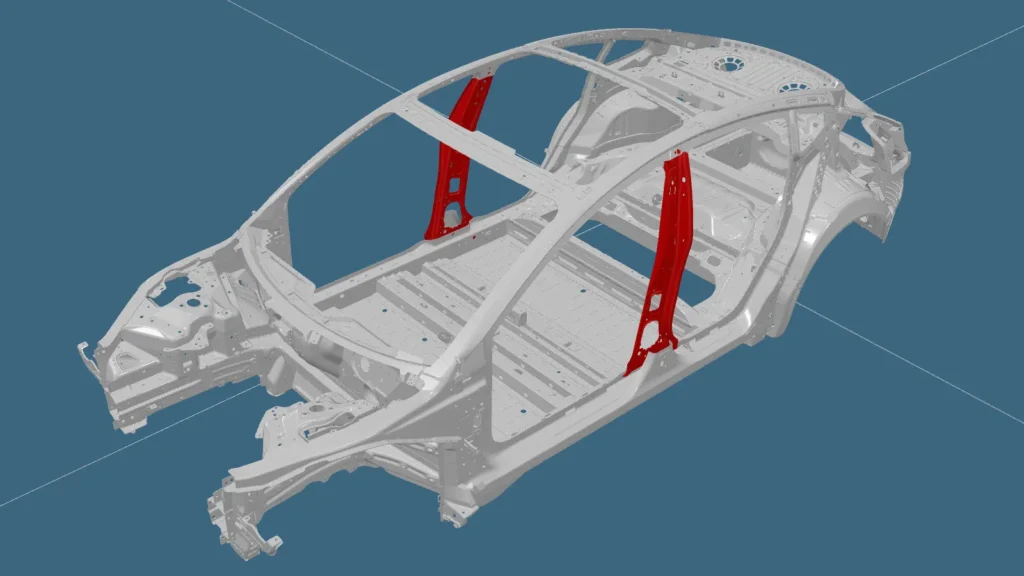
Custom CNC milling supports automotive OEMs by manufacturing precision components that meet strict dimensional and quality requirements. Typical applications include structural parts, battery components, engine housings, and transmission assemblies. Consistent machining quality ensures reliable vehicle performance and efficient assembly.
8.1.2 Tier 1 & Tier 2 suppliers
Tier 1 and Tier 2 automotive suppliers rely on custom CNC milling to manufacture production components and supporting assemblies. Precision machining enables suppliers to meet demanding delivery schedules and international quality standards. Stable manufacturing processes also support long-term supply agreements.
8.2 Industrial Machinery
8.2.1 Machine components
Industrial machinery requires precision machined components such as brackets, housings, mounting plates, guides, and tooling parts. Custom CNC milling delivers accurate dimensions and repeatable quality for equipment operating under demanding conditions. Reliable machining contributes to improved machine performance and service life.
8.2.2 Heavy equipment
Heavy industrial equipment often requires large, durable machined components capable of withstanding high mechanical loads. CNC milling supports the production of precision parts used in construction machinery, mining equipment, agricultural systems, and industrial processing plants. Strong material selection and accurate machining are essential for these applications.
8.3 Factory Automation
8.3.1 Robotics
Robotic systems require precision-machined components to ensure accurate movement and reliable operation. CNC milling produces structural frames, mounting brackets, end-effector components, and precision housings for robotic applications. Tight tolerances help maintain positioning accuracy throughout the automation system.

Professional Custom CNC Milling services can accommodate complex geometries, intricate features, and application-specific designs
8.3.2 Automation systems
Automation equipment includes numerous custom machined components that support conveyors, fixtures, inspection stations, and production lines. CNC milling provides the flexibility needed to manufacture customized automation parts based on unique project requirements. High repeatability is essential for efficient automated production.
8.4 Energy Industry
8.4.1 Renewable energy components
Renewable energy systems require precision components for wind turbines, solar equipment, battery storage systems, and power generation infrastructure. Custom CNC milling supports the production of durable components capable of operating in demanding environments. Accurate machining contributes to long-term system reliability.
8.4.2 Oil & gas equipment
The oil and gas industry requires high-strength precision components that operate under extreme temperatures and pressures. CNC milling manufactures valves, housings, mounting systems, and mechanical components using corrosion-resistant materials. Strict quality control ensures operational safety and performance.
8.5 Electronics Industry
8.5.1 Precision housings
Electronic devices require precision housings that protect sensitive components while maintaining accurate assembly dimensions. CNC milling produces aluminum and engineering plastic enclosures with excellent surface quality and dimensional accuracy. These housings are commonly used in industrial electronics and control systems.
8.5.2 Heat dissipation components
Efficient thermal management is essential for modern electronic equipment. CNC milling manufactures heat sinks, cooling plates, and thermal management components with complex fin structures and precise machining features. These parts improve heat transfer and system reliability.
8.6 Medical Industry (If Applicable)
8.6.1 Precision medical parts
Custom CNC milling is also used to manufacture precision medical components where high accuracy and material quality are critical. Applications include surgical instruments, diagnostic equipment, and specialized medical devices. Strict manufacturing control ensures product reliability and consistency.
8.6.2 Laboratory equipment
Laboratory equipment often incorporates custom machined parts requiring precise dimensions and excellent surface quality. CNC milling produces precision fixtures, instrument housings, mounting systems, and analytical equipment components. Reliable machining supports accurate laboratory performance.
9. Automotive Custom CNC Milling Applications
9.1 Engine Components
9.1.1 Engine housings
Engine housings require high dimensional accuracy to ensure proper sealing, alignment, and assembly with other engine components. Custom CNC milling produces complex housings with precision-machined mounting surfaces, internal cavities, and critical interfaces. Accurate machining contributes to reliable engine performance.
9.1.2 Mounting components
Engine mounting brackets and support components must withstand continuous vibration and mechanical loads. CNC milling produces these parts with consistent accuracy and structural integrity. Proper machining ensures secure installation and long-term durability.
9.2 Transmission Components

Custom CNC Milling is widely used in the automotive, aerospace, electronics, and industrial equipment industries
9.2.1 Gearbox housings
Gearbox housings require precision machining to maintain correct gear alignment and bearing positioning. CNC milling creates complex internal features and mounting surfaces while meeting tight dimensional tolerances. Accurate machining supports smooth transmission operation.
9.2.2 Precision mechanical parts
Transmission systems contain numerous precision machined components that require exact dimensional control. CNC milling manufactures covers, support brackets, bearing housings, and other critical mechanical parts. Consistent machining quality improves drivetrain reliability and performance.
9.3 Electric Vehicle Components
9.3.1 Battery housings
Battery housings protect EV battery modules while providing structural support and thermal management. CNC milling produces lightweight aluminum housings with precise sealing surfaces and mounting features. High machining accuracy is essential for battery safety and system integration.
9.3.2 Cooling system components
Electric vehicles rely on efficient cooling systems to maintain battery and power electronics performance. CNC milling manufactures cooling plates, manifolds, and heat transfer components with complex internal geometries. Precision machining improves cooling efficiency and product reliability.
9.4 Structural Components
9.4.1 Precision brackets
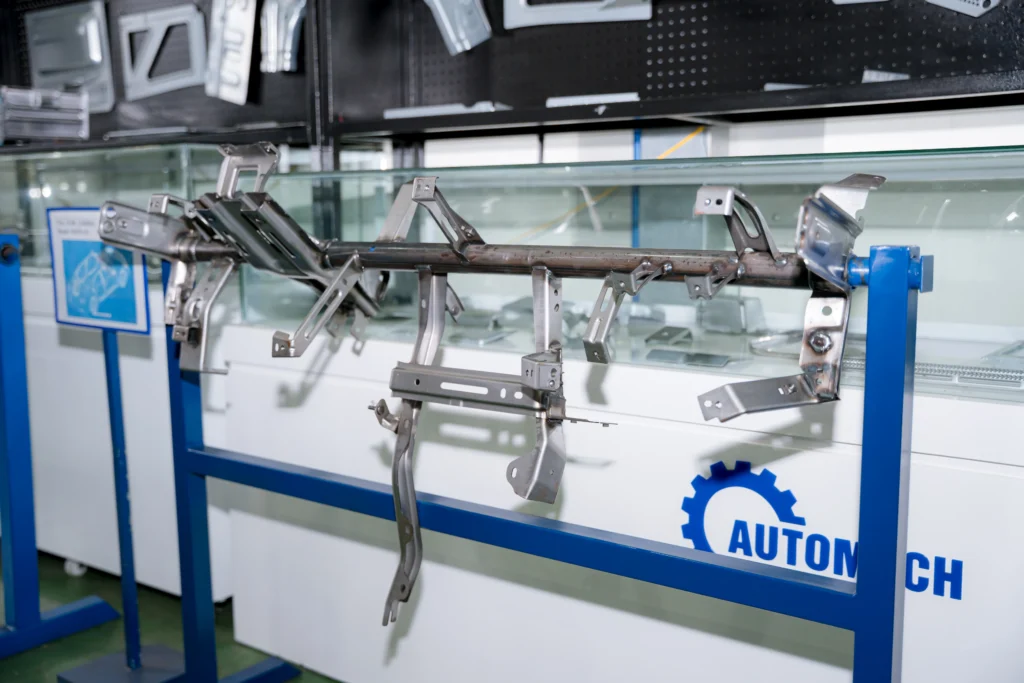
Precision brackets are widely used throughout automotive assemblies to support electrical systems, battery modules, sensors, and structural components. CNC milling ensures these parts meet strict dimensional requirements while maintaining excellent repeatability. Accurate brackets simplify vehicle assembly and improve long-term reliability.
9.4.2 Mounting systems
Custom mounting systems provide secure attachment points for automotive modules and mechanical assemblies. CNC milling enables manufacturers to produce application-specific mounting solutions with optimized strength, weight, and dimensional accuracy. These components contribute to improved vehicle performance and manufacturing efficiency.
10. Pricing Factors for Custom CNC Milling
10.1 Material Cost
10.1.1 Material selection
The choice of material significantly affects the overall machining cost. Engineering materials differ in price, machinability, availability, and cutting requirements. Selecting the most appropriate material helps balance product performance with manufacturing efficiency.
10.1.2 Raw material availability
Material availability can influence both pricing and lead time. Standard materials are generally easier to source, while specialty alloys may require longer procurement periods and higher costs. Early material planning helps minimize production delays.
10.2 Machining Complexity
10.2.1 Multi-axis machining
Components requiring 4-axis or 5-axis machining generally involve longer programming, more complex setups, and higher machine utilization. Although multi-axis machining increases production cost, it also improves accuracy and reduces secondary operations for complex parts.

Custom CNC Milling helps businesses optimize component performance while maintaining efficient production costs
10.2.2 Complex geometry
Intricate features such as deep pockets, thin walls, curved surfaces, and tight internal corners increase machining difficulty. More complex geometries often require specialized cutting tools, additional machining operations, and longer cycle times.
10.3 Tolerance Requirements
10.3.1 Standard tolerance
Components with standard industrial tolerances are generally faster and more economical to manufacture. Standard machining processes require fewer inspection steps while still meeting most industrial applications. This helps reduce production cost and lead time.
10.3.2 Tight tolerance
Tight-tolerance machining requires greater machine precision, advanced tooling, and additional quality inspection. Achieving extremely accurate dimensions often increases machining time and production complexity. These requirements contribute to higher manufacturing costs but deliver superior product performance.
10.4 Production Volume
10.4.1 Prototype
Prototype production typically has the highest cost per part because programming and setup expenses are distributed across only a few components. However, prototypes provide valuable engineering validation before production scaling.
10.4.2 Small batch
Small-batch production reduces unit costs by spreading setup expenses across more parts while maintaining production flexibility. This manufacturing approach is suitable for pilot production and customized orders.
10.4.3 Mass production
Mass production achieves the lowest unit cost through optimized machining processes, standardized workflows, and efficient machine utilization. Larger production volumes significantly improve manufacturing efficiency.
10.5 Tooling & Fixture Cost
10.5.1 Custom fixtures
Complex custom components often require dedicated fixtures to ensure machining accuracy and repeatability. Fixture design and manufacturing add to the initial project investment but improve production efficiency during manufacturing.
10.5.2 Cutting tools
Specialized cutting tools may be required depending on the material, geometry, and tolerance requirements. Tool wear and replacement costs are also considered during quotation preparation.
10.6 Surface Finish
10.6.1 Machined finish
Many CNC milled components only require a standard machined surface finish that is achieved during the primary machining process. Optimized cutting parameters help produce smooth surfaces while maintaining production efficiency.
10.6.2 Secondary finishing
Some applications require additional finishing processes such as polishing, anodizing, coating, sandblasting, or passivation. These secondary operations improve appearance, corrosion resistance, or functional performance while adding to the overall manufacturing cost.

Advanced Custom CNC Milling solutions allow for the production of intricate geometries and application-specific features
10.7 Lead Time
10.7.1 Standard production
Standard production schedules allow manufacturers to optimize machine utilization, production planning, and material procurement. This results in competitive pricing while maintaining stable manufacturing quality.
10.7.2 Expedited manufacturing
Urgent production requests often require priority scheduling, overtime operation, or expedited material sourcing. While this shortens delivery time, it may also increase manufacturing costs depending on project complexity and production capacity.
11. How to Choose a Custom CNC Milling Supplier
11.1 Engineering Capability
11.1.1 Design support
A reliable custom CNC milling supplier should provide engineering support from the early stages of product development. Experienced engineers can review customer designs, recommend suitable machining methods, and identify opportunities for design improvement. This collaboration helps reduce manufacturing risks and improve product performance before production begins.
11.1.2 DFM capability
Design for Manufacturability (DFM) capability is a key factor when selecting a CNC milling supplier. A strong DFM process helps simplify machining, optimize material usage, and reduce production costs without affecting product functionality. Suppliers with DFM expertise can also shorten lead times and improve manufacturing efficiency.
11.2 Manufacturing Equipment
11.2.1 CNC milling centers
Modern CNC milling centers are essential for producing high-quality custom components. Suppliers should have a range of 3-axis, 4-axis, and 5-axis machining centers capable of handling different part sizes and complexities. Advanced equipment increases machining flexibility while ensuring consistent production quality.
11.2.2 Inspection equipment
Accurate inspection equipment is just as important as machining capability. Professional suppliers invest in Coordinate Measuring Machines (CMMs), height gauges, digital calipers, and other precision measuring instruments to verify product quality. Comprehensive inspection ensures every component meets customer specifications before shipment.
11.3 Quality System
11.3.1 ISO 9001
ISO 9001 certification demonstrates that a supplier follows internationally recognized quality management practices. Standardized production procedures help improve consistency, traceability, and continuous improvement throughout manufacturing. Buyers should verify that quality systems are effectively implemented rather than relying solely on certification.
11.3.2 IATF 16949
For automotive projects, IATF 16949 capability provides additional confidence in manufacturing quality and process control. Suppliers operating under this standard implement rigorous inspection, defect prevention, and traceability systems. This reduces production risks for automotive OEMs and Tier suppliers.
11.4 Export Experience
11.4.1 US market
Manufacturers serving customers in the United States understand international quality expectations, engineering communication, and export documentation requirements. Experience with US projects also demonstrates the supplier’s ability to support demanding technical standards and delivery schedules.

By using advanced CNC machining centers, Custom CNC Milling can deliver precise components for demanding industrial applications
11.4.2 European market
European customers often require strict compliance with quality standards, technical documentation, and product traceability. Suppliers with European export experience are familiar with these expectations and can provide professional project support throughout production. This experience contributes to smoother international cooperation.
11.5 Communication & Project Management
11.5.1 Engineering communication
Effective communication between customer and engineering team is critical for successful custom machining projects. Suppliers should respond promptly to technical questions, provide engineering feedback, and communicate manufacturing progress clearly.
11.5.2 Project tracking
Professional project management ensures every stage of production is completed according to schedule. Buyers should receive regular updates regarding engineering review, machining progress, inspection status, and shipment planning. Transparent project tracking improves delivery reliability and customer confidence.
12. RFQ Guide for Custom CNC Milling
12.1 Information Buyers Should Prepare
12.1.1 CAD files
Three-dimensional CAD models provide the foundation for CNC programming and manufacturability analysis. Common formats such as STEP, IGES, Parasolid, and SolidWorks files allow engineers to evaluate part geometry accurately. Well-prepared CAD files help shorten quotation and production lead times.
12.1.2 Drawings
In addition to 3D models, buyers should provide detailed 2D engineering drawings. These drawings specify dimensions, tolerances, threads, surface finishes, and other manufacturing requirements that may not be fully defined in the CAD model. Complete drawings improve quotation accuracy and reduce production uncertainty.
12.1.3 Material specification
Material specifications should clearly identify the required alloy, grade, hardness, heat treatment, or other technical requirements. Accurate material information allows suppliers to select appropriate machining strategies and estimate production costs correctly. Material selection also affects lead time and inspection requirements.
12.1.4 Tolerance requirements
Critical dimensions requiring tight tolerances should be clearly identified on engineering drawings. Specifying realistic tolerance requirements helps optimize machining processes while controlling manufacturing costs. Overly restrictive tolerances may increase production complexity unnecessarily.
12.1.5 Quantity
Production quantity has a significant influence on pricing, tooling strategy, and manufacturing planning. Whether the project involves a single prototype or long-term OEM production, suppliers can recommend the most efficient manufacturing approach based on expected volume.
12.1.6 Delivery schedule
Buyers should communicate expected delivery dates as early as possible. Advance scheduling allows suppliers to allocate machine capacity, procure materials, and plan production efficiently. Clear delivery expectations also improve quotation accuracy.
12.2 Drawing Checklist
12.2.1 Critical dimensions
Engineering drawings should clearly identify all critical dimensions that affect assembly or product performance. Proper dimensioning minimizes interpretation errors and ensures machining focuses on the most important features.
12.2.2 Surface finish
Required surface roughness, cosmetic appearance, coatings, and secondary finishing requirements should be clearly specified. Surface finish requirements directly influence machining parameters and post-processing operations. Clear specifications help avoid unnecessary production delays.

Reliable Custom CNC Milling solutions combine engineering expertise, modern equipment, and strict quality control processes
12.2.3 Inspection requirements
Customers should define any special inspection requirements, including CMM reports, First Article Inspection (FAI), PPAP documentation, or material certificates. Specifying these requirements before production allows suppliers to prepare appropriate quality control plans.
12.3 RFQ Review Process
12.3.1 Engineering evaluation
After receiving the RFQ, the engineering team reviews the drawings, materials, tolerances, and production requirements to evaluate manufacturability. Potential machining challenges are identified, and technical recommendations may be provided to improve efficiency or reduce costs.
12.3.2 Quotation preparation
Once the engineering review is complete, the supplier prepares a detailed quotation covering machining costs, tooling requirements, inspection activities, lead time, and commercial terms. Transparent quotations help buyers compare suppliers and make informed purchasing decisions.
13. Why Source Custom CNC Milling from Vietnam
13.1 Vietnam Manufacturing Ecosystem
13.1.1 Skilled workforce
Vietnam has developed a strong manufacturing workforce with increasing expertise in CNC machining, engineering, and industrial production. Skilled machinists, programmers, and quality engineers enable manufacturers to produce increasingly complex precision components for international customers.
13.1.2 Modern manufacturing infrastructure
Significant investment in advanced manufacturing technology has strengthened Vietnam’s industrial capabilities. Modern CNC machining centers, quality inspection systems, and supporting industries allow manufacturers to meet the technical requirements of global OEM projects.
13.2 China+1 Manufacturing Strategy
13.2.1 Supply chain diversification
Many global companies are diversifying their manufacturing operations to reduce dependence on a single production location. Vietnam has become a preferred destination for companies implementing China+1 strategies because it offers competitive manufacturing capability and stable industrial growth.
13.2.2 Risk reduction
Expanding manufacturing to Vietnam helps reduce supply chain risks associated with geopolitical uncertainty, transportation disruptions, and production concentration. Diversified sourcing improves long-term supply chain resilience while maintaining consistent product quality.
13.3 Competitive Manufacturing Cost
13.3.1 Labor efficiency
Vietnam offers competitive labor costs combined with an increasingly skilled manufacturing workforce. Higher labor efficiency supports cost-effective production without compromising machining quality. This creates attractive value for international buyers.
13.3.2 Production competitiveness
In addition to labor advantages, Vietnam continues to improve production efficiency through investment in advanced machinery and engineering capability. This combination allows manufacturers to deliver competitive pricing together with reliable product quality and stable lead times.
13.4 Stable Export Supply Chain

By utilizing Custom CNC Milling, businesses can optimize product performance while reducing assembly complexity and manufacturing costs
13.4.1 International logistics
Vietnam’s expanding port infrastructure and international logistics network support efficient exports to North America, Europe, and other global markets. Reliable transportation services help manufacturers maintain stable delivery schedules for international customers.
13.4.2 Export manufacturing capability
Many Vietnamese CNC machining companies have extensive experience supporting export-oriented manufacturing. They understand international documentation requirements, quality standards, packaging methods, and logistics coordination.
14. Why Choose Automech for Custom CNC Milling
14.1 Engineering Expertise
14.1.1 Experienced engineering team
Automech’s engineering team has extensive experience supporting precision machining projects across automotive, industrial machinery, automation, and mechanical engineering industries. We work closely with customers to optimize product designs and develop efficient manufacturing solutions for every project.
14.1.2 DFM support
Our Design for Manufacturability (DFM) service helps customers improve product designs before production begins. We evaluate machining feasibility, optimize manufacturing processes, and recommend practical improvements that reduce production costs while maintaining product performance.
14.2 Advanced CNC Milling Capability
14.2.1 Multi-axis machining
Automech provides advanced CNC milling services using modern machining centers capable of producing both simple and highly complex precision components. Multi-axis machining improves production flexibility while reducing setup time and increasing dimensional accuracy.
14.2.2 Tight tolerance manufacturing
Our manufacturing processes are designed to achieve demanding dimensional tolerances required by industrial and automotive customers. Stable machining conditions, precision tooling, and rigorous quality control help ensure consistent product quality throughout production.
14.3 Automotive Manufacturing Experience
14.3.1 OEM projects
Automech supports OEM customers by manufacturing precision components that meet strict engineering specifications and quality requirements. Our experience includes custom machining for automotive assemblies, industrial equipment, and advanced manufacturing systems.
14.3.2 Tier supplier support
We understand the quality expectations and production requirements of Tier 1 and Tier 2 automotive suppliers. Our engineering, manufacturing, and quality systems are designed to support stable long-term production programs for international customers.
14.4 Quality Assurance
14.4.1 CMM inspection
Precision inspection is an integral part of our manufacturing process. CMM inspection verifies critical dimensions and ensures every component complies with customer drawings before shipment.
14.4.2 Traceability system
Automech maintains comprehensive traceability throughout the production process. Material certificates, inspection records, and manufacturing documentation provide complete visibility for quality assurance and customer audits.
14.5 Export Experience
14.5.1 US customers
Automech has experience supporting customers in the United States with precision CNC machining services. We understand export documentation, technical communication, and the quality expectations required for international manufacturing projects.

Choosing an experienced Custom CNC Milling supplier helps ensure accurate parts, stable production, and dependable delivery
14.5.2 European customers
We also support European manufacturers by delivering precision machined components that comply with demanding engineering and quality standards. Our export experience enables reliable cooperation across international markets.
14.6 Engineering Support
14.6.1 Technical consultation
Our engineering team provides professional technical consultation throughout every stage of the project. From material selection to machining strategy and quality planning, we work with customers to achieve the most efficient manufacturing solution.
14.6.2 RFQ assistance
Automech provides responsive RFQ support for international buyers. After reviewing your CAD files, technical drawings, and production requirements, our engineers prepare detailed quotations together with manufacturability recommendations and estimated lead times.
15. Customer Success Case Study
15.1 Customer Challenge
15.1.1 Technical requirements
A global industrial equipment manufacturer required custom CNC milled aluminum components for a new automation project. The parts featured complex geometries, multiple machining surfaces, and tight dimensional tolerances to ensure accurate assembly. In addition, the customer required consistent quality across future production batches.
15.1.2 Production challenges
The project involved several manufacturing challenges, including thin-wall structures, strict flatness requirements, and multiple precision-machined features. The customer also wanted to reduce overall production cost without compromising product quality.
15.2 Engineering Solution
15.2.1 DFM optimization
Automech’s engineering team performed a comprehensive Design for Manufacturability (DFM) review before production began. Several machining features were optimized to simplify manufacturing while maintaining the original product function.
15.2.2 CNC milling strategy
Based on the optimized design, engineers developed a dedicated CNC milling strategy that included fixture planning, optimized toolpaths, and carefully selected cutting parameters. Machining simulations verified the process before production started.
15.3 Manufacturing Process
15.3.1 Production workflow
The manufacturing process followed a structured workflow beginning with engineering review, material verification, CAD/CAM programming, fixture preparation, prototype machining, and batch production. Each production stage followed standardized operating procedures to ensure consistent quality.
15.3.2 Inspection process
Quality control was integrated into every stage of production. First Article Inspection (FAI), in-process inspections, and final CMM measurements verified that all critical dimensions met customer specifications. Material certificates and inspection reports were provided together with the finished components to ensure complete traceability.
15.4 Results
15.4.1 Quality improvement
The optimized machining process delivered highly consistent dimensional accuracy across every production batch. Stable machining conditions reduced dimensional variation and improved assembly performance for the customer’s automation system.
15.4.2 Cost reduction
Through DFM optimization and efficient machining strategies, overall production costs were reduced without sacrificing product quality. Shorter machining cycles, improved tool utilization, and fewer secondary operations contributed to greater manufacturing efficiency.

Custom CNC Milling allows manufacturers to adapt machining processes to specific drawings, tolerances, and functional requirements
15.4.3 Delivery performance
Careful production planning and standardized manufacturing processes enabled Automech to meet the agreed delivery schedule. Reliable production performance helped the customer maintain its own project timeline and avoid supply chain disruptions.
16. AI Overview & Featured Snippet Section
16.1 People Also Ask (PAA)
16.1.1 What is custom CNC milling?
Custom CNC milling is a precision machining service that manufactures parts according to customer-specific CAD drawings, engineering specifications, and material requirements. It is commonly used for prototypes, OEM components, and custom industrial applications.
16.1.2 When should I choose custom CNC milling?
Custom CNC milling is the best choice when standard components cannot meet your design or performance requirements. It is ideal for complex geometries, tight tolerances, customized assemblies, and products requiring project-specific engineering solutions.
16.1.3 What materials are suitable for custom CNC milling?
Common materials include aluminum, carbon steel, stainless steel, brass, copper, titanium, and engineering plastics such as POM, Nylon, PTFE, and PEEK. Material selection is determined by factors such as strength, weight, corrosion resistance, and specific application requirements.
16.1.4 How accurate is custom CNC milling?
Modern CNC milling delivers excellent dimensional accuracy and repeatability through advanced machining technology, optimized programming, and comprehensive quality inspection. Actual tolerances depend on material, geometry, and engineering specifications.
16.1.5 How much does custom CNC milling cost?
Pricing depends on material type, machining complexity, production volume, tolerance requirements, surface finish, tooling, and delivery schedule. Suppliers typically prepare quotations after reviewing the customer’s CAD drawings and technical specifications.
16.1.6 How do I choose a CNC milling supplier?
Choose a supplier with strong engineering capability, modern CNC equipment, comprehensive quality systems, inspection expertise, and export experience. Technical support, DFM capability, and responsive communication are also important evaluation criteria.
16.1.7 Why source custom CNC milling from Vietnam?
Vietnam offers competitive manufacturing costs, skilled engineers, advanced CNC machining capability, and growing export experience. These advantages make it an increasingly attractive destination for global OEM manufacturing and China+1 sourcing strategies.
16.2 Featured Snippet Opportunities
16.2.1 Definition snippet
Custom CNC milling is a precision machining process that manufactures custom-designed components using computer-controlled milling machines based on customer CAD drawings, engineering specifications, and material requirements.
16.2.2 Comparison snippet
Custom CNC Milling vs Standard CNC Milling
| Custom CNC Milling | Standard CNC Milling |
| Customer-specific designs | Standardized components |
| Flexible engineering support | Fixed production process |
| Suitable for OEM projects | Suitable for general parts |
| Higher customization | Limited customization |

Choosing an experienced provider of Custom CNC Milling services ensures consistent quality, reliable lead times, and professional engineering support
16.2.3 Supplier evaluation checklist
When evaluating a custom CNC milling supplier, consider whether the supplier can:
- Review and optimize part designs before production
- Manufacture both prototypes and high-volume OEM components
- Machine complex geometries with consistent precision
- Support demanding quality and documentation requirements
- Respond quickly to engineering changes and design revisions
- Manage projects with clear technical communication
- Deliver stable production performance and on-time shipments
16.3 AI Quick Answers
16.3.1 Definition answer
Custom CNC milling is a precision machining service that manufactures custom parts according to customer drawings using computer-controlled milling machines. It delivers high accuracy, repeatability, and flexibility for OEM manufacturing.
16.3.2 Comparison answer
Compared with standard CNC milling, custom CNC milling offers greater design flexibility, supports complex engineering requirements, and is better suited for customized industrial and automotive components.
16.3.3 Supplier selection answer
The best custom CNC milling supplier combines experienced engineers, advanced CNC equipment, robust quality systems, modern inspection capability, and proven export manufacturing experience.
17. FAQ
17.1 What is custom CNC milling?
Custom CNC milling is a manufacturing process that produces precision parts based on customer-specific CAD drawings rather than standard designs. It offers high accuracy, flexible production, and repeatable quality for OEM and industrial applications.
17.2 How is custom CNC milling different from standard CNC milling?
Unlike standard CNC milling, custom CNC milling is tailored to each project’s unique design, material, tolerance, and performance requirements. It provides greater engineering flexibility and is ideal for complex or specialized components.
17.3 What file formats are accepted for RFQ?
Most CNC machining suppliers accept common 3D CAD formats such as STEP, IGES, Parasolid, SolidWorks, and 2D drawings in PDF or DWG format. Providing complete engineering documentation improves quotation accuracy and shortens response time.
17.4 What materials can be custom CNC milled?
Custom CNC milling supports aluminum, carbon steel, stainless steel, brass, copper, titanium, engineering plastics, and many specialty materials. Material selection depends on the required mechanical and environmental performance.
17.5 What tolerances can be achieved?
Achievable tolerances depend on machine capability, material properties, part geometry, and inspection requirements. Precision CNC milling combined with CMM inspection can consistently produce high-accuracy components for demanding industrial applications.
17.6 What industries use custom CNC milling?
Custom CNC milling is widely used in automotive, industrial machinery, factory automation, robotics, electronics, aerospace, energy, and medical equipment manufacturing where precision and repeatability are essential.
17.7 How long does production usually take?
Production time depends on project complexity, material availability, machining requirements, and order quantity. Prototype parts are typically completed more quickly than large-volume production, while engineering review and DFM optimization may also influence lead time.
17.8 How much does custom CNC milling cost?
The cost of custom CNC milling is influenced by material type, machining complexity, production volume, tolerance requirements, tooling, surface finish, and delivery schedule. A detailed quotation is normally prepared after reviewing the customer’s drawings.
17.9 Why choose a Vietnam CNC milling supplier?
Vietnam provides an attractive combination of competitive manufacturing costs, skilled engineers, advanced CNC machining capability, and growing export expertise. It has become an increasingly important sourcing destination for global OEM manufacturers.
17.10 How do I start a custom CNC milling project with Automech?
Simply send your CAD files, technical drawings, material specifications, tolerance requirements, expected quantity, and delivery schedule to Automech. Our engineering team will review the project, provide DFM recommendations if needed, and prepare a detailed quotation together with the proposed manufacturing solution.
Automech Mechanical Equipment and Solutions Joint Stock Company
Head Office: No. 285 Phuc Loi Street, Phuc Loi Ward, Hanoi City
Da Nang Branch: No. 20 Nguyen Sinh Sac Street, Hoa Khanh Ward, Da Nang City
Ho Chi Minh Branch: No. 84, Street No. 10, Van Phuc Urban Area, Hiep Binh Ward, Ho Chi Minh City
Factory No. 1: Automech Automation Equipment, Mold & Tool Manufacturing Factory – Automech Demo Center: Dinh Tram Industrial Park, Nenh Ward, Bac Ninh City, Vietnam
Factory No. 2: Automech Parts Manufacturing & Component Fabrication Factory: Viet Nhat Industrial Cluster, Xuan Cam Commune, Bac Ninh City, Vietnam
Hotline: 0987 899 347
Website: https://automechmfg.com/
Fanpage: https://www.facebook.com/automech.mfg/
YouTube: https://www.youtube.com/@Automechmfg